HMRC Savings Account Tax Letters: A Guide to Your Options
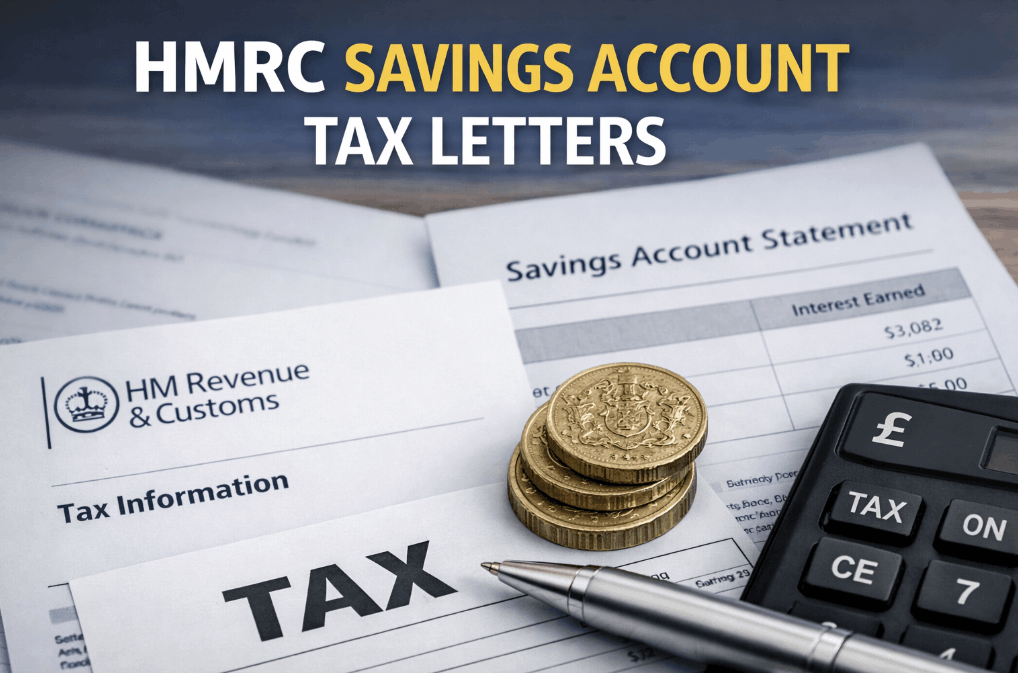
HMRC savings account tax letters are formal notifications sent to UK taxpayers when bank data suggests earned interest has exceeded tax-free thresholds.
As of 2026, these nudge letters or P800 forms are issued because banks and building societies automatically report interest data to HM Revenue and Customs.
If your total interest exceeds your Personal Savings Allowance, HMRC will adjust your tax code or issue a bill to collect the underpaid tax.
Why are HMRC savings account tax letters being sent to so many people?
HMRC issues these letters to address a tax gap caused by rising interest rates and frozen tax thresholds.
When the interest you earn on non-ISA accounts surpasses your annual allowance, the bank’s automated report triggers a reconciliation in HMRC’s system. If a discrepancy is found between your reported income and your actual earnings, a letter is generated to recover the balance.
The automated data sharing process
Under current UK tax regulations, financial institutions are legally required to provide HMRC with a year-end summary of the interest paid to every account holder.
This digital link allows the government to cross-reference your employment income with your passive income.
This level of oversight is part of a broader initiative involving HMRC wage raid payroll checks to ensure all income streams are captured accurately.
The reality for many is that these letters arrive months after the tax year ends, often leading to confusion if the funds have already been spent.

How do I verify if a letter about my savings account is genuine?
- Check the sender address and branding to ensure it matches official HMRC styling and postmarks.
- Look for your National Insurance number; genuine letters almost always include this as a primary identifier.
- Review the “Our Reference” section for a specific 10-digit tax reference or a PAYE code.
- Access your Personal Tax Account via the official GOV.UK portal to see if the letter is mirrored in your digital inbox.
- Verify any repayment or payment links; HMRC will never ask for bank details via a QR code in a way that bypasses secure login.
- Call the official HMRC helpline using a number sourced from the government website, not the letter itself.
- Check for aggressive or threatening language; real tax letters are matter-of-fact and provide a right to appeal.
Identifying sophisticated tax scams
Scammers frequently exploit terms like ‘tax refunds’ or ‘unpaid interest’ to bait victims into clicking malicious links.
A common pattern is the urgent action scam, where a letter or text claims you will be prosecuted unless you pay immediately via a provided link.
Real HMRC correspondence regarding savings interest usually results in a tax code change (P800) rather than a demand for an immediate wire transfer to a private account.
What is the Personal Savings Allowance in 2026?
The amount of interest you can earn tax-free depends entirely on your Income Tax band. This allowance applies to bank accounts, building societies, and even certain peer-to-peer lending platforms.
| Taxpayer Band | Annual Income Range | Personal Savings Allowance (PSA) |
| Basic Rate | £12,571 to £50,270 | £1,000 |
| Higher Rate | £50,271 to £125,140 | £500 |
| Additional Rate | Over £125,140 | £0 |
Understanding the starting rate for savings
For those with a lower total income, there is an additional Starting Rate for Savings. If your other income (like wages or pension) is less than £17,570, you may be able to earn up to £5,000 in interest without paying tax.
This is a common area of confusion in HMRC savings account tax letters, as the software sometimes defaults to the standard PSA without accounting for this lower-income relief.
This issue is particularly prevalent in HMRC notices for UK pensioners savings, where fixed-income streams must be carefully balanced against interest earnings to avoid overpayment.

How does HMRC collect the tax owed on interest?
Once HMRC determines that tax is due, they use one of three primary methods to collect it.
For most employees, this is handled through the Pay As You Earn (PAYE) system, which often triggers a standard HMRC savings account warning before any physical deductions are made from a monthly payslip.
Collection methods summary
| Method | Description | Who it applies to |
| Tax Code Adjustment | Your tax code is lowered, so you pay slightly more tax on your monthly salary. | Employees and Pensioners |
| Simple Assessment | You receive a bill that must be paid directly online or by cheque. | Those whose tax can’t be taken from wages |
| Self Assessment | You report the interest yourself on your annual tax return. | High earners and Business owners |
The department typically prefers the ‘Tax Code Adjustment’ route because it effectively automates the collection process for the taxpayer.
In cases where you are owed a rebate due to overpayment, the letter will often point you toward the official gov.uk/p800refund process to claim your money back securely.
However, for a retiree named Susan, a sudden spike in interest from a matured three-year bond meant her state pension couldn’t cover the tax due, resulting in a Simple Assessment letter instead.
What should I do if the figures in the letter are incorrect?
Errors in HMRC savings account tax letters are often the result of maturity spikes. This occurs when a multi-year bond pays out all interest at the end of the term, making it look like you earned a massive amount in a single year.
Steps to challenge a calculation
If you believe the data is wrong, you must gather your Certificate of Interest from your bank for the relevant tax year.
Compare the Gross Interest on your certificates to the figure cited in the HMRC letter. If there is a discrepancy, perhaps due to a joint account where only 50% of the interest is yours, you must notify HMRC.
A common occurrence is HMRC attributing 100% of the joint interest to one person because the bank reported the lead name only.
How can I avoid receiving these tax letters in the future?
| Strategy | Benefit | Consideration |
| Cash ISAs | 100% Tax-Free interest | Annual £20,000 limit |
| Premium Bonds | All prizes are Tax-Free | No guaranteed interest rate |
| Gifting to Spouse | Utilises two sets of PSA | Requires legal transfer of funds |
Utilising an ISA is the most effective way to stop the flow of these letters. Since ISAs are not reported in the same way for tax purposes, they do not trigger the nudge system.
Additionally, moving funds into a spouse’s name if they are in a lower tax bracket can effectively double your household’s tax-free allowance, particularly following any HMRC tax-free allowance increase that might shift your overall liability.

Summary of next steps
Receiving a tax letter can be unsettling, but the first step is simply to verify the data. Start by logging into your Personal Tax Account to verify the correspondence.
Cross-reference the interest figures with your actual bank statements, paying close attention to the dates of credited interest rather than when the bond was opened. If the bill is correct, your tax code will usually update automatically.
If incorrect, call HMRC immediately with your bank certificates ready. To prevent future letters, consider maximizing your ISA contributions or exploring tax-exempt National Savings & Investments (NS&I) products.
FAQ about HMRC savings account tax letters
Do I need to report my savings interest to HMRC manually?
Only if you already complete a Self Assessment tax return or if your interest exceeds £10,000. For most people, banks report the data automatically, and HMRC will contact you if tax is due.
Is interest from an ISA included in these letters?
No. Interest earned in a Cash ISA or Stocks and Shares ISA is legally tax-free and should not be included in HMRC’s calculations for savings tax.
What happens if I ignore the letter?
Ignoring a genuine P800 or nudge letter can lead to interest charges and potential penalties. HMRC will eventually move to collect the debt via your tax code or debt collection.
Can a joint account cause a tax letter?
Yes. HMRC usually splits joint account interest 50/50. If one partner is a higher-rate taxpayer, they may receive a letter while the other does not.
Why did I get a letter now for interest earned two years ago?
HMRC often performs reconciliations retrospectively. It can take 12–24 months for bank data and tax records to be fully cross-referenced across all systems.
Does the tax letter affect my credit score?
No. Receiving a tax calculation or a nudge letter is a private matter between you and HMRC and does not appear on your credit report.
Can I pay the tax in installments?
If the tax is collected via your tax code, it is naturally spread over 12 months. If you receive a Simple Assessment bill, you can often set up a Time to Pay arrangement.