HMRC Notices For UK Pensioners Savings: Fix Your Tax Bill
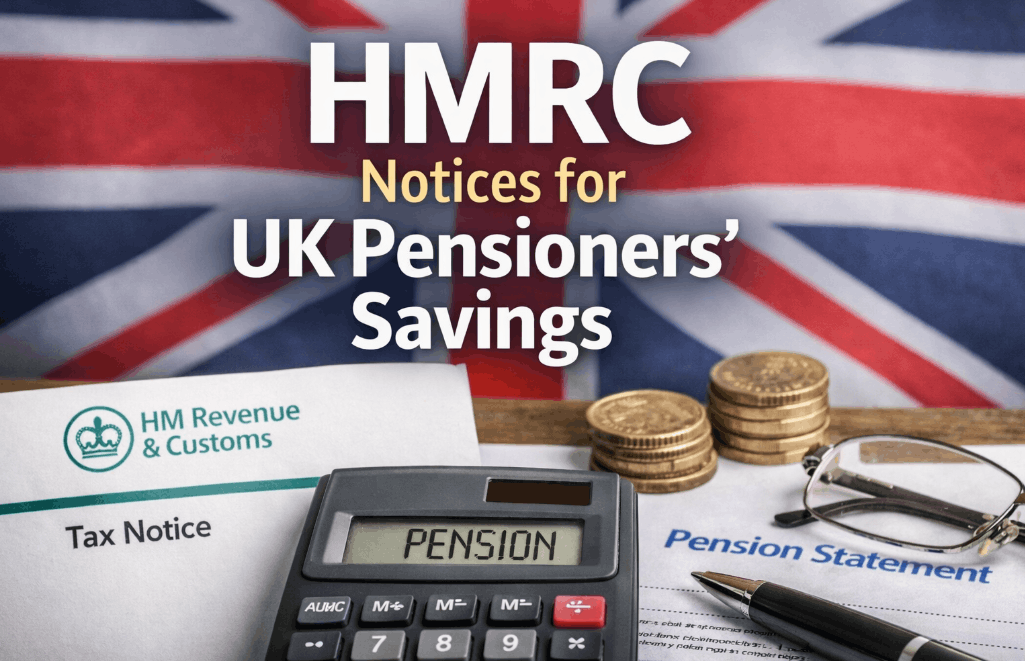
HMRC notices for UK pensioners savings are official communications sent when tax is owed on bank or building society interest. In 2026, these letters usually trigger because total income exceeds the £12,570 Personal Allowance and specific savings triggers.
Recipients must verify the interest amounts and tax year stated before making payments or appealing.
Why have I received HMRC notices for UK pensioners savings?
An HMRC notice for UK pensioners savings is a formal calculation sent to retirees when their total annual interest exceeds tax-free thresholds.
This occurs because banks report interest data directly to HMRC, which then compares it against your pension income. If the combined total surpasses your available allowances, HMRC issues a notice to collect the unpaid tax.
The 2026 Fiscal Reality for Retirees
The primary driver behind the surge in tax letters this year is the fiscal drag. While the State Pension has risen under the Triple Lock, the £12,570 Personal Allowance remains frozen.
Many feel the new state pension unfair to existing pensioners who often have smaller private pots but are now being dragged into the tax net for the first time. Consequently, even modest savings pots are now being pushed into taxable territory.
I have observed that many pensioners are caught off guard because they assume savings interest is always tax-free, which is no longer the case in a higher interest-rate environment.

How to identify the specific HMRC letter you received
- Check the top right corner for a reference code like P800 or PA302.
- Verify the Tax Year listed; HMRC often reconciles data from the previous year.
- Cross-reference the National Insurance number to ensure the letter is intended for you.
- Review the total interest figure against your actual bank statements or certificates of interest.
- Identify the payment deadline, which is typically 30 to 60 days from the date of issue.
- Look for the How to Pay section, but never use links from unexpected emails or texts.
Understanding the PA302 Simple Assessment
If you receive a PA302, it means HMRC has decided you owe tax that cannot be taken automatically from your pension.
This is common if your only income is the State Pension and savings interest. Unlike a P800, which often results in a tax code change, a PA302 is a direct bill.
In my experience helping individuals navigate these, the most frequent error is HMRC double-counting interest from joint accounts that should be split 50/50.
| Feature | P800 Tax Calculation | PA302 Simple Assessment |
| Primary Use | Adjusting tax via PAYE/Pension codes | Direct billing for untaxed income |
| Common Trigger | Small underpayments on private pensions | State Pension + High savings interest |
| Action Required | Check if code changes are correct | Pay the bill or appeal within 60 days |
| Payment Method | Monthly deduction from pension | Lump sum via HMRC app or bank transfer |
What are the tax-free limits for HMRC notices for UK pensioners savings?
The amount of interest you can earn before receiving a notice depends on your total income. For the 2026/27 tax year, most retirees benefit from a combination of the Personal Allowance, the Starting Rate for Savings, and the Personal Savings Allowance (PSA).
While many are waiting for an HMRC tax-free allowance increase to ease this burden, the current frozen thresholds mean you must be proactive in managing your interest. The amount of interest you can earn before receiving a notice depends on your total income.
The Starting Rate for Savings
If your other income (like your pension) is less than £17,570, you may qualify for the Starting Rate for Savings. This allows up to £5,000 of interest tax-free. However, for every £1 you earn over your Personal Allowance from your pension, this £5,000 limit reduces by £1.
Example: John has a total pension income of £14,000. This is £1,430 over the Personal Allowance. His Starting Rate for Savings is therefore reduced from £5,000 to £3,570. If his savings interest is £3,000, he owes nothing. If it is £4,000, he will likely receive a notice for the £430 excess.

The Personal Savings Allowance (PSA)
In addition to the starting rate, the PSA provides a final buffer. Basic rate taxpayers can earn £1,000 tax-free, while higher rate taxpayers get £500. When I review these cases, I often find that HMRC’s automated systems sometimes fail to apply the Starting Rate before the PSA, resulting in an inflated tax bill.
| Income Type | Tax-Free Threshold (2026/27) |
| Personal Allowance | £12,570 |
| Starting Rate for Savings | Up to £5,000 (Income dependent) |
| Personal Savings Allowance | £1,000 (Basic) / £500 (Higher) |
Common errors found in HMRC notices for UK pensioners savings
One of the most significant issues in the current system is the Joint Account Trap.
This issue is a core part of the wider HMRC savings account warning issued to those who hold large cash balances outside of tax-free wrappers. If one spouse is a non-taxpayer and the other is a higher-rate taxpayer, this assumption can lead to a notice being sent to the wrong person.
HMRC receives data from banks under one name or simply assumes a 50/50 split. If one spouse is a non-taxpayer and the other is a higher-rate taxpayer, this assumption can lead to a notice being sent to the wrong person or for the wrong amount.
- ISA Interest: Interest earned in ISAs is tax-free. Occasionally, banks misreport this as taxable interest.
- Closed Accounts: HMRC may use estimated interest based on the previous year’s high balance, even if you moved the money to a lower-interest account or spent it.
- Compounded Interest: If your bond only pays out at maturity (e.g., after 3 years), the entire interest amount is taxed in the year of payout, potentially pushing you into a higher tax bracket.
Expert Insight: When reviewing HMRC notices for UK pensioners savings, always check the ‘Basis of Interest’ section. If the figure looks exactly like last year’s, HMRC is likely using an estimate rather than actual data from your banks.
How to appeal or correct a savings tax notice?
If you believe the figures in your notice are incorrect, you must act quickly. For a Simple Assessment (PA302), you generally have 60 days to query the calculation. I recommend gathering all Certificates of Interest from your banks for the relevant tax year before calling.
- Call the HMRC Income Tax Helpline: Be prepared for wait times; mid-week mornings are usually best.
- Use the Personal Tax Account: Logging in via GOV.UK allows you to see exactly what interest has been reported by which bank.
- Submit a Self-Correction: If you have a joint account that isn’t split 50/50, you may need to provide evidence of who provided the funds.

Managing your savings to avoid future notices
- Utilise ISAs: With a £20,000 annual limit, moving taxable savings into an ISA is the simplest way to stop receiving these notices.
- Premium Bonds: Winnings from NS&I Premium Bonds are 100% tax-free and do not count toward your allowances.
- Gift to Spouses: If your spouse has a lower income or hasn’t used their allowances, transferring savings into their name (or a joint account) can reduce the total tax bill.
Summary and Next Steps
Receiving an HMRC notice for UK pensioners savings can be stressful, but it is rarely a cause for panic. Most notices are the result of automated data matching between banks and the tax office. To resolve the issue, follow these steps:
- Verify the data: Compare HMRC’s interest figures with your actual bank statements.
- Check your allowances: Ensure the Starting Rate for Savings and PSA have been applied.
- Act within 60 days: If the notice is wrong, call HMRC or update your Personal Tax Account immediately.
- Future-proof: Move excess cash into tax-free wrappers like ISAs or Premium Bonds to prevent future letters.
FAQ about HMRC notices for UK pensioners savings
Do I need to fill out a Self Assessment for savings interest?
Not usually. If you are a pensioner and your only untaxed income is savings interest, HMRC will typically use the Simple Assessment process to bill you directly without requiring a full tax return.
What if I cannot afford to pay the tax notice?
Contact HMRC immediately to discuss a Time to Pay arrangement. They are generally amenable to monthly instalments for pensioners, provided you reach out before the payment deadline expires.
For those still operating small businesses or consultancy work in retirement, keeping track of deductible expenses like the HMRC new road fuel rates can also help reduce your overall taxable profit. This ensures you aren’t overpaying on your total income assessment.
Does the State Pension count toward my tax-free allowance?
Yes. The State Pension is taxable income. It uses up your Personal Allowance first, meaning there is less room left for savings interest to remain tax-free.
Why did HMRC change my tax code because of my savings?
If you have a private pension, HMRC often tries to collect tax on savings interest by lowering your tax code. This reduces your monthly pension payment but avoids a large year-end bill.
Is interest from National Savings and Investments (NS&I) taxable?
It depends. Interest on Direct Saver or Income Bonds is taxable. However, interest on ISA products and winnings from Premium Bonds are completely tax-free.
Can I ignore a P800 notice if the amount is small?
No. Even if the amount is under £50, HMRC will either carry it forward to next year’s tax code or issue a formal demand. Ignoring it can lead to interest charges.
How does HMRC know about my offshore savings?
Under the Common Reporting Standard (CRS), over 100 countries share financial data with HMRC. Offshore interest is often a primary trigger for nudge letters and formal notices.