Managing HMRC ISA Rule Breach Penalties: Guide To Fixing Over-Subscription, Tax Fines
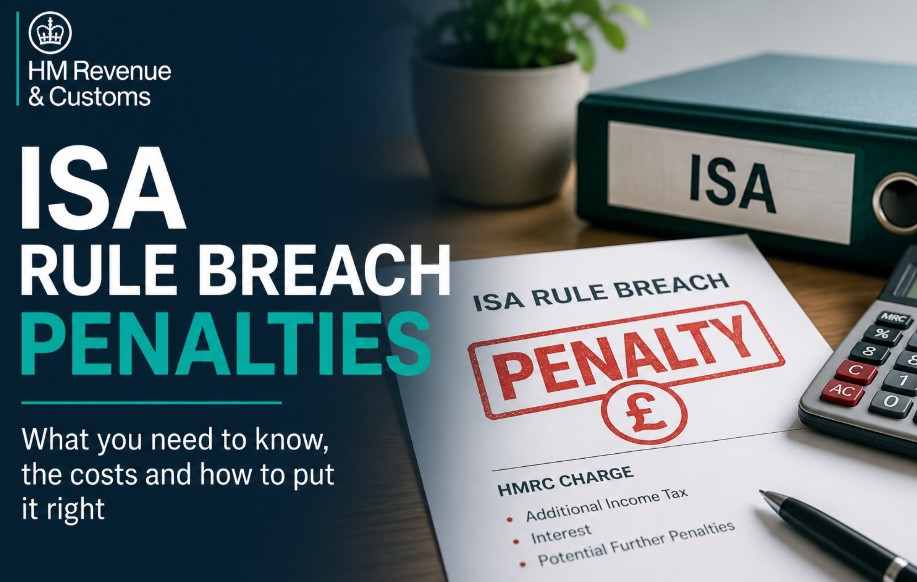
HMRC ISA rule breach penalties are statutory financial corrections enforced by HM Revenue and Customs when an investor exceeds the annual £20,000 ISA allowance or invalidly subscribes to a tax-sheltered savings account.
These penalties do not involve immediate criminal sanctions; instead, HMRC strips the tax-exempt status from non-compliant funds, claws back unearned tax relief, charges retroactively calculated interest on accumulated balances, and applies behavioral civil fines ranging from 30% to 100% of the underlying tax liability for deliberate inaccuracies.
Key Takeaways
- Individual investors face a strict £20,000 maximum subscription cap across all adult ISA types combined for the ongoing 2026/2027 UK tax year.
- HMRC cross-references annual electronic returns from all UK financial institutions using your unique National Insurance number to flag breaches.
- Recoveries for invalidly held funds are calculated using flat statutory formulas costing up to £10 per year for every £1,000 inside Cash ISAs.
- Investors who discover an accidental over-subscription must leave the excess funds untouched and await official written correction from HMRC.
What Are the New ISA Rules for 2026?
The framework governing Individual Savings Accounts (ISAs) has seen structural modernization, but core financial limits remain tightly controlled.
- The Overarching Limit: For the 2026/2027 fiscal year (running from 6 April 2026 to 5 April 2027), the collective adult ISA allowance is fixed at £20,000. You can spread this budget across Cash ISAs, Stocks and Shares ISAs, Innovative Finance ISAs, and Lifetime ISAs (which keep a separate internal cap of £4,000).
- The Multiple-Account Update: Under modernized rules, you are permitted to open and pay into multiple accounts of the same type (e.g., two different Cash ISAs with separate banks) within a single financial year. However, your total combined deposits across all platforms must stay under the £20,000 boundary.
- Upcoming 2027 Cash ISA Reforms: Looking ahead, the government has scheduled a major shift for the following 2027/2028 tax year starting on 6 April 2027. For individuals under the age of 65, the maximum allocation allowed specifically within a Cash ISA will drop to £12,000. The overall ISA limit will stay at £20,000, meaning under-65s will have to direct the remaining £8,000 into investment-style accounts (like Stocks and Shares ISAs) to fully utilize their tax wrapper. Savers aged 65 and over are exempt from this adjustment and retain the full £20,000 Cash ISA flexibility.

What Happens If You Breach ISA Rules?
When an HMRC ISA breach occurs, the financial protection offered by the account is compromised. HMRC monitors compliance strictly through post-year electronic audits. If an account holder invalidly subscribes to an account, the primary penalty is the targeted removal of that account’s tax-exempt status.
When reviewing decisions regarding broken regulations, HMRC splits its enforcement into two major operational categories based on the nature of the error:
Simplified Voiding (The Repair Procedure)
For honest errors, such as accidentally depositing money into an account beyond the £20,000 limit due to a bank transfer timing issue, HMRC generally permits a process known as simplified voiding. Under this mechanism, the valid portion of your savings retains its tax protection, while the non-compliant excess is systematically repaired.
The financial institution removes the invalid funds and their associated earnings, ensuring that the main body of the ISA remains intact.
Strict Treatment (The Voiding Procedure)
If a breach is deemed structural or deliberate, the account is subjected to strict statutory treatment, resulting in a completely void ISA. Circumstances that trigger a total void include:
- Subscribing while failing to meet UK residency or age requirements.
- Purchasing unapproved, non-qualifying investments within a Stocks and Shares portfolio.
- Demonstrating deliberate non-compliance or hiding accounts from tax inspectors.
When an ISA is voided, it is treated as though it never existed. The entire tax shelter is removed, and every penny of interest, dividends, or capital growth becomes retroactively liable for standard UK personal taxation.
What Are the HMRC ISA Rule Breach Penalties?
HMRC ISA rule breach penalties consist of three distinct financial enforcement mechanisms: retroactive tax relief clawbacks, statutory interest charges, and behavioral civil fines.
When an allowance is breached, or an account becomes invalid, HMRC automatically strips the tax-exempt status from the non-compliant funds and applies the following penalties:
Tax Relief & Interest Recoveries
When an error is uncovered, HMRC recovers the exact value of the unearned tax relief directly from the provider or investor. Additionally, under Section 86 of the Taxes Management Act 1970, statutory interest is charged on all recovered sums, calculated retroactively from 31 January following the closing date of the relevant tax year
Behavioral Inaccuracy Penalties
If your tax returns contain discrepancies caused by a lack of reasonable care or intentional concealment regarding your allowances, HMRC applies percentage-based civil fines levied against the underpaid tax liability:
- Careless Error (Lack of Reasonable Care): A fine between 0% and 30% of the extra tax due.
- Deliberate but Not Concealed: A fine between 20% and 70% of the extra tax due.
- Deliberate and Concealed: A harsh fine between 30% and 100% of the extra tax due.
Flat-Rate Formula Assessments
To settle multi-year institutional compliance audits cleanly, HMRC employs strict flat-rate recovery formulas to calculate structural financial clawbacks directly from the accounts:
| Asset Wrapper Type | Flat Annual Recovery Rate Formula | Primary Target of Recovery Action |
| Cash ISA Wrapper | £10 per year for every £1,000 invalidly subscribed | Account Manager / Recovered from Excess Interest |
| Stocks & Shares Wrapper | £5 per year for every £1,000 invalidly subscribed | Account Manager / Recovered from Capital Liquidation |
Does HMRC waive penalties?
No, HMRC never waives the core financial clawback on a broken ISA wrapper. While they will waive harsher behavioral fines (civil penalties up to 100% of the tax due) if you made a genuine, accidental error, you cannot appeal or waive the statutory requirement to repay back-dated tax and Section 86 interest on the invalid savings.
Is there a penalty for exceeding the ISA limit or closing an ISA?
No, exceeding the limit triggers a formula-based tax clawback calculated at up to £10 per year for every £1,000 over-subscribed. For closing an account, HMRC charges absolutely zero penalties for shutting a standard Cash or Stocks and Shares ISA.
However, closing or making an unauthorised withdrawal from a Lifetime ISA (LISA) before age 60 triggers a severe, mandatory 25% government exit penalty. This rigid mechanism clarifies why HMRC is fining Lifetime ISA savers by clawing back the state bonus alongside a portion of your original principal.
What Happens If I Put More Than £20,000 in My ISA?
Going over your annual allowance is one of the most frequent structural errors handled by HMRC. If you are asking yourself, what happens if you accidentally put more than 20k in an ISA?, the answer centers entirely on exposure to tax.
Any capital introduced beyond the £20,000 mark is officially classed as an invalid subscription.
Can I have £40,000 in an ISA over 2 years?
Yes. The £20,000 limit governs new contributions made within a single fiscal year. It does not restrict the total cumulative balance of your savings.
As long as your annual inputs do not cross the maximum threshold during each respective tax year, your account value can grow infinitely through compounding interest, investment returns, and multi-year deposits.
Can you backdate an ISA?
No. The UK tax system operates on a strict use it or lose it timeline. If you only deposited £5,000 in a previous fiscal year, you cannot carry forward the unused £15,000 allowance to pass a £35,000 deposit in the current year. Contributions cannot be backdated under any circumstances.
How Does HMRC Know If You Exceed ISA Allowance?
A common misconception among retail investors is that separate banking platforms do not communicate with each other. In practice, the tax office does not rely on self-reporting or manual discovery; it uses an automated, centralized digital tracking system.
Does HMRC check your ISA?
Yes. Under standard UK tax management regulations, every approved ISA manager and financial institution is legally obligated to submit a comprehensive annual information return to HMRC following the close of the fiscal year on 5 April.
These electronic returns contain highly specific data, including your full name, date of birth, permanent address, unique National Insurance (NI) number, and the exact monetary total you subscribed throughout the year.
HMRC’s automated databases constantly aggregate these institutional returns by matching them directly to your National Insurance profile.
If you have added £15,000 to a Cash ISA with one provider and £10,000 to a Stocks and Shares portfolio with another, the system automatically tags the combined £25,000 total, creating a non-compliance alert.
What to Do If You Realise You Breached the Rules?
Discovering an oversight in your account management requires a structured approach to prevent compounding your tax liabilities.
- Do not manually withdraw the excess funds: Avoid making a quick, manual panic withdrawal from the account. Taking money out yourself does not erase the historical over-subscription, and it can permanently damage your valid, flexible ISA allowance allocation for the year.
- Gather your full contribution records: Log into your online banking portals and download statement summaries for every ISA you hold. Collate the exact dates, deposit amounts, and reference numbers for every contribution made since 6 April of the current tax year.
- Notify your current account manager: Contact the customer compliance support team at your latest ISA provider. Inform them clearly that you believe you have accidentally exceeded the annual contribution limit across multiple platforms.
- Await official guidance from the provider: Allow the provider’s compliance team to review the account against their system logs. If the over-subscription is recent and minor, the provider can often resolve it directly under automated in-year manager correction rules.
- Review your official HMRC matching letter: If the breach spanned multiple providers across a previous financial year, wait for HMRC to send an official matching notification letter. This letter will outline the specific calculations, details of the invalid portion, and clear instructions for payment.
- Settle any calculated tax liabilities promptly: Pay any calculated back-taxes or interest charges promptly via your Self Assessment portal or through your provider’s adjusted balance. Keep the official resolution statement saved safely in your business or personal financial records for at least five years.
Conclusion
Breaching the annual UK ISA guidelines strips away valuable tax protections, but it can be managed effectively if addressed correctly.
If you discover an over-subscription or an invalid contribution, remember to leave the excess funds alone rather than making a manual withdrawal, gather your financial statements, and contact your account provider’s compliance team.
Keeping careful records of your contributions across different platforms throughout the year is the simplest way to maintain full compliance within the UK’s automated tax system.
Disclaimer: This article provides general financial information for educational purposes and does not constitute formal legal or professional tax advice; always verify current regulations directly with HMRC or a qualified financial specialist.
FAQ
Can I put 20k in an ISA every year tax-free?
Yes, you can contribute up to £20,000 into your combined adult accounts during every separate tax year. The key is ensuring your total new deposits across all accounts stay at or below this limit before the annual 5 April deadline.
What happens if ISA providers reject Reeves’ plans or future budget changes?
If future budget adjustments alter standard limits, HMRC will issue updated guidelines for providers. Any structural adjustments or new caps will only apply moving forward; historical contributions made under older rules remain fully protected.
Can HMRC fine me for having two ISAs?
No, holding multiple ISAs of the same type within the same tax year is legally permitted under modernized 2026 rules. A penalty is only triggered if your total aggregate deposits across those accounts exceed £20,000.
How far back can HMRC check for ISA non-compliance?
During formal compliance audits, HMRC routinely reviews account records and looks back up to four years to recover tax relief that was incorrectly granted on non-compliant or voided accounts.
What happens if I accidentally overpaid by a small amount like £50?
For minor, accidental overpayments, HMRC will use the simplified voiding process. Your provider will simply remove the excess £50 and any interest it earned, returning it to a standard account without locking the entire ISA.
What is the penalty for closing a Lifetime ISA vs a standard Cash ISA?
Closing a standard Cash ISA triggers no tax penalty, though commercial exit fees may apply. Closing a Lifetime ISA early for non-qualified reasons triggers a heavy 25% government withdrawal charge, which claws back the initial bonus and part of your own savings.
Does oversubscribing affect my ability to save in future tax years?
No, an accidental over-subscription within a single financial year is handled as an isolated incident. Once the specific breach is repaired and settled, your full statutory allowance resets completely for the next tax year.