Rachel Reeves Set to Cut Cash ISA Allowance: Your 2026/27 Strategic Roadmap
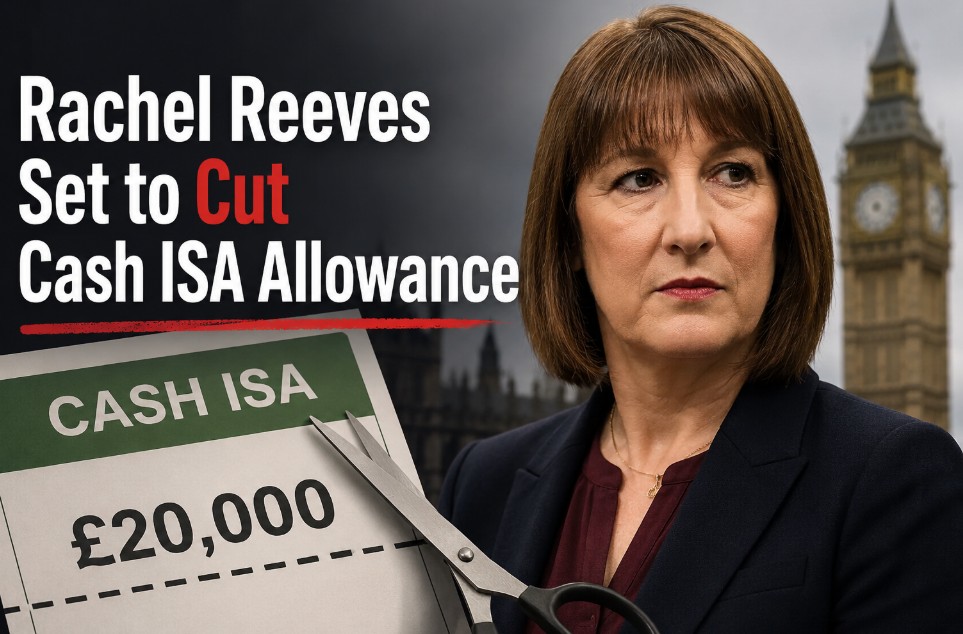
Yes, the UK government has confirmed that the Rachel Reeves set to cut Cash ISA allowance will reduce the annual contribution limit from £20,000 to £12,000 for savers under age 65, effective from the 2027/28 tax year (starting 6 April 2027).
While the total ISA allowance remains at £20,000, savers will need to diversify into other ISA types, such as Stocks & Shares, to utilize the full limit. Existing ISA balances remain fully protected and are not affected by this change.
Is Rachel Reeves set to cut Cash ISA allowance?
Yes, the Chancellor, Rachel Reeves, confirmed in the Autumn Budget 2025 that the annual Cash ISA contribution limit will be reduced for the majority of savers starting in the 2027/28 tax year.
Official government policy for the 2026/27 tax year maintains the standard current ISA allowance of £20,000, which can be allocated across various ISA types.
Speculation regarding a reduction in the cash component stems from ongoing budgetary debates about incentivising productive capital investment rather than holding funds in cash-based tax wrappers.
Why is the Cash ISA Allowance Being Cut?
The Treasury regularly reviews savings incentives to ensure they align with broader national economic goals.
These discussions often focus on encouraging capital investment rather than holding funds in static cash wrappers. Officials aim to support domestic business growth through these potential policy shifts.
- Productivity Goals: Policy advisors argue that cash ISAs primarily serve as liquidity buffers rather than driving long-term economic investment.
- Fiscal Consolidation: Adjusting tax-free limits is a common lever for governments looking to manage the national deficit without raising direct income tax rates.
- Capital Allocation: There is an ongoing push to harmonize savings vehicles, potentially favoring Stocks & Shares ISAs to boost institutional and retail share ownership in British firms.
Who is Affected by the New ISA Rules?
The new £12,000 limit specifically applies to savers aged 64 and under. Savers aged 65 and over are exempt from this change and will retain the ability to contribute the full £20,000 annual allowance into a Cash ISA.
The Current ISA Landscape
The fundamental structure of the Individual Savings Account remains a cornerstone of UK personal finance.
Regardless of speculative reports about potential future restrictions or caps on cash holdings, current legislation protects your existing ISA balances and the underlying tax-free status of interest earned within these accounts.
| Feature | 2026/27 Tax Year Status |
| Total ISA Limit | £20,000 per annum |
| Cash ISA Access | Fully available within the £20,000 cap |
| Tax Treatment | Interest and capital gains remain tax-free |
| Eligibility | UK residents aged 18+ |
The 2027/28 ISA allowance for savers under age 65 is set to reduce to £12,000 starting 6 April 2027, as confirmed in the Autumn Budget 2025. Savers aged 65 and over will retain their current £20,000 threshold to protect retirement liquidity.
How to optimize your ISA strategy before April 2027?
Proactive management involves assessing your risk tolerance and ensuring your portfolio is not overly concentrated in one asset class.
If you are concerned about potential limit changes, diversifying your holdings is the most robust defensive strategy against future fiscal uncertainty.
- Assess your total cash reserves held outside of tax-protected environments.
- Utilize your full £20,000 allowance early in the tax year to maximize tax-free interest.
- Review your existing holdings in a Cash ISA to ensure they meet your liquidity needs.
- Consider the role of Stocks & Shares ISAs for funds intended for long-term growth.
- Check your eligibility for specialized accounts, such as the Lifetime ISA.
- Compare standard cash options by tracking the latest Leeds Building Society ISA rates to maximize your yields before the new limits take effect.
- Maintain a clear record of your annual contributions to avoid accidental HMRC ISA penalties caused by over-subscription.
- Monitor official Treasury announcements during the Autumn Statement and Spring Budget cycles.
Are Stocks & Shares ISAs a better alternative for your cash?
Moving funds into a Stocks & Shares ISA provides greater growth potential, albeit with the inherent trade-off of market-related volatility.
For many, the decision hinges on the time horizon of their financial goals; short-term savings often belong in cash, while wealth accumulation for the medium-to-long term may justify equity exposure.
Comparison of ISA Savings Vehicles
| Factor | Cash ISA | Stocks & Shares ISA |
| Risk Level | Low (Capital protected) | Variable (Market dependent) |
| Return Potential | Interest-based (Steady) | Dividend/Growth (Variable) |
| Best For | Short-term/Emergency funds | Long-term wealth building |
| Liquidity | High | Moderate (Trade execution time) |

Managing large balances and the tax-free status
A common query from savers is whether a balance can exceed £200,000 within an ISA. The answer is yes, as there is no lifetime cap on ISA savings. Your account can grow indefinitely while retaining its tax-free status, regardless of future policy changes.
- Cumulative Growth: Existing ISA balances are grandfathered, meaning they are protected from new rules that might apply to future, new contributions.
- Compound Interest: The tax-free nature of ISAs makes them exceptionally powerful for long-term compounding, especially when interest rates or market returns are high.
- Tax Efficiency: By keeping large balances within the ISA wrapper, you effectively shield significant interest income from the personal savings allowance or dividend tax rates.
Preparing for the 2027 ISA Transition
As the deadline approaches, savers should focus on transitioning their strategy to avoid unintentional over-subscription.
- Keep Records: Ensure you have clear documentation of your annual contributions for the 2026/27 and 2027/28 tax years.
- Automated Savings: If you have standing orders into a Cash ISA, you may need to adjust these by April 2027 to ensure you do not exceed the new £12,000 limit.
Key Takeaways for Your Strategy
When news cycles are driven by speculation, it is vital to distinguish between hypothetical scenarios and established financial facts.
- Maximize your current allowance: Do not delay your contributions based on hypothetical future policy.
- Audit your accounts: Ensure your current savings mix matches your risk appetite.
- Stay informed: Rely exclusively on official HM Treasury updates regarding budget changes.
FAQ about Rachel Reeves set to cut cash ISA Allowance
Is the £20,000 ISA allowance changing in 2026?
As of June 2026, the £20,000 annual ISA limit remains unchanged. Official Treasury policy continues to support this cap for the current tax year, with no legislation currently enacted to reduce it for individual savers.
What happens to money already in my Cash ISA?
Existing money in your Cash ISA is protected. Government policy changes typically apply to future contributions rather than retrospective holdings, meaning your current tax-free savings remain safe under existing legislative protections.
Should I ditch my cash ISA if limits are cut?
Not necessarily. Even if contribution limits were reduced, the tax-free interest benefits of existing accounts persist. Diversification is often a better strategy than closing an account that provides a secure, tax-efficient home for your money.
Can I have more than 20,000 in an ISA?
Yes. The £20,000 figure is an annual contribution limit, not a balance limit. You can accumulate hundreds of thousands of pounds in an ISA over time through annual top-ups and investment growth.
What is the 5-year ISA rule?
There is no 5-year rule for standard ISAs. However, if you hold a Lifetime ISA, you must hold the account for 12 months before making a penalty-free withdrawal for your first home purchase.
Is everything in an ISA tax-free?
Yes. All interest, dividends, and capital gains generated within a Cash ISA or Stocks & Shares ISA are completely exempt from UK Income Tax and Capital Gains Tax, provided the account remains within its rules.
What is the most tax-efficient way to save in the UK?
Using your full £20,000 ISA allowance each year is widely considered the most efficient starting point, combined with maximizing pension contributions, which may offer tax relief on top of tax-free growth.