Best Ways to Support Local Businesses: UK Consumer Tips, Digital Hacks, & Grants
The best ways to support local businesses in the UK combine direct purchasing with free digital promotion. Consumers drive regional economic vitality by choosing independent high-street shops over global marketplaces, buying direct gift cards, leaving targeted online reviews, and participating in council-backed small business campaigns.
Key Takeaways
- According to research from the New Economics Foundation, spending £10 with an independent UK retailer retains roughly 63% of that value directly within the local economy.
- Writing detailed Google Business Profile reviews containing specific service descriptions boosts an independent store’s local SEO rankings for free.
- Buying gift vouchers directly from a neighborhood shop provides immediate working capital and preserves cash flow during slower trading periods.
- Purchasing goods directly from an artisan’s website avoids third-party marketplace commissions that often extract up to twenty percent.
What are the best ways to support local businesses in the UK?
The best ways to support local businesses involve a mixture of conscious spending, digital advocacy, and long-term habits. To strengthen independent enterprises across the UK, consumers and fellow commercial entities must move beyond convenient corporate alternatives.
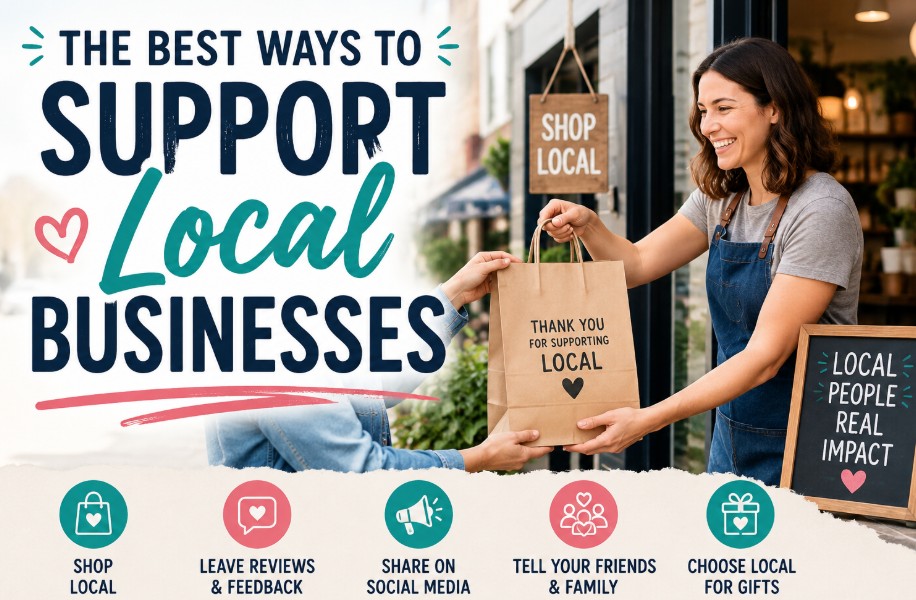
Active backing requires purchasing directly from physical storefronts, utilising local service providers, leaving positive feedback online, and engaging with municipal high-street initiatives.
Swap One Routine Corporate Purchase
Swap just one routine corporate habit for a local alternative. By redirecting your daily flat white, artisan sourdough loaf, or monthly pet supplies to an independent high-street shop, you provide neighborhood traders with steady, predictable cash flow.
Purchase Gift Cards Directly
Buying gift vouchers directly from a neighborhood shop or restaurant provides immediate working capital. This cash injection helps owners cover fixed overheads during slower trading periods (such as post-holiday months) and introduces new customers when the gift recipient redeems the card.
Order Directly via Shop Websites (Skip Marketplace Apps)
High marketplace commissions hurt small margins. Because third-party delivery apps routinely extract 15% to 30% on every order, buying direct from a trader’s own website guarantees the entire payment supports their bottom line.
Write Detailed, Keyword-Rich Online Reviews
Online reviews drive organic footfall. Writing a detailed review on Google Business Profile, TripAdvisor, or Trustpilot featuring specific product names or service details helps search engines index the business for relevant local searches.
Utilize Local Service Providers
Extend your support beyond retail. Hire local independent tradespeople, accountants, graphic designers, tailors, and mechanics. Keeping professional service contracts within your area builds a robust regional network.
Use Low-Fee Payment Methods
Credit card processing and merchant terminal fees slice into thin margins. Pay using debit cards, cash, or direct bank transfers where requested to help small traders keep their transaction fees to an absolute minimum.
Participate in Council-Backed High-Street Campaigns
Get involved with local initiatives like Small Business Saturday, town centre loyalty card schemes, or high-street shopping events organized by your local council or Business Improvement District (BID).
Engage with Local Content on Social Media
Help small shops bypass expensive digital advertising costs. Interacting with their content, by liking, saving, commenting on, or sharing store updates—boosts their visibility across social platform algorithms for free.
Source Seasonal & Regional Produce
Shop at farm shops, local green grocers, and regional markets. Buying seasonal produce grown nearby cuts out middleman logistics costs, supports regional farmers, and reduces long-distance food miles.
Establish B2B Local Supply Chains
If you run a business yourself, contract other local enterprises for your operational needs. Outsource print jobs to a local printer, order office coffee from a local roastery, and hire local IT specialists.
Why is supporting local businesses important in the UK?
Supporting independent traders yields measurable economic, social, and environmental benefits. When money is spent at a national chain or global e-commerce platform, the vast majority of revenue leaves the community to satisfy corporate overheads or distant shareholders.
Conversely, independent shops procure local services, employ neighborhood staff, and pay business rates that directly fund regional infrastructure.
Boosting Regional High-Street Resilience
As of 2026, UK small businesses navigate evolving economic pressures, from shifting consumer habits to broader regulatory shifts, such as how recent DWP benefit eligibility crackdowns impact local workforce participation and consumer spending.
Independent shops act as community hubs, offering specialized knowledge, personalized customer service, and distinct products that standardized retail outlets cannot replicate.
| Factor | Local Independent Shop | Major National Chain |
| Local Revenue Retention | High (~60-70% stays local) | Low (Majority exits region) |
| Supply Chain Origin | Regional & Independent | Centralised & Global |
| Environmental Footprint | Reduced Transport Miles | Multi-stage Freight Delivery |
| Personalised Customer Service | Direct Owner/Operator Care | Standardised Corporate Policy |
Reducing Environmental Overhead
Local procurement significantly reduces carbon footprints. Independent retailers typically source stock from regional producers, eliminating long-haul freight operations. Purchasing locally grown produce or regional artisan goods directly reduces packaging waste and transport emissions.
How can you support local businesses online without spending money?
If you are working with a tight budget, digital advocacy costs nothing but delivers high value to local traders:
- Leave Detailed Google Reviews: Search engine algorithms prioritize local map listings based on recent customer feedback. Mention specific items purchased (e.g., Best flat white in Bristol), post photos, and mention staff by name to improve search indexing.
- Drive Organic Social Media Engagement: Like, comment on, save, and share posts from local businesses on Instagram, TikTok, and Facebook. Algorithms reward active engagement by showing those posts to more local users.
- Geo-Tag and Mention Local Outlets: When posting a picture of your weekend brunch, new haircut, or local market haul, tag the shop and drop a location tag.
- Recommend Traders in Community Groups: Actively suggest local plumbers, bakeries, or mechanics when neighbors ask for recommendations on platforms like Nextdoor or regional Facebook groups.

What UK government support and grants exist for local small businesses?
Navigating official funding channels helps independent traders access capital, lower overheads, and invest in modernizing their operations.
Staying up to date with actionable UK business news and tips makes it easier to track structured financial aid and advisory services available through GOV.UK and local authority portals.
Small Business Rate Relief (SBRR)
Business rates represent a significant fixed property tax for physical storefronts.
- Full Relief (100%): Available for properties with a rateable value of £12,000 or less. Eligible businesses pay no business rates whatsoever.
- Tapered Relief: Available on a sliding scale for properties with a rateable value between £12,001 and £15,000.
UK Shared Prosperity Fund (UKSPF)
Part of the UK government’s levelling-up agenda, the UKSPF allocates funding directly to regional local authorities. Councils distribute these funds through:
- High-Street Regeneration Grants: Funding to help physical shops restore shopfronts, upgrade signage, or improve energy efficiency.
- Digital Transformation Grants: Match-funding schemes designed to help small businesses build e-commerce channels, adopt modern EPOS systems, or upgrade IT infrastructure.
Business Improvement Districts (BIDs)
BIDs are business-led partnerships where local traders pool a small levy to invest in their immediate commercial zone. BIDs fund direct local improvements including:
- Town centre security and dedicated street cleaning teams.
- Targeted regional marketing and seasonal event campaigns.
- Digital directories and high-street footfall tracking analytics.
Regional Growth Hubs & Subsidized Advisory
Across England, Scotland, Wales, and Northern Ireland, network-backed Growth Hubs provide free support to small enterprises:
- Growth Hub Support: Free 1-on-1 business mentoring, financial planning sessions, and export advice.
- Help to Grow Schemes: Subsidized executive education programs covering management training, digital adoption, and strategic growth.

How to Claim Government Grants for Local Businesses in the UK
Securing government grants or rate relief is a structured process. While grant money is non-repayable, applications are competitive, and funds are strictly allocated for explicit operational or capital projects.
- Search Official Directories: Locate active schemes using official government engines:
- GOV.UK Finance Support Finder: Filter options by region, sector, and workforce size.
- Central Government Find a Grant Portal: Browse open national funding schemes directly.
- Your Local Council Portal: Check the Business & Investment tab on your local authority’s website for council-administered UKSPF grants.
- Verify Eligibility & Match-Funding Rules: Review strict eligibility conditions (trading duration, sector, location, and turnover). Check whether the grant requires match-funding; many local authority grants fund up to 50% of a project cost, requiring you to finance the remaining percentage yourself.
- Prepare Documentation & Financial Reports: Before starting the application, prepare key documents: An up-to-date business plan (you can use a free business plan template to structure this) detailing how the project drives growth or job creation, the last 12–24 months of bank statements, and formal supplier quotes for planned grant expenditures.
- Up-to-date business plan detailing how the project drives growth or job creation.
- Last 12–24 months of business bank statements and filed accounts.
- Formal supplier quotes for items you plan to buy with grant money.
- Submit via Official Portals: Complete your application via the local council or GOV.UK portal. Explicitly map your answers to match the funder’s stated aims (e.g., sustainability, town centre footfall, or digital adoption).
- Await Approval Before Spending: Never purchase equipment or commission work before receiving a formal grant offer letter. Almost all UK government grants operate on a reimbursement model, paying out against proof of purchase (invoices and bank statements) after formal sign-off.
Tax Note: Cash grants received by a trading entity count as taxable income. They must be declared on your annual HMRC Self Assessment or Corporation Tax return.
Conclusion
Supporting local independent traders is a practical way to invest in community vitality. Every direct purchase, online review, and B2B contract strengthens regional high streets and protects unique local character.
Choosing independent shops creates an economic environment where small businesses can adapt, grow, and serve their neighborhoods effectively.
Disclaimer: This article is for informational purposes only and does not constitute formal financial, legal, or official grant application advice.
FAQ
How do I find the best independent businesses near me in the UK?
Use local council business directories, search Google Maps for specialized independent shops, explore neighborhood community groups on platforms like Nextdoor, or look for accredited members on the Federation of Small Businesses directory.
What is a support local business campaign and how can I get involved?
A support local business campaign is an organized initiative by community groups or councils to encourage high-street spending. Participate by joining local shopping days, using regional loyalty cards, and sharing campaign hashtags online.
How does shopping at a local shop help reduce carbon footprints in the UK?
Local shops generally source stock from regional growers and manufacturers. This shortens logistics supply chains, significantly lowers heavy-goods vehicle transport miles, and cuts down on excess commercial packaging compared to global distributors.
What official UK government support or business growth services are available for small traders?
The UK government provides support through regional Growth Hubs, Small Business Rate Relief, and local authority grants funded by the UK Shared Prosperity Fund, accessible via the official GOV.UK portal.
How do gift cards directly benefit independent store cash flow?
Gift cards provide immediate working capital to small traders, helping cover operational overheads during quiet periods. They also introduce new customers to the store when the recipient redeems the voucher value.
Why is leaving a Google review so valuable for a small high-street shop?
Detailed online reviews containing specific service descriptions boost a shop’s local SEO rankings. Higher visibility on search maps drives organic footfall without requiring the owner to spend money on digital advertising.
Can small businesses support each other through B2B operations?
Yes, small businesses strengthen the local economy by hiring local accountants, web designers, and print shops, creating a resilient local supply chain that retains capital within the immediate community.