What Do the New Benefits Eligibility Checks Crackdown DWP Mean for Small Businesses?
The Department for Work and Pensions (DWP) is executing a major automated welfare reform targeting capital compliance across the United Kingdom.
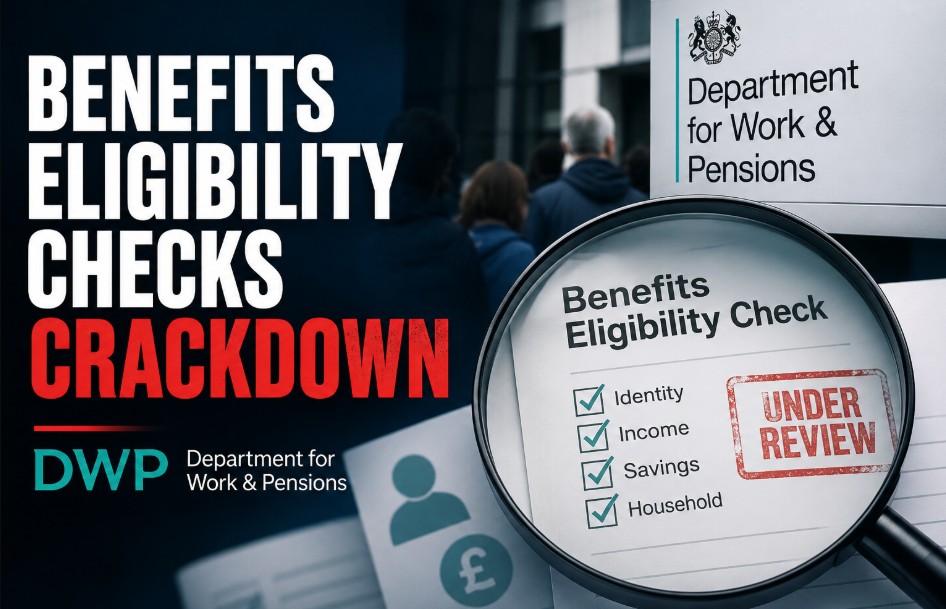
The benefits eligibility checks crackdown DWP introduces automated financial data-matching systems that continuously cross-reference claimant records with live bank account data to identify undeclared capital, irregular self-employed income, and asset threshold breaches.
What Is a Benefits Eligibility Check?
A DWP benefits eligibility check is a mandatory verification process used by the UK government to ensure claimants meet the strict financial and situational criteria required to receive welfare support, primarily targeting means-tested benefits like Universal Credit.
In the past, this was mostly a manual process. You would self-report your savings, earnings, and living situation, and case workers would occasionally ask for paper bank statements or cross-reference your file if something looked amiss.
Essentially, it is the state’s way of verifying that public money is going exactly where it is legally supposed to go.
What Is the New Benefits Eligibility Checks Crackdown DWP?
The new benefits eligibility checks crackdown DWP is a 2026 automated screening initiative under the Public Authorities (Fraud, Error and Recovery) Act 2025 that legally compels UK banks to continuously monitor claimant accounts for capital limit breaches and undeclared income.
The 2026 crackdown changes how these checks happen. Instead of relying on manual reviews or waiting for a red flag, the DWP has shifted to an automated, continuous system.
Here is exactly what this new crackdown looks like in practice:
- Continuous, Automated Screening: Moving away from random, sample-based audits, the DWP now uses automated algorithms to screen financial records every single month.
- Direct Bank Collaboration: Under the Public Authorities (Fraud, Error and Recovery) Act 2025, major UK banks and building societies are legally required to run background filters on behalf of the DWP.
- The Shift in Consent: The DWP no longer needs to ask for your explicit permission or a signature to request these background checks; the system handles it institutionally.
- Targeting Capital Thresholds: The system is specifically calibrated to flag accounts where combined liquid assets quietly creep over the statutory limit (like the absolute £16,000 cutoff for Universal Credit).
- Flagging Irregularities: Beyond high balances, the automated system looks for signs of undeclared self-employed income, sudden capital influxes, or prolonged financial activity outside the UK.

Why Does the DWP Do Benefits Eligibility Checks?
The DWP conducts benefits eligibility checks to protect public funds by preventing fraud and reducing administrative overpayments, addressing an estimated annual loss of £9.5 billion identified by the National Audit Office (NAO).
By conducting these checks, the DWP aims to:
- Protect Public Funds: Ensure that finite taxpayer resources are preserved for the individuals who truly meet the criteria for support.
- Reduce Human Error: Avoid overpayments before they accumulate into massive, life-altering debts that claimants later struggle to pay back.
- Modernise Enforcement: Move away from slow, bureaucratic paperwork and use modern financial technology to catch discrepancies in real-time.
What Kind of Information Is Actually Checked?
The DWP automated bank checks screen specific metadata and balance triggers, including total closing balances across personal or business accounts, identity verification data, cash flow patterns, and geographic transaction locations.
Here is the exact financial information being verified:
- Total Closing Balances: The combined capital across your personal checking accounts, savings accounts, and business accounts (if you are a sole trader or director) to see if you exceed the £6,000 or £16,000 thresholds.
- Identity Verification data: Matching account holder names, addresses, and dates of birth against DWP claimant records to ensure accounts aren’t being hidden under different variations of your name.
- Inflow and Outflow Patterns: Identifying large, irregular deposits that might point to undeclared seasonal business revenues, undisclosed commercial efforts to support local businesses, cash-in-hand work, or unreported inheritance.
- Geographic Transaction Flares: Tracking if an account is consistently being used for everyday transactions abroad, which could signal that a claimant is living outside the UK past the permitted statutory time limits.
Remember, the bank’s algorithm only passes your basic details to a human DWP reviewer if a threshold is breached. DWP staff cannot directly scroll through your itemised daily transactions without a formal, high-level criminal fraud warrant.
What Are Eligibility Verification Notices?
An Eligibility Verification Notice (EVN) is a statutory demand issued by the Department for Work and Pensions to financial clearinghouses and banking institutions.
These notices legally compel banks to run automated algorithms against their customer databases to identify specific eligibility risk indicators, such as capital accounts exceeding statutory allowances or consistent foreign transactions.
| Attribute | Statutory Detail under EVN Framework |
| Legal Basis | Public Authorities (Fraud, Error and Recovery) Act 2025 |
| Primary Trigger | Automated algorithmic flag of capital limits or undeclared revenue |
| Data Shared | Account names, balance flags, and confirmation of identity |
| Prohibited Actions | Real-time transaction browsing, tracking consumer spending choices |
| Targeted Benefits | Universal Credit, Pension Credit, Employment and Support Allowance |
When reviewing decisions on compliance, the system relies heavily on automated data matching. When an EVN triggers a positive match, meaning an account holder claiming means-tested benefits holds capital above the legal limit, the financial institution is legally obligated to pass the basic account identification and balance status back to the Department for Work and Pensions for human review.

Can the DWP Check Your Bank Account Without Permission?
Yes, under the 2026 legal framework, the DWP can check your bank balances without permission by legally forcing UK banks to run automated sweeps via the new DWP eligibility verification measure.
The Department for Work and Pensions cannot directly browse individual itemised bank statements without a formal fraud investigation warrant.
However, under the 2026 DWP eligibility verification measure, the department legally compels UK banks to run automated background checks that flag accounts exceeding capital thresholds without requiring claimant consent. For older individuals, these cross-checks are highly targeted under the strict DWP Pension Bank Rules Update 2026 guidelines to prevent capital threshold errors on means-tested top-ups.
Beyond active claimants, there are also broader legislative plans for the DWP to launch bank account checks for those not claiming benefits, expanding the scope of state financial oversight significantly.
When Does the DWP Check Bank Accounts Online?
The DWP checking system monitors bank accounts online on a recurring monthly cycle, directly aligned with individual Universal Credit assessment periods or specific business processing windows.
A common pattern observed in early compliance roll-outs involves the automated flags triggering immediately after a business processing cycle, such as when seasonal business revenues or temporary contract payments hit an account. The online checking system monitors two main criteria:
- The £16,000 Capital Ceiling: Identifying individuals whose combined liquid assets have remained above the absolute cutoff for means-tested support for more than one assessment period.
- The 52-Week Capital Disregard Rule: Tracking how long temporary capital influxes, such as business redundancy payouts or insurance settlements, reside in an account before they must legally be counted toward the asset threshold.
How Long Can DWP Check Your Bank Account Without Permission?
The DWP can check your bank account without permission continuously for the entire duration of an active benefit claim, halting only when the claim is closed or cleared by a human reviewer.
The monitoring only ceases when the benefit claim is formally closed, or if a human reviewer examines a flagged account and determines that the asset configuration complies with welfare rules.
Which Banks Are Being Checked by DWP?
The DWP bank checks cover all major Tier 1 clearing banks (Barclays, HSBC, Lloyds, NatWest, Santander), building societies (Nationwide), and prominent digital challenger banks like Monzo and Starling.
- Tier 1 Clearing Banks: Barclays, HSBC, Lloyds Banking Group, NatWest Group, and Santander UK.
- Building Societies: Nationwide Building Society and major regional equivalents.
- Digital Challengers & EMIs: Monzo, Starling Bank, and prominent electronic money institutions handling business transactions.
Conversely, foreign financial institutions without physical operations or regulatory registration in the UK fall outside the direct automated EVN data-feed pipeline, though they remain subject to traditional international tax information sharing agreements via HMRC.
How Does the DWP Crackdown Impact Self-Employed and SME Owners?
The DWP crackdown impacts self-employed individuals by risking automated benefit suspensions when systems mistake essential corporate working capital or tax reserves for personal savings.
What Happens If You Have More Than £10,000 or £16,000 in Capital?
Holding personal capital between £6,000 and £16,000 reduces means-tested benefit payments through assumed tariff income, while holding capital exceeding £16,000 causes absolute disqualification from Universal Credit.
For an ordinary corporate director, a realistic example involves holding £18,000 in a business account to cover an upcoming quarterly VAT bill and corporate tax liability.
An automated bank filter running an EVN sweep may flag this account under the director’s name, triggering an automated suspension of their personal Universal Credit claim based on the assumption that they hold personal capital over the £16,000 limit.
The claimant must then manually prove that these funds are legally ring-fenced for business liabilities rather than personal drawdowns.
Can the DWP Just Stop My Benefits or Deduct Money?
Yes, the DWP can temporarily freeze payments upon receiving an automated financial flag, following a structured multi-step review process before permanently closing a claim or applying deductions.
The sequential steps below illustrate the exact trajectory from an initial automated bank flag to final benefit adjustment:
- Automated Flag Trigger: The bank’s internal filter identifies an account breaching capital thresholds or showing irregular foreign transaction patterns.
- Data Transmission: Basic account identification data and total balance metrics are securely transmitted to the DWP data hub under an EVN mandate.
- Claim Suspension: The system automatically places a temporary freeze or processing hold on the upcoming monthly disbursement to prevent overpayment.
- Journal Notification: The claimant receives an official notification via their online benefits portal requesting documentation within 14 days.
- Evidence Review: A DWP decision-maker evaluates the submitted business accounts, invoices, and bank statements to verify capital ownership.
- Formal Overpayment Calculation: If the capital is deemed personal and undeclared, the department calculates the historical overpayment total.
- Deduction Implementation: The department applies statutory monthly deductions to future benefits or initiates direct recovery procedures to reclaim the balance.

What Are the Scope and Structural Limitations of the DWP Powers?
The structural limits of DWP powers prevent the department from viewing specific daily retail purchases or accessing itemised transaction logs without a formal criminal fraud warrant.
| Authorised DWP Capabilities | Explicit Legal Constraints & Safeguards |
| Can compel banks to report total balance figures that exceed capital limits. | Cannot authorise case workers to browse itemised everyday transaction histories. |
| Can run automated monthly data-matching scripts across all major UK banks. | Cannot view what specific goods or services a claimant is purchasing. |
| Can flag accounts showing prolonged presence outside the UK jurisdiction. | Cannot freeze or seize bank assets without a separate, formal court order. |
| Can cross-reference bank data with live HMRC PAYE and self-assessment filings. | Cannot access private encrypted communications or messaging profiles. |
An example of these boundaries involves a sole trader who frequently purchases raw business inventory online. The DWP automated system can see the fluctuating closing balance of the account each month to ensure it complies with asset caps.
It cannot, however, monitor the specific suppliers used, audit individual retail receipts, or review the business’s internal operational software without initiating a high-level criminal fraud investigation.
Maintaining Business Capital Compliance
Small business owners can remain compliant by enforcing strict separate accounting, keeping documented balance sheets for tax liabilities, and aligning self-employment portal reporting with bank records.
To prevent automated systems from misidentifying business working capital as personal savings, small business owners and self-employed claimants should adhere to strict structural banking protocols:
- Maintain Absolute Separation of Accounts: Never mix personal funds with business operational income. Ensure all trading revenues flow into a dedicated business or commercial bank account registered under the business name or formal trading style.
- Document Earmarked Liabilities: Keep a live, updated balance sheet indicating exactly which portions of retained business profit are allocated to upcoming tax liabilities, including VAT, Corporation Tax, and National Insurance contributions.
- Align Monthly Income Reporting: Ensure that the net profit figures declared through the Universal Credit self-employed earnings portal exactly match the corresponding cash movements visible in your business bank statements for that specific assessment period.
- Retain Clear Director’s Loan Documentation: If funds are moved from a corporate account to a personal account as a formal director’s loan, ensure a legal loan agreement is signed and dated before the transaction to prove the funds do not constitute personal income or permanent savings.
Summary
The transition to automated financial screening under the benefits eligibility checks crackdown DWP requires small business owners and self-employed individuals to maintain rigorous accounting discipline.
Automated systems flag asset discrepancies based entirely on raw balance data and account structures.
To avoid disruptive payment suspensions, claimants must clearly separate business working capital from personal assets, preserve clear documentation for earmarked tax reserves, and ensure all portal declarations align perfectly with monthly bank cash flows.
FAQ about Benefits Eligibility checks crackdown DWP
Which specific benefits are being targeted first by the DWP checks?
The automated checking system focuses on means-tested welfare programs, specifically Universal Credit, State Pension Credit, Income Support, Housing Benefit, and income-related Employment and Support Allowance. Non-means-tested benefits like Personal Independence Payment are not subject to automated capital checks.
Can the DWP check my business bank account if I am a limited company director?
Yes. If you are a limited company director claiming means-tested support, the automated system can match your identity details with any commercial accounts where you are a named signatory or designated beneficial owner to verify capital access.
How long can the DWP check your bank account without permission under the new rules?
The automated verification notices allow for continuous monthly screening throughout the lifetime of the active benefit claim. Checks run systematically during each monthly assessment window without requiring individual, ongoing claimant consent.
What happens if a small business owner has more than £16,000 in a business account?
If the account is a sole trader account, the system views it as personal capital, which can trigger immediate benefit termination. For limited companies, the claimant must provide accounting evidence showing the money is working capital, not personal profit.
Can the DWP stop my benefit immediately upon receiving a bank flag?
The department can temporarily suspend payments to prevent further overpayments while they issue a formal request for information. The claimant typically has 14 days to provide financial records before permanent closure or deduction occurs.
How much can DWP deduct from benefits to recover an overpayment?
For capital or earnings misdeclarations, standard regulations cap the maximum automated deduction rate at 15% to 25% of the claimant’s standard Universal Credit monthly allowance, depending on whether fraud or administrative error is determined.
Do the 2026 rules apply to personal bank accounts held by pensioners?
Yes. Pension Credit is a means-tested benefit subject to strict capital rules. The automated algorithm actively screens pensioner accounts to identify undisclosed savings or investment portfolios exceeding the statutory thresholds.