What Is a Line of Credit? A Simple Guide for UK Borrowers
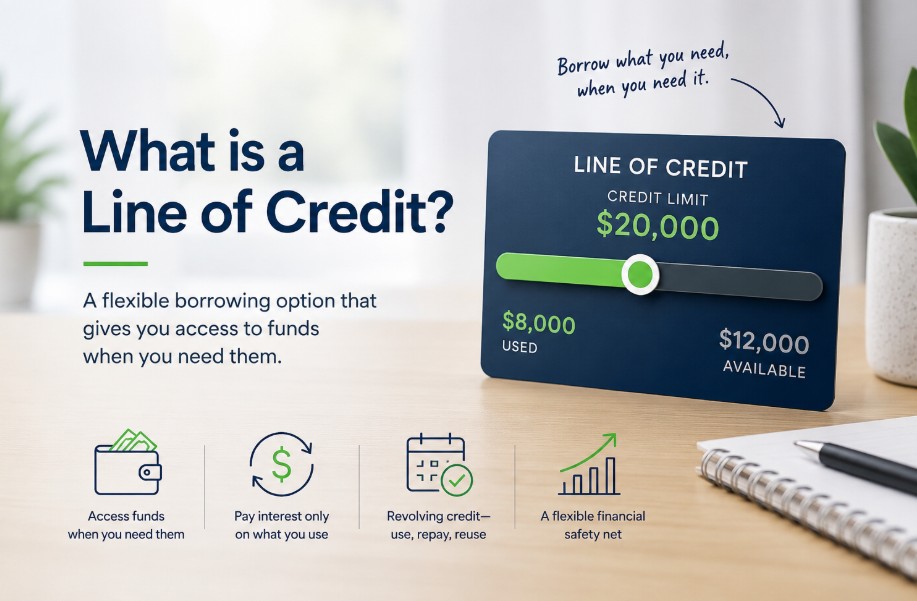
If you want to know what is a line of credit, it is a flexible, pre-approved borrowing arrangement allowing you to withdraw funds as needed up to a set limit. You only pay interest on what you draw down, making it highly adaptable for UK business cash flow.
What is a line of credit?
A line of credit is a revolving credit facility that allows a borrower to withdraw, repay, and reuse funds up to a set financial limit. In the UK, it operates similarly to an arranged bank overdraft but functions as a separate financial product, with interest accumulating exclusively on the funds actively drawn down rather than the total approved limit.
You are not obligated to take the full amount; instead, you draw funds in smaller increments, similar to an overdraft, providing ongoing liquidity for your business or personal financial requirements.
How does it work?
A line of credit works by providing a standing reserve of capital that remains idle and interest-free until a withdrawal is triggered. Once funds are drawn, interest accrues daily on that specific portion; as repayments are made to replenish the principal balance, the available credit limit automatically restores for future use.
Repayments replenish your principal. This makes the facility a permanent tool for smoothing cash flow fluctuations. However, interest expenses are rarely static.
Because UK lines of credit frequently utilise a variable interest rate linked to the Bank of England base rate, your borrowing costs can jump unexpectedly. You need a rigorous budget buffer to absorb these shifts.
What are the Types of lines of credit?
The main types of lines of credit in the UK are secured facilities (backed by physical assets like property or invoices), unsecured facilities (granted based on creditworthiness), business lines of credit (tailored for SME operational costs), and personal lines of credit (structured as high-limit emergency reserves).
Depending on your financial setup and what you intend to use the capital for, lines of credit generally fall into a few distinct categories:
- Secured Lines of Credit: Backed by an asset, such as commercial property, inventory, or invoices. Because the lender’s risk is lower, these typically offer higher borrowing limits and more competitive interest rates.
- Unsecured Lines of Credit: Do not require collateral. Eligibility relies heavily on your creditworthiness and financial history. These are faster to set up but may come with lower limits and slightly higher variable rates.
- Business Lines of Credit: Specifically structured for UK small-to-medium enterprises to manage operational agility, manage seasonal demands, or bridge invoicing gaps. If you are unsure whether your business fits this classification, you can review our guide on what is an SME to see where you stand.
- Personal Lines of Credit: Tied to an individual’s personal bank account, acting similarly to a formalised, higher-limit overdraft for personal emergency expenses.
What Are the Benefits of Lines of Credit?
The primary benefits of a line of credit include extreme financial flexibility, enhanced cost efficiency, increased supplier negotiation power, and an immediate operational safety net. It allows borrowers to access cash instantly without undergoing a new application process for every withdrawal.
When you consider the core value of this financial tool, the primary benefit is the sheer autonomy it provides.
- Financial Flexibility: Unlike a mortgage or a car loan, you do not need to re-apply for funding every time you need to make a purchase. Once the facility is approved, the funds are essentially on call.
- Cost Efficiency: You only stop paying interest the moment you repay the balance, making it highly efficient for managing short-term cash flow gaps and optimising your day-to-day working capital.
- Supplier Negotiation Power: This level of flexibility allows businesses to negotiate better terms with suppliers by paying early, provided the cost of capital from the credit line is lower than the discount offered by the supplier.
- Safety Net: It serves as a vital safeguard against timing mismatches between accounts payable and accounts receivable without depleting your primary cash reserves.
How does a line of credit affect your financial flexibility?
A line of credit enhances financial flexibility by converting passive credit approval into immediate purchasing power.
It eliminates the delays associated with traditional loan underwriting, giving businesses and individuals the agility to exploit sudden market opportunities or absorb unexpected expenses without disrupting cash flow.
The core benefit of this tool is the operational autonomy it provides. In a volatile economic landscape, waiting weeks for a traditional loan application to clear can mean missing out on vital inventory discounts or failing to meet sudden client demands.
By keeping an approved credit line sitting in parallel with your primary accounts, your financial positioning shifts from reactive to proactive.
It gives you the continuous capacity to deploy cash into your business infrastructure exactly when it makes the most financial sense.
What is the eligibility for a line of credit?
To be eligible for a line of credit in the UK, applicants must demonstrate financial stability through a strong credit report, provide 12 to 24 months of active trading history, show stable revenue turnover with clear cash flow forecasts, and hold valid UK residency or Companies House registration.
- Credit Profile: A strong business or personal credit report is vital, especially for unsecured facilities.
- Trading History: According to British Business Bank lending guidelines, providers typically require a minimum of 12 to 24 months of active, verifiable trading history.
- Revenue & Cash Flow: You must present stable turnover and clear cash flow forecasts that justify your capacity to handle flexible repayments.
- UK Residency/Registration: The business must be registered in the UK (with Companies House if a limited company), and directors must typically be UK residents. Ensure all official director names perfectly match your corporate filings; if a name change has occurred, you must submit a valid deed poll during the lender’s anti-money laundering (AML) checks.
Line of Credit vs. Traditional Loans
The main difference between a line of credit and a traditional loan is the capital access pattern and interest structure.
A line of credit provides revolving access to funds with interest charged only on what you use, whereas a traditional loan delivers a single lump sum upfront with interest charged on the total principal from day one.
Choosing the right financing option requires mapping out your precise capital requirements:
| Feature | Line of Credit (Revolving) | Traditional Term Loan (Amortising) |
| Capital Access | Revolving (drawdown increments as needed) | Single lump sum disbursed upfront |
| Interest Charges | Accrues exclusively on the amount withdrawn | Accrues on the entire principal balance |
| Repayment Terms | Variable minimum payments based on usage | Fixed monthly instalments over a set term |
| Best Used For | Ongoing working capital, seasonal gaps, emergencies | One-off capital projects, fixed machinery, infrastructure |
While an overdraft is attached directly to your current account as a safety net for daily transactions, a formal business line of credit is a separate financial product with a higher ceiling and often more favourable interest rates compared to standard or unauthorised overdraft charges.
What Is a Line of Credit for a Business Versus an Overdraft?
While both are revolving facilities, a business overdraft is directly tied to a primary current account to prevent transactional bouncing, whereas a business line of credit is an independent, standalone financial product that typically offers significantly higher borrowing limits and lower interest rates.
While frequently used interchangeably by business owners, there are technical variations between these two instruments:
- Overdrafts: Act as a built-in safety cushion linked to a transactional bank account, primarily designed to capture short-term daily ledger deficits. They can carry higher variable fees if unauthorised.
- Business Credit Lines: Often require a more thorough, dedicated underwriting process, resulting in higher capital ceilings tailored specifically for robust working capital strategies rather than day-to-day point-of-sale clearance.
How to get a line of credit?
To get a line of credit, you must assess your liquidity needs, optimise your credit profile, compile financial documents (bank statements and tax filings), compare interest rates across FCA-authorised lenders, and submit a formal application outlining your repayment capacity.
Securing optimal rates and borrowing terms requires a structured, step-by-step approach:
- Review your financial health: Ensure your cash flow forecasts justify the need for extra liquidity.
- Evaluate your credit profile: Lenders will examine your business or personal credit report to determine eligibility.
- Prepare documentation: Collate recent bank statements, tax filings, and management accounts.
- Compare FCA-authorised lenders: Assess fees, APRs, and whether the facility is secured or unsecured.
- Submit your application: Provide clear details on the intended use of the credit line.
- Set up the facility: Finalise the agreement and understand the drawdown procedure.
- Monitor usage: Track your withdrawals to ensure you remain well within your defined limit.

Why Discipline Matters?
Financial discipline is critical because a revolving credit line can easily turn into a permanent debt trap if treated as supplemental revenue rather than a borrowed liability. Continuous borrowing without a structured repayment plan leads to compounding interest and eroded credit scores.
A common pitfall flagged by commercial financial advisors is the temptation to view an open credit facility as recurring income. Because the capital scales back up upon repayment, losing sight of the underlying debt obligations is easy.
To maintain healthy financial metrics, borrowers must run a tight repayment schedule. Keeping capital revolving rather than permanently maxed out ensures that your borrowing costs stay minimal and your facility remains helpful rather than restrictive.
Final Summary
A line of credit offers a sophisticated, flexible way to manage working capital. By understanding the distinction between secured and unsecured facilities, and maintaining discipline in how you draw and repay funds, you can effectively navigate cash flow gaps.
Always ensure your lender is FCA-authorised to protect your consumer or business rights. Assess your long-term needs before committing. Ultimately, securing a line of credit means unlocking flexible working capital for UK SMEs in 2026.
FAQ
Is a line of credit considered a liability?
Yes, a line of credit is a financial liability. Even if you have not drawn down any funds, the total approved limit is a potential debt that can impact your future borrowing capacity and credit rating.
Is it a good idea to have a line of credit?
It is a good idea only if you have a specific, recurring need for working capital. It provides a valuable safety net, but it is expensive to maintain if you do not have a clear strategy for repayment.
What is the monthly payment on a £50,000 line of credit?
The monthly payment depends entirely on how much of the £50,000 you have drawn. You typically only pay interest on the amount used, plus any mandatory capital repayment stipulated in your specific agreement.
Is a line of credit better than a loan?
It depends on your goal. A line of credit is superior for recurring, unpredictable expenses, whereas a term loan is better for large, one-time purchases where you require a predictable repayment schedule.
Is it bad if I don’t use my line of credit?
Not necessarily. It can be a smart move to have it in place for emergencies. However, check your agreement, as some lenders charge annual maintenance or inactivity fees for keeping the facility open.
Is a line of credit worse than a credit card?
Not necessarily. Lines of credit often feature lower interest rates than credit cards and higher limits. However, credit cards may offer interest-free periods if you pay the balance in full, which lines of credit rarely do.
What is the main advantage of using a line of credit?
The main advantage is financial flexibility. You can access capital exactly when you need it and stop paying interest the moment you repay the balance, making it highly efficient for managing cash flow.