
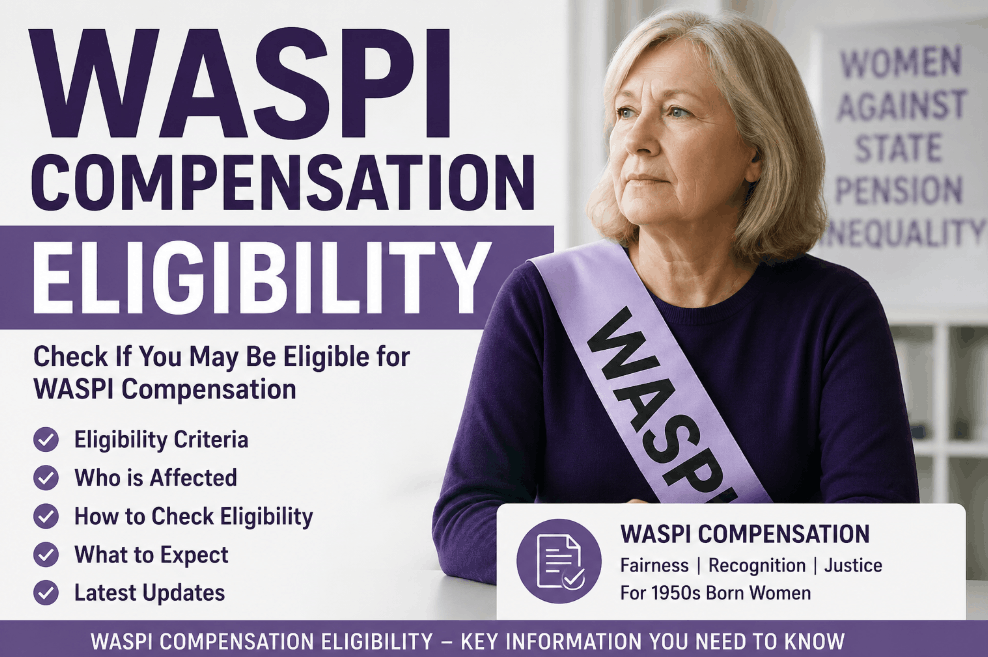
WASPI Compensation Eligibility Guide: Birth Year Charts, Payout Levels, And How To Apply In 2026
WASPI compensation eligibility primarily applies to women born between 6 April 1950 and 5 April 1960 who were affected by the lack of adequate notice regarding changes to the State Pension age.
According to the Parliamentary and Health Service Ombudsman (PHSO), these women are entitled to compensation due to maladministration by the Department for Work and Pensions (DWP).
What is the criteria for WASPI compensation eligibility?
Qualifying for a payout requires the claimant to have been born within the specific decade starting in April 1950. The Parliamentary and Health Service Ombudsman (PHSO) has identified that the Department for Work and Pensions failed to provide sufficient notice regarding the transition from age 60 to 66, leaving millions with significant financial and life-planning gaps.
These issues stem from long years of campaigning by women against state pension inequality, who contend that the lack of clear communication fundamentally undermined their retirement security.
Understanding the Grounds for WASPI Compensation
The heart of the issue is not the increase in pension age itself, but the method by which it was communicated. The 1995 Pensions Act and subsequent 2011 legislation accelerated the equalisation of pension ages between men and women.
The crux of the matter lies in the PHSO’s finding of the DWP guilty of Level 4 maladministration, suggesting that if women had been notified sooner, they could have made different financial choices. This is a quest for restorative justice rather than a challenge to the legality of the pension age increase.

Who exactly qualifies for a WASPI payout in 2026?
Eligibility is strictly defined by your date of birth. While many women feel the impact of pension changes, the Ombudsman’s report focuses specifically on those who received late or no communication during the critical transition periods.
Much of this confusion traces back to the various UK state pension age retirement changes introduced over the last few decades, which altered the financial landscape for an entire generation of women.
Eligibility Checklist:
- You were born on or after 6 April 1950.
- You were born on or before 5 April 1960.
- Your State Pension age was increased as a result of the 1995 or 2011 Pensions Acts.
- You can demonstrate that the lack of notice caused you significant injustice or financial distress.
Consider the situation of those born in 1954, who often received a letter about her pension age changing to 66 just a few years before she turned 60. This narrow window for adjustment is the primary driver for the compensation recommendations currently being debated in Parliament.
How much compensation is recommended by the Ombudsman?
The PHSO has suggested a Level 4 compensation scale, which typically ranges between £1,000 and £2,950. While the WASPI campaign initially sought Level 6 compensation (over £10,000), the current legislative focus remains on the Ombudsman’s lower recommended bracket.
Recent parliamentary discussions have centered on the likelihood of the WASPI compensation DWP £2950 recommendation being adopted as a standard benchmark for those most affected by maladministration.
PHSO vs WASPI Campaign Payout Estimates
| Feature | PHSO Recommendation (Level 4) | WASPI Campaign Request (Level 6) |
| Payout Range | £1,000 – £2,950 | £10,000+ |
| Primary Reason | Loss of opportunity/distress | Significant financial loss/hardship |
| Likelihood of Approval | High (based on report) | Low (government resistance) |
| Target Audience | All 1950s-born women | Those with proven extreme loss |
What are the steps to check WASPI compensation eligibility?
Following the release of the Stage 3 PHSO report, the process has moved from investigation to political implementation. As of 2026, there is no application form because the government has been tasked with creating a universal scheme.
Practical actions you can take:
- Verify your exact birth date falls between 6 April 1950 and 5 April 1960.
- Calculate the exact number of additional years you were required to work.
- Gather any correspondence received from the DWP between 2005 and 2015.
- Document any financial decisions made under the assumption you would retire at 60 (e.g., leaving a job or taking a loan).
- Monitor official announcements from the Department for Work and Pensions (DWP).
- Register your interest with the official WASPI campaign to receive updates on the Compensation Bill.
- Ensure your current contact details are up to date with the Pension Service.

When will the WASPI compensation be paid?
The timeline for payment remains the most significant point of contention. While the Ombudsman issued the final report in 2024, the subsequent years have been filled with parliamentary debates and budgetary reviews.
Historical precedent suggests the Treasury may delay large-scale payouts until a robust vulnerability framework is established. This ensures that those in the greatest financial need or those with failing health are prioritised. For example, some campaigners are pushing for an interim payment for women over the age of 75.
How does birth date affect WASPI compensation eligibility?
Your birth year is the ultimate gatekeeper for these claims. Because the changes were phased in, women born earlier in the 1950s experienced different notice periods than those born later.
WASPI Payout Eligibility by Birth Year
| Birth Date Range | Original Pension Age | New Pension Age | Impact Status |
| Pre-April 1950 | 60 | 60 | Not Eligible |
| April 1950 – April 1951 | 60 | 61 – 62 | Eligible (Low Impact) |
| April 1953 – April 1955 | 60 | 63 – 65 | Eligible (High Impact) |
| April 1955 – April 1960 | 60 | 66 | Eligible (Maximum Impact) |
| Post-April 1960 | 67 | 67 | Generally Not Eligible |
Is there an official WASPI compensation eligibility calculator?
Currently, there is no government-sanctioned calculator that guarantees a specific pound amount. Most online tools are impact calculators that show how many years of pension you lost, rather than how much money you will definitely receive.
When reviewing decisions from the DWP, it is clear that they rely on their internal records of when letters were dispatched. If you moved house frequently and didn’t update the DWP, they may argue that the attempt to notify was sufficient.
What happens if an eligible woman has passed away?
A critical concern remains the number of eligible women who pass away each year without seeing justice. In practice, legal representatives and family members have asked if Posthumous Claims are possible.
The current PHSO recommendations suggest that the compensation should be payable to the estate of the deceased, provided they met the eligibility criteria while alive.

Final Recommendations
Legislative progress is reaching a decisive point in 2026. While the eligibility criteria are clearly defined by birth dates (1950–1960), the actual distribution of funds requires a Parliamentary vote.
We recommend that all impacted individuals keep a file of their work history and any life-event documents from the years they expected to retire. This preparation ensures that if the Level 4 payout requires proof of impact, you are ready to respond immediately.
FAQ about WASPI compensation eligibility
Do I need to sign up with a solicitor to get compensation?
No. If a government compensation scheme is launched, it will be accessible directly through the DWP or a dedicated portal. Avoid no-win-no-fee firms for this specific issue.
Is the compensation affected by my current income?
The PHSO recommendation is based on maladministration and distress, not a means-tested benefit. Current guidance suggests a non-means-tested, flat-rate payment regardless of your current wealth.
What if I was born in 1961?
Currently, the Ombudsman’s findings are strictly limited to the cohorts impacted by the specific notice failures involving 1950s women. 1961 births are generally excluded.
Is the payout taxable?
Usually, compensatory payments for distress and inconvenience are not subject to Income Tax, though final Treasury guidance for this specific scheme is still pending.
Will I get back-dated pension payments?
No. The compensation is for maladministration, not a refund of the pension years lost. It is a one-off payment, not a retrospective pension salary.
Do I need my old NI records?
The DWP already holds your National Insurance and birth records. You will likely only need to provide proof of identity once the scheme opens.
Can men born in the 1950s claim?
No. The WASPI claim is specific to the transition of the female State Pension age which was previously 60. Men’s pension age was already 65.