Personal Allowance 2024/25: Complete UK Guide to Tax Bands, Taper Rules, and Tax Codes
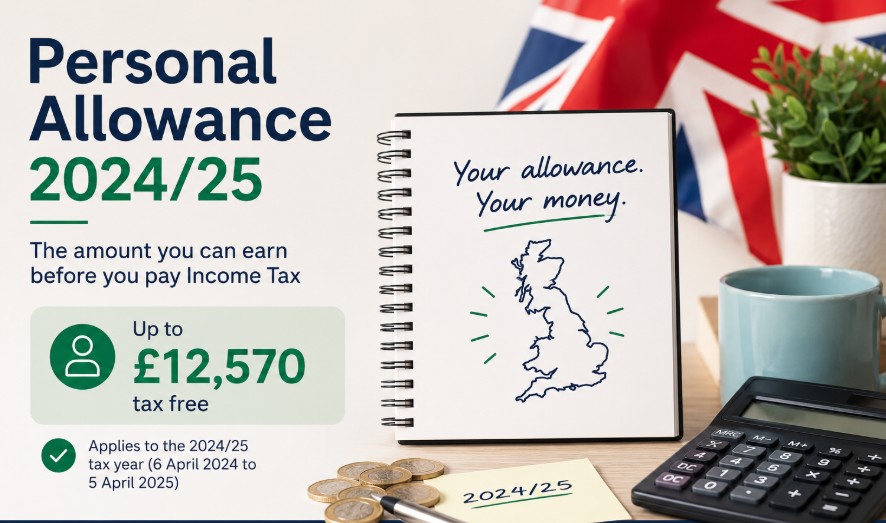
The UK Personal Allowance 2024/25 tax year is £12,570, allowing individuals to earn up to this amount completely tax-free. Administered by HM Revenue & Customs, this threshold remains frozen until April 2028, capping the basic rate boundary at £50,270 and triggering a tapering reduction for earnings over £100,000.
Key Takeaways
- The standard UK tax-free allowance remains fixed at £12,570 across England, Wales, Northern Ireland, and Scotland for the 2024/25 tax year.
- Income tax thresholds remain frozen until April 2028, causing fiscal drag as rising wages push more taxpayers into higher income tax brackets.
- Individual personal allowances reduce by £1 for every £2 earned above £100,000, reaching zero once adjusted net income hits £125,140.
- Transfers of money or assets between legally married UK spouses or civil partners are completely tax-free and exempt from Capital Gains Tax.
What is the Personal Tax Allowance?
The Personal Allowance is the specific amount of gross income an individual can earn each UK tax year without paying any Income Tax.
While discussions around an HMRC tax-free allowance increase remain popular, the standard Personal Allowance is currently set at £12,570 for 2024/25, applying automatically to salary, self-employment, pensions, and property income.
- Standard Amount: For the 2024/25 tax year, the standard Personal Allowance is £12,570.
- Scope: It applies to most sources of earned and unearned income, including employment salary, self-employment profits, pensions, and rental income.
- Eligibility: Most UK residents receive the allowance automatically through their tax code (e.g., 1257L) or via their Self Assessment tax return.
How Will the Personal Allowance Impact Your Income Tax?
Your Personal Allowance directly lowers your total tax burden by shielding the first £12,570 of your annual income from Income Tax. Income Tax is charged only on earnings exceeding this £12,570 threshold, which acts as the foundation for setting all subsequent tax bands.
- Reduces Your Overall Taxable Income: Income Tax is charged only on the money you earn above your Personal Allowance. For instance, if you earn £30,000 in a year, you pay 0% tax on the first £12,570 and basic rate tax (20%) only on the remaining £17,430.
- Sets Key Tax Band Boundaries: The Personal Allowance is added directly onto tax bands to set total earnings thresholds:
- Basic Rate (20%): Applies from £12,571 up to £50,270 (£12,570 allowance + £37,700 basic band).
- Higher Rate (40%): Applies to earnings between £50,271 and £125,140.
- Creates Fiscal Drag When Frozen: Because the Personal Allowance is legally frozen at £12,570 through April 2028, rising wages gradually push more of your income into higher tax brackets over time, a process known as fiscal drag.
- Tapers Off for High Earners (£100,000+): If your adjusted net income passes £100,000, your allowance decreases by £1 for every £2 earned above that mark, creating an effective 60% marginal tax rate between £100,000 and £125,140.
What Is the Standard UK Personal Allowance 2024/25?
The standard UK Personal Allowance 2024/25 is £12,570. This grants an operational tax-free baseline of £1,048.33 per month or £241.73 per week for Pay As You Earn (PAYE) employees and self-employed individuals across the UK.
According to official guidance on GOV.UK Income Tax rates, the £12,570 baseline gives Pay As You Earn (PAYE) employees an operational tax-free allowance of £1,048 per month or £242 per week.
| Tax Year | Standard Personal Allowance | Basic Rate Threshold | Higher Rate Threshold | Policy Status |
| 2023/24 | £12,570 | £12,571 – £50,270 | £50,271 – £125,140 | Historical Baseline |
| 2024/25 | £12,570 | £12,571 – £50,270 | £50,271 – £125,140 | Confirmed Policy |
| 2025/26 | £12,570 | £12,571 – £50,270 | £50,271 – £125,140 | Legally Frozen |
| 2026/27 | £12,570 | £12,571 – £50,270 | £50,271 – £125,140 | Legally Frozen |
While the Income Tax Personal Allowance is £12,570, the Class 1 National Insurance Primary Threshold is aligned at £12,570 per year (£242 per week) for the 2024/25 tax year, streamlining payroll deductions for UK workers.
What Are the UK Income Tax Rates and Bands for 2024/25?
In England, Wales, and Northern Ireland, UK Income Tax rates for 2024/25 are divided into four tiers: Personal Allowance (0% up to £12,570), Basic Rate (20% from £12,571 to £50,270), Higher Rate (40% from £50,271 to £125,140), and Additional Rate (45% over £125,140).
Income Tax Breakdown (England, Wales & Northern Ireland)
| Tax Rate Tiers | Taxable Annual Income Band | Statutory Tax Rate |
| Personal Allowance | Up to £12,570 | 0% |
| Basic Rate | £12,571 to £50,270 | 20% |
| Higher Rate | £50,271 to £125,140 | 40% |
| Additional Rate | Over £125,140 | 45% |
Scottish Income Tax Divergence
Scottish taxpayers receive the same £12,570 UK Personal Allowance baseline but pay Income Tax under six devolved Scottish tax bands ranging from 19% to 48% on non-savings and non-dividend income.
- Starter Rate (19%): £12,571 to £14,876
- Basic Rate (20%): £14,877 to £26,561
- Intermediate Rate (21%): £26,562 to £43,662
- Higher Rate (42%): £43,663 to £75,000
- Advanced Rate (45%): £75,001 to £125,140
- Top Rate (48%): Over £125,140
In practice, reviewing payroll records shows that an employee in Glasgow earning £52,000 pays a higher effective rate of Income Tax than an employee on the exact same salary in Manchester, despite both receiving the identical £12,570 Personal Allowance baseline.
How Does the Personal Allowance Work for High Earners Over £100,000?
High earners face a statutory reduction in their Personal Allowance once their adjusted net income passes £100,000. Under HMRC rules, an individual loses £1 of Personal Allowance for every £2 of adjusted net income earned above the £100,000 mark.
Personal Allowance Reduction = (Adjusted Net Income – £100,000) / 2
When an individual’s adjusted net income reaches £125,140, the Personal Allowance is reduced to zero.
Understanding the 60% Effective Tax Trap
The 60% tax trap occurs on UK income between £100,000 and £125,140. Within this band, every extra £100 earned incurs £40 in Higher Rate tax plus £20 in added tax from the lost £50 Personal Allowance, creating a 60% marginal tax rate before National Insurance.
- Gross Income Increase: +£100
- 40% Higher Rate Tax Direct Deduction = £40
- Loss of £50 Personal Allowance (Taxed at 20%) = £20
- Combined Effective Tax = £60 (60% Effective Rate)
Mitigating the Taper Mechanism
To mitigate the 60% marginal tax trap, high earners frequently execute gross pension contributions or enter into workplace salary sacrifice arrangements (such as cycle-to-work or EV schemes) to lower their Adjusted Net Income back down to £100,000.
What Does Your Tax Code Mean on Your Payslip?
A tax code on your UK payslip tells your employer or pension provider how much tax-free income you are entitled to under PAYE. The numbers represent your tax-free allowance divided by 10, while the letters indicate your specific tax status.
- 1257L: The standard tax code for most employees receiving the full £12,570 allowance.
- S1257L: Indicates that income is taxed under Scottish Income Tax rates, while keeping the standard £12,570 tax-free baseline.
- BR: Stands for Basic Rate; the full salary from this employer is taxed at 20% without any tax-free allowance applied.
- K Codes: Used when taxable benefits in kind (such as company cars) or unpaid tax from previous years exceed the total tax-free allowance.
How Can You Transfer Tax Allowances or Gift Money Tax-Free?
You can transfer unused Personal Allowance to a spouse via the UK Marriage Allowance, or make tax-free transfers of cash and assets to a legally married partner without incurring Income Tax or Capital Gains Tax under statutory HMRC exemptions.
Marriage Allowance Rules
The Marriage Allowance permits an individual who earns less than the £12,570 Personal Allowance to transfer up to £1,260 of their unused allowance to their spouse or civil partner.
To qualify, the receiving partner must be a basic-rate taxpayer (earning between £12,571 and £50,270). For the 2024/25 tax year, this transfer yields a direct tax reduction of up to £252.
Gifting Money to a Spouse or Family Member
Taxpayers frequently inquire whether transferring money to a spouse or family member incurs an immediate tax penalty in the UK.
- Gifts Between Legally Married Spouses / Civil Partners: You can give cash, investments, or property to your legally married spouse or civil partner without incurring Income Tax or Capital Gains Tax. Spousal transfers are completely exempt from tax under UK law.
- Gifts to Children or Other Relatives: Parents can gift cash (such as £20,000) to children without incurring Income Tax. However, for Inheritance Tax (IHT) purposes, these transfers fall under the Potentially Exempt Transfer (PET) rule. The gift becomes fully exempt from IHT provided the donor survives for 7 full years after making the transfer.
How to Calculate Your Personal Allowance and Tax Burden?
Calculating your total UK tax liability for 2024/25 requires a four-step process: calculate total gross income, deduct eligible reliefs (pensions and donations), apply the £100,000 Personal Allowance taper, and allocate remaining income across tax tiers.
- Calculate Gross Taxable Income: Add up all income sources, including employment earnings, self-employed profits, rental income, and pension payments.
- Deduct Allowable Reliefs: Subtract gross pension contributions and eligible charitable donations to arrive at your adjusted net income.
- Apply the Taper Rule: If adjusted net income exceeds £100,000, reduce the standard £12,570 Personal Allowance by £1 for every £2 over the threshold.
- Allocate Net Income Across Tax Tiers: Apply 0% to earnings covered by the Personal Allowance, 20% to basic rate earnings, 40% to higher rate earnings, and 45% to earnings exceeding £125,140.
Additional UK Tax-Free Allowances (2024/25)
| Additional Tax-Free Allowances | Statutory Limit (2024/25) | Eligibility Criteria |
| Personal Savings Allowance | £1,000 (Basic) / £500 (Higher) | Savings interest threshold to protect against unexpected HMRC savings tax bills |
| Dividend Allowance | £500 | Tax-free dividend threshold for all taxpayers |
| Trading Allowance | £1,000 | Gross self-employment or casual side-income |
| Property Allowance | £1,000 | Gross income derived from residential property |
Conclusion
The UK Personal Allowance means a fixed £12,570 tax-free income threshold for UK taxpayers in the 2024/25 tax year. While this baseline remains frozen through 2028, rising wages and Scottish tax divergence mean actively managing your allowances is essential to avoid overpaying.
To optimize your personal position for the current tax year:
- Review your latest payslip to confirm that your tax code accurately shows 1257L (or S1257L in Scotland).
- If your earnings fall below £12,570 and your spouse is a basic rate taxpayer, submit an online application for Marriage Allowance to transfer £1,260 of unused allowance.
- For earnings between £100,000 and £125,140, evaluate workplace pension schemes or salary sacrifice options to bring adjusted net income down to maintain your Personal Allowance.
Disclaimer: This guide is for informational purposes only and does not constitute professional tax or financial advice; consult HMRC or a qualified tax advisor for personalized guidance.
FAQ
What is the personal tax allowance 2024/25 in the UK according to GOV.UK?
The standard personal allowance is £12,570. It allows UK taxpayers to earn up to this amount in income without paying Income Tax during the 2024/25 tax year.
How much can I earn before I pay 40% tax in the UK?
You begin paying the 40% higher rate on earnings above £50,270. This threshold incorporates your standard £12,570 personal allowance combined with the £37,700 basic rate tax band.
What is the tax-free personal allowance projection for 2025/26 and 2026/27?
The UK Personal Allowance is legally frozen at £12,570 until April 2028. Consequently, the baseline threshold remains fixed at £12,570 for both the 2025/26 and 2026/27 tax years.
Can I give money to my wife tax-free in the UK?
Yes, gifts of cash or assets between legally married spouses or civil partners living together are completely tax-free and exempt from Income Tax and Capital Gains Tax under UK tax law.
How does the £100,000 personal allowance reduction work?
Your £12,570 allowance reduces by £1 for every £2 of adjusted net income over £100,000. The personal allowance reduces to zero once your income reaches or exceeds £125,140.
What happens if I have an S1257L tax code on my payslip?
An S1257L tax code means you receive the standard £12,570 tax-free allowance, but your remaining income is taxed under Scotland’s devolved income tax bands.
Is dividend income covered by the Personal Allowance?
Yes, if your taxable employment or self-employment income does not fully absorb your £12,570 Personal Allowance, the remaining balance can cover dividend earnings before the separate £500 Dividend Allowance applies.