
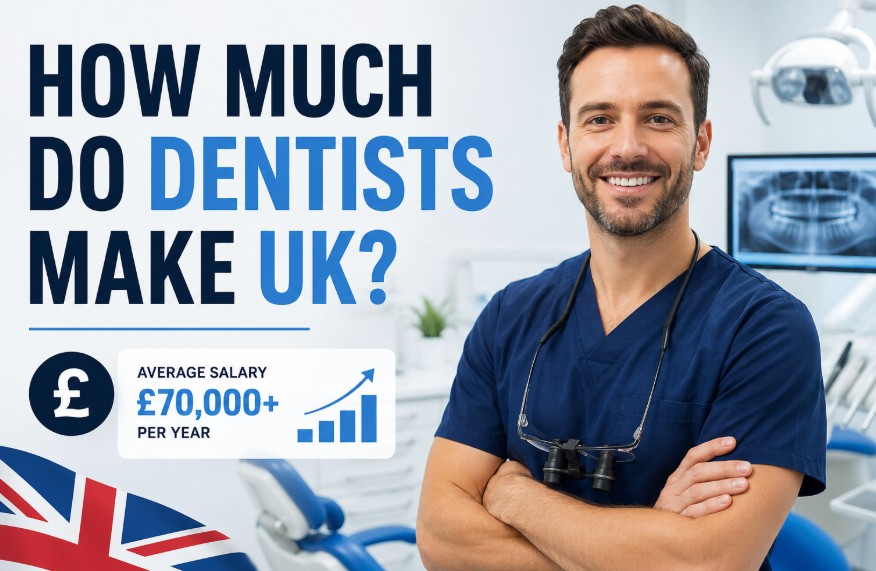
How Much Do Dentists Make in the UK? NHS vs Private Salaries and SME Practice Profits
How much do dentists make in the UK depends heavily on career stage, geographic location, and NHS versus private practice models.
According to industry earnings reports, average gross pay ranges from £68,000 to £75,000 annually for mid-level clinicians, while private practitioners frequently exceed £120,000.
Key Takeaways
- Based on official NHS Digital and trade association data, the average full-time dentist salary in the UK sits between £68,000 and £75,000 per year.
- NHS foundation dentists start on a mandatory training salary tracked by NHS Employers of approximately £38,472 to £40,776 per year.
- Private practice ownership and fee-per-item models offer significantly higher earning ceilings, with principal dentists often grossing upwards of £120,000 to £170,000+.
- Geographic location creates substantial variance, with London commanding an average salary premium roughly 30% higher than regional UK averages.
How much do dentists make a year?
The average salary for a dentist in the UK ranges from £68,000 to £75,000 per year for standard mid-level practitioners, while entry-level foundation dentists start at £38,472 to £42,408.
| Career Stage / Role | Average Gross Annual Salary | Employment Model |
| Foundation Dentist (Year 1) | £38,472 – £42,408 | Fixed NHS Training Contract |
| Early Career Associate (2–5 years) | £50,000 – £62,000 | Mixed NHS / Private Contract |
| Mid-Level Practitioner | £68,000 – £75,000 | Established NHS / Private Split |
| Senior Associate / Specialist | £88,000 – £112,000 | Senior NHS / Private Practice |
| Practice Principal / Director | £120,000 – £170,000+ | Private Enterprise Ownership |
Total earnings vary significantly based on experience, NHS versus private practice splits, and business ownership, with senior associates and practice principals frequently earning £120,000 to £170,000+ annually.

Why do independent dental practices struggle with underfunded NHS contracts?
Independent dental practices face severe financial strain under current NHS contracts because fixed Unit of Dental Activity (UDA) values have failed to keep pace with clinical inflation, staff wage increases, and material costs.
When reviewing financial statements, practice owners often find that the cost of delivering NHS care exceeds the unitary reimbursement rate provided by integrated care boards.
This dynamic forces practice principals to subsidize public care delivery out of private revenue streams or risk operating at a deficit.
Compliance overheads regulated by the Care Quality Commission (CQC) and standards set by the General Dental Council add fixed operational costs. Managing these regulatory burdens leaves slim margins unless balanced with commercial income. Understanding these limits is critical for practice viability.
Do dentists receive performance bonuses for completing more treatments?
No, Salaried NHS dentists rarely receive performance bonuses, whereas self-employed associate dentists operate on percentage-based production splits, typically earning 40% to 50% of the gross revenue they generate for the clinic.
- Fixed-Salary NHS Contracts: Clinicians employed directly by community dental services receive a flat pay scale determined by Agenda for Change bands without direct commission incentives.
- Associate Production Models: Self-employed associates in mixed practices are paid a fixed percentage of the billings or UDAs they complete, directly tying clinical output to take-home pay.
- Private Fee-per-Item Commissions: High-end restorative and cosmetic treatments offer higher absolute margins, meaning high production volumes translate directly into substantial monthly earnings growth.
Production-based remuneration directly links clinical output to individual take-home pay.
Can a growing dental business still make money with NHS contracts?
Yes, wholly NHS-reliant practices face severe margin compression. Modeling the financial transition from a 100% NHS contract to a mixed private-patient plan requires a structured approach to evaluate chair utilization, patient conversion rates, and cash flow stability.
As clinical overheads climb, relying exclusively on state contracts restricts the financial agility required to invest in advanced dental technology or competitive staff wages.
- Diversify revenue streams by introducing private hygienist clinics and cosmetic options.
- Cap NHS commitments to free up clinical chair time for private fee-per-item treatments.
- Audit material and laboratory costs quarterly to prevent supplier inflation from eroding margins.
- Restructure staff remuneration models to align with private billing performance.
Strategic portfolio diversification away from state-funded caps protects small business cash flow.
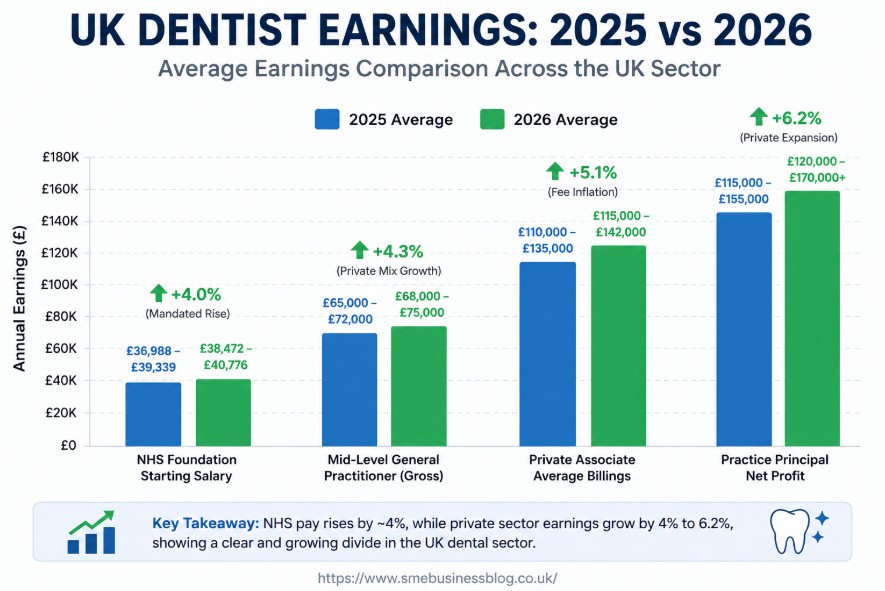
How do dentist earnings in 2025 and 2026 compare across the UK sector?
UK dentist earnings in 2025 and 2026 reflect a growing structural divide, as static state-funded NHS contracts contrast sharply with robust growth in private practice billings.
While baseline NHS foundation pay experienced mandated government uplifts of approximately 4%, private practice fee inflation and rising consumer demand for cosmetic and restorative treatments pushed average private practitioner gross earnings up by 4% to 6.2% year-on-year.
| Financial Metric | 2025 Average UK Sector Benchmark | 2026 Average UK Sector Benchmark | Year-on-Year Variance |
| NHS Foundation Starting Salary | £36,988 – £39,339 | £38,472 – £40,776 | +4.0% (Mandated Rise) |
| Mid-Level General Practitioner (Gross) | £65,000 – £72,000 | £68,000 – £75,000 | +4.3% (Private Mix Growth) |
| Private Associate Average Billings | £110,000 – £135,000 | £115,000 – £142,000 | +5.1% (Fee Inflation) |
| Practice Principal Net Profit | £115,000 – £155,000 | £120,000 – £170,000+ | +6.2% (Private Expansion) |
Macroeconomic shifts highlight the growing divergence between state-funded and privately financed dental enterprises.
How can an independent dental practice compete with corporate dental groups on salary?
Independent practices attract top-tier associates and talent similar to a competitive Business Development Manager Salary by offering flexible working hours, higher percentage production splits, mentorship programs, and local clinical autonomy rather than rigid corporate quotas.
While corporate Dental Service Organisations (DSOs) leverage massive purchasing power and centralized marketing, independent SMEs win talent through workplace culture and tailored remuneration packages.
- Offer enhanced percentage splits on private treatments (exceeding standard 50% thresholds).
- Provide funding support for postgraduate clinical specialisms and professional development.
- Maintain complete clinical freedom over material selection and appointment scheduling lengths.
- Foster a collaborative, non-corporate practice culture that prioritizes staff well-being.
Workplace culture and attractive revenue-sharing agreements help independent SMEs secure skilled practitioners.
What is the income difference between independent practice owners and corporate employee dentists?
Independent practice owners shoulder business risk but capture full equity growth and net commercial profits (£120,000 to £170,000+), whereas corporate employee dentists receive stable base salaries with structured performance bonuses but limited profit upside.
When reviewing decisions on career structure, a common pattern is that clinicians transition from corporate employment to practice ownership once they accumulate the capital required for commercial property acquisition and equipment financing.
Evaluating business ownership versus employment models determines long-term wealth accumulation for dental professionals.
Comparison of UK Dental Roles
| Role / Model Category | Annual Gross Earnings | Monthly Gross / Net Pay | Hourly Rate / Pay Structure | Key Operational Insights |
| Independent Practice Owner | £120,000 – £170,000+ |
£10,000 – £14,166+ gross(Net profit varies) |
Equity & Commercial Profits | Assumes full business risk, captures total commercial equity growth, and scales income via private enterprise ownership. |
| Corporate Employee Dentist | £68,000 – £95,000 |
£5,666 – £7,916 gross(Stable monthly cash flow) |
Stable base + structured bonuses | Offers predictable income and lower administrative burden, but limits long-term profit upside compared to private ownership. |
| Standard Mid-Level Dentist (UK Average) | £75,000 |
£6,250 gross(~£4,317 net take-home) |
£36.00 – £38.40 gross per hour | Standard benchmark across mixed practices, subject to UK income tax, National Insurance, and pension contributions. |
| Freelance Locum Dentist | £90,000 – £140,000 (pro-rata) | Variable based on days worked | £45.00 – £75.00+ gross per hour | Premium hourly rates designed to offset the lack of holiday pay, sick leave entitlements, and job security, where practitioners often calculate compensation strategies similar to guidelines on how to work out pro rata salary. |
| Dental Hygienist | £35,000 – £45,000 | £2,916 – £3,750 gross | £28.00 – £40.00 gross per hour | Direct-access hygiene services act as a major commercial driver, maximizing chair utilization and periodontal care. |
| Fully Private Dentist / Specialist | £120,000 – £200,000+ | £10,000 – £16,666+ gross | Fee-per-item commission/split | Eliminates NHS contract caps to monetize high-margin cosmetic, orthodontic, and implant procedures. |
Strategic Outlook: While corporate employment offers financial stability and structured progression, transitioning to independent practice ownership or a fully private fee-per-item model remains the primary wealth-accumulation pathway for dental professionals.
Conclusion
Navigating dentist remuneration requires balancing the operational stability of NHS frameworks against the high-yield growth of private practice ownership. Business owners must continuously audit overhead ratios, regulatory compliance costs, and staffing models to protect profitability.
Disclaimer: Figures and salary estimates provided are for informational purposes only and may vary based on individual experience, regional location, and changing NHS or private contract structures.
FAQs
What is the average salary of a dentist in the UK?
The average gross salary for a mid-level dentist in the UK ranges between £68,000 and £75,000 per year, varying based on experience, NHS contract commitments, and private patient volume.
Do private dentists earn more than NHS dentists?
Yes. Wholly private dentists and those running mixed practices with high private patient ratios generally earn substantially more than dentists working exclusively under fixed NHS UDA contracts.
How much does a newly qualified dentist make in the UK?
A newly qualified dentist undertaking mandatory NHS Foundation Training earns a fixed starting salary between £38,472 and £40,776 for their first year.
What are the highest-paying areas for dentists in the UK?
London and the surrounding South East region offer the highest average salaries and private fee ceilings, frequently exceeding £90,000 to £120,000 for experienced clinicians.
Are NHS dental pensions still considered valuable?
Yes. Despite increases in contribution tiers and limits comparable to standard HMRC Salary Sacrifice Limit regulations, the NHS Pension Scheme provides a defined-benefit structure that offers long-term security unmatched by most private commercial alternatives.
How do dental specialists compare to general practitioners on pay?
Specialists such as orthodontists and oral surgeons command higher average earnings, often ranging from £100,000 to £180,000+, due to the advanced clinical training required.
What impact do laboratory fees have on take-home pay?
Laboratory fees for crowns, bridges, and aligners are typically deducted directly from gross billings before associate percentage splits are calculated, reducing net clinical take-home pay.
Can part-time dentists maintain a high hourly equivalent?
Yes. Part-time clinicians focusing exclusively on private fee-per-item days often maintain high hourly returns by optimizing chair-side efficiency and skipping low-margin NHS units.