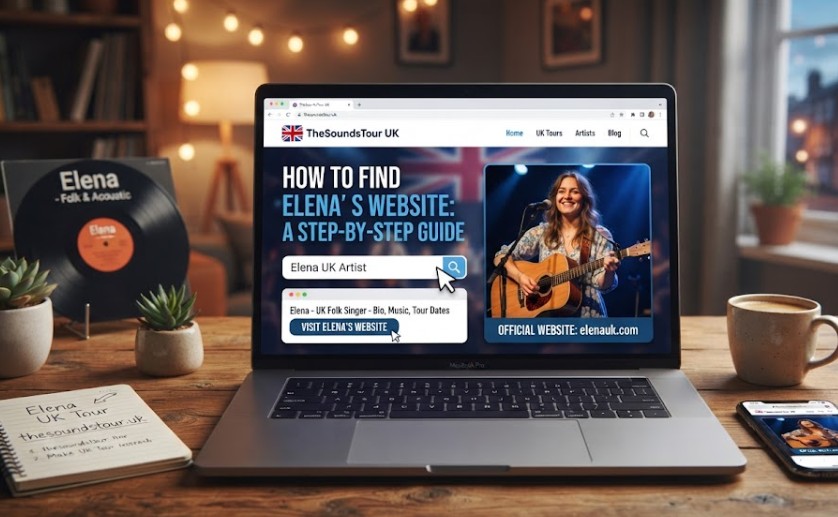
How to Find Elenas Website on TheSoundsTour Using Advanced Search Operators and Directories
Locating Elena’s official website or creator profile across complex content networks requires targeted search operators, domain verification checks, and structured directory navigation. By utilizing precise query strings and examining root metadata, researchers can quickly bypass generic aggregator pages to find verified author archives.
Key Takeaway
- Navigating complex digital directories requires precise keyword filters and designated search strings.
- Understanding URL structures prevents broken links when tracing specific online content creators.
- Official domain verification standards protect researchers from unverified mirror networks.
- Structured web asset tracking improves efficiency across multi-author publishing platforms.
What is the Structure of The Sounds Tour Platform?
The platform operates as a multi-category content network housing various contributor profiles, making targeted directory searches essential for locating individual creator pages.
Modern digital content repositories organize their assets through hierarchical taxonomy structures, grouping specialised articles into distinct folders such as buying guides, instructional how-tos, and author-specific portfolios.
When analysing these environments, understanding the underlying directory layout prevents users from getting lost in generic landing pages or unrelated category archives.
Domain indexing patterns governed by the World Wide Web Consortium (W3C) dictate how servers organize internal file paths. Meanwhile, semantic schemas mapped via Schema.org help search engines accurately categorise author entities.
recognising this architecture allows researchers to bypass broad landing pages and jump straight into targeted content clusters.
Navigating a multi-tiered publishing platform becomes significantly faster once the underlying menu taxonomy and category URL patterns are mapped out.
How Do Digital Researchers Use Search Operators to Locate Specific Contributor Portfolios?
Deploying exact-match query filters and site-specific operators provides the fastest route to specific author sections within complex publishing architectures.
When standard search bars return overly broad results, incorporating advanced search modifiers isolates precise pages associated with a specific writer or project.
- Search Query Formula: site:thesoundstour.com
- Elena Alternative String: site:thesoundstour.com author elena guides
Incorporating search protocols overseen by Google Search Console indexing data structures reveals how URLs are exposed to the public web. By commanding search engines to scan only the target domain, researchers eliminate external noise and focus entirely on indexed subdirectories.
- Open a preferred search engine in the browser window.
- Type the core operator command using site:thesoundstour.com.
- Add the target creator name or keyword in quotation marks for exact matching.
- Review the resulting URL pathways for distinct author or guide folders.
- Filter out commercial product pages or unrelated equipment roundups.
- Click through to the deep-linked page to verify content ownership.
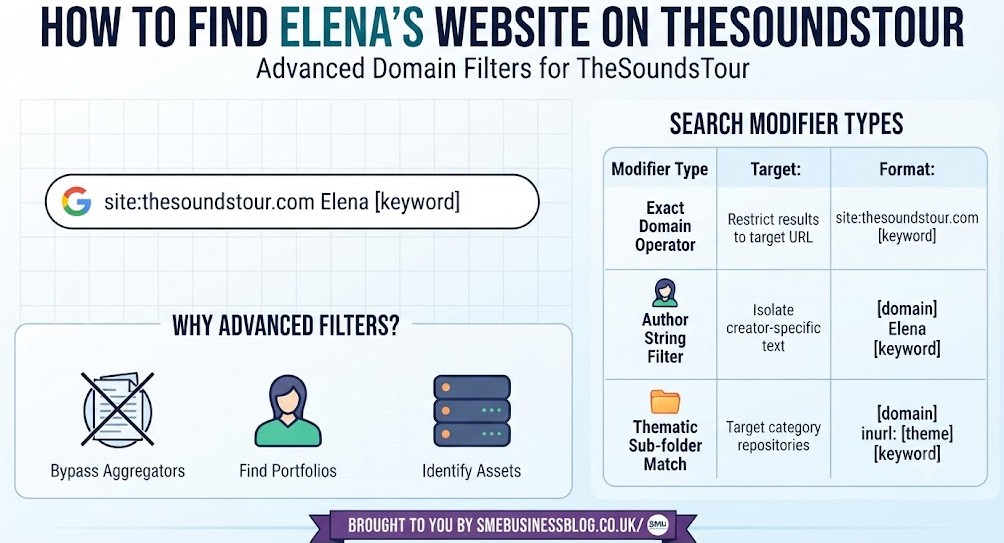
How to Find Elenas Website on TheSoundsTour Using Advanced Domain Filters?
Combining operator strings with precise modifier terms bypasses generic aggregator pages to surface deep-linked author portfolios directly.
Because multiple third-party syndication sites frequently reference popular creator names, utilizing specific modifier tags ensures that search queries lock onto primary publishing assets rather than duplicate mirrors.
Applying structural criteria aligned with Schema.org metadata standards and semantic web indexing rules allows automated crawlers to surface accurate author association tags.
| Search Modifier Type | Primary Operational Target | Recommended Application Format |
| Exact Domain Operator | Restricts results strictly to the target URL | site:thesoundstour.com [keyword] |
| Author String Filter | Isolates creator-specific text strings | [domain] author Name |
| Thematic Sub-folder Match | Targets specific category repositories | [domain] inurl: guides [term] |
When standard navigation menus obscure specific contributor profiles, adding thematic keywords such as guides, audio, or reviews next to the creator name narrows the results down to the exact sub-domain or folder hosting the desired material.
How Can Digital Auditors Verify Official Web Domains and Asset Authenticity?
Cross-referencing registration records with governing domain registries ensures that users land on authentic creator portals rather than secondary aggregators.
In an era where digital content is frequently mirrored or summarised across unrelated blogging networks, confirming the legitimacy of a web asset protects researchers from misleading information.
Integrating domain verification standards set by the Internet Corporation for Assigned Names and Numbers (ICANN) and guidelines from the UK Intellectual Property Office provides a robust framework for establishing digital provenance.
Auditors examine SSL certificates, publishing history timestamps, and official contact transparency pages to confirm that a given portal represents an authorised creator distribution point.
- Check the official security certificate details via browser inspection tools.
- Review the About and Contact disclosures for verifiable organisational links.
- Cross-reference historical domain registration data where ownership transparency is required.
- Inspect inbound link profiles to see if major industry authorities reference the platform.
What Compliance and Safe Browsing Protocols Govern Multi-Tier Publishing Directories?
Adhering to standard web safety frameworks protects researchers from tracking anomalies while navigating extensive content repositories.
Exploring unfamiliar digital directories or third-party content platforms requires an awareness of data privacy standards, secure hypertext transfer protocols, and transparent user tracking policies.
Referencing regulatory oversight from the Information Commissioner’s Office (ICO) and security frameworks established by the Open Worldwide Application Security Project (OWASP) ensures that web exploration remains secure and compliant with modern data protection standards.
Safe browsing habits, such as avoiding unverified script downloads and verifying URL integrity, safeguard professional research sessions against malicious redirects.
Maintaining strict digital hygiene while exploring specialised web directories prevents exposure to tracking scripts and unverified redirection chains.

Conclusion
Locating specific creator websites across complex digital publishing networks requires a systematic approach combining advanced search operators, domain verification checks, and structured directory navigation.
By bypassing generic search habits and employing precise query modifiers, researchers and business auditors can securely access verified digital assets.
Next steps include bookmarking verified portal structures, using the official site search functions for deep-archive exploration, and maintaining strict adherence to secure browsing protocols throughout all web research activities.
FAQs
What is The Sounds Tour platform primarily focused on?
The platform primarily serves as an informational web resource covering specialised audio equipment, buying guides, and technical insights, as well as contributor-led content.
Why is finding specific author pages difficult on content directories?
Complex menu hierarchies, frequent content updates, and external aggregator mirroring often obscure deep-linked creator portfolios within search engine indexes.
How do search operators improve web navigation efficiency?
Search operators restrict search engine results to specific domains or exact text strings, eliminating irrelevant external pages and saving time.
Are third-party mentions reliable for finding official creator websites?
No, third-party references frequently point to duplicate or mirror sites. Making direct domain verification via official links is always essential.
What role do metadata schemas play in website discovery?
Metadata schemas help search engine crawlers understand page structures, author identities, and content hierarchies more accurately.
How can users verify if a web domain is secure?
Users can inspect browser security certificates, check for HTTPS encryption protocols, and review transparent contact pages.
What steps should be taken if a target web page appears broken?
Researchers can check cached search engine versions or utilise alternative directory paths to locate updated resource URLs.