Proven Excuses to Get Out of Work: UK Rights, Self-Certification & Workplace Guidelines
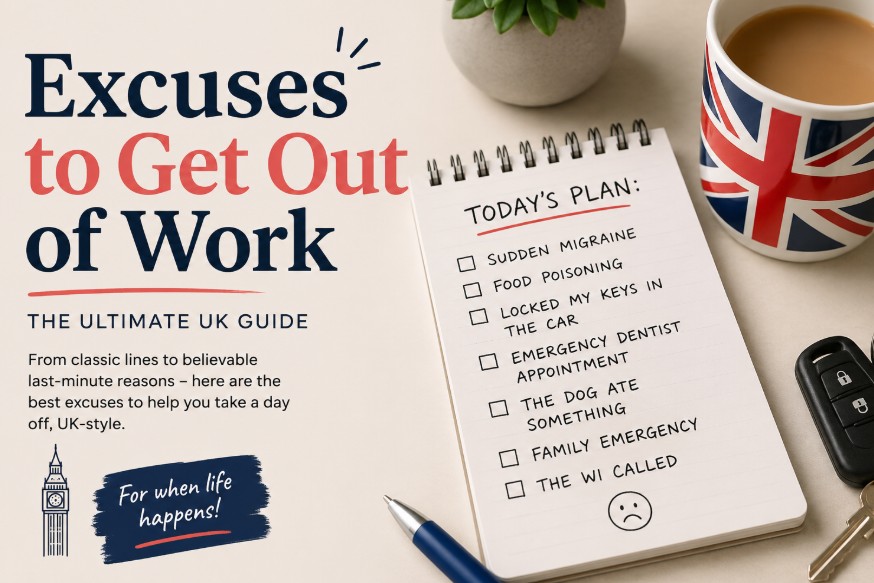
The most believable excuses to get out of work on short notice in the UK are sudden acute illnesses (gastroenteritis, severe migraines), home emergencies (burst pipes, gas leaks), and emergency dependent care (protected under Section 57A of the Employment Rights Act 1996).
UK employees can legally self-certify for sickness for up to 7 consecutive calendar days without a doctor’s fit note.
Key Takeaways
- UK workers can legally self-certify for sickness absence up to seven consecutive calendar days before requiring an official fit note.
- Section 57A of the Employment Rights Act 1996 permits unpaid statutory time off to manage urgent emergencies involving dependants.
- Falsifying reasons for absence risks formal disciplinary procedures under gross misconduct provisions outlined in UK employment law.
- Providing prompt notice via official communication channels preserves professional trust and ensures compliance with workplace absence policies.
What Does UK Employment Law Say About Calling In Sick?
Under UK law, employees do not need a GP fit note for short-term sickness lasting 7 calendar days or less. Sickness pay eligibility begins under Statutory Sick Pay (SSP) guidelines or employer-specific sick pay schemes once reporting criteria are met.
Understanding UK Self-Certification Regulations
UK guidelines state that employees can self-certify for sickness absences lasting up to seven consecutive calendar days, including weekends. Official GP fit notes are required only if the illness extends beyond seven consecutive days.
| Sickness Duration | Required Evidence | SSP Eligibility Status |
| 1 to 7 Consecutive Days | Self-certification form / Statement | Eligible from Day 1 under UK rules |
| 8 Days or Longer | Official GP / Clinician Fit Note | Requires valid medical certification |
Under UK employment law, employers cannot legally demand a GP fit note or medical proof for short-notice sickness absences lasting seven consecutive calendar days or fewer.
What Is the Most Believable Excuse to Call Out of Work on Short Notice?
The most believable excuses to get out of work short-notice are unpredictable, immediate, and prevent safe or effective job performance, such as severe physical illness, acute domestic hazards, or urgent family care obligations.
1. Acute Physical Illness or Sudden Symptoms
Sudden health issues like gastroenteritis, acute migraines, high fevers, or severe flu are universally accepted because they carry contagious risks and impair basic cognitive function.
- Believability Rating: 10/10
- Best Communication Channel: Early morning email or SMS before your official start time.
- UK Context & Rights: In the UK, calling in sick protects colleagues from workplace outbreaks. Under UK regulations, you can self-certify for up to 7 consecutive calendar days without providing a doctor’s fit note.

2. Urgent Domestic Emergencies
Major structural or utility failures at home, such as burst water pipes, gas leaks, or winter boiler breakdowns, require immediate physical intervention and qualify as undisputed emergency leave.
- Believability Rating: 9.5/10
- Best Communication Channel: Phone call or quick priority message.
- Why It Works: Leaving a property unattended during a major leak or gas risk causes catastrophic damage. Employers understand that waiting for emergency engineers (e.g., Dyno-Rod or British Gas) cannot be deferred.
3. Emergency Dependent Care
Under Section 57A of the Employment Rights Act 1996, UK workers have a statutory right to reasonable unpaid time off to handle unexpected emergencies involving dependants.
- Believability Rating: 10/10 (Statutorily Protected)
- Best Communication Channel: Brief email or message to line manager.
- Legal Framework: Covers sudden illnesses affecting children or elderly parents, as well as unannounced childcare or school closures. Employers cannot legally penalize you for taking reasonable emergency leave for dependants.
4. Mental Health and Burnout Days
Experiencing acute stress, panic attacks, or extreme fatigue is a recognized health issue in the UK that falls under an employer’s statutory duty of care.
- Believability Rating: 8.5/10
- Best Communication Channel: Private email or portal request.
- HR Perspective: Citing mental health carries the exact same contractual status as physical illness. You do not need to over-explain; stating you are unwell and unfit for work today fully protects your privacy while remaining honest.
5. Severe Commuter and Transportation Disruptions
Sudden vehicle breakdowns, serious road collisions, or catastrophic regional train cancellations serve as immediate, verifiable reasons for absence when remote duties are not possible.
- Believability Rating: 8/10
- Best Communication Channel: Immediate SMS update with a photo or transit alert status.
- Practical Advice: If you can work from home, offer to switch to remote working immediately to preserve goodwill and save a formal sick/leave day.
6. Medical Emergencies Involving Immediate Family
Accompanying a family member to an urgent treatment center or emergency room (A&E) is widely respected as an essential, non-negotiable short-notice absence.
- Believability Rating: 9.5/10
- Best Communication Channel: Quick message outlining emergency accompaniment.
- Pro Tip: Keep details concise. A simple notification that you are accompanying a relative to an emergency appointment is sufficient; you are not required to disclose their full medical history.

7. Emergency Dental Issues
Severe toothaches, dental abscesses, or broken teeth require immediate emergency dental appointments that cannot be deferred without medical risk or severe pain.
- Believability Rating: 9/10
- Best Communication Channel: Morning notification citing an emergency dental appointment.
- Context: Unlike routine cleanings (which require advance notice), acute dental pain is recognized as incapacitating.
8. Compassionate or Bereavement Needs
The sudden loss of a close family member or loved one warrants immediate short-notice leave to process grief and handle urgent family logistics.
- Believability Rating: 10/10
- Best Communication Channel: Formal email or direct phone call to HR / Line Manager.
- Employer Standards: Most UK organizations maintain dedicated compassionate leave policies providing 2 to 5 paid days off for immediate family losses.
9. Unexpected Pet Emergencies
While not covered under statutory dependant care laws, acute pet injuries or sudden severe illness requiring emergency veterinary visits are widely accepted by modern employers.
- Believability Rating: 7.5/10
- Best Communication Channel: Morning update proposing a flexible shift or remote work day.
- Nuance: Works best if you offer to make up lost hours later in the week, adjust your daily break entitlement, or work remotely while the pet recovers.
10. Localized Environmental Hazards & Disasters
Localized flooding, severe storm damage (e.g., fallen trees blocking exits), or police council evacuations make leaving home unsafe and serve as legitimate grounds for absence.
- Believability Rating: 9/10
- Best Communication Channel: Urgent status message citing local authority warnings.
- Validation: Easily validated via local weather or news alerts, making it practically unquestionable.
How to Call In Out of Work Without Oversharing?
- Keep it Concise: The more details you invent, the less believable you sound. Stick to the core facts.
- Focus on Work Impact: State clearly that you are unable to safely perform your duties and provide an estimated return date.
- Reassign Urgent Work: Mention who can cover your critical deadlines for the day to minimize disruption to your team.
What Are Good Excuses to Get Out of Work in Advance?
Good excuses to get out of work in advance include planned medical procedures, court summons, required home infrastructure appointments, and professional board examinations submitted through formal HR channels.
Key Pre-Planned Absence Categories
- Pre-Booked Medical and Specialist Appointments: Hospital procedures, specialist consultations, diagnostic scans, or routine medical treatments that cannot be scheduled outside standard working hours.
- Mandatory Civic and Legal Obligations: Official summons for UK jury service, mandatory court appearances, or essential legal proceedings (e.g., property completions or probate meetings).
- Essential Home Infrastructure and Utility Repairs: Scheduled installation of major utility services, structural property repairs, or mandatory safety inspections (e.g., annual gas safety checks) that require an adult to be present at home.
- Compassionate and Family Care Commitments: Attending funerals, memorial services, or managing planned compassionate care arrangements for dependants.
- Professional and Career Development Events: Attending external trade accreditation tests, professional board examinations, or industry-required continuing professional development (CPD) courses.
Best Practices for Submitting Advance Requests
- Give Maximum Notice: Submit your leave request as soon as the date or appointment is confirmed to allow management time to adjust shift schedules.
- Use Formal Channels: Follow your company’s explicit HR procedure, whether through an online portal (e.g., Workday, BambooHR) or an official email to your line manager.
- Provide Necessary Documentation (When Applicable): For civic duties like jury service, attach official documentation (such as the court summons) to streamline approval.
- Propose a Work Coverage Plan: Briefly outline how your core responsibilities or ongoing projects will be covered during your absence to minimize disruptions for your team.
How to Get Work From Home (WFH) Instead of Taking Full Leave?
Requesting short-notice WFH instead of full leave involves identifying light duties that can be completed independently while managing minor physical symptoms, trade appointments, or transit delays.
Converting Absence into Flexible Remote Working
Experiencing minor physical discomfort, waiting for an essential delivery, or facing localized travel delays does not always require stopping work entirely.
Proposing temporary work-from-home arrangements or adjusting your law on breaks across extended shifts demonstrates commitment while addressing personal constraints.
When submitting a request for remote work on short notice, highlight specific tasks that can be completed independently from home to assure managers that core responsibilities will be met.

How to Politely Exit Work Socials?
Politely declining work social events is best achieved by citing prior personal commitments, caregiver obligations, or low energy levels while thanking the organizers to keep relationships positive.
Attending workplace social gatherings or evening networking events falls outside core contractual duties for most roles.
Declining an invitation to an office party can be handled smoothly without damaging workplace relationships:
- Prior Personal Commitments: Mentioning pre-existing family obligations or prior social plans provides a clear, polite boundary.
- Caregiver Responsibilities: Citing family or childcare commitments offers a valid, uncontested reason for missing after-hours events.
- Low Energy Levels: Stating a need for rest following a demanding work week frames your absence around personal wellbeing rather than a lack of team spirit.
Expressing gratitude for the invitation while politely declining keeps communications professional and positive.
How Do I Tell My Boss I Can’t Come In Without Lying?
Notify your direct manager as early as possible before your start time, provide a clear and concise reason without oversharing, and offer a plan for urgent task coverage.
Practical Steps for Believable Absence Notification
Establishing trust requires transparent, prompt, and professional communication when requesting short-notice leave.
- Review your internal employee handbook for specific absence reporting procedures and daily working hour limits.
- Contact your direct manager as early as possible before your start time.
- State the core reason clearly without providing unnecessary personal details.
- Confirm your expected return date or outline when you will provide a status update.
- Highlight any urgent cover requirements or critical deadlines that need reassigning.
- Complete any required self-certification or HR absence forms upon your return.
Communication Templates for Short-Notice Leave
Template 1: Unplanned Sickness
Good morning [Manager Name],
I am unwell today and unable to attend work. I plan to take the day to recover and will keep you updated on my progress for tomorrow.
[Colleague Name] has been briefed on today’s urgent tasks.
Template 2: Domestic Emergency
Hello [Manager Name],
I am dealing with an urgent domestic emergency at home this morning that requires my immediate attention. I will keep you updated on my availability later today.
What Are the 5 Fair Reasons for Dismissal in the UK?
Under Section 98 of the Employment Rights Act 1996, the 5 fair reasons for dismissal in the UK are Capability, Conduct, Redundancy, Statutory Restrictions, and Some Other Substantial Reason (SOSR). Falsifying absence falls under Conduct and can result in summary dismissal for gross misconduct.
| Fair Reason Category | Statutory Legal Definition |
| Capability or Qualifications | Inability to perform duties due to health issues or lack of credentials |
| Employee Conduct | Workplace misconduct, fraudulent behavior, or policy breaches |
| Redundancy | Operational restructuring leading to role elimination |
| Statutory Restriction | Continued employment breaching legal regulations (e.g., driver’s license) |
| Other Substantial Reason (SOSR) | Significant operational issues justifying contractual termination |
Falsifying reasons for absence falls under employee misconduct. Severe breaches may lead to summary dismissal, which can also impact statutory benefits like Universal Credit during unexpected employment gaps.
Conclusion
Handling short-notice workplace absences requires balancing personal health and life demands with professional accountability.
Using legitimate reasons, communicating promptly with management, and understanding UK statutory frameworks ensures that absences are handled smoothly.
Always consult your employer’s HR handbook and ACAS guidelines to remain informed about workplace leave policies.
Disclaimer: This article provides general information regarding UK workforce guidelines and does not constitute formal legal or HR advice.
FAQ
What is the most believable excuse to call out of work last minute?
Sudden physical illness, acute migraines, food poisoning, or urgent household emergencies like plumbing leaks are universally recognized as valid, highly believable reasons for short-notice absence.
What is a good enough excuse to miss work without getting disciplined?
Genuine illness, emergency dependent care obligations, or severe domestic emergencies qualify as legitimate excuses to miss work without facing disciplinary measures, provided proper reporting protocols are followed.
Do I need a doctor’s note for taking 1 day off work in the UK?
No. Under UK regulations, employees can self-certify for up to seven consecutive days of sickness before an official GP fit note is required by their employer.
How do I ask for a day off on short notice while keeping my privacy?
Provide a concise statement citing personal health or urgent personal matters, specify your expected return date, and offer to cover critical responsibilities without disclosing confidential personal details.