How to Register as Sole Trader: The Complete HMRC Self Assessment Guide
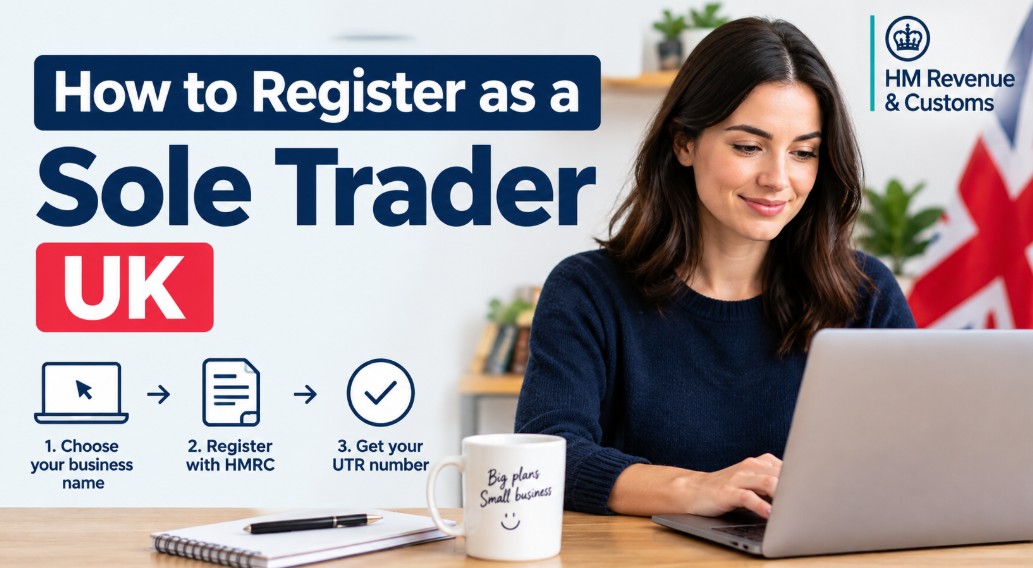
Register as sole trader with HMRC is a process that establishes a self-employed individual as personally responsible for a business’s tax and National Insurance, distinct from setting up a limited company. Anyone earning more than £1,000 from self-employment in a tax year must complete it.
Key Takeaways
- Registration is free and must be completed with HMRC by 5 October after the tax year in which self-employment began, if earnings exceed £1,000.
- Sole traders register for Self Assessment only; no Companies House application is required, unlike a limited company.
- HMRC can take up to 15 working days to issue a Unique Taxpayer Reference after registration.
Do You Need to Register as Sole Trader?
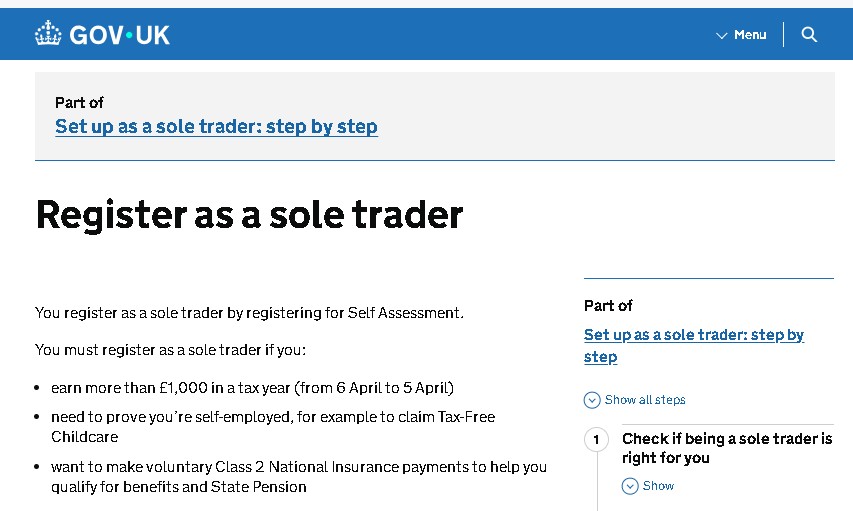
Yes, you must register as sole trader if you earn more than £1,000 from self-employment in a tax year, or if certain other conditions apply.
Register as sole trader if any of the following apply:
- Self-employment income exceeded £1,000 in the last tax year (6 April to 5 April)
- Proof of self-employment is needed for benefits such as Tax-Free Childcare
- Voluntary Class 2 National Insurance payments are wanted to protect State Pension entitlement
- Registration as a subcontractor under the Construction Industry Scheme is required
None of these applying yet means there’s no obligation to register. This £1,000 threshold is known as the trading allowance, and it applies to gross income before expenses are deducted, not profit.
According to ONS Labour Force Survey estimates, self-employment already accounts for millions of UK workers, and the moment earnings pass £1,000, the registration deadline starts running.
How to Register as a Sole Trader?
You can register with HMRC online, by post, or by phone using a Government Gateway account to set up your Self Assessment.
Details required to register as a Sole Trader
- National Insurance number
- Business start date
- Business name, own name or a trading name
- Description of the type of work carried out
Registering online
The fastest route is HMRC’s online Self Assessment registration service, which typically takes around ten minutes to complete. While not legally mandatory for a sole trader, many choose to open a dedicated business bank account at this stage to keep personal and commercial transactions cleanly separated.
Register by Post or by Phone
A paper CWF1 form can be posted instead, or the Newly Self-Employed Helpline can be called directly for those who prefer not to register online.
Once submitted, HMRC issues a Government Gateway user ID, if one doesn’t already exist, and later a Unique Taxpayer Reference by post.
Anyone who has registered for Self Assessment before, for a different reason, still needs to complete this step specifically as a sole trader, using the CWF1 route to reactivate rather than duplicate their existing record.
When Is the Deadline to Register as Sole Trader?
The deadline to register as sole trader is 5 October following the end of the tax year in which self-employment began.
For example, starting to trade in July 2025 means registration is due by 5 October 2026. The tax year runs from 6 April to 5 April, so anyone starting a business partway through, in, say, November, still has until the following 5 October to register, not just a few months.
This is separate from the Self Assessment tax return deadline, which falls on 31 January each year. Confusing the two is common, since both involve HMRC and the same online account, but missing the registration deadline specifically carries its own consequence.
Registering as soon as trading starts avoids any risk of missing that date altogether, and the consequences of missing it are specific enough to plan around.
What Happens If You Miss the Deadline?
Missing the sole trader registration deadline can result in a financial penalty from HMRC, even if it wasn’t deliberate.
Fines are scaled to the reason for the failure: broadly 30% of the tax owed for a non-deliberate oversight, rising toward 100% where the failure is judged deliberate and concealed. Interest on unpaid tax may also apply.
Penalties can often be reduced or avoided if:
- There was a reasonable excuse for missing the deadline, such as an event outside reasonable control
- HMRC is told as soon as possible once the excuse no longer applies
Before any of this becomes relevant, it helps to understand when do I need to register my business with HMRC and what the process does and doesn’t involve.
Do Sole Traders Need to Register with Companies House?
No, sole traders do not register with Companies House; registration with HMRC for Self Assessment is the only step required.
| Feature | Sole Trader | Limited Company |
|---|---|---|
| Registers with | HMRC (Self Assessment) | Companies House and HMRC |
| Cost to register | Free | From around £50 (Companies House incorporation) |
| Personal liability | Unlimited, personal assets at risk | Limited to the company’s assets |
| Public financial disclosure | None | Accounts filed publicly at Companies House |
This distinction is one reason sole trader status appeals to people testing a new business idea before committing to something more formal, but it’s worth checking one more registration detail before assuming the process is finished.

Why Registering as a Sole Trader Still Matters when Already Filed a Tax Return?
Being registered for Self Assessment for another reason doesn’t automatically register anyone as a sole trader with HMRC.
Practitioner discussions on AccountingWeb highlight a recurring situation: someone already filing Self Assessment, for rental income or a previous role, for example, starts self-employment and assumes their existing registration covers it.
HMRC’s own guidance confirms that a separate sole trader registration is still required in this case, specifically so Class 2 National Insurance is correctly linked to the self-employment record.
Skipping this step risks a missing qualifying year toward the State Pension administered by the Department for Work and Pensions, something accountants on these forums describe having to correct retrospectively with HMRC’s National Insurance team.
Registering separately, even when Self Assessment is already familiar, closes this gap before it becomes a problem, and once it’s done, a fairly predictable timeline follows.
How Long Does It Take to Register as Sole Trader?
Registration itself takes about ten minutes online, but HMRC can take up to 15 working days to issue the Unique Taxpayer Reference by post.
The initial sign-up is near-instant once the Government Gateway details are submitted. The UTR letter, sent to the registered home address, is what actually confirms the registration is complete and active. Starting the process well before the 5 October deadline avoids being caught out by this postal lag.

What Happens After You Register as Sole Trader?
Once registered, sole traders must file an annual Self Assessment tax return and pay any tax and National Insurance due.
- Using the Unique Taxpayer Reference to file Self Assessment each year, by 31 January
- Paying Class 4 National Insurance if profits exceed the Lower Profits Limit
- Registering separately for VAT if turnover exceeds £90,000
- Keeping accurate records of income, expenses, and whether I have to notify HMRC of savings interest throughout the year
Making Tax Digital for Income Tax also changes how records are kept for some sole traders, becoming mandatory from April 2026 for those with qualifying income above £50,000, requiring digital records and quarterly updates rather than a single annual return.
MoneyHelper’s free guidance service offers further support on budgeting for tax bills as a newly self-employed sole trader.
Conclusion
Registering as a sole trader is a free, straightforward HMRC process on paper, but timing and the small print around National Insurance and existing Self Assessment records matter just as much as the steps themselves.
Registering as early as possible after self-employment begins avoids the 5 October deadline entirely, helps you understand when taxes are due, and gets the Unique Taxpayer Reference arriving with plenty of time to spare.
Disclaimer: Tax rules and thresholds change over time, and individual circumstances vary. Figures in this article reflect HMRC rates published as of September 2026; readers should confirm current details directly with HMRC or GOV.UK before registering.
FAQs
How much does it cost to register as sole trader?
Registering as a sole trader is free. HMRC charges no fee for Self Assessment registration, whether completed online, by post or by phone, though optional costs like insurance or accounting software may still apply as the business grows.
Do I need to register if I earn under £1,000?
No, earning under £1,000 from self-employment in a tax year falls within the trading allowance, so registration isn’t required. Registering voluntarily is still possible, and can help build a business record.
Is it worth registering as a sole trader?
Yes, for most people earning self-employment income above £1,000, since registering is free, quick, and avoids late-registration penalties. It also establishes eligibility for Class 2 National Insurance credits toward the State Pension.
What are the main disadvantages of being a sole trader?
The main disadvantage is unlimited personal liability; there’s no legal separation between personal and business finances if debts arise. Raising external investment is also harder, since lenders and investors often prefer the formal structure of a limited company.