Cashflow Management Software for UK Small Businesses: Tools and Selection Guide
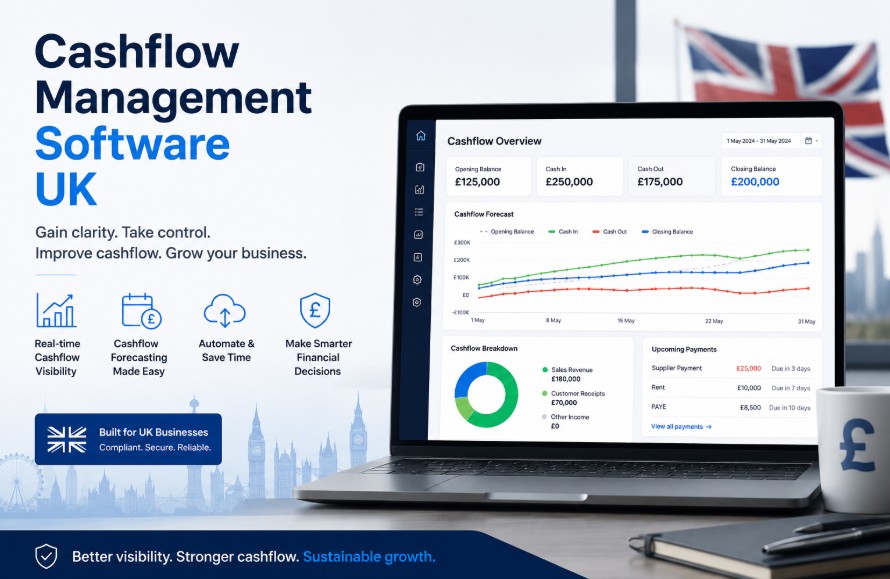
Cashflow management software is a digital financial tool that tracks money coming in and going out, connects to live bank feeds, and provides real-time cash forecasts to help small businesses avoid cash shortages and keep up with their payments.
Key Takeaways
- Digital cash management tools remove the need to track finances manually in spreadsheets by syncing directly with business bank accounts.
- Automated bank reconciliation and 13-week forecasts help small businesses spot potential cash shortfalls early.
- Modern platforms integrate natively with UK cloud accounting stacks like Xero, QuickBooks, and Sage.
- Choosing the right software means balancing basic bookkeeping needs with more advanced features such as multi-currency forecasting.
What is cashflow management software?
Cashflow management software is a type of financial technology designed to track, analyse and forecast how money moves through a business.
Unlike traditional bookkeeping, which mainly records past transactions for tax reporting, cash-focused software uses real-time data to help predict a business’s future financial position.
Many growing companies use these planning tools alongside small business accounting software to keep track of both past transactions and future cash flow.
In practice, small business owners often struggle with payment timing gaps where outgoings like payroll and rent occur before customer remittances clear.
These tools help bridge the gap by connecting directly to business bank accounts, automatically categorising income and spending, and producing rolling cash forecasts.
By replacing manual spreadsheets with automated tracking, businesses get a clearer view of future cash flow and can make better decisions about spending, hiring and credit without putting their accounts at risk of going overdrawn.
Which are the 10 best cashflow management software options for UK SMEs?
Choosing the right platform means balancing its integrations with the business’s forecasting needs. The UK market has a wide range of accounting packages and specialist add-on tools.
The best choice depends largely on whether a business needs an all-in-one accounting system or a specialist forecasting tool.
- Xero UK
- Sage 50 / Accounting
- Float
- QuickBooks UK
- Futrli
- IRIS KashFlow
- Fluidly
- Fathom
- Crunch
- AccessPay
Xero UK
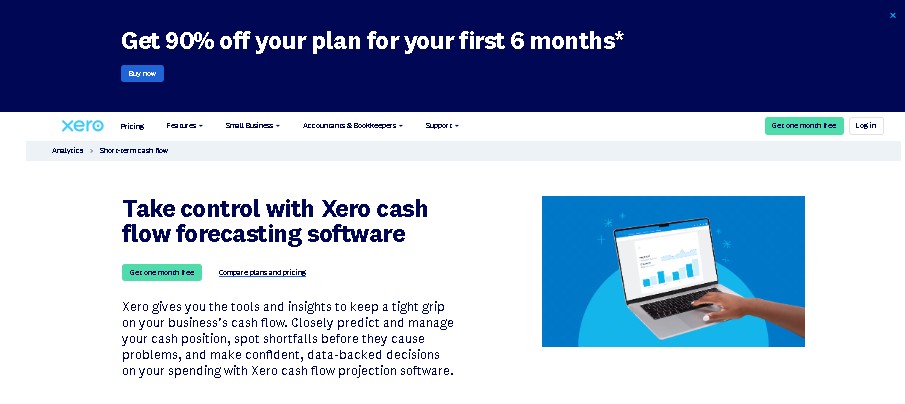
Xero UK is a popular cloud accounting platform with a live cash dashboard that gives small business owners a real-time view of their finances.
It acts as a central financial hub where bank feeds, invoices and expenses come together automatically, helping businesses keep track of working capital without updating ledgers manually.
- Pricing: Plans typically range from £15 to £35+ per month, depending on the chosen tier (Ignite, Early, Growing, or Established).
- Best Suited For: Small businesses seeking broad app integration and collaborative accounting.
- Pros: Extensive third-party marketplace, excellent bank reconciliation features, and user-friendly mobile app.
- Cons: Advanced analytics and multi-currency options often require higher-tier plans or add-ons.
Sage 50 / Accounting
Sage 50 / Accounting is a financial management and inventory tracking system designed to handle more complex needs as a business grows.
It can be used to manage company accounts, detailed stock records and compliance requirements from one interface.
- Pricing: £18 to £59+ per month (+ VAT) for Sage Accounting tiers (Start at £18, Standard at £39, Plus at £59), with Sage 50 enterprise packages scaling higher based on user seats.
- Best Suited For: Growing SMEs requiring deep stock control and advanced financial reporting.
- Pros: Powerful inventory tracking, comprehensive audit trails, and robust full MTD compliance.
- Cons: Steeper learning curve for non-accountants and interface can feel less modern than pure cloud competitors.
Float
Float is a short-term cash flow forecasting and scenario planning tool that works alongside existing accounting software.
It lets management create what-if cash flow scenarios and see how decisions such as hiring or delayed customer payments could affect cash in the weeks ahead.
- Pricing: Starts around £45 to £75+ per month, scaled according to business transaction volume and advisory features.
- Best Suited For: Businesses needing visual cash runway projections and dynamic budgeting scenarios.
- Pros: Highly visual interface, intuitive scenario planning, and native integration with major cloud ledgers.
- Cons: Operates primarily as an add-on rather than a standalone ledger system.
QuickBooks UK
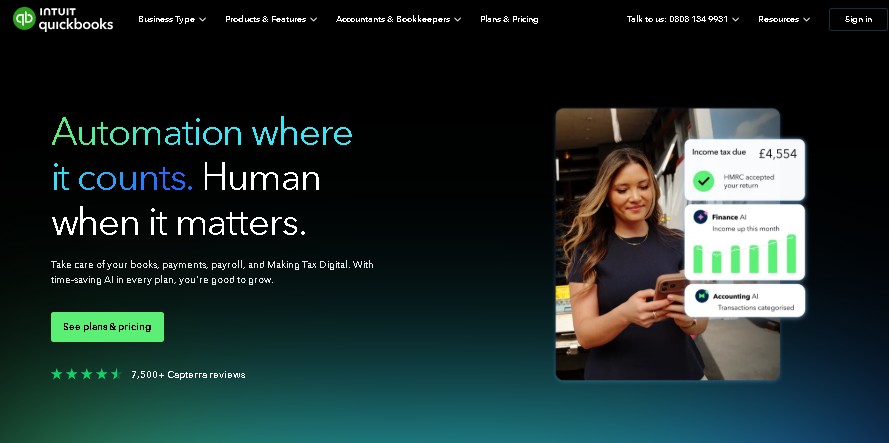
QuickBooks UK is a popular bookkeeping platform for small businesses, with automated receipt capture for everyday financial tracking.
It can be used to record expenses on the go, manage VAT calculations and track money coming in and going out.
- Pricing: £16 to £40+ per month (+ VAT), with entry-level simple start plans around £16 and frequently featured introductory promotio
- Best Suited For: Sole traders and micro-enterprises wanting streamlined everyday bookkeeping.
- Pros: Excellent mobile receipt capture, straightforward invoicing, and full HMRC recognition.
- Cons: Customer support can be difficult to reach during peak billing periods.
Futrli
Futrli is a short-term forecasting and business intelligence platform with tools that help predict future financial performance. It uses historical trends alongside upcoming invoices and bills to predict future financial performance and possible cash shortages.
- Pricing: £50 to £100+ per month, depending on the depth of forecasting and advisory analytical tools required.
- Best Suited For: SMEs preparing for seasonal financial fluctuations and needing predictive clarity.
- Pros: Advanced forecasting logic, custom metric tracking, and early warning indicators for cash shortages.
- Cons: Setup requires a solid understanding of financial metrics to configure custom dashboards effectively.
IRIS KashFlow
IRIS KashFlow is simple online invoicing and payroll software designed to be easy to use. It helps independent contractors create VAT-compliant invoices, track payments, and file tax submissions without complicated accounting language.
- Pricing: £10 to £25 per month, providing a predictable flat subscription structure for micro-entities.
- Best Suited For: Independent contractors and small service providers who want straightforward administrative tools.
- Pros: Direct HMRC VAT submissions, very simple interface, and automated customer payment reminders.
- Cons: Lacks the advanced multi-entity reporting and deep forecasting depth required by larger firms.
Fluidly
Fluidly is an AI-powered cash flow forecasting and credit control platform. It helps automate debtor tracking, predict customer payment behaviour using machine learning, and sync bank data through cloud APIs.
- Pricing: Starts around £50 per month, scaling upward according to company revenue and automated credit control capacity.
- Best Suited For: Businesses focused on automated debtor tracking and intelligent cash collection.
- Pros: Strong automated credit control workflows, predictive collection insights, and proactive cash alerts.
- Cons: Primarily focused on cash flow optimization rather than full general ledger accounting.
Fathom
Fathom is a financial analysis, management reporting, and multi-entity consolidation tool. It helps growing firms turn accounting data into visual reports, KPIs, and performance comparisons across companies.
- Pricing: Around £42 per month for a single core company entity, with tiered scaling for multi-entity agency structures.
- Best Suited For: Established SMEs requiring board-level reporting and multi-entity performance metrics.
- Pros: Exceptional analytical depth, beautiful executive dashboards, and multi-company consolidation.
- Cons: Too advanced for micro-businesses or sole traders who only need basic income tracking.
Crunch
Crunch is an online accounting software package bundled with unlimited, in-house accountant support and advisory services.
It is used by digital freelancers and limited company directors to ensure complete tax compliance while maintaining a clear view of business liquidity.
- Pricing: £35.50 to £99.50+ per month, varying based on whether the package serves a sole trader or a limited company director.
- Best Suited For: Freelancers and limited company directors looking for professional guidance alongside software.
- Pros: Direct access to human accountants, MTD-compliant digital filing, and fixed-fee packages.
- Cons: Less flexible if you prefer managing your own tax advisory completely independently.
AccessPay
AccessPay is a bank connectivity and cash visibility platform designed for businesses with more complex banking needs.
It helps growing businesses bring accounts from multiple banks into one dashboard while maintaining strong security and compliance.
- Pricing: Custom enterprise pricing available strictly on request (typically matching corporate budgets due to bespoke bank integrations).
- Best Suited For: Scaling SMEs managing multiple bank accounts across different financial institutions.
- Pros: High-level ISO 20022 and Bacs compliance, centralized multi-bank visibility, and robust security.
- Cons: Over-engineered and cost-prohibitive for standard small businesses or micro-enterprises.
What are the benefits of using cashflow management software?
Implementing automated financial tracking generates immediate operational efficiencies that protect business longevity. Relying on static spreadsheets exposes operations to oversight errors that digital tools inherently prevent.
- Real-Time Liquidity Visibility: Automated bank feeds replace delayed manual reconciliation, providing an accurate, up-to-the-minute view of available working capital.
- Proactive Deficit Warning: Predictive algorithms flag potential cash crunches weeks in advance, allowing directors to arrange short-term credit or delay non-essential spending safely.
- Accelerated Receivables: Automated invoice chasing and payment links reduce average debtor days, improving overall cash conversion cycles.
- Reduced Administrative Burden: Eliminating manual data entry frees up valuable staff hours for core revenue-generating activities.
Maximising these advantages transforms financial management from a reactive compliance chore into a strategic driver of business growth.
How to choose the best cashflow management software for a small business?
Choosing the correct platform demands a structured evaluation of technical requirements, team capabilities, and existing software infrastructure.
- Audit current software stacks to determine whether a standalone forecasting tool or an all-in-one accounting suite with native cash features is required.
- Verify that the software vendor supports secure Open Banking Application Programming Interfaces (APIs) certified under Financial Conduct Authority (FCA) guidelines.
- Evaluate the reporting granularity, ensuring the platform supports rolling 30-, 60-, and 90-day cash projections tailored to seasonal income variations.
- Assess user permission controls, ensuring that external accountants or internal staff only access designated financial modules.
- Review pricing tiers against projected transaction volumes to prevent unexpected subscription cost spikes as the business expands.
- Test customer support responsiveness and availability of onboarding resources during a trial period before committing to an annual contract.
Following this sequential selection process ensures long-term compatibility and high user adoption rates across the organisation.
For teams that prefer a structured manual approach while transitioning to automated systems, utilizing a standardized cash flow forecast template can provide immediate clarity on monthly inflows and outflows.
Is cashflow management software compliant with Making Tax Digital in the UK?
Software compliance represents a non-negotiable requirement for UK commercial entities. HM Revenue and Customs (HMRC) mandates that VAT-registered businesses maintain digital records and submit returns through compatible software channels under Making Tax Digital (MTD) rules.
While dedicated cash forecasting tools focus on liquidity rather than tax filing, platforms integrated with core cloud ledgers feature direct HMRC API connectivity.
This integration ensures that digital audit trails remain unbroken from bank transaction ingestion through to final tax submission, protecting the enterprise from regulatory penalties.
How does automated forecasting prevent small business insolvency?
Insolvency often arrives swiftly when unexpected tax bills or delayed client payments catch an organisation without liquid reserves. Automated forecasting tools mitigate this risk by applying predictive analytics to historical spending patterns and scheduled liabilities.
When management teams review rolling forecasts regularly, minor cash flow pinches are identified long before they escalate into structural crises.
This advance notice enables proactive cost controls, structured supplier negotiations, and disciplined reserve building, ensuring the enterprise maintains continuous operational solvency even during volatile trading cycles.
Conclusion
Implementing robust cashflow management software shifts small business operations away from reactive crisis management toward predictable liquidity control.
By integrating live bank feeds, automating debtor reminders, and maintaining rolling 90-day forecasts, UK SMEs can protect working capital and secure sustainable growth.
Review current software infrastructure, assess integration capabilities with existing accounting stacks, and trial a cloud solution to establish real-time visibility over business finances today.
Disclaimer: This article is for informational purposes only and does not constitute professional financial or legal advice.
FAQs
How does Open Banking improve cash flow accuracy?
Open Banking protocols allow software platforms to pull encrypted, real-time transaction feeds directly from financial institutions via secure APIs. This eliminates human error inherent in manual CSV file uploads and ensures dashboards reflect cleared funds instantly.
Is cashflow management software compliant with Making Tax Digital?
Platforms integrated with core accounting ledgers feature HMRC-recognised MTD compatibility, allowing businesses to manage digital record-keeping requirements and submit tax returns directly from the software interface.
Can small businesses use free cash flow tools effectively?
Free tiers or basic spreadsheet templates offer a starting point for micro-businesses with minimal transaction volumes. However, growing enterprises typically require automated bank reconciliation, multi-currency tracking, and dynamic forecasting found in paid cloud subscriptions to maintain adequate financial control.
How secure is financial data stored in cloud cash flow applications?
Cloud platforms employ bank-grade encryption tokenisation, multi-factor authentication, and secure data storage within UK or EU jurisdictions, operating under strict regulatory supervision by the Financial Conduct Authority (FCA).
Do cashflow management tools support multi-currency transactions?
Advanced platforms automatically convert foreign receivables and payables into British Pounds using live exchange rates, giving international traders clear visibility over currency fluctuation risks.
Can multiple users access the cash flow dashboard simultaneously?
Role-based user permissions allow business owners to grant restricted visibility to accountants, financial directors, or operational managers without compromising sensitive payroll or director-level data.