HMRC Wants Tax Money Back: Complete Guide to P800 Demands, ESC A19 Appeals & Payments
When HMRC wants tax money back, HM Revenue & Customs issues a formal P800 tax calculation or Simple Assessment notice (PA302) requiring taxpayers to settle underpaid Income Tax arising from incorrect PAYE tax codes, unrecorded taxable benefits, or multiple simultaneous income sources.
Taxpayers must verify employer earnings against their Personal Tax Account before making payments.
Key Takeaways
- HM Revenue & Customs issues P800 calculations or Simple Assessment notices when automated PAYE reconciliations detect Income Tax underpayments.
- Taxpayers can challenge demands using Extra-Statutory Concession A19 if HMRC failed to process employer records within twelve months.
- Underpayments under three thousand pounds are usually collected automatically across twelve months by reducing future payroll Personal Allowances.
- Formal Simple Assessment demands require written appeals within sixty days and direct settlement before the thirty-first of January deadline.
What Does It Mean When HMRC Wants Tax Money Back UK?
Receiving an official notice stating that HMRC wants tax money back means the UK tax authority completed its annual Pay As You Earn (PAYE) reconciliation and found a deficit in your Income Tax payments.
Each year, the government cross-references payroll data submitted by employers against your total personal earnings and allowances.
When payroll software applies an inaccurate tax code or misses taxable perks, an underpayment accumulates silently throughout the tax year.
An underpayment notice is an administrative reconciliation rather than an immediate criminal allegation. In practice, payroll discrepancies occur frequently across changing career paths, but you must still review the demand carefully before paying.
P800 Tax Calculation vs Simple Assessment Notice
HM Revenue & Customs relies on two primary statutory documents to demand underpaid Income Tax from individuals outside Self Assessment:
| Feature | P800 Tax Calculation | Simple Assessment (PA302) |
| Primary Target | Employed staff & company pensioners | High earners, state pensioners, taxpayers with HMRC savings tax bills or untaxed asset income |
| Collection Method | Automatic tax code adjustments (Coding Out) | Direct manual bank payment or installment plan |
| Debt Threshold | Under £3,000 underpayment | Over £3,000 or uncollectable via payroll |
| Legal Status | Informational annual calculation notice | Legally binding payment order with statutory deadlines |
| Appeal Window | Flexible review window via online account | Strict 60-day formal appeal window |
Common Reasons You Owe Money or Have Underpaid Tax
When reviewing decisions regarding underpaid tax, systemic payroll mismatches emerge as the leading cause of unexpected tax demands:
- Multiple Employers or Pensions: Holding two jobs or receiving a private pension alongside a salary often leads to both providers applying your full Personal Allowance (£12,570 for 2025/26 and 2026) simultaneously.
- Inaccurate Tax Codes: Changing employment mid-year can result in an emergency tax code remaining active longer than intended.
- Untaxed Employment Benefits (P11D): Non-cash company perks like company cars, private health insurance, or interest-free loans are submitted at year-end on Form P11D.
- State Pension Income: The UK State Pension is taxable income paid gross without tax deducted at source. If errors occur when assessing this income, it can trigger an unexpected HMRC state pension tax error, requiring HMRC to reclaim the unpaid tax via PAYE tax codes.
Statutory Time Limits for Tax Claims and Reclaims
Under standard UK tax legislation, strict statutory time limits govern how far back historical tax accounts can be reopened:
- Standard 4-Year Rule: HMRC can reclaim underpaid tax up to 4 tax years after the end of the year in which it arose. Taxpayers also have exactly 4 years to submit a claim for a tax refund.
- Careless Behaviour (6 Years): If tax underpayments stem from careless errors or inaccurate information on submitted returns, the assessment window extends to 6 years.
- Deliberate Evasion (20 Years): Where HMRC proves intentional tax evasion or deliberate failure to notify chargeability, demands can reach back 20 years.
How Do You Check If HMRC’s Demand Is Accurate?
Do not pay an unexpected demand immediately without verifying the underlying calculation against your earnings records.
Automated systems occasionally process duplicated income records submitted during corporate restructures or payroll system migrations.
Verifying Records via Your Personal Tax Account
To confirm whether an underpayment notice is correct, follow these 6 verification steps:
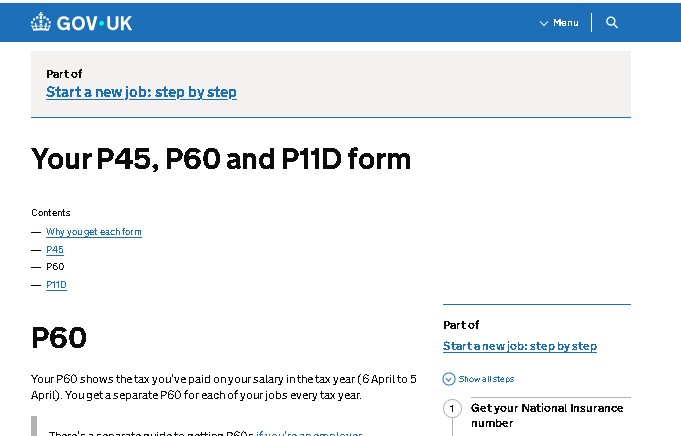
- Gather Documentation: Retrieve your P60 end-of-year certificate, P45 form from previous employment, and P11D benefit statement.
- Access the Portal: Log into your official Personal Tax Account on GOV.UK using your Government Gateway user ID.
- Navigate to PAYE Records: Select the Pay As You Earn (PAYE) section and click Check your income tax for previous years.
- Cross-Check Total Income: Compare the gross taxable salary recorded on your P60 against HMRC’s listed taxable income for that year.
- Inspect Allowance Allocations: Ensure your annual Personal Allowance was distributed correctly across your active income streams.
- Report Discrepancies: If HMRC’s listed income figure exceeds your actual earned salary shown on your P60, submit an online update before accepting the debt.
How Can You Challenge HMRC If Their Underpayment Demand Is Unfair?
If an underpayment demand is mathematically correct but occurred because HMRC failed to act promptly on information provided to them, you can request that the debt be written off under official administrative protections.
Requesting Relief Under Extra-Statutory Concession A19
Extra-Statutory Concession A19 (ESC A19) allows HMRC to write off historical tax arrears if the underpayment was caused by administrative delays in processing information.
To successfully qualify for an ESC A19 write-off, your claim must satisfy three mandatory criteria:
- HMRC Failed to Act: HMRC received accurate information regarding your job, state pension, or employer benefits from you, your employer, or the Department for Work and Pensions (DWP), but failed to adjust your tax code.
- Unreasonable Delay: HMRC took more than 12 months after the end of the tax year in which the information was received to notify you of the arrears.
- Reasonable Belief: You genuinely believed your tax affairs were up to date because tax was being deducted regularly via your salary payslips.
Submitting a Formal Appeal Within the 60-Day Window
When contesting a Simple Assessment notice (PA302), you must file a formal written appeal within 60 days of the letter’s date.
- State Your Purpose: Heading your document clearly as a Formal Disagreement.
- Provide Identifiers: Include your full legal name, address, and National Insurance number.
- Attach Supporting Proof: Enclose copies of P60 or P45 documentation showing HMRC’s administrative error.
- Request Debt Suspension: Explicitly request an immediate suspension of debt recovery proceedings while the internal review is conducted.
What Are Your Options to Pay HMRC Back?
When an underpayment is verified as legitimate and ESC A19 relief does not apply, you must arrange settlement using one of four official repayment channels:
| Payment Route | Target User | Eligibility Requirement | Repayment Terms |
| PAYE Coding Out | Employed staff & pensioners | Underpayments below £3,000 | Deducted automatically from monthly wages over 12 months. |
| Time to Pay (TTP) Plan | Self-employed, directors, PAYE | Debts under £30,000 | Direct Debit installments spread over 12 to 36 months. |
| Lump Sum Transfer | All taxpayers | Any balance size | Paid directly to official HMRC tax bank accounts via online banking, debit card, or Government Gateway. |
| Debt Remission | Low-income / vulnerable households | Severe financial hardship | Complete cancellation of tax debt if payments compromise basic living standards. |
Setting Up an Online Time to Pay Agreement
If you owe less than £3,000 under PAYE, HMRC usually collects the debt by adjusting your tax code for the following tax year.
Instead of benefiting from a standard HMRC tax-free allowance increase, your allowance is reduced so that additional Income Tax is deducted from your wages over 12 months.
For larger underpayments or Simple Assessment notices, taxpayers can establish a formal Time to Pay (TTP) plan:
- Log into GOV.UK and search for Pay your tax bill by Time to Pay.
- Set up a direct debit schedule spreading repayments over 12 to 36 months.
- Note that statutory interest charges accrue on outstanding tax balances during the repayment period. Ignoring notices can lead to debt enforcement measures or bailiff referrals.
Common misconceptions about Tax Demand
| Myth | Reality |
| If HMRC made the mistake, I don’t have to pay. | You still owe the tax unless you meet the strict criteria for Extra-Statutory Concession A19. |
| A P800 notice means I am being investigated for tax fraud. | A P800 is a routine automated administrative reconciliation, not a criminal inquiry. |
| I must pay the full balance immediately upon receiving a PA302 notice. | You can pause recovery by filing an appeal within 60 days or set up a Time to Pay agreement. |
Do HMRC Automatically Refund Overpaid Tax in the UK?
Yes, HM Revenue & Customs automatically refunds overpaid tax to PAYE taxpayers between June and November following the end of the UK tax year. When automated annual reconciliations detect an overpayment, HMRC generates a P800 Tax Calculation notice confirming the exact rebate amount.
Claiming Overpaid Tax and Leaving the UK
If your P800 indicates you overpaid tax, you can receive your money using one of two methods:
- Online Direct Transfer: Claiming through your Personal Tax Account transfers funds into your nominated UK bank account within 3 to 5 working days.
- Automatic Cheque Payment: If you do not claim online within 45 days, HMRC automatically posts a payable order cheque to your registered home address.
If you leave the UK permanently or work abroad for a full tax year, submit Form P85 (Leaving the UK) alongside Parts 2 and 3 of your P45 to claim back unutilized Personal Allowances.
How Does HMRC Tax Clawback Impact SMEs, Startups, and Business Operations?
When HMRC demands tax money back due to PAYE errors, P11D mismatches, or Simple Assessment notices, the burden falls heavily on businesses.
Organizations face sudden working capital friction, payroll compliance exposure, heavy administrative strain, and potential damage to employee relations across all commercial scales.
- Operational & Payroll Strain: Rapid tax code adjustments (coding out) force payroll teams to re-evaluate tax setups, process complex benefit reconciliations, and field urgent internal employee inquiries.
- Cash Flow & Financial Risk: Underpayment demands create unexpected liabilities. Businesses must reallocate operating capital to settle debts, set up Time to Pay (TTP) arrangements, or absorb statutory interest charges.
- Compliance & Legal Exposure: Reopened tax accounts going back 4 to 6 years trigger time-consuming internal audits, increasing susceptibility to formal HMRC employer compliance checks and penalty assessments.
- Productivity Loss: Finance and HR teams waste valuable working hours auditing P60s, P45s, and Government Gateway records against HMRC figures instead of driving strategic business growth.
- Employer Brand & Retention: Payroll errors that result in tax clawbacks hurt workforce trust, lower morale, and create unwanted friction during salary and benefit reviews.
Conclusion
- Do Not Panic: Verify the notice date and check whether it is a P800 calculation or Simple Assessment notice (PA302).
- Audit Your Income: Compare gross pay on your P60 and P11D against figures inside your online Personal Tax Account.
- Assess ESC A19: If HMRC delayed acting on employer data for over 12 months, apply in writing to write off the tax.
- Arrange Settlement: Set up a Time to Pay Direct Debit if you owe more than £3,000 to avoid late payment penalties.
Disclaimer: This article is for informational purposes only and does not constitute formal legal or financial advice; always consult a qualified tax professional or HMRC directly regarding your specific circumstances.
FAQ
Will HMRC automatically refund overpaid tax?
Yes. HMRC automatically recalculates PAYE accounts annually and issues P800 rebate notices with online claim instructions or postal cheques.
How long does it take for HMRC to process your tax refund?
Online claims made via your Personal Tax Account take 3 to 5 working days, while paper cheque refunds take up to 6 weeks.
Why is HMRC taking so long to refund my money?
Refunds take longer if HMRC flags your account for security checks, if employer P11D data is delayed, or during peak processing months.
What is the maximum tax refund amount I can get?
There is no legal maximum limit on tax refunds. You are legally entitled to recover the exact full amount of tax overpaid within 4 tax years.
How can I claim a PAYE tax refund if I changed jobs?
Log into your Personal Tax Account to verify your details, or submit online Form P50 if you stopped working mid-year.
How do I contact HMRC directly about an underpayment?
Call the HMRC Income Tax Helpline on 0300 200 3300 or send a message to support via webchat in your Personal Tax Account.
What happens if I ignore a P800 tax underpayment notice?
HMRC will automatically collect smaller debts under £3,000 through your payroll tax code in the next tax year. If left uncollected or if you owe more than £3,000, HMRC may pass the debt to enforcement agencies or charge statutory interest.