What Is an IOSS Number UK? A Seller’s Guide to EU VAT, HMRC Routes and Marketplaces
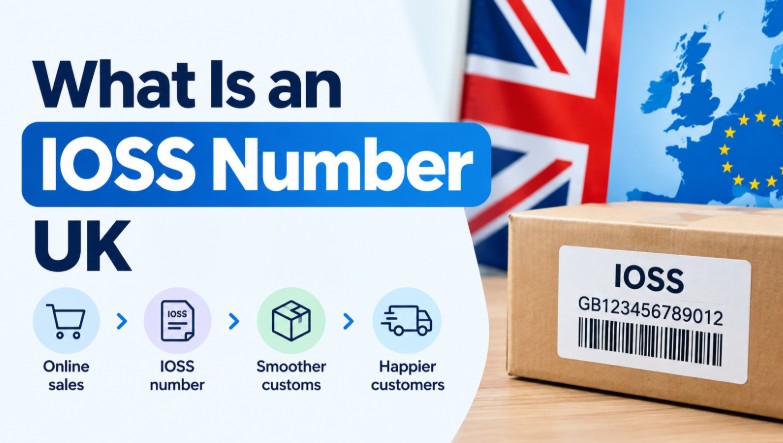
An IOSS number UK is a 12-digit VAT identification number issued under the EU’s Import One Stop Shop scheme. It lets a UK business collect EU VAT on eligible sales at checkout, instead of leaving the customer to pay it on delivery.
HMRC’s February 2026 guidance update confirms UK sellers now have two separate registration routes.
Key takeaways
- An IOSS number only covers B2C consignments valued at £135 (HMRC) or €150 (EU) or less.
- Sellers using Amazon, eBay, or Etsy generally don’t need their own IOSS number, since the marketplace applies its own instead.
- From 1 April 2026, UK businesses can register for the scheme with HMRC using an intermediary, instead of registering through an EU country.
What Is an IOSS Number UK?
An IOSS number identifies a business registered for the EU’s Import One Stop Shop, the scheme HMRC uses to simplify VAT on low-value goods sent to EU consumers.
IOSS stands for Import One Stop Shop. Every IOSS number follows the same 12-digit format, starting with IM followed by 10 digits, for example, IM0123456789. Customs uses this number to confirm VAT has already been collected at checkout.
This way, the parcel clears without a second VAT charge landing on the buyer. HMRC administers the UK side of the scheme, and full guidance sits on GOV.UK.
The scheme replaced an older VAT exemption for parcels worth under €22, which was removed in July 2021 so that all commercial goods entering the EU attract VAT regardless of value.
An IOSS number isn’t a substitute for a business VAT number. A business needs to hold both, since one covers domestic sales and the other covers eligible EU distance sales.
Do I Need an IOSS Number for My Small Business?
A small business needs its own IOSS number only if it sells directly to EU consumers, outside a marketplace, in consignments under the value limit.
To qualify, the sale must meet all of the following:
- The buyer is a private consumer in the EU or Northern Ireland, not a business.
- The consignment is worth £135 or less, HMRC’s figure for the same threshold the EU states as €150.
- The goods are located outside the EU and Northern Ireland at the point of sale.
- The goods aren’t excise goods, such as alcohol or tobacco.
Selling only through Amazon, eBay, or Etsy usually removes the need to register at all, since the marketplace is treated as the deemed seller for VAT purposes. Selling through your own website, alongside or instead of a marketplace, is what typically makes registration worthwhile.
Sales to another VAT-registered business, rather than a private consumer, fall outside IOSS entirely and follow normal import VAT rules instead.
A small business shipping only a handful of EU parcels a month can weigh registration against simply letting the customer pay VAT on delivery. Registration tends to pay off once EU orders become frequent enough that delivery delays start costing sales.
How Does an IOSS Number Work for a Small Business?
An IOSS number works by moving VAT collection from the EU border to the moment of sale.
The process runs in three steps:
- VAT is charged at checkout, at the rate that applies in the buyer’s EU country.
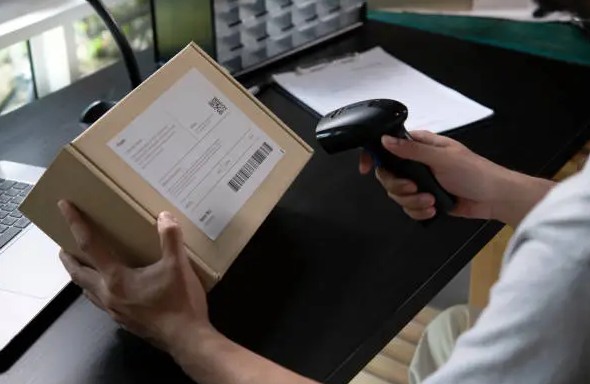
- The seller’s IOSS number is included in the customs data given to the courier, such as Royal Mail, for that consignment.
- Customs matches the number against the declaration and releases the parcel without charging VAT again.
Skip any one of these steps and the system breaks down, usually at the courier, where a missing or mistyped number means the parcel gets treated as unpaid.
Ensuring these identifiers are fully accurate beforehand, much like when you routinely check an EORI number to prevent import delays, helps guarantee smooth cross-border transit.
Behind these three steps, the business also files one monthly IOSS VAT return covering every eligible EU sale, rather than separate returns for each country sold into. The total VAT due is paid to HMRC or the chosen EU tax authority by the end of the following month.

Where Do I Find My IOSS Number If I Sell on a Marketplace?
Where an IOSS number comes from depends entirely on which channel made the sale.
| Marketplace | Who provides the IOSS number | What the seller needs to do |
|---|---|---|
| Amazon | Amazon (deemed seller) | Nothing, Amazon applies its own number automatically |
| eBay | eBay (deemed seller) | Nothing, eBay retrieves and applies its number automatically |
| Etsy | Etsy (deemed seller) | Nothing on eligible orders under the threshold |
| Discogs | Varies by listing type | Check Discogs’ own shipping and VAT settings before assuming coverage |
| Own website (e.g. Shopify) | The seller’s own registration | Add the seller’s IOSS number in shipping/tax settings |
A business selling through both a marketplace and its own website needs to keep the two channels separate. The marketplace’s number covers marketplace orders only, and direct sales still need the seller’s own number if the business has registered for one.
Using a marketplace’s IOSS number for a direct sale it doesn’t cover is treated as misuse, since the marketplace’s registration only extends to orders it processed and can verify. Keeping the two order types clearly split in the shipping or fulfilment system avoids that mix-up.
When Is the IOSS Number Mandatory?
Technically, registering for an IOSS number is completely voluntary. HMRC and the EU do not legally force any business to use the scheme.
However, from a practical business perspective, it is virtually mandatory if you want to maintain a positive customer experience and protect your profit margins.
Without it, your parcels ship as Delivered Duties Unpaid (DDU). This means the VAT is not collected at checkout; instead, the courier stops the parcel at the border and bills the EU customer for the local VAT rate, plus a non-refundable handling and administration fee.
This often leads to frustrated buyers, refused deliveries, and costly return shipping fees for the seller. So, while the law doesn’t mandate it, competitive ecommerce practically demands it.
What Is the Eligibility to Apply for an IOSS Number UK?
To qualify for the scheme, a UK business must meet a few strict HMRC and EU conditions. First, the business must already be registered for UK VAT.
The goods being sold must be located outside the EU and Northern Ireland at the point of sale and shipped directly to private consumers, rather than other VAT-registered businesses.
Additionally, the total intrinsic value of the consignment cannot exceed £135 or €150. If a customer orders multiple items that bundle together past this limit in a single shipment, the entire package falls outside the scheme’s eligibility.
Finally, the goods cannot be subject to excise duties, meaning sellers of alcohol or tobacco products are completely excluded from using the scheme.
How Do I Apply for an IOSS Number UK?
A UK business can apply for an IOSS number either by registering in an EU country through an EU-established intermediary or, as of 2026, through HMRC’s own scheme.
As per HMRC’s guidance, a UK business now has a second route. Intermediary registrations for HMRC’s own VAT Import One Stop Shop scheme open from 1 April 2026.
This sits alongside, not instead of, the established EU route. Most UK-facing service providers still describe only the EU option, but managing these ongoing liabilities domestically often integrates more easily alongside the rest of your HMRC business tax account.
This sits alongside, not instead of, the established EU route. Most UK-facing service providers still describe only the EU option.
To register through either route, a business typically needs:
- Confirmation it’s already registered for UK VAT.
- Its business name, address, and contact details.
- Bank details, including BIC and IBAN, for the intermediary or HMRC to process payments.
- Details of any existing EU VAT or tax registrations, if applicable.
Once approved, the 12-digit IOSS number arrives, and registration becomes active from that date, it can’t be backdated to cover earlier sales.
A business can only hold one active IOSS registration at a time, so switching from an EU-based intermediary to HMRC’s own route means cancelling the existing registration first.
What Documents Are Required to Apply for an IOSS Number UK?
Whether you register through an EU intermediary or use the newer HMRC-recognised route, the supporting documentation remains largely the same. You will need to provide:
- UK VAT Registration Proof: Confirmation of your existing UK VAT number.
- Business Identification: Your official business name, registered trading address, and primary contact details.
- Banking Information: Accurate bank details, including the BIC and IBAN, allowing the intermediary or HMRC to process your monthly VAT payments.
- Previous Tax Records: Details of any existing EU VAT or tax registrations your business currently holds.
- Intermediary Agreement: If applying from Great Britain before the direct HMRC intermediary rollout matures, you will also need the signed representation agreement from your chosen EU-established intermediary.

What Happens If I Don’t Have an IOSS Number?
Without an IOSS number, VAT gets collected at the EU border instead of at checkout, and the customer usually pays it.
The parcel is treated as Delivered Duties Unpaid: the courier contacts the recipient for VAT, plus a handling fee, before releasing it. This often means delays, refused deliveries, and returns.
Also note that from 1 July 2026, the EU applies a separate flat customs duty per item type on the customs declaration, not per parcel.
This means a single order containing three different types of products, such as a t-shirt, a mug, and a hat, will attract three separate duty charges, which can significantly impact shipping margins.
This sits alongside VAT and applies whether or not the seller is IOSS-registered, so an IOSS number solves the VAT side of shipping to the EU but not that duty.
Businesses that would rather not register for IOSS can use a Delivered Duties Paid service through their courier instead. This pays VAT and duty upfront on the customer’s behalf, usually at a higher per-parcel cost than an IOSS registration.
Conclusion
An IOSS number simplifies EU VAT for UK sellers shipping goods worth £135 or less directly to consumers. From 1 April 2026, it can be obtained through HMRC as well as an EU country. Marketplace sellers usually need nothing at all.
Direct sellers need to register, use the number correctly on every customs declaration, and remember it only settles VAT, not the separate customs duty introduced in July 2026. Checking which route suits the business now, rather than defaulting to the first intermediary found, can save both time and ongoing fees.
Disclaimer: VAT thresholds, registration routes, and customs duty rules can change, and individual circumstances vary. Figures in this article reflect HMRC and European Commission guidance published as of September 2026; businesses should confirm current requirements directly with HMRC or a qualified VAT adviser before registering.
FAQs
What does IOSS stand for?
IOSS stands for Import One Stop Shop. It’s the EU VAT scheme that lets non-EU sellers, including UK businesses, collect VAT on low-value goods at checkout rather than at the border.
Where do I put my IOSS number on a customs form?
The IOSS number goes on the customs declaration data given to the courier for each consignment, not printed on the parcel itself. Couriers such as Royal Mail collect it electronically before dispatch.
Do I need to renew my IOSS number?
No renewal is required while a business keeps filing its monthly returns on time. Registration is only lost through voluntary cancellation or exclusion for non-compliance, which carries a two-year re-registration ban.
How much does an IOSS number cost?
There’s no EU registration fee for the scheme itself. Costs come from the intermediary’s fee, since most non-EU sellers, including UK businesses, must appoint one to register and file on their behalf.