

Capital Gains Tax Allowance 2025/26: Comprehensive Guide to Rates, Exemptions & Rules
The capital gains tax allowance 2025/26 UK is set at £3,000 for individuals and £1,500 for most trustees, allowing taxpayers to make up to this amount in net profit from asset sales before triggering HM Revenue & Customs (HMRC) Capital Gains Tax charges at rates of 18% or 24%.
Key Takeaways
- The UK Capital Gains Tax Annual Exempt Amount remains frozen at £3,000 per individual for the 2025/26 tax year.
- Main individual CGT rates are 18% for basic-rate taxpayers and 24% for higher and additional-rate taxpayers across all standard assets.
- Married couples and civil partners can combine their individual exemptions to realise up to £6,000 in total tax-free gains per tax year.
- Taxable gains on UK residential property sales must be reported and paid within 60 days of completion using HMRC online accounts.
What Is the Capital Gains Tax Allowance 2025/26 in the UK?
The capital gains tax allowance 2025/26 UK, officially termed the Annual Exempt Amount, is the exact profit threshold an individual can realise from selling or transferring assets without owing tax to HMRC.
For the 2025/26 tax year (running from 6 April 2025 to 5 April 2026), the allowance is £3,000 per individual and £1,500 for most trust funds.
This £3,000 threshold acts as a strict use it or lose it limit per tax year. Unused exemptions expire on 5 April and cannot be rolled over into future tax cycles.
Recent Reductions in the Annual Exempt Amount
The UK government has significantly scaled back the CGT allowance over recent tax years (following freezes to the income Personal Allowance in 2024/25 and subsequent years):
| Tax Year | Individual Annual Exempt Amount | Trust Annual Exempt Amount |
| 2022/23 | £12,300 | £6,150 |
| 2023/24 | £6,000 | £3,000 |
| 2024/25 | £3,000 | £1,500 |
| 2025/26 | £3,000 | £1,500 |

What Is Capital Gains Tax Exemption?
A Capital Gains Tax exemption is a statutory tax rule or financial wrapper that completely shields specific asset profits from HMRC taxation. Unlike the £3,000 annual allowance, gains made on fully exempt assets incur 0% CGT and do not count toward your £3,000 threshold.
While the £3,000 AEA applies to taxable disposals, broad categories of assets remain entirely tax-free regardless of how much profit you realise.
Fully Exempt Assets and Transfers
- Private Residence Relief (PRR): Selling your primary residential home is generally 100% exempt from CGT.
- ISA Wrappers: Investments held inside Stocks & Shares ISAs, Cash ISAs, or Lifetime ISAs accrue tax-free growth and withdrawals.
- Spousal Transfers: Direct transfers between legally married spouses or civil partners living together take place on a nil-gain/nil-loss basis.
- Private Vehicles: Personal cars, including classic and vintage automobiles, are exempt.
- NS&I & Premium Bonds: Winnings from Premium Bonds, lottery prizes, and National Savings & Investments are completely tax-free.
- Foreign Currency for Personal Use: Foreign currency bought for personal or family use outside the UK.
What Are the Capital Gains Tax Rates and Bands for 2025/26?
For 2025/26, main individual Capital Gains Tax rates are 18% for basic-rate taxpayers and 24% for higher or additional-rate taxpayers. This unified rate applies across residential property, shares, crypto, and valuable personal possessions.
When determining how much Capital Gains Tax you owe, your taxable profit is added on top of your annual taxable income.
Any portion of the gain that falls within the available basic-rate income tax band (up to £50,270 for most taxpayers) is taxed at 18%. Any portion of the gain exceeding £50,270 is taxed at the higher 24% rate.
UK CGT Rates and Threshold for 2025/26
| Asset Type | Basic Rate Taxpayer (Income ≤ £50,270) | Higher / Additional Rate Taxpayer (Income > £50,270) |
| Residential Property | 18% | 24% |
| Shares, Stocks & Funds | 18% | 24% |
| Cryptocurrency & Valuables | 18% | 24% |
| Business Assets (BADR) | 14% (up to £1m lifetime limit) | 14% (up to £1m lifetime limit) |
| Trust Assets | 24% | 24% |
When Do You Have to Pay Capital Gains Tax?
You trigger a Capital Gains Tax liability at the exact date of asset disposal when your total net profit across the tax year exceeds £3,000. Disposals include selling assets for cash, swapping cryptocurrencies, gifting items, or receiving insurance compensation.
What Constitutes an Asset Disposal?
A CGT obligation is triggered when you:
- Sell an asset for cash profit.
- Exchange or swap an asset for another (e.g., trading one crypto token for another).
- Gift an asset to someone other than your spouse or civil partner.
- Receive Compensation for an asset (e.g., an insurance payout for a destroyed item).
Payment Timing Requirements
- UK Residential Property: Payment is due strictly within 60 calendar days of the transaction completion date.
- All Other Assets (Shares, Crypto, Valuables): Payment is due by 31 January following the end of the tax year in which the disposal occurred (via Self Assessment).
How Does Capital Gains Tax Work on Specific Assets?
CGT rules vary depending on asset type. Residential property gains above £3,000 require 60-day reporting, while share and crypto gains are reported annually via Self Assessment or HMRC’s Real-Time service.
1. UK Residential Property Sales (The 60-Day Rule)
Disposing of a secondary home, holiday let, or buy-to-let property requires deducting the £3,000 exemption from net sale profits. Primary homes remain protected under Private Residence Relief (PRR).
- Calculate your chargeable gain after deducting allowable expenses and the £3,000 AEA.
- Sign into the online HMRC Capital Gains Tax on UK Property service using your Government Gateway ID.
- Submit the property disposal return within 60 days of completion.
- Settle the estimated CGT payment within the same 60-day deadline.

2. Shares, Crypto, and Other Assets (Self Assessment or Real Time Service)
Disposing of individual stocks, exchange-traded funds (ETFs), or crypto tokens triggers a chargeable event calculated as total sale price minus purchase price and trading fees.
- Net gains up to £3,000 across the tax year are taxed at 0%.
- Net gains above £3,000 are taxed at 18% (basic rate) or 24% (higher rate).
- Holding assets inside a Stocks & Shares ISA completely insulates capital appreciation from HMRC charges.
How to Calculate Capital Gains Tax in the UK?
To calculate Capital Gains Tax, subtract allowable purchase costs, improvement expenses, and disposal fees from the gross sale price. Then deduct the £3,000 allowance and registered losses to determine total chargeable gain.
Worked Calculation Scenario
A higher-rate taxpayer selling a secondary property for a £70,000 net gain deducts the £3,000 Annual Exempt Amount to arrive at a £67,000 taxable gain. Charged at the 24% higher CGT rate, total tax owed equals £16,080, payable within 60 days of transaction completion.
- Gross Profit: £260,000 − £180,000 = £80,000
- Deductible Expenses: £2,000 Stamp Duty + £3,000 estate agent fees + £5,000 structural extension = £10,000
- Net Gain: £80,000 − £10,000 = £70,000
- Taxable Gain: £70,000 − £3,000 (Annual Exempt Amount) = £67,000
- Tax Owed (24% Higher Rate): £67,000 × 24% = £16,080
How to Report Capital Gains Tax and Payment Deadlines?
Property gains must be declared and paid within 60 days of completion via HMRC’s online UK Property service. Standard gains (shares, crypto) must be declared on Self Assessment by 31 January following the end of the tax year.
1. UK Residential Property (The Strict 60-Day Rule)
- Calculate net gain after deducting allowable costs and the £3,000 AEA.
- Sign into the official online HMRC Capital Gains Tax on UK Property service.
- Submit the property return and pay the estimated CGT within 60 calendar days of completion.
- Note: Late submissions incur automatic HMRC penalties and interest.
2. Shares, Crypto, and Personal Assets
- Self Assessment (SA108): Declare gains in your annual tax return. For the 2025/26 tax year, the deadline to file and pay tax is 31 January 2027.
- Real-Time CGT Service: Report gains immediately after sale at any point up to 31 December following the tax year’s end.
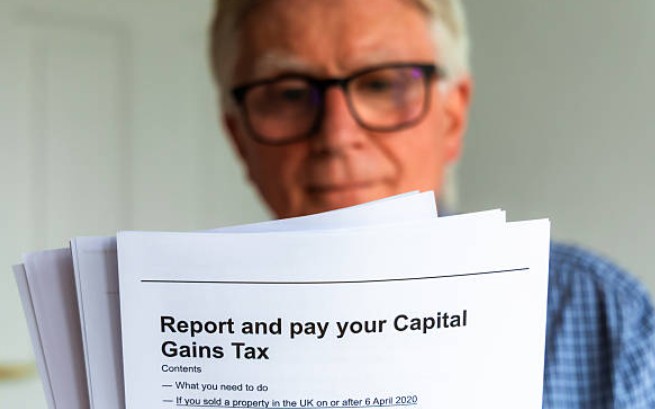
How Does HMRC Audit Capital Gains Data?
HMRC monitors compliance using automated data-matching tools. Land Registry updates alert HMRC to property transfers, while financial reporting systems monitor broker transactions and crypto platform exchanges. Mismatches automatically trigger compliance reviews.
How to Avoid Capital Gains Tax Legally in the UK?
You can legally minimize CGT by transferring assets to a spouse to double allowances to £6,000, registering capital losses with HMRC within 4 years, utilizing Bed & ISA transfers, and contributing to pensions to expand lower tax bands.
1. Spousal Ownership Transfers
Direct transfers between legal spouses or civil partners occur on a nil-gain/nil-loss basis. Before an asset sale, transferring a full or partial share to your spouse allows both individuals to apply their separate £3,000 allowances against the final profit, sheltering £6,000 tax-free.
If one spouse is in a lower income bracket, transferring the asset also unlocks the lower 18% CGT rate.
2. Registering and Offsetting Capital Losses
Unprofitable property sales or loss-making investments provide opportunities to offset total gains made in the same tax year. If total losses exceed gains, excess losses can be carried forward indefinitely to offset future gains.
Losses must be formally registered with HMRC within 4 years from the end of the tax year in which they occurred.
3. Bed & ISA and Pension Contributions
- Bed & ISA: Selling shares outside a tax wrapper to realize gains within your £3,000 limit, then instantly re-buying those same shares within a Stocks & Shares ISA shield.
- Pension Expansion: Making gross Personal Pension or SIPP contributions increases your threshold under current UK Tax Bands. Expanding your basic band allows more of your capital gain to be taxed at 18% rather than 24%.
Conclusion
Managing your capital gains tax allowance 2025/26 UK position requires proactive planning following recent allowance cuts.
To keep your tax bill as low as possible:
- Calculate Net Gains Early: Factor in allowable costs, surveying fees, stamp duty, and structural improvements before calculating tax liability.
- Utilise Joint Ownership: Transfer ownership percentages to spouses or civil partners before completion to double allowances and utilise lower income bands.
- Register Losses Promptly: File unutilised capital losses with HMRC within the 4-year limit to offset current or future chargeable gains.
- Respect Reporting Windows: Mark key HMRC deadlines, especially the strict 60-day rule for residential property disposals.
Disclaimer: This article provides general informational guidance on UK tax rules and does not constitute formal financial, tax, or legal advice.
FAQ
Is there a capital gains tax allowance in the UK?
Yes. The UK Capital Gains Tax allowance is £3,000 per individual for the 2025/26 tax year. You only pay CGT on net profits that exceed this Annual Exempt Amount.
What is the capital gains tax rate for FY 2025/26?
The standard individual Capital Gains Tax rates for 2025/26 are 18% for basic-rate taxpayers and 24% for higher or additional-rate taxpayers across all standard asset categories.
Can spouses combine their capital gains tax allowances?
Yes. Married couples and civil partners can transfer assets between each other tax-free before selling, effectively combining their £3,000 allowances to shelter up to £6,000 in gains.
Can you carry forward unused Capital Gains Tax allowance?
No. The £3,000 Annual Exempt Amount expires at the end of each tax year on 5 April. If unused, it cannot be rolled over into subsequent tax years.
What is the CGT rate for Business Asset Disposal Relief in 2025/26?
The Business Asset Disposal Relief rate is 14% for qualifying business disposals completed during the 2025/26 tax year, up to the £1 million lifetime limit.
Do I pay Capital Gains Tax on my main residential home?
No, provided the property qualifies fully for Private Residence Relief. Primary residences occupied as your main home throughout ownership are generally exempt from Capital Gains Tax.
How long do I have to report property capital gains to HMRC?
Taxable gains from selling UK residential property must be reported and paid to HMRC within 60 calendar days of the transaction’s completion date.
What happens if my total capital gains are under £3,000?
If your total net gains stay below £3,000, you owe no Capital Gains Tax and generally do not need to report the transaction unless total proceeds exceed statutory reporting limits.