
HMRC New Road Fuel Rates 2026: The SME Guide To Compliance
As of March 2026, UK small businesses must apply the updated HMRC advisory fuel rates for all company car travel. These rates allow employers to reimburse employees for business travel or require them to repay the cost of private fuel without triggering a tax charge.
Failure to align your payroll with these quarterly adjustments can lead to significant Benefit-in-Kind (BiK) complications and lost VAT recovery opportunities. While these figures focus on transport, they form just one part of the broader tax landscape for 2026.
Managing your payroll effectively also requires aligning with the recent HMRC tax-free allowance increase which directly impacts your employees’ take-home pay and your overall National Insurance obligations.
What are the HMRC new road fuel rates for 2026?
The HMRC new road fuel rates, effective from 1 March 2026 serve as the mandatory benchmark for reimbursing business mileage in company cars.
These figures are calculated based on current pump prices and engine capacities to ensure reimbursements remain tax-neutral. While most internal combustion rates remained stable this quarter, significant shifts occurred in LPG and electric vehicle public charging categories.

The 2026 SME Mileage Compliance Standard
In our experience working with UK fleet owners, the transition period is where most errors occur. HMRC allows a one-month grace period, meaning you can legally use the previous December 2025 rates until 1 April 2026.
However, from that date forward, your accounting software must be locked into the March 1st figures to remain compliant. Using incorrect rates can result in “over-reimbursement,” which HMRC treats as taxable income, potentially triggering unexpected National Insurance contributions for your business.
Keeping your digital logs precise is more than just good practice; it’s a safeguard against the Revenue’s increasingly automated enforcement.
In our experience, businesses that fall behind on mileage accuracy are often the most vulnerable to unexpected HMRC bank account deductions during a routine compliance check.
HMRC Advisory Fuel Rates (AFR) from 1 March 2026
The March 1st adjustments introduce specific changes for combustion engines and a new tiered approach for electric vehicle reimbursement.
Petrol, Diesel, and LPG Rates
| Engine Size | Petrol Rate | Diesel Rate | LPG Rate |
| 1,400cc or less | 12p | 12p (if ≤ 1600cc) | 10p |
| 1,401cc to 2,000cc | 14p | 13p | 12p |
| Over 2,000cc | 22p | 18p | 19p |
Electric Vehicle (EV) Advisory Rates
| Charging Location | Rate per Business Mile |
| Home Charging | 7p |
| Public Charging | 15p |
Note: Hybrid vehicles do not have their own category. HMRC requires you to use the petrol or diesel rates based on the engine size of the hybrid’s combustion element.
How to implement the new road fuel rates in your business?
- Audit your vehicle list: Categorise every company vehicle by engine displacement (cc) and fuel type.
- Update payroll software: Ensure your mileage modules are updated with the March 1st rates before the April 1st grace period ends.
- Differentiate EV charging: Ask drivers of electric company cars to provide evidence of charging (home vs. public) to justify the 15p reimbursement rate.
- Collect fuel receipts: Instruct employees to submit VAT-compliant fuel receipts for every journey to secure your input tax reclaim.
- Calculate private use: If you provide “free fuel,” ensure employees repay the private portion at exactly the AFR rate to avoid the Fuel Benefit Charge.
- Archive records: Store mileage logs and receipts for at least six years to satisfy HMRC audit requirements.

How does the September 2026 Fuel Duty increase affect these rates?
A critical change is coming later this year. While the March 1st rates reflect current stability, the UK Government has confirmed that the temporary 5p fuel duty cut, introduced in 2022, will begin to unwind on 1 September 2026.
The duty will rise by 1p per litre in September, followed by a 2p increase in December 2026. We expect this to trigger a corresponding rise in the HMRC new road fuel rates for the final two quarters of the year.
For an SME, this means your cost per mile for logistics and sales travel will likely increase by approximately 5–8% by year-end. Preparing your 2026/27 budget now to absorb these incremental fuel cost hikes is a strategic necessity.
This incoming pressure on fuel budgets makes protecting your business reserves even more important.
It is worth reviewing the latest HMRC savings account warning to ensure any interest earned on your cash buffers isn’t eroded by avoidable tax charges as rates fluctuate through the year.
How to reclaim VAT on mileage using HMRC fuel rates
One of the most common missed opportunities we see in SME accounting is the failure to reclaim VAT on the fuel element of mileage claims. You cannot reclaim VAT on the full 45p (AMAP) or the full AFR rate; you can only reclaim it on the fuel portion.
VAT Recovery Example (Petrol 1,401cc – 2,000cc)
| Component | Value | Calculation |
| Total Reimbursement | 14.00p | Per mile (March 1st AFR) |
| VAT Fraction | 1/6 | Standard 20% VAT rate |
| VAT Claimable | 2.33p | Per business mile |
In practice, if an employee drives 1,000 business miles, your business can reclaim £23.30 in VAT. While this seems small, across a fleet of five vehicles doing moderate mileage, this often equates to over £1,500 in found money annually.
However, HMRC strictly requires a fuel receipt that covers the cost of the fuel used for that claim.
What are the rules for Electric Vehicles and VED in 2026?
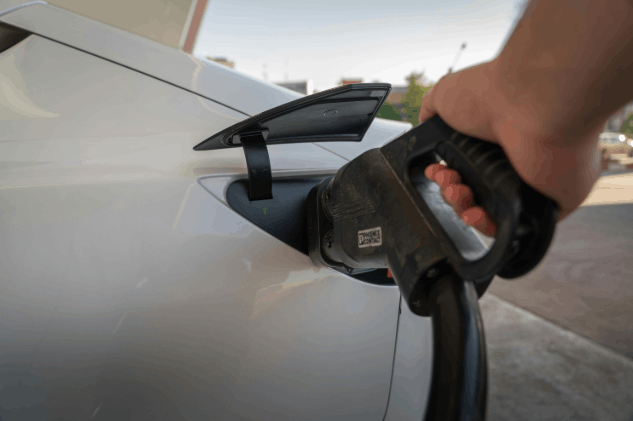
Starting April 2026, the tax landscape for EVs changes significantly. Electric cars are no longer exempt from Vehicle Excise Duty (VED). Most EV owners will move to the standard rate of £200 per year.
A “win” for SMEs, however, is the adjustment to the Expensive Car Supplement. From 1 April 2026, the threshold for this “luxury tax” on zero-emission vehicles rises from £40,000 to £50,000.
This means popular business models like the Tesla Model Y or VW ID.4 often avoid the £425 annual surcharge that previously applied.
When reviewing our clients’ fleet choices, we’ve seen this change shift the “Total Cost of Ownership” in favour of mid-range EVs over hybrids for the 2026/27 tax year.
Final Summary and Next Steps
The HMRC new road fuel rates for March 2026 demand immediate attention to ensure your SME remains compliant and tax-efficient. By updating your rates now, you avoid the risk of BiK penalties and ensure your VAT reclamation is maximised.
As you update your 2026/27 payroll settings, remind your team that these rates only cover business-related travel.
For their personal finances, HMRC warns that savings over £3501 may incur tax, making it vital for staff to track their total interest alongside their mileage claims to avoid a personal tax bill at year-end.
Your Action Plan:
- Update your mileage rates to the March 1st figures in your accounting software today.
- Audit your EV fleet to determine who requires the 15p public charging rate versus the 7p home rate.
- Budget for the September 1st Fuel Duty hike, which will likely increase these rates again in late 2026.
- Enforce a No Receipt, No Reclaim policy for all business mileage to satisfy HMRC VAT rules.
FAQ about HMRC new road fuel rates
Can I pay more than the HMRC advisory fuel rates?
Yes, but anything paid above the AFR is considered a taxable benefit. You must report the excess on a P11D form, and it will be subject to Income Tax and Class 1A National Insurance.
What is the grace period for the March 2026 rates?
HMRC allows you to use the previous quarter’s rates (December 2025) for up to one month after the new rates are published. For the March update, the old rates must be retired by 1 April 2026.
Do these fuel rates apply to vans?
No. These AFRs specifically apply to company cars. For vans, different rules apply, including a flat-rate Van Fuel Benefit Charge if private fuel is provided, which is increasing to £4,170 for the 2026/27 tax year.
How do I handle hybrid car mileage?
Hybrids are treated as either petrol or diesel vehicles. You must use the rate applicable to the engine size of the internal combustion engine within the hybrid system.
Why is there a difference between home and public EV rates?
Public charging is significantly more expensive due to VAT (20% vs 5% at home) and provider margins. HMRC’s 15p public rate acknowledges this higher cost for drivers without home chargers.
What happens if my car’s engine size isn’t listed?
If your engine size falls between the categories, you must round to the nearest band. If an engine is exactly 1,400cc, it stays in the lower band.
Are these the same as the 45p mileage rate?
No. The 45p rate (AMAP) is for employees using their own cars. The AFR rates discussed here are specifically for company-provided cars.