National Minimum Wage 2026: SME Rates, Payroll Fix Guide
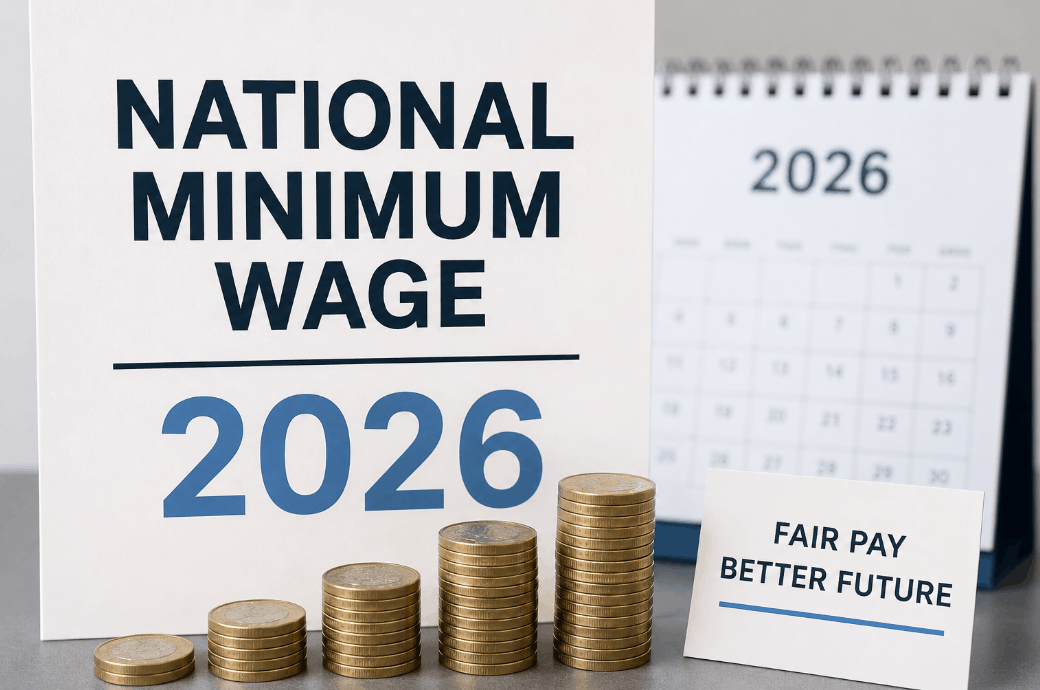
The UK national minimum wage 2026 sets the legal minimum pay rate at £12.71 per hour for workers aged 21 and over from 1 April 2026. Governed by the National Minimum Wage Regulations, younger workers receive £10.85 (ages 18–20) and £8.00 (ages 16–17 and apprentices).
- The National Living Wage increases to £12.71 per hour on 1 April 2026 for all qualifying staff aged 21 and over.
- The statutory rate for workers aged 18 to 20 rises by 8.5% to £10.85 per hour, narrowing the gap between entry-level pay rates.
- Total employer wage costs exceed the gross hourly rate due to secondary Class 1 National Insurance and auto-enrolment pensions.
What Is the UK National Minimum Wage as of April 2026?
From 1 April 2026, the statutory hourly minimum for workers aged 21 and over is £12.71 across England, Scotland, Wales and Northern Ireland.
According to the Low Pay Commission (LPC) and the Department for Business and Trade (DBT), the revised rates are intended to reflect changes in living costs and keep entry-level pay in line with wider earnings.
Small business owners budgeting for UK labour minimum wage legislation must apply these qualifying age brackets across all payroll software runs starting on or after the official April implementation date.
The statutory rates and estimated full-time gross earnings are set out below for each worker category:
| Worker Category & Age Band | 2025 Rate (per hour) | April 2026 Rate (per hour) | Percentage Increase | Gross Annual Salary (37.5 hrs/week) | Gross Annual Salary (40 hrs/week) |
| National Living Wage (Aged 21+) | £12.21 | £12.71 | +4.1% | £24,784.50 | £26,436.80 |
| 18–20 Year Old Rate | £10.00 | £10.85 | +8.5% | £21,157.50 | £22,568.00 |
| 16–17 Year Old Rate | £7.55 | £8.00 | +6.0% | £15,600.00 | £16,640.00 |
| Apprentice Rate | £7.55 | £8.00 | +6.0% | £15,600.00 | £16,640.00 |
Figures are based on the statutory rates confirmed by the Department for Business and Trade for April 2026.
These rates provide the baseline gross pay for standard weekly working patterns. Employers should review their employment contracts to make sure hourly pay rates meet the statutory minimum.
Why the 2026 Wage Uplift Costs Small Businesses More Than £12.71 an Hour
A business paying the statutory minimum will have total employment costs that are higher than the headline hourly rate.
An increase in gross pay also increases mandatory employer costs, including secondary Class 1 NICs and workplace pension contributions.
Small businesses working with tight profit margins need to factor these additional statutory costs into their cash flow rather than looking at the basic wage rate alone. The main additional employment costs include:
- Secondary Class 1 National Insurance Contributions: Employers pay 15% on earnings above the secondary threshold of £5,000 per employee per year.
- Workplace Pension Auto-Enrolment: Employers must contribute a mandatory minimum of 3% on qualifying employee earnings above the statutory pension auto-enrolment threshold set by The Pensions Regulator (TPR).
- Statutory Holiday Pay Accrual: Every worker accumulates 5.6 weeks of statutory paid leave per year, requiring approximately 12.07% in additional wage reserves for every qualifying hour worked.
Taken together, these additional costs can add around £2.10 to £2.40 per hour for a worker paid the national living wage 2026 rate.
As the Federation of Small Businesses (FSB) has highlighted, overlooking these additional statutory costs can put pressure on margins in labour-intensive sectors such as retail and hospitality.

Youth Rates and Apprentices: The Under-21 Wage Band Compression
The government’s policy of narrowing the pay gap between younger and adult workers is also reducing the difference between pay levels within small businesses.
The national minimum wage 2026 18 year old rate rises by 8.5% to £10.85 per hour. This change narrows the pay gap between junior staff and experienced shift supervisors, which may leave employers needing to review supervisory pay to maintain clear differences between roles.
- Widely circulated claim: The National Living Wage applies only to workers aged 23 or 25 and over.
- Correct position: The National Living Wage threshold applies to all qualifying workers aged 21 and over.
- Source: Department for Business and Trade (DBT) Statutory Wage Framework.
Rules for 16-to-17-Year-Old Workers and School Leavers
Workers who are above compulsory school age but under 18 must receive at least £8.00 per hour from 1 April 2026. Employers must verify worker dates of birth using official government documentation, especially when determining what is the minimum wage for a 16 year old during seasonal recruitment.
Apprentice Pay Triggers: The 19-and-Over Second-Year Rule
An apprentice covered by the national minimum wage 2026 rules must receive at least £8.00 per hour during their first year of training.
Once an apprentice turns 19 and completes the first twelve months of their apprenticeship programme, employers must immediately increase their pay to the standard statutory minimum wage for their age group (£10.85 or £12.71).
The change in apprentice rates is a common payroll calculation issue for growing businesses. Employers should keep track of training start dates and employee birthdays to avoid accidentally underpaying apprentices.
Common Payroll Pitfalls: Deductions, Accommodation Offsets, and Unpaid Working Time
Incorrect deductions and unrecorded working time can lead to minimum wage underpayments and enforcement action.
Under the National Minimum Wage Act 1998, compliance is assessed by comparing qualifying pay with the total hours worked during the relevant pay reference period.
If deductions or unpaid working time bring effective hourly pay below the statutory minimum, the employer can be in breach even if the employee has agreed to the arrangement.
Common operational practices that trigger unintended wage underpayment include:
- Mandatory Workplace Uniforms and Equipment: Requiring staff to purchase specific clothing or tools from their own pocket reduces calculated pay by that exact expense amount.
- Mandatory Security Checks and Handover Briefings: Unpaid working time spent queuing for bag checks or attending 15-minute pre-shift briefings counts as worked time under ACAS guidance.
- Salary Sacrifice Arrangements: Deductions for pension schemes, cycle-to-work programmes, or childcare vouchers cannot legally reduce an employee’s gross cash remuneration below the statutory rate.
- Exceeding Accommodation Offset Deductions: Employers providing housing can offset a maximum accommodation offset allowance of £11.10 per day (£77.70 per week) against statutory pay.
Deductions allowed under the National Minimum Wage Regulations still need to be monitored carefully. Business owners should make sure salary sacrifice arrangements do not result in pay falling below the statutory minimum.
Fair Work Agency Enforcement: Penalties and Audit Readiness for SMEs
Minimum wage rules are backed by financial penalties and public naming of employers who fail to comply.
The Fair Work Agency (FWA), working alongside HM Revenue and Customs (HMRC) compliance teams, has powers to investigate suspected minimum wage breaches, including through workplace inspections.
Businesses found in breach face mandatory arrears repayments plus civil penalties of 200% of the total underpayment amount, capped at £20,000 per worker.
To prepare for HMRC wage raid payroll checks and keep payroll records ready for inspection, business owners should follow these steps:
- Audit All Time-Tracking Records: Compare electronic clock-in records with payroll records to make sure early starts, mandatory meetings and overtime are properly paid.
- Review Salary-Sacrifice Schemes: Check that voluntary salary-sacrifice deductions do not bring calculated hourly pay below the statutory minimum during any pay period.
- Verify Apprentice Progression Triggers: Check apprentices’ training dates so that any required pay increase is applied at the correct time.
- Update Payroll Systems: Test payroll software before 1 April 2026 to make sure the new rates and thresholds are applied correctly across all pay periods.
Regular compliance checks can help businesses reduce the risk of enforcement action and protect their reputation.
How Small Business Owners Can Safeguard Margins Against Statutory Wage Rises
Small businesses can manage higher wage costs by improving productivity and reviewing their pricing strategies. Managing a rising wage bill means reviewing how the business operates rather than simply absorbing the extra cost through lower profit margins.
To maintain stability and manage the national minimum wage 2026 yearly payroll impact, businesses should focus on three key areas:
- Restructure Commercial Pricing and Contracts: Review client billing rates and service contracts annually to incorporate statutory employment cost increases into baseline pricing.
- Invest in Workflow Automation Tools: Implement modern inventory management, digital point-of-sale software, and automated scheduling systems to reduce low-value administrative hours.
- Rebalance Internal Pay Spreads: Establish clear skills-based performance tiers to maintain motivation across supervisory staff while junior pay rates compress upward.
Making these operational changes can help small businesses manage higher wage costs without putting unnecessary pressure on profitability.

Conclusion
The 2026 statutory wage increases mean UK small business owners need to review their payroll, consider the narrowing gap between youth and adult rates, and budget for additional employer National Insurance costs.
Businesses should keep accurate working time records to reduce the risk of enforcement action and penalties.
Understanding the national minimum wage 2026 is important for UK SME owners who need to manage total employment costs and protect their margins throughout the 2026/27 financial year.
FAQ
What is the difference between the National Minimum Wage and the National Living Wage?
The National Living Wage represents the mandatory statutory minimum rate for workers aged 21 and over (£12.71), while the National Minimum Wage covers workers aged 16 to 20 and apprentices (£8.00–£10.85). Both are statutory obligations, unlike the voluntary Real Living Wage set by the Living Wage Foundation.
Do apprentices get the minimum wage in 2026?
Yes. Apprentices receive a dedicated statutory rate of £8.00 per hour during their first 12 months of training. If an apprentice is 19 or older and has completed their first training year, they are entitled to the higher statutory rate for their age group.
Can an employer pay below minimum wage in the UK if staff agree to it in writing?
No. Statutory minimum pay is a legally protected employment right under the National Minimum Wage Act 1998. Written employment contracts, private agreements, or employee waivers cannot legally opt out of mandatory statutory wage rates.
Does the accommodation offset count towards the minimum wage?
Yes. Employers providing living accommodation can count up to £11.10 per day (£77.70 per week) towards statutory minimum wage compliance. Any accommodation charge exceeding this statutory limit reduces the employee’s calculated pay for minimum wage enforcement purposes.
What will the national minimum wage be in 2027?
The Low Pay Commission is expected to make its recommendations for the 2027/28 rates in late 2026, taking account of economic conditions, inflation and earnings growth. The government will formally announce the 2027 statutory rates during the Autumn fiscal statement.
Disclaimer: This guide provides general informational guidance on UK statutory wage rates and does not constitute formal legal, tax, or professional payroll advice.