

Advisory Fuel Rates December 2025: The UK Business Compliance Guide
Advisory fuel rates December 2025 are essential benchmarks for UK employers providing company cars to staff. These rates allow businesses to reimburse employees for business travel in company vehicles without triggering a taxable benefit, provided the payments strictly align with HMRC’s published figures for specific engine capacities and fuel types.
HMRC maintains these rates to ensure fairness in mileage reimbursement for company car drivers. When an employer pays these specific amounts per business mile, the reimbursement is considered non-taxable.
This is intended to cover the actual cost of fuel consumed during business-related journeys, avoiding any secondary tax burden for the employee.
What are Advisory Fuel Rates (AFR)?
Advisory Fuel Rates (AFR) are the official sets of per-mile cash allocations managed and updated quarterly by HM Revenue and Customs (HMRC). They establish a clear, universally recognized baseline for processing corporate vehicle expenses and settling tax compliance obligations.
In the day-to-day management of a corporate fleet, these rates fulfill two vital, legally distinct programmatic functions:
- Reimbursing Business Miles: Employers use AFR metrics to systematically pay back employees for the exact cost of fuel consumed during legitimate business travel while operating an assigned company car.
- Repaying Private Miles: If an individual uses an assigned company car for personal errands but the employer pays for the baseline fuel, the employee uses these rates to pay back the exact cost of their private mileage. Settling this balance removes the risk of facing a punishingly expensive Fuel Benefit tax charge.
What are the Advisory Fuel Rates December 2025?
The Advisory Fuel Rates for December 2025 represent the legal, non-taxable maximum reimbursement caps per mile for business journeys completed within a company-provided vehicle.
These numbers apply exclusively to dedicated company fleet allocations and remain completely separate from personal vehicle mileage schemes.
Employers must mandate the use of these precise financial parameters to prevent complex accounting errors with the tax office.
Failing to separate these figures from standard private transport structures often results in unauthorized company payouts, forcing rapid intervention from payroll auditors.
The Official HMRC December 2025 Rate Table
This official HMRC rate schedule outlines the exact pence-per-mile values for petrol, diesel, and LPG vehicles effective from 1 December 2025.
Employers must update their expense matrices to match these specific metrics to maintain zero-tax status on staff mileage claims.
| Engine Size (cc) | Petrol Rate Per Mile | LPG Rate Per Mile | Engine Size (cc) | Diesel Rate Per Mile |
| 1400cc or less | 12p | 11p | 1600cc or less | 12p |
| 1401cc to 2000cc | 14p | 13p | 1601cc to 2000cc | 13p |
| Over 2000cc | 22p | 21p | Over 2000cc | 18p |
Note: Fully electric cars follow a separate Advisory Electricity Rate (AER).

The One-Month HMRC Grace Period Rule
HMRC implements a mandatory one-month transitional grace period whenever a new set of quarterly mileage updates takes effect across the United Kingdom. This means employers can legally process expense forms using the previous quarter’s rates up until 31 December 2025 if required.
This operational overlap accommodates natural business delays in updating global enterprise resource planning (ERP) software or gathering late paper mileage logs from employees.
However, by 1 January 2026, the updated December table becomes absolute, rendering older mileage values obsolete until businesses transition fully to the upcoming HMRC new road fuel rates 2026.
How do the Hybrid Vehicle Framework and Rates Work?
HMRC specifies that hybrid vehicles must be reimbursed using standard petrol or diesel Advisory Fuel Rates based entirely on the internal combustion engine’s cubic capacity (cc).
Hybrid configurations that contain secondary electric battery assistance do not qualify for standalone electric mileage rates.
For a petrol-electric hybrid vehicle, the fleet manager must use the primary petrol table corresponding directly to the vehicle’s engine size.
This standardized framework ensures consistent tax treatment across mixed corporate fleets while eliminating the complex task of monitoring real-time battery-to-fuel efficiency splits.
Steps for Applying HMRC Rates
Correctly executing the HMRC mileage framework requires a step-by-step compliance checking sequence to preserve clean corporate tax books. Following a structured verification workflow guarantees that every mileage claim passes internal audit criteria seamlessly:
- Verify Engine Specs: Identify the vehicle’s precise internal combustion engine capacity by checking the official V5C logbook.
- Confirm Fuel Classification: Corroborate the primary fuel type listed on the vehicle’s formal registration document.
- Cross-Reference Brackets: Map the certified engine size against the appropriate December 2025 threshold brackets.
- Isolate Business Travel: Apply the verified pence-per-mile rate strictly to business-only mileage logs submitted by staff.
- Log Route Parameters: Record the verified start and end postcodes for every single commercial journey.
- Secure Document Archival: Store these comprehensive journey logs for a minimum of six years to satisfy standard tax audit protocols.
Company vs. Personal Vehicles: Mileage Reimbursement Policy
A common error in fleet management involves conflating company car reimbursements with the Approved Mileage Allowance Payments (AMAP).
While the latter covers personal cars at a rate of 45p per mile for the first 10,000 miles, it has no application to company-owned vehicles. Misapplying these rates often triggers HMRC inquiries during routine employer compliance reviews.
| Feature | Company-Owned / Leased Vehicle | Personal Vehicle (Grey Fleet) |
| What is Reimbursed? | Fuel costs only for business-related trips. | All running costs (Fuel, wear-and-tear, insurance, depreciation, and maintenance). |
| Reimbursement Basis | Actual fuel receipts OR a fixed, lower fuel-only rate per mile (e.g., HMRC Advisory Fuel Rates). | Standard Per-Mile Rate (e.g., 2026 IRS rate of 67¢/mile or 2026 UK AMAP rate of 55p/mile). |
| Tax Implications | Tax-free if only business fuel is covered. Private use of the car usually triggers a fringe benefit tax. | Tax-free up to the government-approved maximum per-mile limit. Excess paid above this limit is taxable. |
| Insurance Requirement | Covered under the organization’s commercial fleet insurance policy. | Employee must prove they have business-use coverage on their personal auto insurance. |
| Receipts & Tracking | Requires fuel receipts and a log separating business vs. private mileage to avoid tax penalties. | Requires a detailed mileage log (Date, origin, destination, business purpose, and exact miles driven). |
| Best Suited For… | Employees who drive heavily for work (e.g., delivery, field service, or sales reps exceeding 10k–15k miles/year). | Employees who travel occasionally or unpredictably for business purposes. |
The Reality of 45p per Mile
Many employees mistakenly believe the 45p per mile rule is a universal standard for all business driving. In reality, this rate serves as the statutory limit for employees using their own private vehicles for work.
Using this rate for a company car is incorrect and will likely result in an unauthorized tax-free benefit that must be reported.

AFR vs. AMAP at a Glance
Establishing explicit boundaries within payroll software completely removes structural tax reporting risks for your business. Fleet administrators should utilize this distinct three-point verification check to map vehicle expenses accurately:
- Isolate Company Fleet: Apply standard AFR metrics to all company-owned or leased vehicles to prevent P11D tax reporting complications.
- Protect Private Transport: Reserve AMAP metrics (45p for the initial 10,000 miles, 25p thereafter) exclusively for employees utilizing personal vehicles.
- Audit Enterprise Software: Review structural payroll tracking settings quarterly to ensure specific vehicle categories map directly to their lawful rate tables.
Advisory Electricity Rate (AER) for electric cars
The Advisory Electricity Rate (AER) for fully electric company cars is set at a multi-tiered split for the December 2025 quarter: 7p per mile for home charging and 14p per mile for public charging network utilization. Employers must apply these split tiers based on where the vehicle is charged.
This critical split in the AER framework was introduced by HMRC to fairly accommodate the stark pricing discrepancies between residential utility rates and commercial public infrastructure.
For journeys where an employee charges the vehicle across both environments, HMRC dictates that companies may apportion the business mileage logs between the 7p and 14p rates on a fair and reasonable calculation basis.
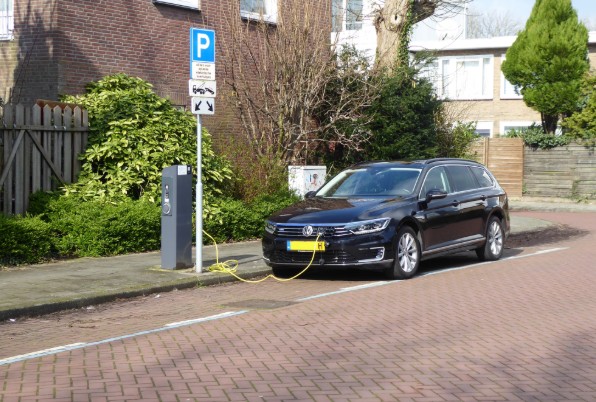
How to Manage Electric Car Mileage Tax and Reimbursement?
Reimbursing fully electric company car travel requires using the official Advisory Electricity Rate (AER), which features a multi-tiered split for the December 2025 quarter.
Under this framework, home-based charging sessions are reimbursed at 7p per mile, while public charging network travel is set at 14p per mile.
HMRC introduced this structural split to mirror the different costs associated with charging methods across the UK.
For business trips that blend both residential and public charging locations, employers are permitted to apportion the mileage calculation based on how much charging occurs at each location, provided the final calculation remains fair and reasonable.
Documentation for Electric Fleet Compliance
Maintaining audit readiness for electric vehicle (EV) fleets requires robust digital mileage tracking and verified proof of charging methods.
Relying on rough distance estimates or loose averages fails to satisfy the rigorous evidentiary standards requested by HMRC tax compliance inspectors.
Corporate fleet managers should implement automated logging systems to track electric consumption smoothly.
Clear digital histories serve as a primary layer of corporate defense, ensuring that public charging reimbursements are backed by legitimate transactions during any standard tax review.
Step-by-Step Electric Vehicle Reimbursement Process
Optimizing your business for electric vehicle travel requires establishing standardized home and public reimbursement pathways. Fleet tracking systems should utilize this distinct sequence to process electric claims accurately:
- Deploy Automated Logs: Integrate dedicated tracking applications that capture precise mileage and distinguish trip types automatically.
- Separate Billing Receipts: Keep all public charging VAT receipts organized and completely isolated from standard home utility statements.
- Standardize Home Payouts: Enforce the standard 7p AER limit across all residential charging claims unless real per-mile utility costs can be proven.
Summary and Next Steps
Managing fuel reimbursement requires precision. Ensure your records clearly separate business journeys from private travel, apply the correct engine-specific rates, and maintain digital logs to satisfy HMRC requirements.
For complex fleet arrangements or hybrid structures, consult the official government guidance periodically to ensure your internal policies reflect the latest HMRC standards.
FAQ about Advisory Fuel Rates December 2025
Is the mileage rate still 45p?
No. The 45p per mile rate remains the tax-free Approved Mileage Allowance Payment (AMAP) for employees using their own private vehicles. It does not apply to company cars, which must use HMRC advisory fuel rates.
How do I calculate car mileage for tax?
Calculate mileage by subtracting the odometer reading at the start of a journey from the end reading. Ensure you document the date, business purpose, and specific start and end locations for every claim.
What is the mileage rate for hybrid cars?
Hybrid vehicles are reimbursed using the petrol or diesel advisory rates based on their engine size. Electric-only hybrids (PHEVs) typically follow the petrol rate unless they are designated as fully electric.
What is the current HMRC mileage rate for company cars?
The current rate depends on the vehicle’s engine size and fuel type, as published in the official HMRC advisory fuel rates table. Always verify the specific rate for the vehicle’s capacity before processing payment.
Do I need to update my payroll for December 2025?
Yes, ensure your payroll software is updated to reflect the specific advisory fuel rates active for the relevant period. Outdated rates can lead to incorrect tax filings and potential penalties from HMRC.
What is the fuel benefit?
The fuel benefit is a taxable benefit-in-kind that arises when an employer pays for private fuel for a company car. It is distinct from the non-taxable reimbursement of business fuel costs.
What is the BiK rate for electric cars?
The Benefit-in-Kind (BiK) rate for fully electric cars is significantly lower than for petrol or diesel equivalents, intended to incentivize the adoption of low-emission vehicles within company fleets.
What is the UK tax mileage allowance?
The UK tax mileage allowance refers to the tax-free amounts an employer can pay for business travel. For private cars, this is 45p for the first 10,000 miles and 25p thereafter.