What Are the Memorandum and Articles of Association? A Complete Guide to UK Company Law
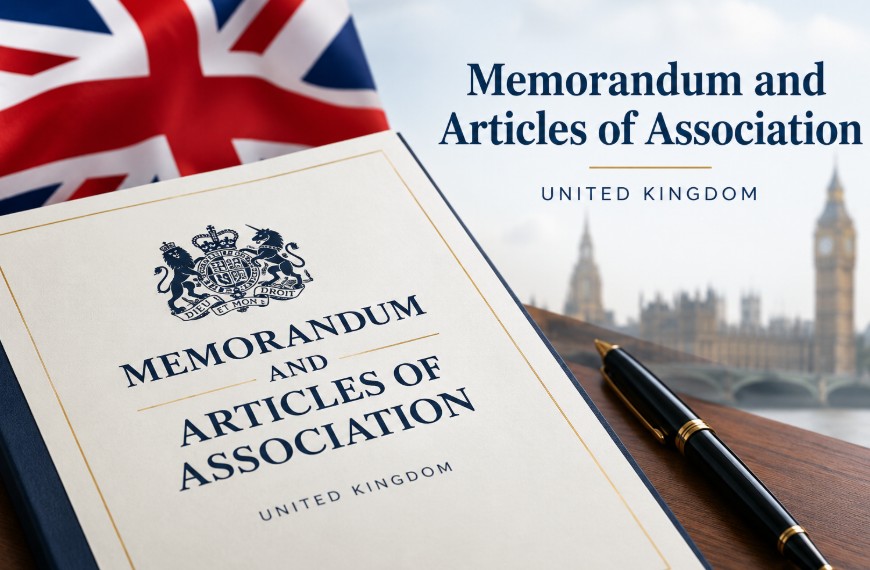
The memorandum and articles of association serve as the foundational constitutional documents required to incorporate and operate any private limited company in the United Kingdom under the Companies Act 2006.
These legal records establish the official existence of the corporate entity while defining the internal governance framework, shareholder rights, and director responsibilities necessary for day-to-day business management.
Key Takeaways
- The memorandum of association acts as a historical snapshot confirming the original founders’ consent to form the company at the point of incorporation.
- The articles of association serve as a legally binding rulebook dictating daily internal management, shareholder voting rights, and director decision-making powers.
- Companies formed under modern legislation do not require a detailed memorandum of association outlining objects or share capital, unlike older historical entities.
- Model articles provided by legislation offer a standard governance template that newly incorporated private limited companies can adopt automatically.
What Is a Memorandum of Association in the UK?
The memorandum of association is a vital statutory statement signed by the initial subscribers or founders that officially confirms their intention to form a company under the Companies Act 2006.
It acts as a legal bridge that brings the corporate entity into existence, serving as hard proof that the founding members mutually agreed to create the company.
Key Characteristics of the Modern Memorandum
For any private limited company incorporated after October 2009, the memorandum is a streamlined, static document. Unlike its historical counterpart, a modern memorandum contains:
- Subscriber Details: The full names and signatures of the original shareholders (subscribers) who formed the company.
- Association Statement: A formal declaration confirming that the subscribers wish to form a company under the Companies Act 2006 and agree to become members taking at least one share each.
- Immutability: Once the company is registered, the memorandum is finalized at that exact historical moment. It cannot be amended, updated, or altered under any circumstances. Any future changes to the company’s structure, share capital, or officers are recorded in internal registers or the articles of association, leaving the original memorandum untouched.
Modern vs. Historic Memorandums
It is important to distinguish between companies formed today and older, historic entities incorporated before the 2006 Act reforms:
- Historic Companies: Older entities often feature a lengthy memorandum that includes an objects clause. This clause historically restricted the exact business activities and commercial scope the company was legally permitted to undertake.
- Modern Companies: Modern incorporations bypass these restrictions entirely. Companies formed today possess unlimited legal capacity, meaning they can engage in any lawful business activity unless explicitly and narrowly constrained by their own articles of association.
What Are the Articles of Association?
The articles of association constitute the primary internal rulebook that governs how a company is managed, operated, and controlled.
This legally binding document acts as a multi-party contract between the company and its members, ensuring that internal governance aligns with statutory requirements under the Companies Act 2006.
Key Characteristics of the Modern Articles
- Internal Governance: Defines the specific powers delegated to directors, procedures for board meetings, and shareholder voting protocols.
- Operational Rules: Outlines share transfer restrictions, dividend distribution rules, and the exact process for appointing or removing company officers.
- Legal Compliance: Directors and shareholders must strictly adhere to these provisions to ensure that corporate resolutions and business decisions remain legally valid.
Dynamic vs. Static Nature
Unlike the immutable memorandum of association, the articles remain a living document that grows and adapts alongside the business. As a company scales, undergoes restructuring, or takes on new investment, its governance rules can be modified via a formal shareholder special resolution.
In practice, legal advisors closely examine the articles during corporate expansions, funding rounds, or property leases to verify that internal decisions comply fully with the company’s established voting thresholds and administrative rules.
Comparison of the Memorandum and Articles of Association
The following breakdown highlights how the memorandum and articles of association differ in purpose, legal effect, and lifecycle management under UK company law.
| Feature | Memorandum of Association | Articles of Association |
| Primary Purpose | Confirms the initial statutory intent of founders to form and register the corporate entity. | Regulates ongoing internal governance, management rules, and shareholder rights. |
| Amendment Status | Static and immutable; cannot be altered or updated under any circumstances after incorporation. | Dynamic and flexible; can be amended as the business evolves via a special resolution. |
| Modern Content | Minimal historical details, including original subscriber names and formation consent. | Comprehensive operational rules, director authority, voting thresholds, and transfer restrictions. |
| Legal Binding | Acts as the foundational snapshot that brings the corporate entity into legal existence. | Functions as a multi-party contract binding the company, directors, and shareholders to specific operational conduct. |
How to Get a Copy of the Memorandum and Articles of Association?
Retrieving official company documents is a routine requirement during corporate due diligence, commercial property leasing, or business banking setup.
Official copies of any registered company’s memorandum and articles of association can be obtained directly through the public register.
- Navigate to the official online Companies House Beta search portal.
- Enter the target company name or its Unique Company Number into the search bar.
- Select the correct entity from the search results page to open its public filing history.
- Access the Filing History tab and filter or scroll down to locate the initial incorporation documents or any subsequent amended articles of association.
- Download the PDF copies instantly for digital review or request certified paper copies directly from the Registrar of Companies.

Model Articles vs. Custom Articles: Which Should Your Small Business Use?
When establishing a company through Companies House, founders can choose to adopt standard regulatory templates known as Model Articles, or draft bespoke provisions tailored to specific business needs.
Model articles provide a pre-approved legal framework established by statute, saving time and legal expenses during standard incorporations.
If a company registers online without submitting custom rules, the default Model Articles for private companies limited by shares apply automatically.
These standard provisions govern standard board quorum requirements, director decision-making processes, and share transfer restrictions.
However, growing small businesses often modify these model provisions to include custom shareholder protections, specialised veto rights, or distinct classes of shares.
- Standard model articles eliminate upfront legal drafting costs for standard setups.
- Custom articles permit the creation of specialized voting rights and transfer controls.
- Bespoke drafting prevents operational deadlock in multi-founder small business enterprises.
What Should Be Included in the Memorandum and Articles of Association?
The Companies Act 2006 defines the contents of these constitutional documents, separating high-level incorporation data from day-to-day operational rules.
What Must Be Included in the Memorandum of Association?
For companies incorporated under modern legislation, the memorandum is minimal and standardized. It contains:
- The Association Statement: A formal declaration signed by each initial subscriber stating that they wish to form a company under the Companies Act 2006, agree to become members, and take at least one share each.
- Subscriber Details: The full legal names and authenticating signatures of the founding shareholders.
- Historic Objects (If Applicable): For older entities incorporated prior to October 2009, a specific objects clause dictating the permitted scope of commercial activities may still be present, though modern entities enjoy unlimited legal capacity by default.
What Must Be Included in the Articles of Association?
The articles act as the comprehensive internal rulebook and generally cover the following structural areas:
- Shares and Distributions: Rules governing share classes, rights attached to shares, allotment procedures, pre-emption rights, calls on shares, and dividend distribution protocols.
- Directors’ Powers and Responsibilities: The scope of authority delegated to the board, how board meetings are convened and quorum is calculated, voting procedures, and the process for appointing, disqualifying, or removing directors.
- Decision-Making by Shareholders: Protocols for organizing annual general meetings (AGMs) and general meetings, notice periods, proxy voting rules, and the voting thresholds required to pass ordinary or special resolutions.
- Share Transfers and Transmission: Restrictions or conditions on transferring shares, board discretion to refuse registration of transfers, and rules handling shares upon a shareholder’s death or bankruptcy.
- Administrative Provisions: Guidelines on the use of the company seal, the maintenance of statutory registers, indemnity protections for directors and officers, and winding-up procedures.
Can You Change the Memorandum or Articles of Association?
The memorandum of association cannot be altered under any circumstances following the initial registration of the company.
Because it represents a fixed historical record of the original subscribers at the exact date of incorporation, regulatory frameworks prohibit any post-registration modifications to this document.
Conversely, the articles of association are fully dynamic and can be updated as the company evolves. Altering the articles requires a formal shareholder process where a special resolution is passed, ensuring that structural governance rules adapt appropriately to new business requirements, equity investments, or ownership shifts.

What Happens If You Do Not Have These Documents?
Operating a commercial enterprise without accessible constitutional documents creates immediate administrative, legal, and operational roadblocks.
Regulatory authorities, financial institutions, and commercial partners routinely require copies of the memorandum and articles of association during standard compliance and due diligence checks.
Risks of Missing Constitutional Documents
- Banking and Finance Hurdles: Business bank accounts cannot be opened, verified, or actively maintained without up-to-date constitutional papers. Similarly, commercial loan applications stall during mandatory underwriting verification.
- Commercial Property Delays: Landlords and commercial property lessors require verified corporate filings during lease negotiations, sometimes intersecting with tenancy management tasks such as issuing a Section 21 Notice Form 6A for residential units attached to mixed-use portfolios, causing significant delays if documents are missing from the public register.
- Investment and Due Diligence Stalls: Corporate due diligence reviews during funding rounds or equity expansion halt immediately if foundational records are incomplete or inaccessible.
Maintaining organized digital or physical access to these documents ensures seamless compliance and prevents unnecessary friction with regulatory bodies and financial institutions as the enterprise expands.
What are the Common Mistakes Small Business Owners Make?
Small business founders frequently encounter compliance pitfalls when handling corporate governance documents during and after company incorporation. Avoiding these common oversights ensures long-term legal standing and prevents administrative penalties:
- Relying on Unverified Legacy Templates: Downloading outdated constitutional templates from unverified third-party websites without aligning them with current statutory requirements under the Companies Act 2006 often creates internal operational conflicts and legal vulnerabilities.
- Failing to Meet Filing Deadlines: Missing the statutory 15-day deadline to notify regulatory authorities after passing a special resolution to amend company articles results in administrative penalties for officers and creates discrepancies on the public Companies House record.
- Neglecting Custom Provisions for Multi-Founder Startups: Blindly accepting standard model articles without evaluating specific business needs can leave growing enterprises unprotected against founder disputes, deadlock, or unwanted share transfers.
Conclusion
Establishing and managing a corporate entity requires strict adherence to statutory governance frameworks.
Founders must ensure that initial filings are accurately executed, model or custom articles reflect actual operational intent, and any subsequent structural changes are formally approved and registered.
Maintaining organized access to these constitutional documents ensures seamless compliance with regulatory bodies and financial institutions as the enterprise expands.
Disclaimer: This article is for informational purposes only and does not constitute formal legal or financial advice. For specific guidance on corporate formation or company law compliance, consult a qualified solicitor or chartered secretary.
FAQs
How do I get MOA for my company?
The original memorandum of association is issued by Companies House upon successful incorporation and can be retrieved at any time through the online filing history portal.
Are model articles compulsory for UK companies?
Model articles apply automatically if a company registers online without submitting custom provisions, but founders retain the legal right to adopt bespoke articles from incorporation.
Can the memorandum of association be updated?
The memorandum of association is a static historical document finalized at registration and cannot be altered or amended under any circumstances.
What vote is required to change company articles?
Amending articles of association requires passing a formal special resolution supported by a minimum seventy-five percent majority of voting shareholders.
Who can access a company’s articles of association?
Constitutional documents are public records; any individual can view, download, or purchase copies via the online Companies House register.