100k After Tax UK: Take-Home Pay Breakdown and the 60% Tax Trap for SME Owners
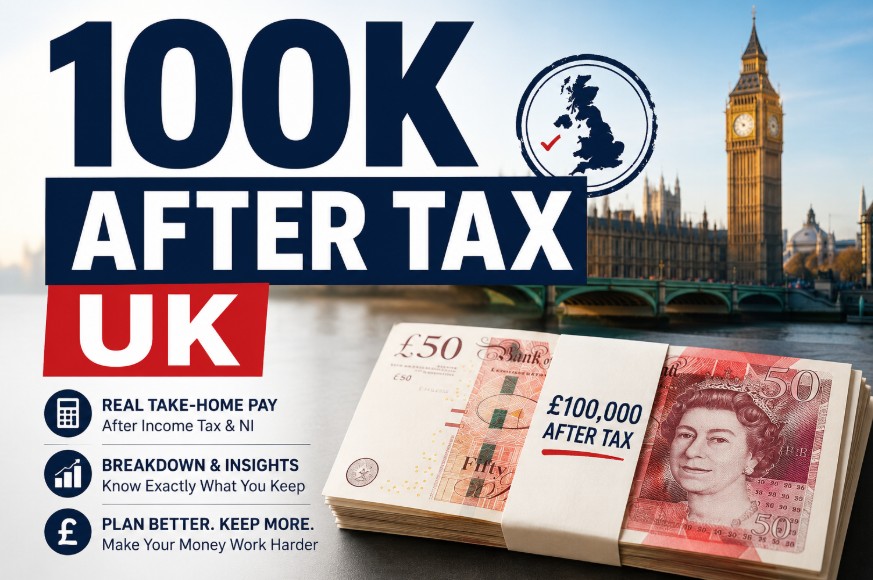
A gross salary of 100k after tax UK gives an annual take-home pay of around £68,557, or £5,713 per month, for people living in England, Wales, and Northern Ireland under current PAYE rules.
While scaling up to a six-figure salary involves navigating high tax bands and the Personal Allowance taper, many business owners and contractors start by reviewing figures like 60k After Tax UK as their business scales through different milestones.
Earning a six-figure income means dealing with Income Tax bands, National Insurance thresholds, statutory deductions, and the withdrawal of the tax-free Personal Allowance. Understanding these figures can help with personal finances and decisions about how to take money from a company.
Key Takeaways
- Gross annual earnings of £100,000 result in a net take-home pay of roughly £68,557 per year for individuals living in England, Wales, and Northern Ireland.
- Monthly take-home pay on a £100,000 salary sits at approximately £5,713 before workplace pension deductions or student loan repayments.
- Earnings between £100,000 and £125,140 trigger the withdrawal of the Personal Allowance, creating an effective marginal tax rate of 60%.
- Workplace pension contributions made via salary sacrifice reduce adjusted net income, mitigating the impact of the 60% tax trap.
How much take-home pay do UK business owners get on a 100k after tax UK?
A gross salary of £100,000 in England, Wales, and Northern Ireland gives an estimated annual take-home pay of £68,557, or £5,713 a month. Once earnings reach six figures, HM Revenue and Customs collects the relevant tax and National Insurance through the PAYE system.
| Financial Metric | Yearly (£) | Monthly (£) | Weekly (£) | Daily (£) |
| Gross Salary | £100,000.00 | £8,333.33 | £1,923.08 | £384.62 |
| Income Tax | £27,432.00 | £2,286.00 | £527.54 | £105.51 |
| National Insurance | £4,010.60 | £334.22 | £77.13 | £15.43 |
| Net Take-Home Pay | £68,557.40 | £5,713.12 | £1,318.41 | £263.68 |
(Note: Daily figures are based on a standard five-day working week.)
Office for National Statistics figures show that earning this amount puts someone well above the national median income and into the higher tax bands.
What are the current UK income tax rates across different regions?
Income Tax bands vary across the UK, with Scottish taxpayers subject to different rates and thresholds set by the Scottish Parliament.
When checking your tax position, it is important to use the rates for the relevant tax year published by HM Revenue and Customs. The basic, higher and additional rates determine how much tax is paid as your income increases.
Rest of the UK Tax Rates
These tax thresholds apply across England, Wales and Northern Ireland, with income taxed at different rates as earnings move into each band.
For those comparing how tax burdens shift incrementally as earnings rise from intermediate tiers, similar to calculations seen when evaluating £50k After Tax UK, the standard thresholds highlight the steep progression into higher brackets.
The standard Personal Allowance remains frozen, so income above these thresholds can be subject to higher marginal tax rates.
| Tax Band (Rest of UK) | Taxable Income Band | Tax Rate |
| Personal Allowance | Up to £12,570 | 0% |
| Basic Rate | £12,571 to £50,270 | 20% |
| Higher Rate | £50,271 to £125,140 | 40% |
| Additional Rate | Over £125,140 | 45% |
Scottish Tax Rates
The Scottish Parliament has the power to set its own six-tier income tax structure, which differs from the rest of the UK.
Taxpayers in Scotland face different tax bands and rates on their non-savings and non-dividend income.
| Tax Band (Scotland) | Taxable Income Band | Tax Rate |
| Starter Rate | £12,571 to £16,537 | 19% |
| Basic Rate | £16,538 to £29,526 | 20% |
| Intermediate Rate | £29,527 to £43,662 | 21% |
| Higher Rate | £43,663 to £75,000 | 42% |
| Advanced Rate | £75,001 to £125,140 | 45% |
| Top Rate | Over £125,140 | 48% |
How do National Insurance contributions affect your £100,000 earnings?
Employee National Insurance is charged at different rates depending on where earnings fall within the relevant thresholds set by HM Revenue and Customs. Unlike Income Tax, National Insurance is calculated for each pay period through the PAYE system.
Employee National Insurance Rates (Class 1)
| Earnings Band (Annual) | Earnings Band (Monthly) | Contribution Rate |
| Up to £12,570 | Up to £1,048 | 0% |
| £12,570 to £50,270 | £1,048 to £4,189 | 8% |
| Over £50,270 | Over £4,189 | 2% |
National Insurance is a statutory payroll deduction that helps fund the State Pension, NHS and certain social security benefits.
Because Class 1 contributions are worked out for each pay period through PAYE, the amount can change as earnings pass the relevant thresholds. For a £100,000 salary, contributions are charged at the applicable rates across the different earnings bands.

Why does the £100,000 income threshold trigger a 60% tax trap?
The £100,000 tax trap occurs because HM Revenue and Customs reduces the tax-free Personal Allowance by £1 for every £2 earned above £100,000.
Combined with the 40% higher rate of Income Tax, this creates an effective marginal tax rate of 60% on income between £100,000 and £125,140, when the Personal Allowance is gradually withdrawn.
- Gross earnings pass the £100,000 threshold, starting the Personal Allowance taper.
- For every £2 earned above £100,000, £1 of the £12,570 tax-free allowance is withdrawn.
- The individual pays the standard 40% higher rate tax on the income itself.
- At the same time, losing part of the Personal Allowance means an additional £1 of income that was previously tax-free is taxed at 40%.
- Together, these effects mean that 60% of each additional pound in this range is effectively lost to tax.
- The tapering process continues until adjusted net income reaches £125,140, at which point the Personal Allowance drops to zero.
- Adjusted net income includes your total taxable income minus certain deductions, such as grossed-up charitable donations.
- High earners often review how they take their income to reduce unnecessary exposure to the 60% marginal rate.
- Professional advisers often recommend looking at tax-planning options before earnings reach the £100,000 threshold.
How can SME directors use pension contributions to avoid the tax trap?
Business owners can reduce their adjusted net income below £100,000 through employer pension contributions or salary sacrifice arrangements, which can help restore their Personal Allowance.
Managing remuneration effectively often involves looking at how overall business profits are structured, much like optimizing thresholds when drawing a steady 80k After Tax UK salary and topping it up with dividends.
When an employee puts part of their gross salary into a registered pension scheme regulated by The Pensions Regulator, that amount is excluded from adjusted net income calculations.
- Workplace pension schemes offer a reliable vehicle for lowering taxable income and securing long-term retirement funds.
- Salary sacrifice agreements reduce gross contractual pay in exchange for equivalent employer pension contributions, saving both income tax and employee national insurance.
- Relief at source pension contributions expand the basic rate tax band by the grossed-up value of the payment.
How should limited company owners balance salary and dividends at £100k?
SME directors often manage their tax position by taking a suitable PAYE salary, such as up to the Primary Threshold, and receiving the remaining amount through company dividends rather than taking the full £100,000 as salary.
Running a limited company allows directors to make use of Corporation Tax reliefs and dividend allowances, rather than relying solely on PAYE income.
- Director remuneration strategies balance low-salary high-dividend models to maintain state pension credits while minimizing personal tax liabilities.
- Company profits distributed via dividends are subject to dividend tax rates rather than standard income tax bands.
- Professional accountants can help directors work out the right level of profit extraction and avoid moving unnecessarily into higher tax bands.
How to get the tax back for over 100k part?
If your income goes above £100,000 and you have paid too much tax because of the Personal Allowance taper or incorrect deductions, you may be able to claim the overpaid amount through the relevant HMRC process.
- File a Self Assessment Tax Return: Registering for and submitting an annual Self Assessment tax return allows HM Revenue and Customs to check your adjusted net income, apply relevant pension or charitable reliefs, and refund any higher-rate tax you have overpaid.
- Make Retrospective Pension Contributions: If your adjusted net income is between £100,000 and £125,140, making a lump-sum pension contribution or relief-at-source payment before the end of the tax year can reduce your adjusted net income, restore some of your Personal Allowance and potentially lead to a tax refund.
- Contact HMRC Directly: If you spot an error in your tax code or PAYE deductions, you can contact HMRC through your online personal tax account or by phone and ask them to review the issue and adjust your refund if needed.
Conclusion
Managing a six-figure income as an SME owner means balancing PAYE obligations, regional tax differences, and the most suitable way to take money from the company.
Understanding how Income Tax, National Insurance and the Personal Allowance taper work together can help business directors protect their take-home pay and plan their finances more effectively.
Disclaimer: This content is published for general information purposes only and does not constitute formal financial, tax, or legal advice.
FAQs
How much is 100k after tax UK a month?
A £100,000 annual salary yields approximately £5,713 per month after standard Income Tax and National Insurance deductions in England, Wales, and Northern Ireland.
What happens to my tax if I earn exactly £100,000?
Earning exactly £100,000 places you at the threshold where the Personal Allowance taper begins, though you retain your full tax-free allowance unless your adjusted net income exceeds that amount.
How do student loan repayments affect a £100,000 salary?
Plan 1, Plan 2, Plan 4, Plan 5 and Postgraduate student loan repayments are automatically deducted through PAYE once earnings pass the relevant threshold for each loan plan, reducing monthly take-home pay.
Can I avoid the 60% tax trap entirely?
Yes. Putting the part of your income above £100,000 into a registered pension scheme or donating through Gift Aid can lower your adjusted net income and help preserve your Personal Allowance.
Does the Personal Allowance taper affect Scottish taxpayers?
Yes, Scottish taxpayers have different Income Tax bands set by the Scottish Parliament, but the UK-wide rules for withdrawing the Personal Allowance above £100,000 still apply.
What is adjusted net income for high earners?
Adjusted net income is your total taxable income before Personal Allowances, minus certain reliefs such as trade losses, relief-at-source pension contributions and grossed-up charitable donations.
Are employer pension contributions counted in adjusted net income?
Employer pension contributions made through formal salary sacrifice arrangements do not count towards adjusted net income, making them a useful way to reduce your tax liability.