What is Management Accounting? A Practical Guide for UK SMEs
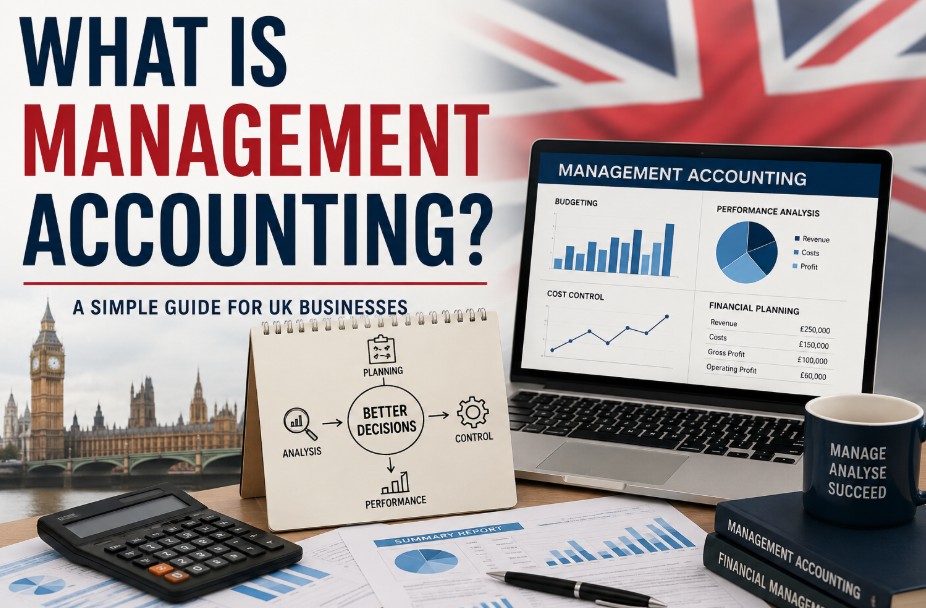
Management accounting is the practice of identifying, measuring, analysing, and communicating internal financial information to business owners and decision-makers.
Unlike mandatory tax reporting, management accounting focuses entirely on forward-looking analysis, cost control, and strategic planning.
It helps small business leaders track cash flow, evaluate profitability, and allocate resources based on real-time operational performance data.
Key Takeaways
- Management accounting provides forward-looking internal financial analysis to help small business owners control overheads and manage cash flow.
- Statutory financial accounting is mandatory under the Companies Act 2006, whereas management accounting is voluntary and tailored to internal needs.
- CIMA-qualified management accountants in the UK earn average salaries between £45,000 and £60,000, depending on location and experience.
- Internal management accounts rely on operational data and financial estimates, requiring high input accuracy to prevent misleading forecasts.
What is Management Accounting for Small Businesses?
Management accounting for small businesses is the process of generating internal financial reports, budgets, and operational analyses tailored specifically for company directors and small business owners.
While external accounting serves statutory compliance, internal managerial reporting translates complex commercial figures into actionable growth plans, profit tracking, and overhead control measures.
Real-Time Financial Visibility vs Year-End Reporting
Many small and medium-sized enterprises rely solely on year-end financial statements to assess business health. However, waiting 12 months to review financial records leaves owner-managers vulnerable to hidden cash-flow drains, mispriced services, and unmonitored operational overheads.
Management accounting establishes monthly or weekly monitoring metrics, allowing small business leaders to adjust pricing strategies and operational spending before cash reserves are compromised.
In practice, regular management accounts act as an early-warning radar for trading issues, transforming accounting from a passive annual expense into an active management tool.
Key Fact: Over 80% of UK small business insolvencies stem from unmonitored working capital shortages rather than a lack of balance sheet profitability.

What is the Importance of Management Accounting for SMEs?
Internal accounting frameworks give growing businesses clear control over their working capital and gross margins. Without structured internal accounts, increasing revenue can mask underlying operational inefficiencies and declining cash reserves.
Operational Benefits
- Cash Flow Preservation: Distinguishes ledger profit from actual liquid cash, preventing liquidity shortfalls during trading expansion.
- Overhead Control: Highlights raw material price rises and labour cost variations against projected operating budgets.
- Profitable Product Pricing: Applies marginal costing techniques to ensure every product line covers its indirect overheads.
- Strategic Resource Allocation: Identifies high-margin clients and services, guiding capital expenditure toward profitable business areas.
Implementing the Management Control Cycle
- Collect Operational Data: Gather weekly sales activity, raw material costs, supplier invoices, and payroll entries while maintaining accurate tracking of debtors and creditors to protect short-term liquidity.
- Conduct Cost Analysis: Apply cost accounting methods to measure actual expenditure against initial monthly budgets.
- Compile Internal Reports: Format financial insights into clean management account packs for executive review.
- Implement Corrective Actions: Adjust pricing structures, renegotiate supplier terms, or cut excess overheads based on findings.
For example, a regional logistics provider tracking rising fuel expenses used variance analysis to adjust client delivery surcharges mid-quarter. Rather than waiting for an annual loss to appear on statutory statements, the firm preserved its profit margin through real-time rate adjustments.
What is the Difference Between Financial Accounting and Management Accounting?
Financial accounting produces historical records intended for external users under strict regulatory oversight. Management accounting generates internal reports designed to inform prospective business strategy and day-to-day operations.
Statutory accounts must comply with the Financial Reporting Council standards, UK Generally Accepted Accounting Practice, or International Financial Reporting Standards.
In contrast, management accounts have no mandated legal structure. Small business owners can design internal reporting formats that directly reflect their operational priorities.
| Reporting Feature | Management Accounting | Financial Accounting |
| Primary Audience | Business owners, directors, and internal managers | HMRC, external lenders, shareholders, Companies House |
| Legal Status | Voluntary; driven by internal operational needs | Mandatory for limited companies under Companies Act 2006 |
| Time Orientation | Forward-looking using forecasts, budgets, and projections | Historical data covering past financial reporting periods |
| Governance Rules | Customised internal templates; no fixed regulatory standard | Governed strictly by FRC, UK GAAP, or IFRS rules |
| Update Interval | Weekly, monthly, or on-demand real-time updates | Annual statutory filings or formal interim periods |
Is Management Accounting Harder Than Financial Accounting?
No, management accounting is not strictly harder than financial accounting—they present distinct operational challenges depending on whether your team struggles with rigid compliance or forward-looking strategy.
| Myth | Reality |
| Management accounting is just complex bookkeeping. | Bookkeeping records past transactions; management accounting models future business decisions and strategy. |
| Financial accounting requires more commercial intuition. | Financial accounting demands strict regulatory compliance (UK GAAP/IFRS), whereas management accounting requires commercial interpretation and risk analysis. |
| Management accounts must follow fixed government templates. | Management accounts have zero mandatory statutory formatting and are completely customised for internal director use. |
Why do business owners struggle with Management Accounting?
Most small business owners master basic financial bookkeeping quickly because it follows clear, repeatable rules. Strategic financial modeling is usually considered more difficult because it forces you to make complex forward-looking assumptions in an unpredictable market.

What is the Role of a Management Accountant in a Small Business?
A management accountant acts as an internal strategic advisor, converting financial data into actionable operational guidance.
Practitioners often hold professional credentials from recognized accountancy bodies like the Chartered Institute of Management Accountants or the Institute of Chartered Accountants in England and Wales.
Key Operational Responsibilities
- Designing rolling 12-month cash flow projections and annual master budgets.
- Calculating unit economics, contribution margins, and break-even sales volumes.
- Analyzing departmental variances to prevent cost overruns across business units.
- Preparing executive reporting dashboards for directors, investors, and commercial lenders.
What is the Average Salary for Certified Management Accountants in the UK?
Employing a full-time, qualified management accountant represents a significant fixed investment for an SME. As of 2026, UK compensation rates for internal management accounting professionals reflect regional demand and professional qualification status.
| Qualification Level | Average UK Salary Range | Typical Role Responsibilities |
| Part-Qualified / Assistant | £30,000 – £42,000 | Basic variance tracking, data input, cost ledger reconciliations |
| Fully Qualified (CIMA / ICAEW) | £45,000 – £60,000 | Cash flow forecasting, strategic budgeting, executive reporting |
| Senior Controller / Finance Director | £65,000 – £85,000+ | High-level commercial strategy, capital raising, corporate structuring |
Growing businesses that do not require full-time internal coverage often engage fractional management accounting services.
Outsourcing monthly management accounts to a specialized practice provides strategic financial oversight at a fraction of the cost of a full-time salary.
What Are the Limitations of Management Accounting for SMEs?
Management accounting offers strong strategic value, but its practical limitations can create risks for growing businesses:
- Data Dependency: Internal accounts are only as accurate as the operational data behind them. Flawed, incomplete, or delayed input data directly leads to incorrect strategic forecasts and misguided decisions.
- Estimation Bias: Because management accounting relies heavily on future projections, over-optimistic sales or revenue expectations can prompt premature capital expenditure or unsustainable inventory expansion.
- Resource Drain: Setting up and analyzing internal reports takes time. For smaller teams, focusing too heavily on detailed reporting can pull critical focus away from day-to-day business execution.
- No Tax or Legal Validity: Management accounts do not replace formal tax returns submitted to HMRC or statutory annual filings submitted to Companies House. SMEs still require compliant financial accounting systems running alongside internal reports.
To mitigate these risks, small firms should ensure their small business accounting software feeds cleanly into their statutory compliance systems rather than operating in isolation.

Conclusion
Management accounting bridges the gap between basic commercial bookkeeping and long-term business strategy. By tracking key financial metrics monthly, small business owners gain the clarity needed to protect cash flow, cut unnecessary overheads, and fund growth safely.
To build an effective internal accounting process, start by establishing a simple monthly reporting routine:
- Standardize weekly data entry for sales and expenses.
- Identify three key operating metrics to track, such as gross profit margin, cash runway, and overhead variances.
- Schedule a recurring monthly review session to analyze results and refine upcoming quarterly forecasts.
Disclaimer: This article provides general financial information for educational purposes only and does not constitute formal legal, tax, or professional accounting advice.
FAQs
What is the main purpose of management accounting?
The primary purpose is to provide internal decision-makers with timely financial data and forecasts. This information helps business owners control operational costs, protect cash flow, and execute growth strategies effectively.
What are the main objectives of management accounting?
Core objectives include operational budgeting, cost control via variance analysis, product pricing optimization, and long-term resource allocation. It ensures every business unit contributes positively to overall company profitability.
What is the difference between financial and management accounting?
Financial accounting creates mandatory, historical reports for external authorities like HMRC under standard legal rules. Management accounting generates voluntary, forward-looking reports strictly for internal operational use.
Is management accounting mandatory for UK limited companies?
No, management accounting is entirely voluntary. However, registered limited companies must still file statutory annual accounts with Companies House and submit tax returns to HMRC under statutory law.
How often should an SME review its management accounts?
Most small businesses review management accounts monthly. Fast-growing businesses or companies operating with tight cash margins often monitor key performance indicators and rolling cash forecasts weekly.
Can cloud accounting software produce management accounts automatically?
Modern cloud accounting platforms generate basic profit and loss statements and balance sheets. However, custom variance analysis, tailored driver forecasts, and strategic financial interpretation require human review.
What are the main limitations of management accounting?
Key limitations include heavy reliance on estimated future data, vulnerability to inaccurate internal bookkeeping, implementation costs, and a lack of standardized legal templates.