Ultimate Guide to Point of Sale Software: Compare Free UK EPOS Systems and Transaction Rates
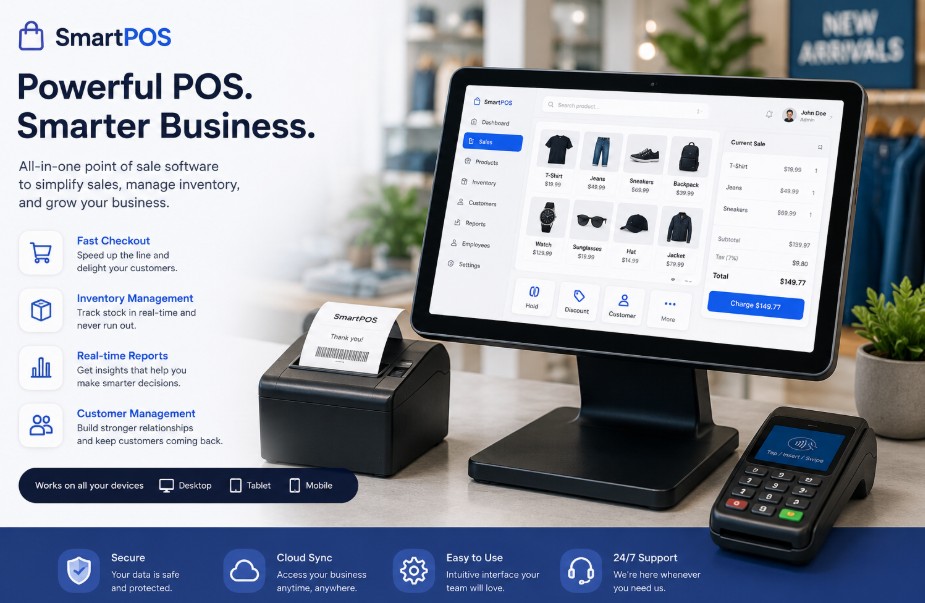
Point of sale software is a cloud-connected digital system that replaces traditional cash registers in British retail and hospitality businesses to automate inventory tracking, process chip-and-PIN payments, and synchronise multi-channel sales reports in real time.
Key Takeaway
- Modern point of sale software securely automates daily card payments, real-time inventory tracking, and employee hour monitoring for British merchants.
- Cloud-based EPOS architecture ensures business owners can monitor store performance and stock levels remotely from any location across the United Kingdom.
- Selecting the right platform requires balancing monthly software subscription fees against variable card processing percentages and hardware bundle costs.
- Compliance with official Information Commissioner’s Office (ICO) UK GDPR guidelines and Payment Card Industry Data Security Standards (PCI-DSS) protects customer payment data while preventing security breaches for growing retail operations.
What is Point of Sale Software?
Point of sale software refers to the digital applications and hardware interfaces that businesses use to complete customer transactions, manage stock, and analyse sales data. In the United Kingdom, these platforms are commonly referred to as Electronic Point of Sale (EPOS) systems.
They combine touchscreens, card readers, barcode scanners, and cloud databases into a single operational hub. When reviewing decisions regarding retail infrastructure, a common pattern among expanding businesses is the shift from standalone card terminals to fully integrated cloud ecosystems.
In practice, this means inventory updates automatically across both physical shopfronts and online web stores the moment a customer completes a purchase. This eliminates manual stock counts and prevents overselling during peak trading periods.
EPOS Architecture
- Hardware Layer – Touchscreen, Card Reader, Receipt Printer
- Software Layer – Cloud Database, Inventory Sync, Analytics
- Processing Layer – Payment Gateway, Merchant Account, Bank
Which are the best Free Point of Sale Software for Small Budgets?
For startup businesses and small merchants operating on tight margins, utilizing a free baseline POS software tier is an effective way to preserve capital.
While these platforms do not charge a monthly subscription fee for their basic software packages, they typically recoup costs through a fixed percentage rate per transaction.
Below is a detailed comparison of 10 prominent POS platforms that offer free software tiers, zero-monthly-cost entry models, or open-source solutions suitable for small budgets in the UK market.
| POS Platform | Monthly Software Cost | In-Person Transaction Rate | Best Suited For | Key Features |
| Square POS | Free (Advanced plans available) | From 1.75% | Retail shops, cafes, pop-ups | Inventory tracking, offline mode, free app |
| SumUp | Free (Plus plan available) | From 0.99% to 1.69% | Mobile traders, micro-merchants | Pocket card reader integration, remote invoicing |
| Loyverse POS | Free (Paid add-ons available) | Custom / Bring your own processor | Small retail & hospitality | Employee management, customer loyalty program |
| eHopper | Free basic tier | Custom / Integrated processing | Quick-service restaurants, retail | Order management, split payments, basic reporting |
| Oliver POS | Free core tier | Integrates with WooCommerce | E-commerce stores with physical spaces | Seamless WooCommerce sync, customer profiles |
| SquareXpress (Open-Source) | Free (Self-hosted) | Free / Zero gateway fees (BYO processor) | Tech-savvy independent merchants | Fully customizable, local database control |
| zZll POS | Free tier available | Varies by processor | Small independent shops | Barcode scanning, sales reports, multi-store view |
| Imonggo | Free for single user / limited stock | Varies by processor | Small boutiques, single-location shops | Cloud inventory, web-based access, fast checkout |
| Cashier Live | Free trial / Limited free model | Standard processing rates | Independent retail outlets | Multi-register support, purchase orders, user permissions |
| Erply | Free tier for micro-businesses | Custom merchant agreement | Small retail chains | Advanced inventory control, warehouse management |
1. Square Point of Sale Software
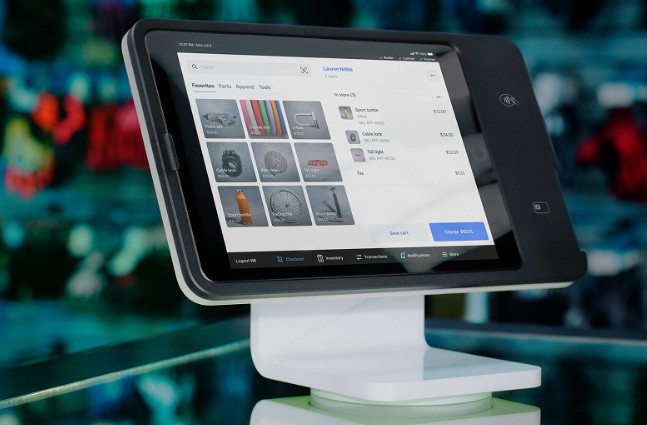
Square POS is one of the most widely adopted cloud platforms in the UK, known for its frictionless onboarding and sleek hardware ecosystem.
The free software tier includes core inventory tracking, low-stock alerts, customer directory management, offline sales capabilities, and basic sales reporting.
Merchants only pay when a transaction is processed, making it ideal for startups, though high-volume sellers can upgrade to paid tiers for lower processing overhead.
- Monthly Software Cost: Free baseline tier (Advanced plans start from £29+/mo)
- In-Person Transaction Rate: Starting from standard UK merchant rates of 1.75%
- Best Suited For: Retail shops, cafes, pop-up stalls, and service providers
2. SumUp Point of Sale Software
SumUp originally gained fame for its pocket-sized Bluetooth card readers and has since evolved into a full cloud EPOS provider. Its free software version allows small businesses to build item catalogues, manage mobile checkouts, and issue remote invoices.
It features a flexible pay-as-you-go model with competitive transaction rates, making it a go-to choice for low-overhead operators.
- Monthly Software Cost: Free tier available (Plus plans start around £19+/mo)
- In-Person Transaction Rate: Ranging competitively from 0.99% to 1.69% per swipe
- Best Suited For: Mobile traders, micro-merchants, and market vendors
3. Loyverse POS
Loyverse stands out by offering a feature-rich, entirely free core mobile POS app for Android and iOS. It includes robust employee time-tracking, shift management, role-based permissions, and a built-in customer loyalty program framework.
Because it supports external card payment processors, merchants can choose their own merchant acquiring banks without being locked into a proprietary gateway.
- Monthly Software Cost: Free (with paid advanced employee/inventory add-ons)
- In-Person Transaction Rate: Custom / Bring your own processor
- Best Suited For: Small independent retail boutiques and hospitality venues
4. eHopper POS
eHopper is designed to simplify multi-channel workflow management for small food-service and retail businesses. The free basic tier supports order management, split billing, receipt printing, and customer database logs.
It is particularly useful for small eateries that need intuitive table layouts and order-tracking functionality without committing to high monthly software subscriptions.
- Monthly Software Cost: Free basic tier available
- In-Person Transaction Rate: Custom / Integrated processing options
- Best Suited For: Quick-service restaurants, coffee shops, and specialty retail
5. Oliver POS
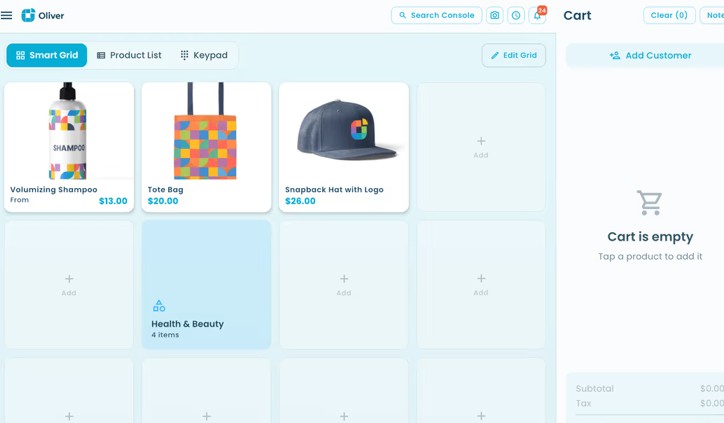
Oliver POS is engineered specifically to sync seamlessly with WooCommerce online web stores. Its free core tier unifies physical in-person sales with online inventories in real time.
This prevents overselling across channels, lets merchants manage customer profiles from a unified dashboard, and handles basic cash and card sales through standard browser interfaces.
- Monthly Software Cost: Free core tier available
- In-Person Transaction Rate: Integrates directly with WooCommerce processing gateways
- Best Suited For: E-commerce merchants expanding into brick-and-mortar or pop-up retail spaces
6. SquareXpress
Open-source point-of-sale frameworks (such as Open Source Point of Sale or similar web architectures) give businesses complete ownership of their database code.
Running locally or via private cloud servers, these systems eliminate monthly software subscription fees entirely. They provide full customisability over inventory attributes, multi-tier taxation rules, and security protocols, though they require technical competence to install and maintain.
- Monthly Software Cost: Free (Self-hosted open-source software)
- In-Person Transaction Rate: Free / Zero gateway software fees (Bring your own processor)
- Best Suited For: Tech-savvy independent merchants and developers
7. zZll POS
zZll POS provides a straightforward, web-accessible point-of-sale option focused on essential retail workflows. The free tier gives small-shop owners access to quick barcode scanning, structured daily sales reports, and multi-store view capabilities.
It accommodates standard retail hardware peripherals like USB barcode scanners and receipt printers.
- Monthly Software Cost: Free tier available
- In-Person Transaction Rate: Varies by chosen payment processor
- Best Suited For: Small independent high-street shops and convenience stores
8. Imonggo
Imonggo offers a streamlined, cloud-based retail management interface tailored for simplicity. Its free tier is ideal for single-user operations handling manageable inventory levels.
The system features fast web-based checkouts, centralized cloud inventory management, and instant data visibility from any standard web browser without demanding complex hardware installation.
- Monthly Software Cost: Free for single-user accounts with limited stock thresholds
- In-Person Transaction Rate: Varies by merchant processor integration
- Best Suited For: Single-location boutiques and specialty gift shops
9. Cashier Live
Cashier Live focuses on fast register setups and ease of use for independent business owners. While primarily operating on a paid SaaS model, limited promotional or entry setups allow small merchants to test multi-register support, issue purchase orders, and establish user permission levels.
It excels at keeping cashier training times minimal through a clean, uncluttered user interface.
- Monthly Software Cost: Free trial / Limited free operational model
- In-Person Transaction Rate: Standard processing rates
- Best Suited For: Independent retail outlets and specialty stores
10. Erply
Erply is an enterprise-grade retail software platform that extends free-tier access to micro-businesses aiming to scale. Unlike basic cash-register apps, Erply focuses heavily on advanced inventory control, warehouse tracking, and automated purchasing orders.
It enables small merchants to utilize professional inventory management tools without incurring heavy software costs during their initial growth phases.
- Monthly Software Cost: Free tier available for micro-businesses
- In-Person Transaction Rate: Custom merchant agreement terms
- Best Suited For: Small retail chains and growing inventory-heavy businesses
How Does a Point of Sale Software Function in Daily Operations?
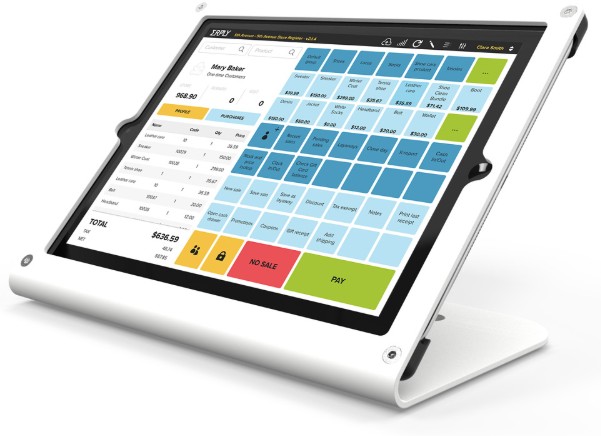
A point of sale business relies on seamless communication between front-of-house transaction terminals and back-office management software. Staff members use the interface to ring up items, apply discounts, split bills, and accept contactless, chip-and-PIN, or mobile wallet payments.
Simultaneously, the system logs the sale, deducts the item from inventory, and records tax figures that feed seamlessly into digital accounting software for streamlined financial reporting.
- A customer presents items at the counter for purchase or selects services via a digital menu.
- The cashier or automated kiosk scans product barcodes into the point of sale software interface.
- The software calculates the total cost, including applicable VAT and any active promotional discounts.
- The payment terminal prompts the customer to tap, insert a card, or use a mobile device.
- The payment gateway securely authorises funds transfer through the acquiring bank network.
- The receipt prints or sends digitally via email, while inventory levels update instantly in the cloud.
- End-of-day sales totals reconcile automatically, preparing clean data reports for business accounting.
What Are the 5 Main Types of POS Systems Available?
Understanding the available system categories helps business owners match their operational workflow to the correct technology. Different business models require distinct hardware footprints and software capabilities.
- Mobile App POS: Ideal for pop-up shops, markets, and mobile services. Utilises a smartphone or tablet with a compact card reader.
- Tablet Cloud POS: Built for independent boutiques, cafes, and salons. Requires an iPad or Android tablet, stand, and receipt printer.
- Terminal Integrated: Designed for busy hospitality venues and high-volume retail. Features an all-in-one payment terminal with a built-in printer.
- Legacy On-Premise: Built for large supermarkets and established department stores. Relies on heavy terminals, local server racks, and dedicated cash drawers.
- Self-Service Kiosks: Deployed in quick-service restaurants and ticketing venues. Consists of floor-standing touchscreen enclosures and payment heads.
How to Compare POS Systems and Choose the Cheapest Option?
Selecting economical retail technology requires a methodical evaluation of transaction volume, hardware longevity, and hidden processing costs. A system with zero monthly subscription fees can quickly become more expensive than a paid platform if transaction fee percentages outweigh the monthly savings.
- Calculate Average Turnover: Determine your average monthly card turnover to see whether flat-rate payment structures or interchange-plus pricing offers lower long-term overhead.
- Evaluate Hardware Compatibility: Verify whether the software requires proprietary hardware or if it supports standard tablets, smartphones, and existing receipt printers.
- Inspect Contract Transparency: Check contract terms thoroughly for hidden PCI-DSS non-compliance fees, gateway charges, or restrictive early termination penalties.
- Test Software Integrations: Ensure the platform integrates smoothly with your existing accounting packages, such as Xero, QuickBooks, or Sage, to save administrative hours.
Conclusion
Implementing the correct point of sale software requires careful alignment between operational workflows, hardware durability, and transaction processing costs.
Business owners should request live software demonstrations, test offline functionality features, and audit processing agreements thoroughly before committing to long-term hardware contracts.
Taking these structured steps ensures long-term operational efficiency and financial transparency across all retail channels.
Disclaimer: This article is for informational purposes only and does not constitute formal legal, financial, or tax advice; always verify merchant terms and regulatory compliance independently.
FAQ
Do they use POS in the UK?
Yes, digital point of sale systems are standard across the United Kingdom. Almost all modern retail shops, hospitality venues, and service providers use cloud-based EPOS platforms to handle daily sales and inventory.
How much does a POS system cost in the UK?
Costs vary from zero monthly subscription fees with higher transaction percentages to comprehensive bundles costing between twenty-five pounds for basic readers and over six hundred pounds for advanced multi-terminal setups.
What does point of sale software do?
It records customer transactions, manages real-time inventory levels, tracks staff hours, processes secure digital payments, and generates analytical sales reports for business accounting.
Which free POS software is best?
Square and SumUp offer the most reliable free baseline software tiers for small businesses, allowing users to trade software subscription costs for per-transaction processing fees.
Is Zoho POS free?
No, while Zoho provides free tiers for select core business tools, its dedicated point-of-sale modules operate on paid subscription models depending on the required business tier.
Can I use my laptop as a POS?
Yes, web-based point-of-sale software allows merchants to process sales using a laptop browser connected to a secure internet network and compatible peripheral hardware.
Which POS system works internationally?
Cloud-based systems like Lightspeed and Shopify POS support multi-currency transactions and international tax configurations, making them suitable for global trading operations.
What is the cheapest POS system for small business?
Pay-as-you-go providers with free software tiers represent the lowest upfront cost, though merchants must weigh transaction percentages against fixed monthly subscription fees.