The Complete Guide to Selecting an Efficient HR System for SME Compliance and Automation
Selecting an efficient HR system for SME UK operations is one of the most critical structural decisions a growing business can make to transition from chaotic spreadsheet tracking to streamlined, compliant people management.
A dedicated human resources platform digitises employee records, automates holiday calculations, secures sensitive personal data, and aligns everyday workforce operations with strict UK employment laws.
Key Takeaways
- The term SME in UK human resources officially covers small and medium-sized enterprises employing fewer than 250 staff members in total.
- Moving away from spreadsheets to a digital system mitigates costly UK GDPR non-compliance risks regarding employee personal data storage.
- A modular HRMS allows growing companies to scale from core admin to advanced payroll and performance appraisal features on demand.
- Most UK software providers charge on a subscription basis, which, according to industry vendor benchmarks, averages between £1.50 and £8.00 per employee per month in 2026.
What is an HR System?
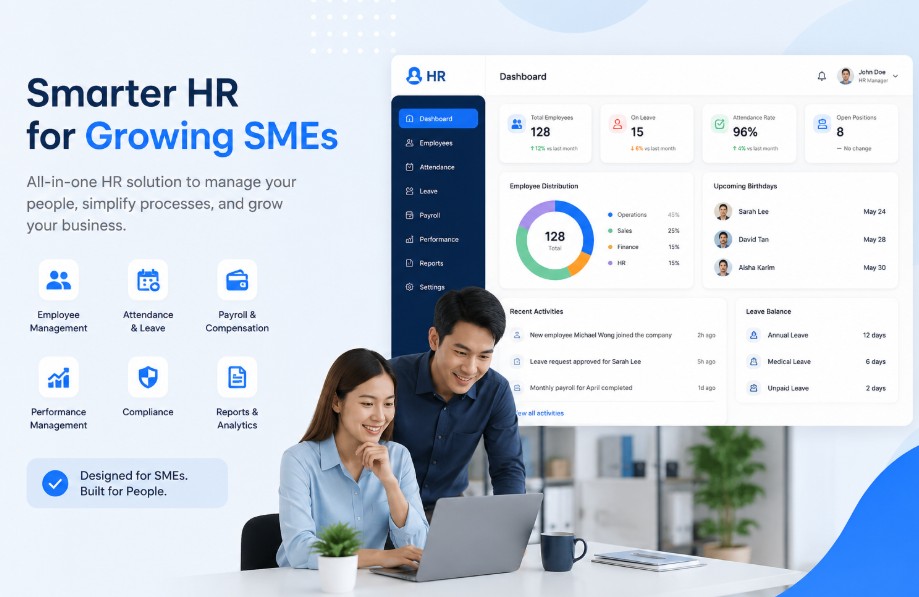
An HR system (Human Resources Information System or HRMS) is a centralized, cloud-based digital database that serves as the single source of truth for all workforce operations.
It links personal employee profiles directly to active management tools like holiday planners, sickness trackers, document signing portals, and performance monitoring tools to eliminate disjointed file tracking.
At its core, this software replaces the practice of scattering staff data across paper folders, disjointed emails, and separate desktop files.
By centralizing these records, a business ensures that data is instantly accessible, consistently accurate, and simple to manage from a single secure login window.
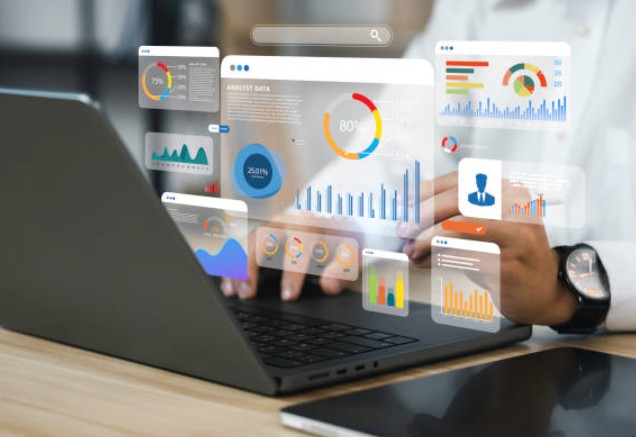
How Does an HR System for SMEs Work?
An HR system for SMEs automates the entire employee lifecycle by triggering digital workflows for onboarding, calculating real-time annual leave balances against a live team calendar, and exporting automated updates (like new starters or unpaid leave) directly to UK payroll systems.
Automated Onboarding Workflows
When a new employee is hired, the system triggers a sequential digital pathway. It collects their bank details, routes their employment contract for digital signature, and conducts their legal Right to Work checks automatically.
Autonomous Absence Management
Once staff are onboarded, the system runs autonomously in the background. It manages time off by matching requested leave against the live team calendar, dynamically calculating remaining holiday balances based on specific contract types.
Integrated Payroll Off-boarding
At the end of the month, the platform bundles all key administrative updates, such as new starters, leavers, and unpaid sick leave, into an accurate data export. This links directly with your payroll software, completely eliminating the need for double-data entry.
Why is an HR System for SMEs Important?
An HR system is critical for SMEs because it stops operations managers from wasting hours acting as manual data-entry clerks, while simultaneously protecting the business from catastrophic UK GDPR data breach fines by securing sensitive employee files behind enterprise-grade encryption.
For small businesses, time and capital are finite. Operating without an HR system forces founders or operations managers to act as data-entry clerks, creating massive operational bottlenecks that slow company growth.
What are the Types of HR Systems Available for Small Companies?
The three main types of HR systems available for small UK companies are Core HRIS (for basic personal data storage), Tactical HRMS (adding automated absence and recruitment workflows), and Comprehensive HCM platforms (incorporating advanced talent analytics and international payroll pipelines).
| HR System Category | Core Purpose & Functionality | Best Suited For |
| Core HRIS (Human Resources Information Systems) | Centralises employee records, personal data, emergency contacts, and basic contract details. | Early-stage micro-businesses (5–15 employees) needing an organised digital filing cabinet. |
| Tactical HRMS (Human Resources Management Systems) | Combines core database features with active operational workflows like absence management, recruitment tracking, and performance reviews. | Growing SMEs (15–100 employees) aiming to automate manual approval bottlenecks. |
| Comprehensive HCM (Human Capital Management) | Integrates strategic talent management, deep workforce analytics, global payroll pipelines, and onboarding programmes. | Mid-market businesses (100–250+ employees) with dedicated internal HR departments. |
What are the 4 Types of HR Focus Areas for Growing Businesses?
The four core focus areas managed by modern HR software are Administrative Compliance (contracts and Right to Work checks), Absence Management (annual leave and sick pay), Payroll Alignment (salary updates and benefits), and Employee Relations (appraisals and training logs).
- Core Administrative Compliance: Securing employee contracts, managing personal details, and conducting mandatory Right to Work checks to meet UK Home Office guidelines.
- Absence and Time Management: Overseeing annual leave requests, managing statutory sick pay (SSP) eligibility, tracking parental leave, and monitoring absenteeism patterns.
- Compensation and Payroll Alignment: Ensuring that monthly salary changes, overtime hours, bonuses, and benefit choices are tracked and seamlessly communicated to your payroll bureau or integrated accounting software.
- Employee Relations and Development: Structuring probationary periods, documenting formal performance appraisals, managing disciplinary processes, and tracking health and safety training records.
What are the Benefits of an HR System for SMEs?
The major benefits of deploying an HR system include an 80% reduction in routine paperwork via self-service, flawless prorated holiday calculations, automated regulatory audit trails, lower absenteeism through metric tracking, and ISO-certified data security.
- Drastic Admin Reduction: Market research from the Chartered Institute of Personnel and Development (CIPD) indicates that self-service platforms cut routine human resources paperwork by up to 80% by shifting data updates to the employees themselves.
- Flawless Holiday Calculations: Automatically adjusts holiday allocations for part-time workers, variable shift patterns, and UK bank holiday variations.
- Total Regulatory Compliance: Maintains unalterable, timestamped audit trails for contract alterations, policy updates, and mandatory training compliance.
- Reduced Absenteeism Costs: Utilises tools like the Bradford Factor formula to spot and address frequent, short-term sickness patterns early.
- Enhanced Information Security: Replaces weak desktop files with ISO-certified cloud hosting, protecting sensitive corporate and personal records.

Why SMEs Need an HR System?
SMEs need an HR system because manual human error scales much faster than headcount. A process that functions perfectly well for a team of 4 people begins to fragment at 12, and can break completely once you cross 30 staff members.
To scale successfully without disproportionately inflating internal administrative headcounts, small firms require an automated digital infrastructure to handle routine tasks efficiently.
Some Common Struggles of SMEs Without an HR System
SMEs without HR systems routinely face sudden staffing shortages from overlapping leave bookings, costly payroll calculation mistakes from version control issues, expired visa compliance fines, slow onboarding times, and severe tribunal vulnerabilities.
- The Operational Cliff Edge: Realising too late that overlapping annual leave bookings have left a core client-facing department completely unstaffed.
- Version Control Chaos: Managing multiple versions of the Master Employee Spreadsheet, leading to costly payroll calculation mistakes.
- Compliance Black Holes: Realising during a surprise check that an employee’s Right to Work visa has quietly expired without any internal warning flags.
- Onboarding Friction: New hires spending their first week sitting idle because printing, signing, and scanning physical documents takes days instead of minutes.
- Tribunal Exposure: Lacking an unalterable, dated record showing that a problematic employee explicitly read and agreed to the company disciplinary policy.

How to Manage HR in a Small Business Effectively?
Small businesses can manage HR effectively by replacing manual spreadsheets with a centralized cloud platform. This automates daily workflows and guarantees data protection compliance under UK GDPR and the 2026 Employment Rights Bill.
Managing staff administrative duties manually becomes unsustainable once a team grows past 10 employees. To prevent operational bottlenecks and legal risks, small businesses must adopt a digital framework focused on four key pillars:
- Data Security: Replaces vulnerable local spreadsheets with secure, encrypted storage to protect employee files under UK GDPR and ICO rules.
- Legal Compliance: Automates the precise, timestamped audit trails required by the 2026 updates to the Employment Rights Bill on GOV.UK.
- Absence Management: Eliminates scheduling conflicts and payroll errors by automating holiday bookings and Statutory Sick Pay tracking.
- Tribunal Protection: Maintains an unalterable chronological record of signed employment contracts and policy acknowledgements.
Top 5 HR Software Systems for UK SMEs
The following table evaluates the leading UK HR platforms designed to scale efficiently without enterprise-level overheads:
| Platform | Best For | Key Features | Pricing Model (2026) | Potential Limitations |
| Breathe HR | Micro-businesses looking for simple, intuitive admin tools. | Prorated holiday calculators, centralized record management, basic 1:1 logs. | Tiered flat rates starting from £24/month per business (up to 10 staff). | Performance tools are light; no native UK payroll processing engine. |
| Sage HR | Businesses needing deep financial and payroll system linkages. | Modular build, expense tracking, shifts/timesheets, direct Sage alignment. | Modular pricing from £4.60/employee monthly based on active add-ons. | Advanced analytics are lighter; system configuration takes longer. |
| BrightHR | Firms wanting direct, built-in employment law advisory services. | 24/7 expert legal helpline, Blip clock-in tracking, BrightSafe H&S portal. | Contract-based model starting around £2.20/employee per month. | Requires a fixed-term contract lock-in; performance analytics are basic. |
| CharlieHR | Startups and creative firms focused on workplace culture. | Tailored onboarding flows, sleek UI, structured employee feedback loops. | Flexible rolling subscription based entirely on final staff headcount. | Lacks advanced, shift-heavy scheduling configurations or custom rotas. |
| Factorial | Fast-scaling SMEs with cross-border or EU recruitment needs. | Built-in Applicant Tracking System (ATS), legally valid e-signatures, advanced custom reporting. | Bespoke modular structures provided directly via corporate custom quotes. | Higher relative cost; setup requires dedicated administrative time. |
Is There a Free HR Software Option for UK Small Businesses?
While searching for budget-friendly solutions, many startups ask if there is a functional free HR software option. Some platforms offer free trials or basic freemium tiers for teams of fewer than five employees.
However, these free versions often have significant limitations, such as restricted document storage limits, a lack of automated UK bank holiday calculations, or no customer support.
Because of the critical security requirements of storing sensitive personal data under the UK GDPR, investing a small monthly fee in a fully supported, secure paid system is generally the safer and more scalable route.
Transitioning to a Digital HR Platform
To transition a business smoothly from manual processes to a digital system, follow this structured, sequential migration pathway:
- Audit Current Employee Records: Locate and gather all active employee contracts, personal data sheets, emergency contact details, and remaining holiday balances.
- Review Data Retention and Security Policies: Ensure all collected files are clean and compliant with UK GDPR retention rules, deleting outdated or unnecessary personal records.
- Select Your Target HR Software: Choose the platform that best fits your business size, budget, and integration requirements.
- Configure System Settings: Input your company-specific rules, including standard working hours, custom holiday policies, and automated UK bank holiday profiles.
- Clean and Import Core Data: Use structured CSV templates provided by the software vendor to import your audited employee records cleanly.
- Set Access Control and Permissions: Define exactly who can view sensitive information, limiting access to salary data and performance files to relevant directors or managers.
- Conduct a Pilot Phase: Test the holiday request and approval workflow with a small group of trusted team members to ensure calculations are correct.
- Launch and Train the Team: Send out system invitations to all employees, encouraging them to download the mobile app and complete their self-service profiles.
Conclusion and Next Step
Implementing a dedicated HR system is a highly effective way to eliminate administrative strain and ensure your small business remains fully compliant with UK employment regulations.
Instead of losing valuable hours to manual spreadsheets, a structured platform automates daily tasks, protects employee data, and provides clear operational clarity.
To take your next step, audit your current employee records, estimate your monthly budget, and sign up for a few software trials to find the interface that best fits your daily workflow.
Disclaimer: This guide provides general operational insights for educational purposes and does not constitute formal legal or professional employment law advisory services.
FAQ
What is the best HR system for small business in the UK?
The best option depends on your complexity. Breathe HR is highly recommended for straightforward, budget-conscious leave tracking, while Sage HR offers modular scalability and direct accounting integrations for growing mid-sized teams.
What are the top 5 HRIS systems scaled for UK small firms?
The most widely used platforms scaled for UK SMEs are Breathe HR, Sage HR, BrightHR, CharlieHR, and Factorial. Each platform is built to simplify core administration without enterprise complexity.
Is Zoho an HR software option suitable for UK SMEs?
Yes. Zoho People is a highly customisable, cloud-based platform that suits small companies, especially those already utilising the wider Zoho ecosystem for CRM, accounting, or productivity tools.
How much do typical HR services for SMEs cost?
Software systems generally cost between £1.50 and £8.00 per employee monthly. Retained, outsourced consulting services typically range from £150 to £800+ per month, depending on team size and required support hours.
Is an HR system legally required for SMEs in the UK?
No, while a specific software system is not legally mandated, UK employers must comply with strict statutory laws, including UK GDPR, the Employment Rights Act, and Right to Work tracking, which are incredibly difficult to manage without one.
How does HR software simplify UK payroll processing?
HR systems track starters, leavers, salary changes, and unpaid sickness in real time, exporting accurate, formatted data directly to your payroll manager to ensure seamless HMRC Real Time Information (RTI) submissions.
Can small businesses use spreadsheets instead of an HR system?
While possible for micro-teams of 1 to 5 people, spreadsheets present high security risks under the UK GDPR, lack automated calculations for complex leave, and fail to provide an unalterable compliance audit trail.