
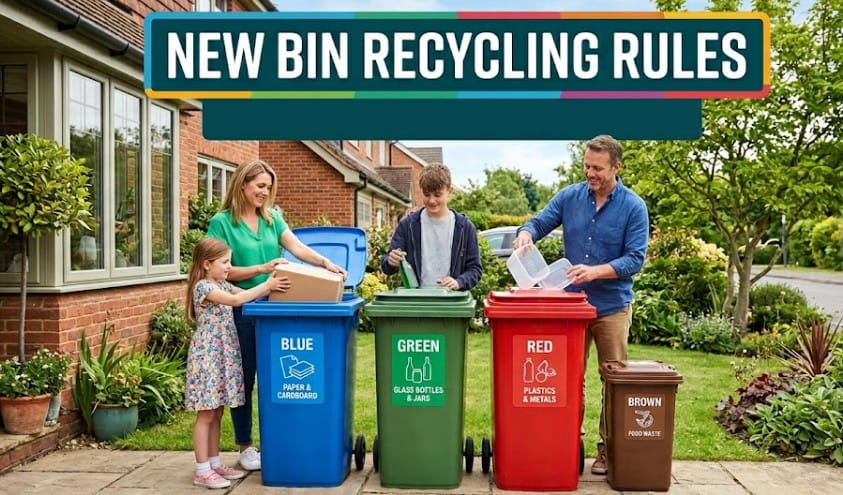
New Bin Recycling Rules: The Complete 2026 Guide for UK Households and Small Businesses
New bin recycling rules require all homes and workplaces across England to separate waste into unified, standardised collection streams under the Simpler Recycling framework.
Administered via the Environment Act 2021, this strategic national overhaul eliminates the historical local council postcode lottery by introducing a uniform core list of materials that must be recycled. This opening answer establishes a synchronised baseline across all municipal areas.
By replacing fragmented regional collections with synchronised systems, the legislation tackles public confusion and reduces material contamination. This shift ultimately accelerates the UK’s transition toward a highly efficient, self-sustaining circular economy.
What Are the New Bin Recycling Rules in the UK for 2026?
The new bin recycling rules in the UK (specifically England) mandate that all local authorities collect a standardised, baseline range of recyclable materials from residential properties by 31 March 2026.
Managed by DEFRA, the framework requires food waste, garden waste, paper/cardboard, and a mixed dry recycling stream (plastics, glass, metals) to be separated from general waste.
However, residents who repeatedly refuse to use the correct containers face fixed penalty notices issued by local councils under section 46 of the Environmental Protection Act 1990.
The primary purpose of this baseline mandate is to elevate England’s stagnant 44% municipal recycling rate, according to official DEFRA data, to a targeted 65% by 2035, forcing high-grade packaging materials into domestic reprocessing plants rather than overseas shipping containers.
What Actually Goes in Your Bins Now?
To make recycling identical across every single council area, every home in England now follows the exact same rules. Here is exactly what needs to be separated:
- The Food Bin (Collected Weekly): Plate scrapings, vegetable peelings, meat, bones, tea bags, and coffee grounds.
- The Paper & Cardboard Box: Delivery boxes, newspapers, envelopes, and clean card.
- The Plastic Container: Drinks bottles, food tubs, trays, and cartons (like Tetra Pak).
- The Metal Bin: Food tins, drink cans, aerosols, and clean kitchen foil.
- The Glass Bin: Clear and coloured bottles or jars.
- The Garden Waste Bin: Grass cuttings, hedge trimmings, weeds, and leaves.
When Do the Changes Hit?
The rollout is split into stages to give households, businesses, and councils time to adjust their setups:
- March 2025 (Workplaces): Schools, hospitals, and businesses with 10 or more staff started separating their dry recycling and food waste.
- March 2026 (Households): The rules officially became law for all English homes, including mandatory weekly food waste collections.
- March 2027 (The Next Step): Small micro-businesses must comply. Crucially, plastic film (carrier bags, crisp packets, and plastic wrappers) will become a mandatory collection item for everyone.
What is the 4 Bin Rule Under the New Waste Legislation?
The 4 bin rule under the new waste legislation is a standardised segregation framework dividing household waste into four distinct streams: food waste, dry recyclables (glass, plastic, metal), paper and cardboard, and residual general waste.
This structural baseline ensures high-value materials remain uncontaminated for processing. Rather than forcing people to navigate dozens of distinct storage crates, the government has streamlined waste infrastructure into four distinct, logical categories.
If you are struggling to accommodate these extra containers at home, utilising a structured garage storage and racking guide can help you efficiently organise your space to fit the new layout.
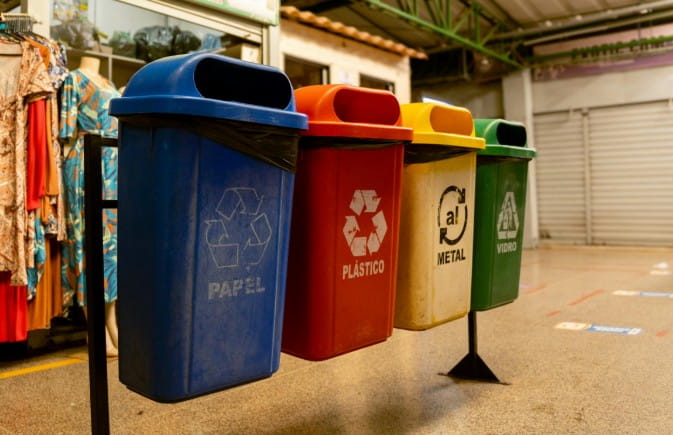
The Standardised Waste Stream Separation Framework
The table below highlights how the four core national streams operate under the updated statutory guidance, outlining exactly what materials are permitted or excluded across England:
| Collection Stream | Permitted Materials & Packaging Types | Prohibited Materials & Contaminants |
| Food Waste | Plate scrapings, vegetable peelings, meat bones, tea bags, dairy products, and pet food. | Liquids (soups/oils), packaging, garden soil, animal faeces. |
| Dry Recyclables | Plastic tubs/pots, glass jars, aluminium foil trays, steel food cans, and drink cartons. | Laminated pouches, contaminated cling film, Pyrex glass, and mirror fragments. |
| Paper & Cardboard | Clean delivery boxes, office documents, newspapers, dry egg cartons, and brochures. | Waxed paper, greasy pizza boxes, items with glitter, padded envelopes. |
| Residual Waste | Nappies, bagged pet litter, vacuum dust contents, and heavily soiled fast-food wrappers. | Batteries, electronic waste (WEEE), paints, and hazardous chemicals. |
Understanding the Black General Waste Bin and Overflows
Under the 2026 rules, the black general waste bin is restricted exclusively to non-recyclable residual waste. Households are strictly prohibited from using unauthorised secondary black bins or causing overflows, as councils enforce strict capacity limits following the mandatory diversion of food and dry recyclables.
This exception is typically reserved for large families of six or more people, or households producing unavoidable medical waste (such as clinical dressings or adult incontinence products). Unauthorised secondary black bins will simply be left unemptied by collection crews.
Are Food Waste Bins Compulsory in England Now?
Yes, food waste bins are completely compulsory in England. The legislation dictates that all local authorities must provide separate, dedicated weekly organic waste collections to all households, entirely removing food waste from the standard residual trash stream.
This mandate diverts millions of tonnes of organic food scraps away from sealed landfills into anaerobic digestion facilities to generate renewable green electricity.
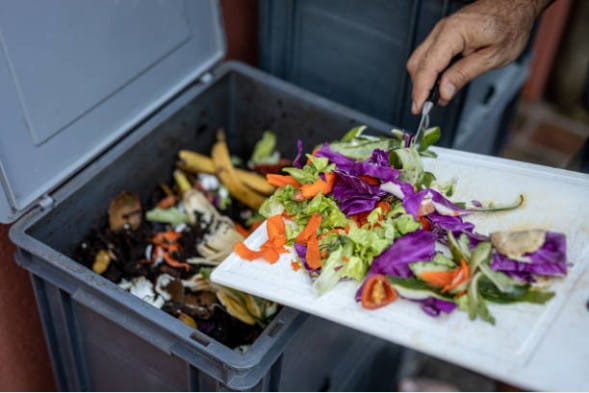
A Simple Step-by-Step Food Waste Routine
To ensure compliance with the new national standard, households should adopt this structured, five-step kitchen waste management process:
- Position the internal kitchen caddy in an accessible area, such as on the countertop or directly beneath the sink.
- Line the caddy container using a designated, council-approved compostable liner or a clean sheet of recycled newspaper.
- Scrape all plate leftovers, vegetable skins, tea grounds, meat bones, and spoiled dairy products straight into the liner.
- Tie the liner securely every two to three days once filled, avoiding over-packing to prevent messy splits or structural tears.
- Transfer the tied bundle into your larger, lockable outdoor food caddy to protect the organic waste from nocturnal pests.
- Place the outdoor food caddy at the pavement kerbside on your designated weekly collection morning for the crew.
How to Handle Dairy Waste and Caddy Liner Rules?
Dairy waste substances (like stale cheese or old yoghurt) are fully accepted in your food waste caddy. However, the outer plastic packaging must be completely emptied, rinsed clean of residue, and placed into your dry recycling bin.
Additionally, you must verify your specific local authority’s guidelines regarding plastic bags.
While many modern anaerobic digestion processing plants utilise heavy-duty mechanical shredders to rip open and filter out standard plastic liners, some localised regions accept exclusively 100% biodegradable cornstarch bags bearing the EN 13432 certification stamp.
Separating Fact from Fiction
Common 2026 recycling misconceptions include the belief that sorting errors carry immediate criminal charges, that all items marked with a triangular recycling code are accepted at the kerbside, and that any biodegradable bag can go into a food caddy. All three assumptions are completely false.
The introduction of the Simpler Recycling framework across England has brought a wave of new waste management guidelines, along with a fair amount of public confusion.
Misunderstanding these operational updates can result in rejected collections, unexpected local council fines, or high contamination rates at processing plants.
The breakdown below exposes the truth behind three common recycling misconceptions:
| Myth | Reality | Action Required |
| Sorting errors cause criminal fines. | Mistakes aren’t criminal. Councils only issue civil penalties for repeated, deliberate non-compliance. | Separate carefully; don’t panic over accidental errors. |
| All plastics with triangles are recyclable. | Black plant pots use carbon pigments that blind automated infrared sorting sensors. | Return plant pots to garden centres or use general waste. |
| All biodegradable bags fit food caddies. | Processing plants can’t break down generic bioplastics, treating them as contamination. | Use only EN 13432 certified liners or plain newspaper. |
How to Navigate Tricky Everyday Materials?
Tricky household items like toothpaste tubes, plastic plant pots, and old laptops cannot be thrown blindly into standard bins. Toothpaste tubes must be snipped and rinsed, plant pots are often rejected by automated infrared sorters, and electronics require specialist hardware recycling hubs.
While sorting basic glass jars and newspapers is straightforward, consumer goods featuring composite materials frequently cause processing issues at local sorting facilities. Use this quick guide to safely navigate the trickiest household items:
- Toothpaste Tubes: Snip off the end with scissors, rinse out any lingering paste residue with warm water, and place the clean plastic body straight into your dry mixed plastic recycling bin.
- Plastic Plant Pots: Clean off any remaining soil and check your local council rules. If they are not accepted at the kerbside, take them to a supermarket or garden centre recycling drop-off hub.
- Old Laptops & Tech: Devices containing batteries or circuitry fall under strict WEEE compliance rules. Never throw them in standard wheelie bins; instead, clear your personal data and take them to your local Household Waste Recycling Centre (HWRC).
The Complexity of Plastic Plant Pots and Packaging Films
A common pattern among UK gardeners is tossing rigid plastic plant pots straight into their residential recycling bins. In reality, most black or dark-coloured plant pots contain a high concentration of carbon black pigment.
This chemical composition absorbs infrared light, rendering the pots completely invisible to the automated optical sorting sensors used at standard Materials Recovery Facilities (MRFs).
Unless your specific council uses updated technology that explicitly welcomes these items, dirty plastic plant pots must be returned to local garden centre take-back points or disposed of in the general residual bin.
When tracking soft plastics, consumers must verify the small numerical triangles stamped onto packaging, known as the 7 recycling codes. High-density polyethene (Code 2) and low-density polyethene (Code 4) encompass standard supermarket carrier bags, bread bags, and bubble wrap.
Under the current timeline, these flexible films are not yet universally collected from doorsteps by all English councils; instead, they must be brought to regional supermarket recycling drop-off hubs until doorstep film collection infrastructure becomes universally mandatory.
Safe Electronic Waste Disposal Rules
Throwing electronic devices, such as old laptops, tablets, or lithium-ion batteries, into standard household wheelie bins is highly illegal under the Waste Electrical and Electronic Equipment (WEEE) Regulations.
When crushed inside a waste collection vehicle, compromised batteries can ignite instantly, causing devastating, toxic truck fires. Old computers must be cleared of personal data and taken to a designated Household Waste Recycling Centre (HWRC), or traded into electronics retailers via statutory hardware take-back schemes.
Throwing lithium-ion batteries or old electronics into standard domestic waste bins is illegal under WEEE Regulations due to severe vehicle fire hazards.

What to Do with Old Underwear and Textiles?
Old underwear and degraded textiles should never be mixed with standard household recycling. While pristine clothes are accepted at high-street charity shops, heavily worn garments or underwear must go into dedicated supermarket textile take-back hubs or your black general waste bin for energy-from-waste conversion.
Discarded fashion creates a massive environmental footprint, with the Waste & Resources Action Programme (WRAP) estimating that hundreds of thousands of tonnes of clothing are thrown into UK trash heaps annually.
While public clothes banks are excellent for recycling wearable items, intimate garments present a distinct hygiene dilemma.
Recommended Textile Recycling Pathways
Before clearing out your wardrobe, use this quick checklist to decide the best way to dispose of old items based on their condition:
- Unworn or Excellent Condition Underwear: If you have brand-new items with original sales tags attached, they are fully accepted by charitable clothes banks and high-street charity shops for direct resale.
- Heavily Worn or Damaged Knickers: Intimate textiles that are stretched, torn, or stained should never be placed into public donation banks. They compromise the hygiene of the entire textile batch.
- Supermarket Fashion Take-Back Hubs: Many major UK supermarket branches now host dedicated clothing recycling collection boxes that accept heavily degraded rags and underwear explicitly for industrial fibre shredding and insulation production.
- Household General Waste: If local textile recycling options are completely unavailable, old underwear must be placed in the black general waste bin for safe disposal or energy-from-waste conversion.
What Are the Changes in the Suffolk Bin Collection for 2026?
The Suffolk bin collection changes under the Better Recycling scheme introduce a multi-stream layout featuring a weekly food caddy, a grey wheelie bin with a green lid (collected every four weeks for paper/card), and a blue wheelie bin (collected every four weeks for mixed dry recyclables).
Although DEFRA establishes national baselines, local implementation models differ based on pre-existing regional waste contracts and equipment configurations.
A clear example of this localised execution is the roll-out of the Better Recycling scheme across Suffolk, providing a real-world look at how councils are modernising infrastructure.
The Suffolk Regional Multi-Stream Collection Configuration
The table below details the updated bin layout and collection schedule being deployed across Suffolk neighbourhoods to align with the national directive:
| Bin Container Profile & Lid Colour | Designated Material Stream | Mandatory Collection Frequency |
| Light Grey Caddy (Food) | Food waste scrapings, bones, and organic residues. | Once every week (Fixed) |
| Grey Wheelie Bin + Green Lid | Clean, dry paper, cardboard packaging, and envelopes. | Once every four weeks |
| Blue Wheelie Bin (Mixed) | Glass jars, plastic pots, metal cans, and liquid cartons. | Once every four weeks |
| Black Wheelie Bin (Residual) | Non-recyclable household rubbish and general waste. | Once every two weeks |
| Brown Wheelie Bin (Garden) | Leaves, grass, twigs, and hedge trimmings (Paid service). | Once every two weeks |
This customised twin-stream recycling infrastructure separates paper and card from other dry materials at the doorstep.
This prevents glass fragments or liquid residue from degrading the raw paper quality, allowing the council to sell the pure fibre material directly to British paper processing mills.
Because these specialised streams extract the vast majority of volume from household waste, the council can transition dry recycling collections to a rotating four-week cycle without reducing overall storage capacity.
Is it Illegal to Use Someone Else’s Bin in the UK?
Yes, placing your rubbish into a neighbour’s private wheelie bin without express permission is legally considered a form of fly-tipping. It violates local authority waste regulations, which hold the registered property owner strictly responsible for the contents and contamination penalties of their assigned bins.
As councils restrict general waste capacity, neighbourhood friction over bin space often rises.
How to Handle Unauthorised Bin Closures?
If you discover that neighbours are using your bin containers for their overflow waste, use these three practical steps to protect your property:
- Move your bin containers inside your property boundary, keeping them securely behind gates or fences between collection days rather than on the public pavement.
- Apply discrete house number stickers onto the sides and lids of your bins to establish clear ownership within the street.
- Communicate calmly with your neighbour to explain that their actions could lead to your bin being rejected by the council for contamination or weight limits. If the issue continues, you can formalise the complaint through your local council’s environmental health portal.
What the 2026 Rules Mean for UK Small Businesses?
For UK small businesses, the framework mandates strict commercial compliance dates requiring all workplaces with ten or more employees to source-separate dry recyclables and food waste. Businesses producing over 5kg of food waste weekly must secure a dedicated, compliant commercial recycling contract.
The Phased Commercial Compliance Schedule
The table below outlines the statutory enforcement dates for workplaces based on their total organisational headcount:
| Business Operating Scale | Employee Headcount Threshold | Legally Mandated Compliance Date |
| Medium & Large Enterprises | 10 or more Full-Time Equivalent (FTE) workers | 31 March 2025 (Enforced) |
| Non-Domestic Institutions | Schools, colleges, and NHS hospitals | 31 March 2025 (Enforced) |
| Micro-Businesses | Fewer than 10 Full-Time Equivalent (FTE) workers | 31 March 2027 (Impending) |
Workplace managers should note that any company producing more than 5kg of food waste per week is now legally required to arrange a dedicated commercial food waste collection contract.
Failing to sort waste properly can lead to formal warning notices or uncapped statutory fines issued by the Environment Agency.
By setting up colour-coded recycling stations and running brief staff training sessions, small businesses can cut down on expensive landfill tax surcharges and keep their operations fully compliant.
Preparing Your Property for Modern Recycling
The New Bin Recycling Rules mark a major shift in how the UK manages its daily waste resources. While adjusting to more precise sorting and new collection schedules requires some initial effort, the environmental and financial benefits are clear.
To stay ahead of local council rollouts, verify your specific local authority’s container delivery timeline, update your home or office sorting setups, and double-check labels on unfamiliar packaging.
Verified against official DEFRA Simpler Recycling Statutory Guidance and the legal framework of the Environment Act 2021.
FAQ about New Bin Recycling Rules
Do these rules apply across Scotland and Wales?
No. The Simpler Recycling policy specifically governs waste networks within England. Scotland, Wales, and Northern Ireland operate under independent environmental portfolios managed by their respective devolved governments, with Wales already running highly stringent commercial separation laws.
Are all UK councils using identical bin colours?
No. The national strategy standardises the specific types of materials collected, but allows local councils to use their existing fleets and bin colours. You must check your local council’s digital portal to see which of your local bins matches each national material stream.
Can plastic plant pots be mixed with household plastic bottles?
Generally no. Standard dark plastic plant pots contain carbon pigments that confuse automated optical sorting sensors at recycling plants. Unless your local council explicitly states they have upgraded sorting technology, plant pots belong in the general waste bin.
Can you put compostable plastic bags in a food waste caddy?
Yes, provided they feature the official EN 13432 certification badge. You must check your local council’s rules first, as some processing facilities prefer standard newspaper linings and filter out all plastic-like materials during treatment.
Is it a criminal offence to put the wrong item in a recycling bin?
No, accidental sorting mistakes are not treated as criminal offences. However, if a household consistently contaminates recycling streams with general waste, local authorities can issue formal warning letters followed by statutory financial penalties.
How should you clean common items like toothpaste tubes before recycling?
To recycle a plastic toothpaste tube, snip off the end with scissors, rinse out any lingering paste residue with warm water, and place the clean plastic body into your dry recycling container.
Can I get an extra recycling bin if my household produces excess waste?
Yes. Most UK local authorities will provide additional dry recycling wheelie bins free of charge if you demonstrate that your household maximises sorting and consistently overflows standard containers.