HMRC Savings Tax Warning: 2026/27 Rules and How to Respond
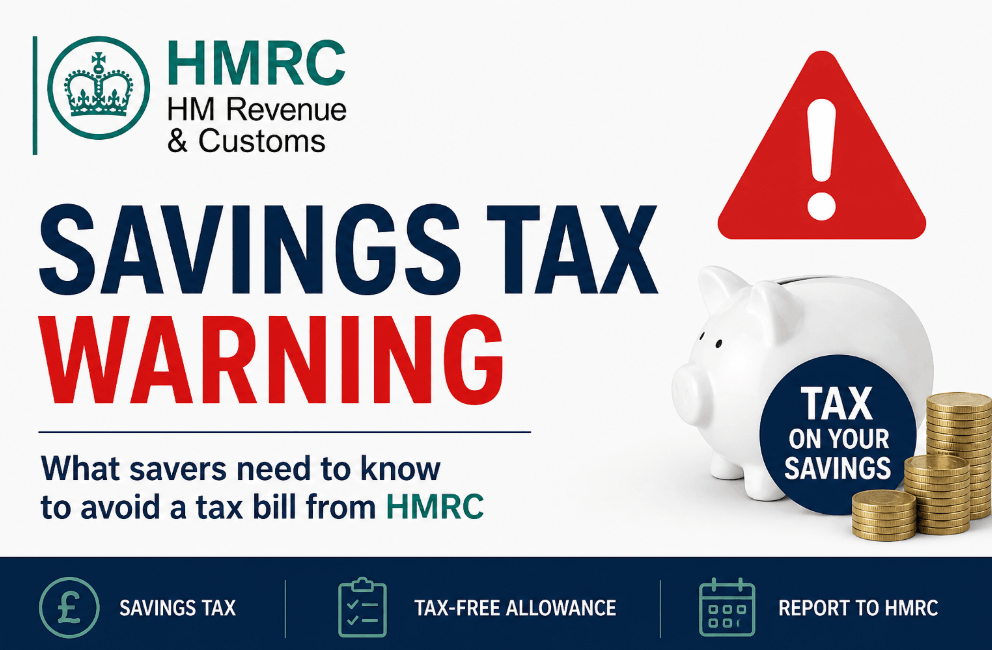
An HMRC savings tax warning is a formal notification, often sent via a nudge letter or a P800 Simple Assessment, informing a taxpayer that interest earned on cash savings has exceeded their annual Personal Savings Allowance.
Due to frozen tax thresholds and higher interest rates in 2026, HMRC uses automated data sharing from banks to identify and reclaim tax owed.
The Shift in UK Savings Oversight
The landscape for UK savers has shifted dramatically. For nearly a decade, low interest rates meant few people ever crossed the threshold of their tax-free allowances.
However, as of the 2026/27 tax year, the combination of fiscal drag, where tax bands remain frozen while incomes and interest rates rise, has brought millions of standard bank accounts under the scrutiny of tax authorities.
What was once a concern only for the wealthy is now a reality for basic-rate taxpayers with modest rainy-day funds.
HMRC savings tax warning: Why is this happening in 2026?
An HMRC savings tax warning occurs when the tax office identifies that your total interest from banks, building societies, and peer-to-peer lending exceeds your Personal Savings Allowance (PSA).
HMRC receives this data automatically from financial institutions, compares it against your reported income, and issues a warning if there is a discrepancy or an unpaid liability.
It is becoming increasingly common for taxpayers to receive HMRC savings account tax letters detailing these discrepancies as part of a wider compliance drive.
Understanding the Data Matching Process
In practice, the process is almost entirely automated. Under the Common Reporting Standard, UK banks are legally mandated to provide HMRC with an annual summary of interest paid to every account holder. HMRC’s systems then aggregate this data across all your accounts.
If the total exceeds your PSA, which is £1,000 for basic rate payers and £500 for higher rate payers, the system triggers a notification. This might arrive as a nudge letter, designed to encourage you to check your affairs, or a Simple Assessment bill if the tax year has already concluded.
How much interest can you earn before receiving a warning?
To avoid an unexpected tax bill, it is essential to monitor your earnings against the current 2026/27 tiers. If you move from the basic rate band into the higher rate band due to a salary increase, your allowance for savings interest is instantly halved, often catching taxpayers off guard.
| Taxpayer Band | 2026/27 Annual Income | Savings Allowance (PSA) |
| Basic Rate | £12,571 – £50,270 | £1,000 |
| Higher Rate | £50,271 – £125,140 | £500 |
| Additional Rate | Over £125,140 | £0 |
What steps should you take after an HMRC savings tax warning?
If a notification arrives, it is vital to verify the figures before making any payments, as bank data can occasionally include errors or misattribute joint account interest.
- Gather all 2025/26 and 2026/27 annual interest certificates from every bank and building society you use.
- Calculate the total interest earned across all accounts, including joint accounts which are usually split 50/50.
- Check your current tax code on your payslip or via the Personal Tax Account to see if HMRC has already adjusted it.
- Compare your total interest against the Personal Savings Allowance relevant to your specific income bracket.
- Identify any tax-free interest, such as that from ISAs or NS&I Premium Bond prizes, and ensure it is excluded from the total.
- Verify if you qualify for the Starting Rate for Savings, an additional £5,000 allowance available if your other income is below £17,570.
- If the HMRC figures are higher than your own, contact your bank to ensure they haven’t reported gross interest incorrectly.
- Submit a correction via your Personal Tax Account or call the HMRC helpline if you believe the assessment is wrong.
Many people prefer to speak to an agent directly; you can find a verified HMRC telephone number free of charge to discuss your case without incurring high call costs.

Is the HMRC savings tax warning data always accurate?
While the automated system is efficient, it is not infallible. A common pattern involves joint accounts where one partner is a non-taxpayer. HMRC often defaults to attributing 50% of the interest to each person.
If the interest actually belongs to only one person, or if a different split was previously agreed upon via a Form 17, the automated warning will be incorrect.
Furthermore, many taxpayers forget about dormant accounts or small amounts of interest earned on current accounts. When reviewing decisions made by the tax office, we often find that nudge letters are triggered by these forgotten pots of money.
If you receive a warning, do not ignore it, but do not assume the computer is always right. Cross-referencing your own bank statements is the only way to ensure you aren’t paying tax on money you never actually received.
How will HMRC collect the tax owed on your savings?
For most employees and pensioners, HMRC does not require a cheque. Instead, they use a system called tax code coding out.
If you are a retiree and notice your code has changed incorrectly, you may also want to investigate your eligibility for an HMRC state pension tax refund to recover any overpaid levies.
If you owe tax on savings interest, HMRC will adjust your PAYE code, for example, changing 1257L to a lower number.
This means you pay more tax on your monthly salary to cover the debt over the course of the year.
However, if the amount owed is significant, or if you are self-employed, HMRC will issue a Simple Assessment (Form P800). This is a formal demand for payment. Failure to pay this by the deadline (usually 31st January following the end of the tax year) results in immediate interest charges.
In a recent example, a taxpayer in Bristol received a P800 for £450 in unpaid savings tax; because they ignored the letter, thinking it was a scam, they eventually faced a penalty and an 8.5% interest charge on the debt.
Strategies to protect your savings from the 2026 tax raid
As interest rates remain high, proactive management is the only way to keep your returns tax-free.
- Maximise ISA Allowances: Every adult has a £20,000 annual ISA limit. Interest earned here is invisible to the HMRC savings tax warning system.
- NS&I Premium Bonds: While the win is not guaranteed, any prizes won are 100% tax-free and do not count toward your PSA.
- Pension Contributions: If you are hovering just above the £50,270 threshold, a pension contribution can pull your adjusted net income back into the basic rate band, doubling your savings allowance from £500 back to £1,000.
- Spousal Transfers: If your spouse earns less than you, moving savings into their name can utilise their unused Personal Savings Allowance or even their 0% Starting Rate for Savings.

Special considerations for SME owners and directors
For business owners, the line between personal and business cash is often a focus for HMRC. If you hold significant business reserves in a personal account to get a better interest rate, that interest is personal income and subject to the PSA.
Conversely, interest earned in a dedicated business account is subject to Corporation Tax. Mixing the two can lead to complex audits.
We have seen instances where directors were issued warnings because they failed to distinguish between a director’s loan account interest and personal savings, leading to unnecessary penalties.
Business owners should remain vigilant across all areas of compliance, as these warnings often coincide with HMRC wage raid payroll checks aimed at uncovering broader financial inconsistencies.
Final Summary and Next Steps
Receiving an HMRC savings tax warning is a signal to audit your financial records rather than a reason to panic. With 2.7 million people expected to pay tax on savings this year, the priority is to verify the accuracy of HMRC’s data against your own bank certificates.
If the warning is correct, ensure your tax code is adjusted or pay the Simple Assessment promptly to avoid interest. Moving funds into tax-efficient wrappers like ISAs or considering Premium Bonds remains the most effective way to shield your future returns from fiscal drag.
FAQ about HMRC Savings Tax Warning
Does HMRC check every bank account I own?
Yes. UK financial institutions are legally required to share interest data with HMRC annually. This includes high-street banks, digital-only banks, and building societies.
Can I ignore a nudge letter if the amount is small?
No. Ignoring a nudge letter can be viewed as careless behavior, which allows HMRC to apply higher percentage penalties if they later find you owed tax.
Do ISAs count towards the HMRC savings tax warning?
No. Interest earned in a Cash ISA or capital gains in a Stocks and Shares ISA are legally exempt from UK tax and do not use up your Personal Savings Allowance.
What if I have a joint account with my spouse?
HMRC usually assumes interest is split 50/50. If you receive a warning, check that the total interest from the joint account has been split correctly between your respective allowances.
How do I pay the tax if I am not in the PAYE system?
If you are not an employee, you must pay via Self-Assessment or a Simple Assessment. HMRC will provide a reference number and instructions for a bank transfer or debit card payment.
Why did I get a warning if I only earned £800 in interest?
If you are a higher-rate taxpayer (earning over £50,270), your allowance is only £500. Earning £800 would mean you owe tax on the £300 excess.
Is interest from Premium Bonds taxable?
No. Premium Bond prizes are classified as gambling wins under UK law and are entirely tax-free, regardless of how much you win.
Can HMRC take the money directly from my bank account?
While HMRC has Direct Recovery of Debts powers for large, unpaid debts, they typically collect savings tax via tax code adjustments or voluntary payments first.