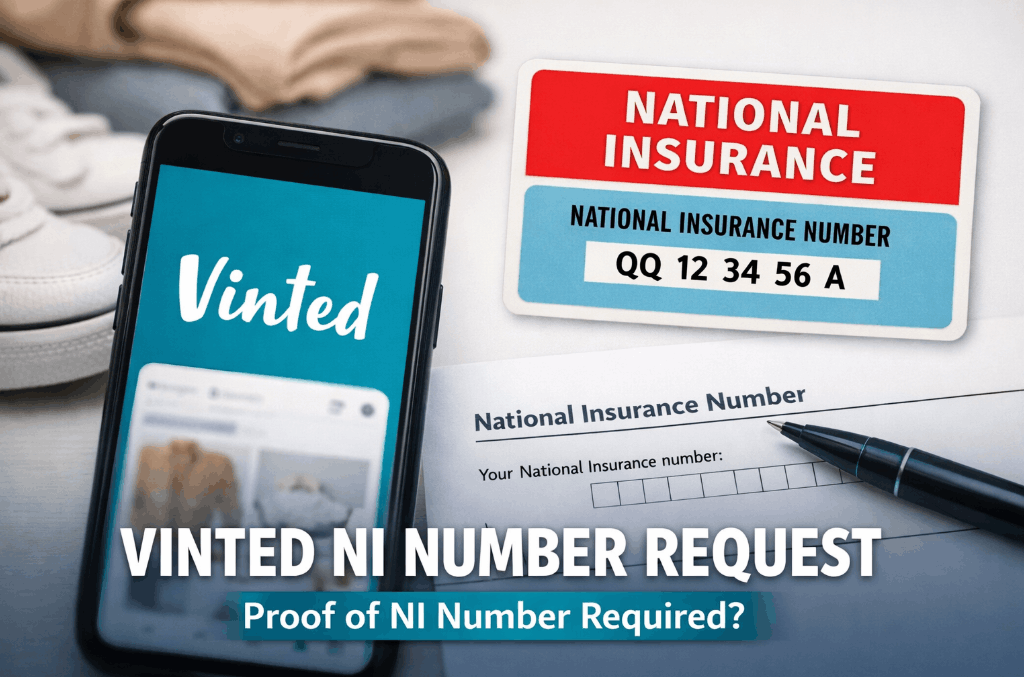
Vinted NI Number Request: How To Fix It And Avoid Tax Panic
A Vinted NI number request is a mandatory data collection process triggered when a UK seller reaches specific sales thresholds, specifically 30 completed transactions or total sales exceeding €2,000 (roughly £1,700) in a calendar year.
This shift is part of the UK’s commitment to new digital reporting standards, which require platforms like Vinted to share seller data directly with HMRC.
The aim is to bring transparency to the growing side hustle economy and ensure the tax office has a clear picture of secondary market activity across the country.
Why is there a Vinted NI number request for UK sellers?
Vinted requests your National Insurance number to comply with the Model Reporting Rules for Digital Platforms, which were integrated into UK law to help HMRC identify individuals earning significant income through online marketplaces.
This data allows HMRC to distinguish between casual sellers decluttering their homes and professional traders running a business.
Being upfront with your details is a standard part of modern financial life. For example, honesty is just as crucial when you are trying to find out which insurance companies do not ask about criminal convictions, as it is when providing tax identifiers to a selling app.
In both cases, accuracy ensures you stay compliant with UK regulations and avoid unnecessary account flags.

The automated reporting framework
Most people selling on the platform find the sudden request for an NI number a bit jarring, especially if they only sell occasionally.
It is a relatively new process for the UK, and the confusion usually stems from whether a notification means you are being investigated or simply recorded.
Under the current regulations, Vinted is legally obligated to collect and verify the tax identification details of any user who hits the reporting threshold. Providing your NI number is not an admission of tax liability; rather, it is a compliance step that ensures the platform can remain operational within the UK.
If you do not provide this information when prompted, Vinted is typically required by law to restrict your account, which often results in a freeze on withdrawing your current balance or listing new items.
When exactly does Vinted trigger the National Insurance request?
Vinted does not ask every user for their sensitive data immediately. The prompt is triggered by specific volume or value metrics within a single calendar year.
- Open the Vinted App: Navigate to your profile tab.
- Check Notifications: Look for a legal identity verification or tax information request.
- Locate your NI Number: Find this on your payslip, P60, or via the HMRC app.
- Enter Personal Details: Ensure your legal name matches your NI records.
- Submit the Form: Double-check for typos to avoid verification delays.
- Verify Confirmation: Once submitted, you can usually check your Legal Information or Account tab to confirm the platform has successfully verified your details.
- Download Your Statement: Review the annual Seller Inventory Report provided by Vinted every January.
| Threshold Metric | Reporting Requirement | Tax Liability Likely? |
| Under 30 sales & <£1,700 | No reporting required | No |
| 30+ sales & <£1,000 profit | Mandatory NI request | No (covered by Allowance) |
| Any volume & >£1,000 profit | Mandatory NI request | Yes (Self-Assessment) |
| High volume (Chattels >£6k) | Mandatory NI request | Possible (Capital Gains) |
Do I have to pay tax because of a Vinted NI number request?
The short answer for most casual sellers is no. HMRC is primarily interested in badges of trade, indicators that you are buying items specifically to resell them for a profit.
If you are selling your family’s old clothes or household items for less than you originally paid for them, you are technically making a loss, and this does not count as taxable income.
While it feels like a new hurdle, staying on top of these rules is simply part of being a responsible seller.
It is much like checking if I have fully comprehensive car insurance can i drive any car? It’s about knowing exactly where your legal and financial protections begin and end before you commit to a transaction.

The £1,000 Trading Allowance explained
The UK government provides a £1,000 annual Trading Allowance. If your total gross income (before expenses) from casual selling is under £1,000, you generally do not need to report it or pay tax.
In practice, we see many sellers panic when they hit the 30-item limit, but because their total sales value remains low, they remain well within the tax-free boundaries.
Capital Gains Tax on personal possessions
For those selling high-value items like designer handbags or rare collectables, the Chattel rule applies. In the UK, you typically only pay Capital Gains Tax on personal possessions if you sell a single item for more than £6,000.
For the vast majority of Vinted users, the total annual sales across hundreds of small items will never trigger this specific tax.
How does Vinted protect your sensitive tax data?
Data privacy is a significant concern when a Vinted NI number request appears on a smartphone screen.
Vinted sends this information using secure, encrypted connections designed to meet strict UK data protection standards. Your details are shared specifically for tax compliance and aren’t accessible to other users or buyers on the platform.
- Encryption Standards: Data is encrypted at rest and in transit using industry-standard protocols.
- Limited Access: Only specific compliance teams within Vinted have access to the raw data during the verification phase.
- Purpose Limitation: Your NI number is used strictly for tax reporting compliance and is not shared with third-party advertisers or other users.
A common pattern we observe in digital compliance is that users feel safer when they provide the information via the official Settings or Legal Information menu rather than clicking links in unsolicited emails. Always ensure you are inside the official app before entering your NI number.
What happens if the Vinted NI number request is ignored?
Ignoring the request does not make the tax obligation go away; it simply complicates your ability to use the platform. Vinted is mandated by the HMRC reporting framework to take enforcement action against non-compliant accounts.
Account restrictions and Payout freezes
The most immediate consequence of failing to provide your NI number is an account lock. This usually starts with an inability to list new items, followed by a freeze on the Vinted Balance.
You may find that while you can still browse, your funds are held in escrow until the legal requirements are met.
HMRC Nudge Letters
While Vinted reports the data, HMRC does not automatically fine you. However, if the data suggests you are running a business without registering for Self-Assessment, HMRC may send a nudge letter. This is a formal request for you to check your tax affairs.
By providing the NI number and keeping your own records of cost vs. sale price, you can easily defend your position if HMRC ever queries your activity.

Strategic record keeping for high-volume sellers
If you are a high-volume seller who frequently triggers the Vinted NI number request, your best defence against tax confusion is clear documentation.
- Keep a simple spreadsheet of what you paid for an item vs. what it sold for.
- Save screenshots of your Vinted annual summary.
- Deduct postage costs, packaging, and Vinted fees from your gross sales to find your true net position.
Summary of next steps for UK sellers
The Vinted NI number request is a standard part of the modern digital economy. To keep your account running smoothly and avoid any last-minute payout freezes, here is a simple plan of action:
- Check your numbers: Look at your yearly sales total in the My Stats area.
- Get your NI ready: Don’t wait for a balance freeze; have your National Insurance details to hand.
- Keep it separate: If you are flipping items for profit, start a basic log of your costs to make your end-of-year tax declaration a breeze.
FAQ about Vinted NI number request
Is the Vinted NI request a scam?
No, if the request appears within the official Vinted app or via an official @vinted.com email, it is a legitimate legal requirement. Vinted must collect this to comply with UK tax transparency laws implemented in 2024 and 2025.
Will my benefits be affected by selling on Vinted?
Generally, selling personal items at a loss does not count as income for Universal Credit. However, if you are trading (buying to sell) and earn over certain limits, it must be declared to the DWP to avoid overpayment issues.
Can I use Vinted without a National Insurance number?
You can use Vinted until you reach the threshold of 30 sales or approximately £1,700 in value. Once these limits are hit, providing an NI number becomes a mandatory condition for continued account use and payouts.
Does HMRC track every single sale I make?
HMRC receives a summary of your total sales volume and value once a year. They do not typically scrutinise every individual £5 t-shirt sale unless your total profile suggests significant, undeclared commercial trading activity.
What if I have multiple Vinted accounts?
The reporting rules apply to the individual. HMRC’s system matches your NI number across multiple platforms. Attempting to split sales across accounts to stay under the 30-item limit is generally ineffective and may breach Vinted’s terms of service.
Can I provide my UTR instead of an NI number?
Vinted specifically requests the National Insurance number for individual UK sellers as it is the primary identifier for personal tax records. Even if you have a Unique Taxpayer Reference (UTR), the NI number is still required.
How long does Vinted keep my NI number?
Vinted retains this data for as long as necessary to fulfil its legal obligations under the reporting regulations, typically for several years, in line with standard UK financial record-keeping requirements.