
How Will A Roof Rack Affect Your Car? Performance, MPG, Insurance, And UK Repair Costs Guide
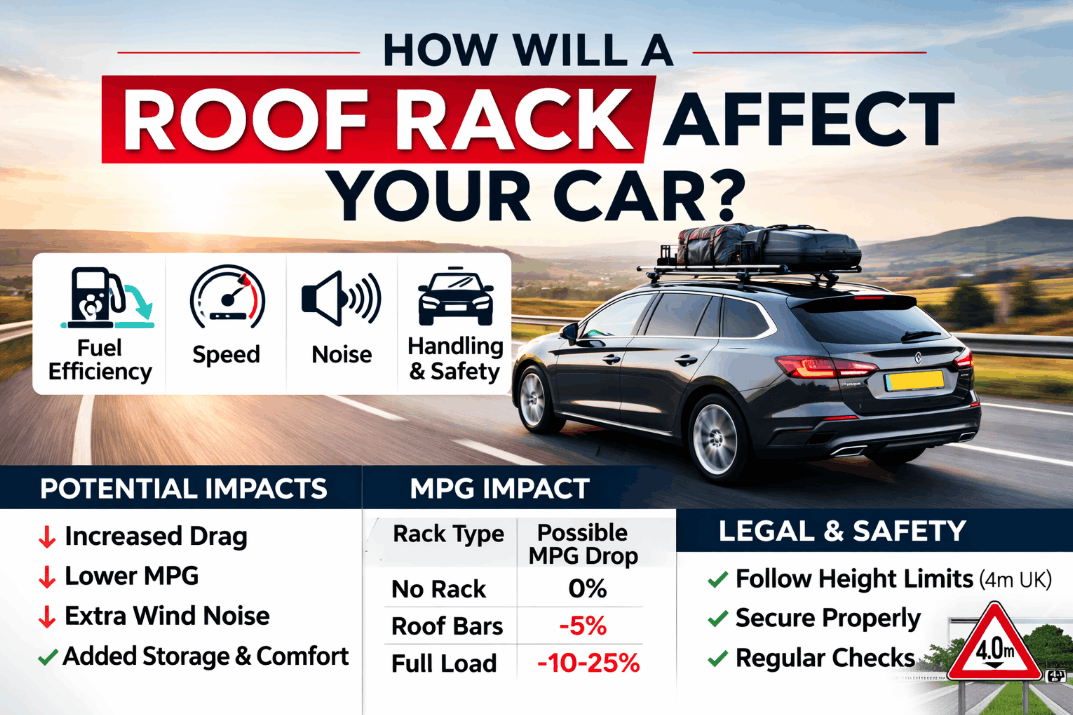
How will a roof rack affect your car? A roof rack significantly impacts a vehicle by increasing aerodynamic drag, which directly reduces fuel efficiency and alters the car’s centre of gravity.
Beyond physical handling, these systems introduce wind noise and carry specific legal implications under UK road safety regulations regarding weight limits and secure loading.
Installing a roof rack is a practical solution for SME owners and outdoor enthusiasts needing extra space.
However, adding hardware to your roofline creates a permanent change in how your vehicle interacts with the air and the road. Understanding the balance between utility and overhead costs is essential for maintaining your vehicle’s longevity and your own safety.
How will a roof rack affect your car?
A roof rack affects your car by fundamentally altering its aerodynamic profile and weight distribution. In practice, this results in increased fuel consumption due to drag, heightened wind noise at motorway speeds, and a shift in the centre of gravity that requires a more cautious approach to cornering and braking.
The Core Reality of External Loading
The presence of a roof rack is a trade-off between utility and vehicle dynamics. While modern designs aim for sleekness, any object protruding from the car’s original silhouette creates turbulence.
A common pattern observed in long-distance driving is the cumulative cost of leaving empty racks fitted; even without a load, the disrupted airflow can lead to a measurable increase in your annual fuel or energy expenditure.
- Aerodynamic Drag: The car must push through more air resistance, straining the powertrain.
- Centre of Gravity: Heightened weight makes the vehicle more prone to body roll in bends.
- Structural Stress: Constant vibrations from wind can loosen mounting points over time.
What is a roof rack and how does it function?
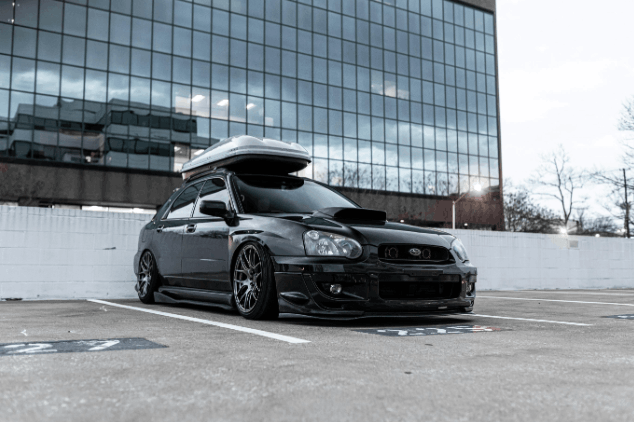
A roof rack is a set of bars secured to the roof of a motor vehicle, designed to carry bulky items such as luggage, bicycles, canoes, or roof boxes.
It consists of three main components: the feet or towers that attach to the car, the crossbars that span the roof width, and optional fitting kits tailored to specific vehicle models.
The Foundation of External Cargo
In practice, these systems provide a structural framework that bypasses the spatial limitations of a car’s boot.
Many owners find that modifications like these are essential when they can you write off a car as a business expense UK to help manage operational costs.
When reviewing transport decisions for a small business, a roof rack is often the first modification considered because it allows a standard passenger vehicle to function as a light commercial haulier without the capital expense of a new van.
- Fixed Points: Pre-drilled threaded holes in the roof hidden under plastic tabs.
- Raised Rails: Factory-fitted bars running lengthways that the rack clamps onto.
- Flush Rails: Low-profile longitudinal rails without a gap between the rail and the roof.
- Gutter Mounts: Classic attachment style for older vehicles or rugged 4x4s.
Why does a roof rack attack my car’s performance?
A roof rack attacks your car’s performance by disrupting the smooth airflow over the bodywork, creating high-pressure zones that act as an invisible brake.
This phenomenon, known as aerodynamic drag, forces the engine or electric motor to consume more energy to maintain a constant speed, particularly above 50 mph.
The Science of Physical Resistance
The attack is not just limited to fuel; it is a physical stressor. As air hits the front of the bars, it creates turbulence.
This turbulence creates a downward and backward force that can subtly strain mounting points. A common pattern observed in wind-tunnel testing shows that even a sleek, empty rack increases the drag coefficient ($C_d$) of a vehicle by up to 15%.
When you load the rack, the attack intensifies
- Frontal Area Expansion: A roof box or bike increases the total surface area pushing against the wind.
- Vortex Shedding: Air spinning off the back of the rack creates low-pressure “pull” behind the car.
- Inertial Changes: The added weight at the highest point of the car makes the vehicle slower to respond to throttle and brake inputs.

What kind of cars are mostly affected by roof rack installations?
The degree to which how will a roof rack affect your car depends largely on the vehicle’s original shape and weight.
Smaller, more aerodynamic cars suffer the most significant percentage losses in efficiency, whereas large, boxy commercial vehicles see a smaller relative change because their “wind profile” is already substantial.
| Vehicle Type | Aerodynamic Impact | Efficiency Loss (Empty) | Efficiency Loss (Loaded) |
| Small Hatchback | Very High | 5% – 8% | 15% – 25% |
| Sleek EV (e.g. Ioniq 6) | Extreme | 10% – 12% | 20% – 30% |
| SUV / Crossover | Medium | 3% – 5% | 10% – 15% |
| Commercial Van | Low | 1% – 2% | 5% – 10% |
Does climate play a role in roof rack attack in my car?
UK weather conditions significantly exacerbate the negative effects of a roof rack. Rain, high winds, and winter road salt act as catalysts for both mechanical wear and structural degradation.
The Corrosion and Wind Factor
A common pattern in the UK is the salt trap effect. During winter, local councils spread grit and salt on the motorways.
This salt-heavy spray gets trapped in the microscopic gaps between your roof rack’s rubber feet and the car’s paintwork. If left uncleaned, the moisture creates a galvanic cell that accelerates rust.
Furthermore, in high-wind regions like the Scottish Highlands or the Welsh coast, a roof rack increases the lateral surface area of your car, making you far more vulnerable to dangerous side gusts on exposed bridges.
What are the prevention steps I can do to avoid roof rack damage?
To avoid permanent damage and maintain vehicle health, you must implement a proactive maintenance and installation routine. Prevention is significantly cheaper than the bodywork repairs required after a poorly fitted rack fails.
- Apply Paint Protection Film (PPF): Place clear adhesive strips under the mounting feet to prevent grit from scratching the clear coat.
- Use a Torque Wrench: Follow the exact Newton-metre (Nm) settings in the manual to avoid deforming the roof pillars.
- Clean Mounting Points Weekly: Remove the rack or lift the feet to flush out salt and dirt during the winter months.
- Grease the Bolts: Use a small amount of copper grease on the threads to prevent “seizing” due to UK road moisture.
- Calculate the Load Correctly: Remember that the “max load” includes the weight of the bars, the box, and the contents.
- Check T-Track Strips: Ensure the rubber filler strips are correctly seated to prevent the “flute effect” whistle.
How to handle my car after roof rack installation
Adding weight to the roof fundamentally changes the car’s centre of gravity. To stay safe, you must adjust your driving habits to compensate for the increased body roll and longer stopping distances.
Driving Adjustments for Roof Loads
When reviewing decisions after a weekend trip, many drivers report that the car felt heavy in corners. This is because the weight on top pulls the car outward during a turn.
In practice, a driver who usually takes a roundabout at 20 mph may find the car’s stability control triggers if they maintain that speed with 75kg on the roof.
Steps to handle a roof-racked vehicle safely:
- Reduce your motorway cruising speed by 5–10 mph to mitigate drag.
- Increase your following distance to at least 3–4 seconds to allow for extra braking weight.
- Approach corners more slowly to minimize pendulum effect body roll.
- Be extra cautious when exiting tunnels or passing lorries, where wind gusts are strongest.
Can roof rack effects lead to engine failure?
While a roof rack will not directly cause an engine to blow up, it places significant additional stress on the cooling system and transmission. A common pattern in older vehicles is overheating when climbing steep hills with a heavy roof box and a full car.
The engine must work harder against the wind, generating more heat. In extreme cases, this sustained strain can lead to head gasket failure or transmission wear if the vehicle is already at its mechanical limits.
What is the expense to repair a roof rack affected car in the UK?
If a roof rack causes damage, the repair costs in the UK vary based on whether the issue is cosmetic or structural. As of 2026, paintless dent removal (PDR) is the most common fix for the “dents” caused by over-tightening.
| Damage Type | Typical UK Repair Method | Estimated Cost (GBP) |
| Mounting Point Scratches | Machine Polish / Respray | £80 – £250 |
| Roof Dents (Over-tightened) | Paintless Dent Removal (PDR) | £120 – £350 |
| Structural Pillar Deformation | Body Shop Realignment | £500 – £1,500+ |
| Rust / Corrosion | Sanding and Full Respray | £300 – £600 |
Do all shops handle roof rack affected car repairs?
Not every garage is equipped for these specific repairs. While a general mechanic can check your suspension, you will likely need a specialist body shop for roof rail realignment or paint correction.
In practice, an SME owner might visit a local smart repair specialist for minor scratches, but structural damage to the roof pillars requires a shop with a hydraulic puller and manufacturer-specific safety certifications.

Does insurance cover roof rack effects on my car?
In the UK, many insurers view a roof rack as a temporary accessory rather than a permanent modification, but this is a grey area.
If you leave a professional-grade rack permanently fitted to a business car, it may technically be a modification that changes the vehicle’s risk profile.
These insurance nuances are just as important as knowing the answer to questions like If I have fully comprehensive car insurance can i drive any car when using a vehicle for varied tasks.
A believable scenario involves a driver claiming for a dented roof after a rack came loose. If the insurer finds the rack was fitted incorrectly or was an undeclared permanent modification, they may reject the claim.
Always check if your policy covers contents in transit specifically, as standard car insurance rarely covers the gear inside a roof box.
How to get rid of the roof rack effect and restore your car
Removing the rack is only the first step. To fully get rid of the effect, you must restore the vehicle’s aerodynamics and protect the mounting points for future use.
Post-Removal Restoration
Once the bars are off, you will often find a ring of dirt or a slight indentation where the feet sat. A common pattern for car-proud owners is to use a clay bar to remove the embedded grit, followed by a high-quality wax.
This ensures that the aerodynamic profile is restored to 100% efficiency and the paint is sealed against the elements.
- Clean: Use a pH-neutral shampoo to remove road salt.
- Inspect: Look for cracks in the paint or rubber door seals.
- Replace: Ensure all plastic “fixing point” covers are snapped back into place to prevent water ingress.
Does the same damage repeat once I have repaired my car?
The risk of recurrence is high if the original cause, such as over-tightening or grit entrapment, is not addressed.
If you have repaired a dent via PDR, the metal in that area may be slightly more prone to flexing. To prevent a repeat, ensure you use a calibrated torque tool for the next installation and never skip the cleaning phase.
Final Summary
The impact of a roof rack on your car is a balance of utility and physical consequences. While it provides the freedom to carry essential gear, it also attacks your fuel economy, changes your vehicle’s handling, and creates new maintenance requirements. To maintain your vehicle’s value and safety:
- Remove the rack immediately when not in use to restore MPG.
- Deep clean mounting points to prevent UK road salt corrosion.
- Adjust your driving style to account for the higher centre of gravity.
FAQ
Does a roof rack cause whistling at high speeds?
Yes, wind passing through small gaps in the bars creates a flute effect. This is usually solved by installing rubber aerodynamic strips into the T-track grooves on top of the bars.
Can I take my car through a car wash with a rack?
No, most automatic car washes can snag the bars, potentially ripping them off and causing severe damage to both the car and the wash equipment.
Do I need to tell the DVLA about a roof rack?
No, a roof rack is an accessory and does not change the vehicle’s classification on the V5C logbook.
How much extra fuel will a roof box use?
A loaded roof box can increase fuel consumption by 10% to 15% at motorway speeds due to increased frontal area and drag.
Does a roof rack affect my car’s resale value?
If well-maintained, it has little impact. However, visible rack rash (scratches) or pillar dents can lead to significant deductions during a professional appraisal or lease return.
Can a roof rack cause leaks inside the car?
Yes, if the rack uses clip-on mounts that go under the door seal, it can create a gap where rainwater enters during heavy UK downpours.
Are electric cars more affected by roof racks?
Yes, because EVs are extremely aerodynamic, a roof rack disrupts their efficiency more noticeably, often reducing motorway range by 20% or more.