
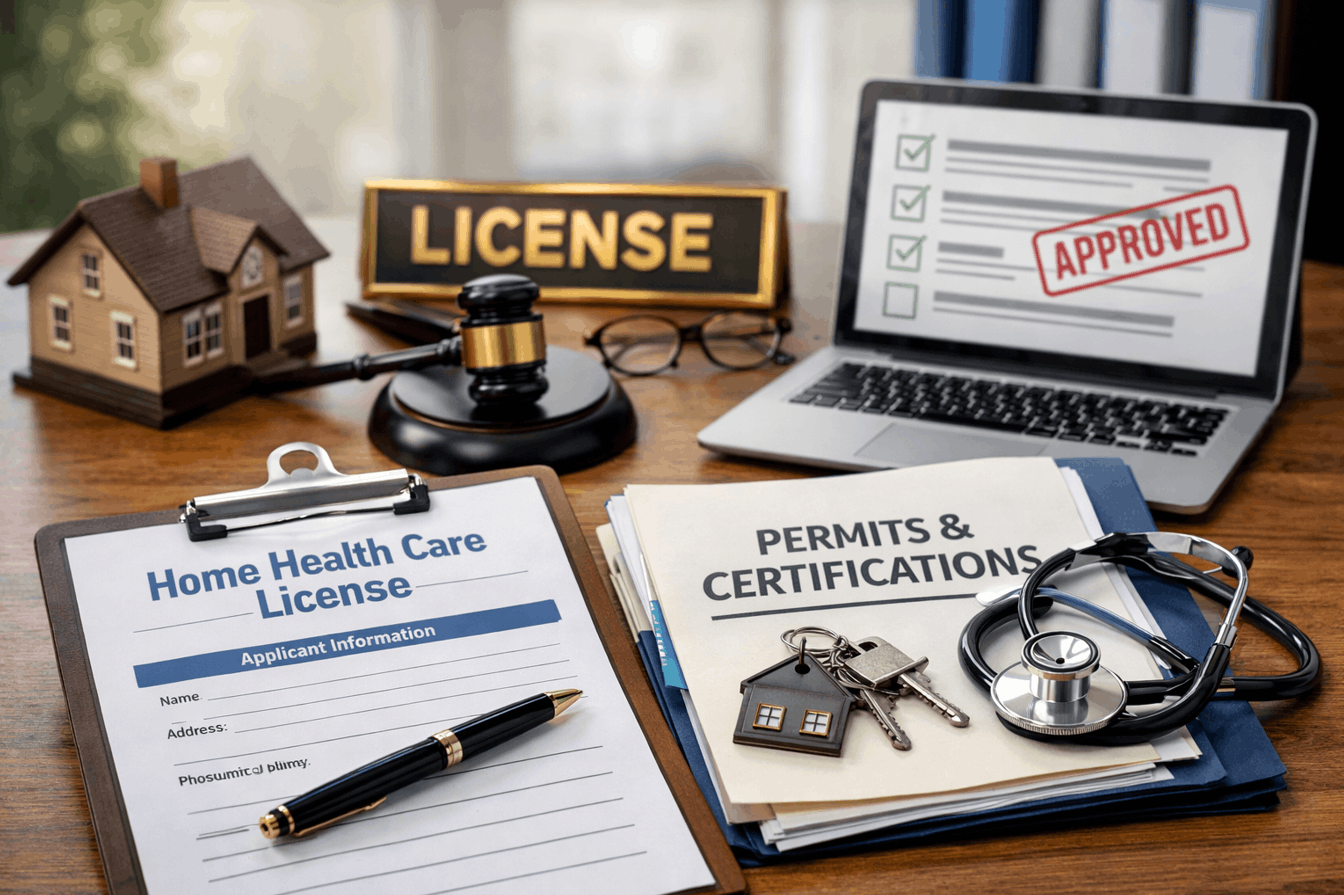
What Licenses Do I Need To Start A Home Health Care Business In The UK: CQC, DBS, ICO, Insurance, Policies, Setup Steps
If you’re asking what licenses do i need to start a home health care business, the answer depends on whether you will deliver a regulated activity such as personal care.
In most cases, you must register with the correct care regulator before providing regulated care, appoint accountable leadership roles, and operate with safeguarding, recruitment, governance, and data protection controls that are inspection-ready.
To start a home care business that delivers personal care, you generally need registration with the relevant care regulator for the nation you operate in, an approved provider and often a registered manager arrangement, plus supporting compliance foundations such as safer recruitment checks, appropriate insurance, and data protection registration.
Requirements vary by service type and location, and you must register before delivering regulated care.
What licenses do I need to start a home health care business?
Home care requirements are driven by the activity you deliver, not the label you use. If your service includes personal care or other regulated activities, you must register with the relevant regulator before providing that care.
If you only provide non-regulated support such as companionship, you may not need regulator registration, but you still need lawful business operations and robust safeguarding practice.
The Core Decision That Changes Your Obligations
Personal care is typically hands-on support with personal hygiene tasks because of age, illness, or disability. If that sits inside your service offer, plan on full registration and inspection readiness.
A common pattern is that founders design branding and pricing first, then discover they have built a regulated service. Set the service boundaries first, then build the business around them.

Is it a business licence or regulator registration?
Most people search for “licences”, but the requirement is usually provider registration with a care regulator. Registration is linked to the points below:
- The regulated activity you intend to deliver.
- The legal entity that will provide the service.
- How the service will be managed day to day.
- Who holds accountability roles such as Nominated Individual or Registered Manager.
In practice, regulators assess whether your system can deliver safe care consistently, not whether you have a folder of policies.
Care regulator registration is central, but the practical set-up matters too. That includes knowing when do i need to register my business with HMRC so your start date, tax position, and reporting stay aligned.
Which regulator do you register with for home care?
The regulator depends on where you operate. Treat each nation as its own framework, even if your service model stays the same.
Regulator By Nation With The Usual Registration Focus
| Where you operate | Main regulator | Typical registration focus | Common accountable roles |
|---|---|---|---|
| England | Care Quality Commission | Regulated activities such as personal care | Provider, Nominated Individual, Registered Manager |
| Scotland | Care Inspectorate | Care at home services and quality framework | Provider, service manager arrangements |
| Wales | Care Inspectorate Wales | Regulated service registration and responsible individuals | Provider, Responsible Individual, manager |
| Northern Ireland | RQIA | Domiciliary care registration and standards | Registered provider, person in charge |
Example: A small provider started with private-pay companionship visits. Within weeks, families asked for bathing support. The owner paused new starts, tightened the service scope, and moved onto the correct pathway before staff drifted into regulated care.
When does your service become regulated?
Regulation is triggered by what your staff do in clients’ homes. Clear boundaries prevent accidental non-compliance.
Activities That Commonly Trigger Regulation Include:
- Washing, bathing, showering support
- Dressing and undressing where the person cannot do it themselves
- Toileting and continence care
- Hands-on oral hygiene or grooming linked to care needs
Services Often Non-Regulated When Offered On Their Own Include:
- Companionship and social support
- Shopping, errands, collecting prescriptions
- Meal preparation that is not hands-on feeding as personal care
- Domestic tasks and light housekeeping
In practice, “we don’t do personal care” fails if staff are not trained to hold boundaries politely and consistently during visits.
A clear scope also helps you position the service. If you’re weighing adjacent service models, 12 unique business ideas can spark options while you keep compliance boundaries tight.

What licenses do i need to start a home health care business in England?
If your service includes personal care, you typically need Care Quality Commission provider registration before delivering that activity. Registration is tied to your legal entity and the regulated activity. You may also need a registered manager arrangement where required by your structure and day-to-day management setup.
What licenses do i need to start a home health care business for personal care services?
For personal care, the “licence” is effectively the regulator registration. Your application normally needs to demonstrate:
- Safeguarding and incident reporting pathways.
- Safer recruitment and DBS handling.
- Training, induction, supervision, and competency assurance.
- Care planning, risk assessment, and review processes.
- Medication support governance where relevant.
- Quality assurance, audits, and management oversight.
- An accessible complaints process and learning culture.
What licenses do i need to start a home health care business is also a readiness test: can you evidence safe systems before the first client visit?
Do you need a registered manager and key responsible roles?
Many regulated models require a registered manager arrangement, particularly where the provider is an organisation or the owner is not the day-to-day manager of the regulated activity. Even where a specific manager registration is not required, clear leadership accountability is expected.
Key roles commonly seen in home care operations include:
- Registered Manager or equivalent manager registration role
- Nominated Individual or Responsible Individual depending on the framework
- Safeguarding Lead
- Medication Lead
- Infection prevention and control lead
- Quality lead responsible for audits and improvement actions
When reviewing real service launches, the difference between “good intentions” and “safe delivery” is usually supervision, record-keeping discipline, and consistent decision-making.
What documents and policies will you be expected to have?
Your paperwork needs to reflect your actual workflow. Copy-and-paste packs often fail because the policy says one thing and the rota, training, and records show another.
Minimum compliance pack and the evidence it should show
| Document or policy | What it should prove | Evidence to maintain |
|---|---|---|
| Statement of Purpose | scope, eligibility, boundaries, aims | version control, review dates, signed ownership |
| Safeguarding policy | recognition and referral routes | training records, referral log, escalation notes |
| Safer recruitment policy | fit and proper staffing controls | identity checks, references, DBS tracking |
| Complaints procedure | accessible resolution process | complaints log, outcomes, learning actions |
| Medication policy | safe prompts and administration rules | MAR audits, competency sign-offs, incident reports |
| Risk assessment framework | safety planning and mitigation | client risk assessments, moving and handling plans |
| Data protection policy | UK GDPR operational controls | retention schedule, access controls, breach log |
| Governance and audit plan | oversight and improvement cycle | audit calendar, actions tracker, management reviews |
Example: One new agency had excellent carers but no audit routine. They introduced a monthly cycle for MAR checks, care plan reviews, incident learning, and spot checks. Within eight weeks the service ran more smoothly because issues were picked up early.
What else is commonly required beyond regulator registration?
Even when your model is non-regulated, you still need professional safeguards and lawful operations. For regulated services, these sit alongside registration.
These foundations are widely expected and reduce avoidable risk:
- Secure record systems for care plans, MAR charts, and incident logs.
- A clear training matrix with refreshers and competency checks.
- A supervision schedule and escalation routes for concerns.
- Appropriate insurance aligned to your activities.
- Data protection controls for special category health data.
Solid financial records support stable staffing and consistent delivery. Many providers use Small business accounting software to manage invoicing, payroll, expenses, and audit-ready reporting from the start.
As of 2026, commissioners and private families increasingly ask for evidence of governance even when they are not using procurement frameworks.

How do you register and launch without delays?
The fastest path is the one that avoids rework. Most delays come from unclear scope, weak evidence, or missing operational detail.
A practical sequence from idea to first client
- Define your service list and draw a hard line between regulated and non-regulated tasks.
- Choose the legal entity and confirm which nation’s regulator you must register with.
- Appoint accountable roles and define decision-making authority in writing.
- Build the minimum compliance pack with version control and review dates.
- Set up safer recruitment, including identity checks, references, and DBS workflows.
- Implement care delivery operations: assessment, care planning, risk, review, and records.
- Establish governance: audits, spot checks, incident learning, and management reviews.
- Submit your registration application with supporting evidence that matches your workflow.
What insurance and data protection do you need?
These aren’t “care regulator licences”, but they are commonly treated as operational requirements because they affect safety, contracting, and trust.
Data protection usually covers:
- A privacy notice and lawful basis for processing.
- Secure storage and role-based access for care records.
- Retention schedules for client and staff files.
- Breach handling and subject access request processes.
Insurance is usually built around:
- Public liability
- Professional indemnity
- Employers’ liability if you employ staff
- Optional cyber cover where you store health data digitally
A common pattern is underestimating data protection because “it’s just notes”. Care notes are sensitive health information and need controlled access and retention discipline. In practice, data issues usually surface during routine audits or when a family asks for records, so it pays to make access control and retention rules routine early on.

What changes if you provide clinical home health care tasks?
Some people use “home health care” to mean clinical interventions rather than personal care support. If you provide clinical tasks, the governance burden increases and you may trigger additional regulated activities.
Operational additions typically include:
- Clinical leadership oversight and competency frameworks.
- Sharper medication governance and documentation standards.
- Clear scope statements for tasks such as wound care, injections, catheter care, or PEG support.
- Formal escalation routes with GP, district nursing, community services, and urgent care pathways.
Example: A provider started with personal care and medication prompts. Families then asked for insulin support. The owner paused growth, built a clinical competency pathway, and tightened scope boundaries. That avoided staff being pushed into tasks without evidenced competence.
What are the most common mistakes that cause delays or risk?
These are the issues that repeatedly show up when systems are tested under pressure.
Common mistakes and safer alternatives
| Mistake | Why it causes problems | Safer alternative |
|---|---|---|
| Vague service scope | accidental delivery of regulated care | write boundaries and scenarios staff can follow |
| Policies copied from elsewhere | mismatch between paper and practice | build policies around your real workflow |
| Weak governance | no evidence of oversight | create an audit cycle with action tracking |
| Recruitment gaps | safeguarding exposure | document checks, induction, supervision |
| Medication ambiguity | prompts drift into administration | define tasks, train, use MAR, sign off competence |
What people talk about this online?
Non-Medical Home Care Service Business
by
u/njvicente21 in
Entrepreneur
Looking to start a home Health Agency
by
u/PotentialHat1678 in
smallbusiness
Final summary
As of 2026, the deciding factor is whether your service includes personal care or other regulated activities. Define the service scope first, confirm the correct regulator route for where you will operate, appoint accountable roles, and build governance, recruitment, and data protection systems that can be evidenced before the first client visit.
Next steps that reduce rework:
- Write a one-page service scope with strict boundaries.
- Map every task you plan to offer against regulated activity triggers.
- Build the minimum compliance pack with version control and an audit calendar.
- Set up recruitment, DBS tracking, induction, supervision, and competency checks.
FAQ
Do you need a licence to run a home care business?
If you provide personal care or another regulated activity, you usually need regulator registration before operating. If you only offer companionship or domestic support, you may not need registration, but you still need safeguarding, safer recruitment, and lawful business compliance.
Can you start without registering if you only offer companionship?
Often yes, if the service is genuinely non-regulated and carers do not provide personal care. Clear boundaries, staff training, and supervision are essential so visits do not drift into regulated tasks.
What counts as personal care in home care?
Personal care commonly includes hands-on support with washing, bathing, toileting, dressing, and similar hygiene tasks linked to care needs. The activity performed is what matters, not the service name on your website.
Do you need a registered manager to open a home care agency?
Many regulated models require a registered manager arrangement, especially where an organisation provides the service or the owner is not managing daily delivery. Even when not mandatory, clear accountable leadership is expected.
How long does registration usually take?
Timelines vary based on service scope and how complete your evidence pack is. Most delays come from unclear boundaries, weak governance detail, or incomplete recruitment and training systems.
What qualifications do you need to set up a care agency?
There is no single qualification that guarantees approval. Regulators look for competence, relevant experience, and leadership capacity in key roles, supported by robust systems for safe delivery, supervision, and quality improvement.
Do carers need DBS checks?
DBS needs depend on role and activity, but home care commonly relies on DBS and safer recruitment controls. Maintain a documented workflow, tracking, and escalation steps for disclosures or concerns.
Do you need to register for data protection?
Most home care providers handle sensitive health data, so UK GDPR controls are essential and many must register for the data protection fee where applicable. Focus on access control, retention schedules, breach handling, and staff training.
Can you support medication without being regulated?
Prompts and reminders differ from administration, but the line can blur in practice. Define the service clearly, train staff, document appropriately, and ensure competency sign-offs match the tasks you permit.
Author note
Written from practical experience reviewing home care start-ups, compliance packs, and inspection readiness workflows. The focus is on clear service boundaries, accountable roles, and evidence-based governance that stands up to scrutiny. General information only, not legal advice.