The US UK Trade Deal Matrix: Tariffs, Automotive Quotas, and the 2026 SME Outlook
As of mid-2026, Department for Business and Trade tracking shows the United States remains the United Kingdom’s single largest bilateral trading partner, with total annual trade volume exceeding £331 billion.
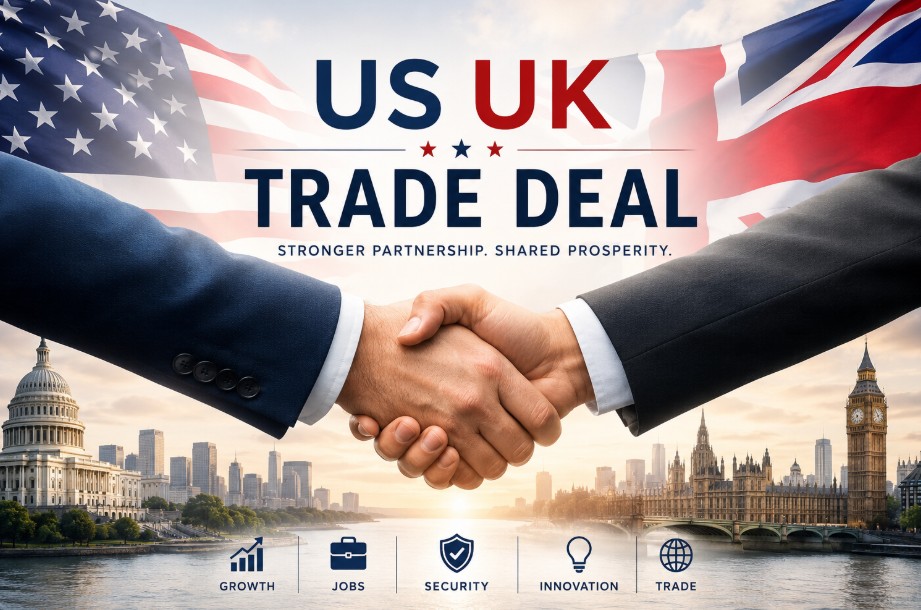
However, instead of a traditional, comprehensive Free Trade Agreement (FTA), this evolving US UK Trade Deal is now governed by a targeted, sector-specific pact known as the Economic Prosperity Deal (EPD).
Signed by the UK and US governments to bypass complex multilateral treaties, the EPD focuses strictly on high-volume industrial and agricultural sectors. For British small and medium-sized enterprises (SMEs), succeeding under this framework requires a clear understanding of its strict sector-specific quotas and rules of origin.
What is the Present US UK Trade Deal?
The present US UK trade deal is a targeted, sector-specific framework known as the Economic Prosperity Deal (EPD). Rather than a single, sweeping treaty, it functions as a network of state-monitored quotas protecting high-volume industrial sectors like automotive manufacturing, steel production, and green energy distribution from global baseline tariffs.
The agreement serves primarily as a shield against broader protectionist actions. While it opens up specific corridors of relief, it demands structural compromises from the UK, particularly regarding agricultural market access and domestic environmental standards for fuel components.
1. The US UK Trade Deal Bioethanol Quotas and Agricultural Terms
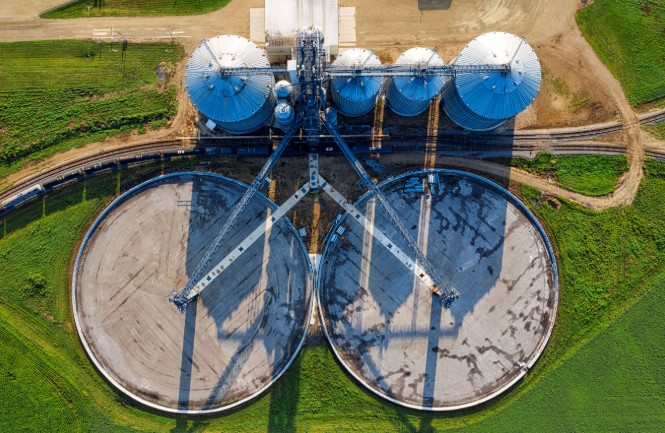
A cornerstone of the US UK trade deal summary is the immediate removal of the historic 19% UK import tariff on American bioethanol.
The UK government announcement serves as the primary regulatory baseline for this policy, establishing a massive tariff-free quota allowing up to 1.4 billion litres of US-origin ethanol into the British market annually.
A cornerstone of the EPD is a direct reciprocal exchange aimed at balancing agricultural and energy interests.
- The 1.4 Billion Litre Ethanol Quota: The UK offers a preferential, duty-free Tariff-Rate Quota (TRQ) of up to 1.4 billion litres for US-origin ethanol annually. This influx of cheaper, corn-based American bioethanol creates stiffer competition for domestic British grain producers and refining networks.
- The 13,000-Tonne Beef Swap: To balance agricultural access, the UK has established a preferential duty-free quota of 13,000 metric tons (mt) for US beef, completely removing the previous 20% tariff. In return, the US reallocated 13,000 mt of its existing Other Countries beef quota specifically to the UK.
- Sanitary and Phytosanitary (SPS) Standards: The document explicitly clarifies that all imported food and agricultural goods must strictly comply with the importing country’s existing food safety and animal welfare standards.
2. Automotive and Steel Quotas
The EPD acts as an essential buffer for British industrial firms against broader American trade penalties, particularly those arising from US Section 232 investigations.
The Car Export Corridor
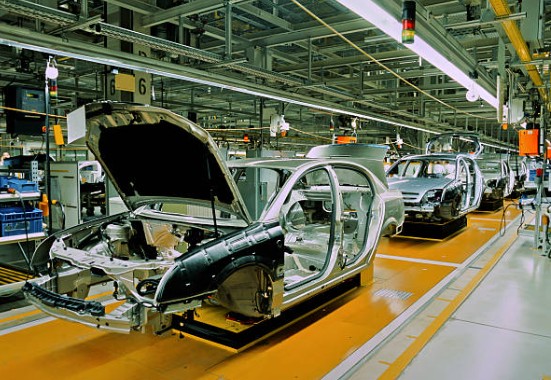
For UK automotive manufacturers (such as Jaguar Land Rover, under Tata Motors), the deal alters the standard US import barriers by creating a volume-managed framework:
- Preferential Tier: The US has created a dedicated quota allowing the first 100,000 vehicles exported from the UK each year to enter at a preferential 10% tariff rate. This arrangement includes a matching framework for accompanying auto parts.
- The Content Threshold: To qualify for this preferential rate and prevent third-party nations from exploiting the deal, businesses must comply with strict rules of origin designed to maximise purely bilateral trade.
Steel and Aluminium Supply Chains
Previously excluded by heavy US penalties under the Trade Expansion Act, British metal producers receive relief under the EPD:
- MFN Quotas: The US provides a quota at Most Favoured Nation (MFN) rates for UK steel, aluminium, and derivative products.
- Security Requirements: This relief is entirely conditional on the UK meeting strict US requirements regarding supply chain security and verifiable tracing of production facility ownership to prevent third-party tariff evasion.
3. Pharmaceuticals and Procurement
Beyond heavy industry, the EPD lays the groundwork for critical high-value sectors:
- Pharmaceuticals: Pending the outcomes of US investigations, both nations intend to negotiate highly preferential treatment for pharmaceuticals and medical ingredients. As part of this, the UK has committed to improving the overall domestic operating environment for pharmaceutical firms.
- Government Procurement: The deal reaffirms both nations’ commitments under the WTO Agreement on Government Procurement (GPA). It links directly to the UK’s National Security Unit for Procurement and the Procurement Act, ensuring secure, reciprocal market access while freezing out non-treaty states.

4. The 2026 Tariff Landscape
UK exporters need to understand the legal nature of this framework to protect their cash flow:
The official EPD text explicitly notes that the document does not constitute a legally binding agreement and can be terminated by either country via written notice. It represents a shared framework of intent that must be actively maintained through ongoing bilateral negotiations.
This distinction became critical following shifts in American trade jurisprudence. When the US executive branch pivoted to using Section 122 of the Trade Act of 1974 to impose a baseline 10% tariff to combat balance-of-payments deficits, standard UK goods faced new friction.
However, because Section 122 measures cannot legally stack on top of active sector agreements, the specialised automotive, steel, and pharmaceutical pathways carved out under the EPD remain intact, acting as an irreplaceable shield for the UK’s primary export sectors.
Impact on UK Corporate Giants
The real-world execution of these sector-specific trade rules is clearly visible in the corporate strategies of the UK’s largest industrial employers.
| Corporate Entity | Primary Export Focus | US UK Trade Deal Operational Impact | Supply Chain Vulnerability |
| Tata Motors | Premium luxury and commercial passenger vehicles (JLR). | Must throttle and monitor shipments to stay within the annual 100,000-unit preferential tariff quota. | High; must maintain 80% regional component content to avoid the 25% penalty rate. |
| Rolls-Royce | Civil aerospace turbines and advanced defence components. | Gains specialised procurement rights under the Government Procurement Agreement (GPA). | Low; relies on highly specialised domestic engineering with insulated Western components. |
Tata Motors US UK Trade Deal Alignment
Jaguar Land Rover, a wholly owned subsidiary of Tata Motors US UK trade deal infrastructure, has been forced to fundamentally redesign its transatlantic shipping logistics.
Because the US market represents their most lucrative export destination, corporate planners now use quarterly allocations to ensure their high-margin luxury SUVs do not cross the American border after the 100,000-vehicle preferential limit has been exhausted.
Rolls-Royce US-UK Trade Deal Gains
Conversely, the aerospace and defence divisions of Rolls-Royce US UK trade deal supply chains have experienced a substantial administrative stabilisation.
The pact specifically guarantees that the US Department of Defence and major aerospace manufacturers retain preferential procurement access to high-quality UK aerospace components. This protects British precision engineering from the blanket import barriers applied to other European nations.

How Does It Impact the Economic Growth of Both Nations?
The economic impacts of the EPD diverge significantly from those of a standard, macro-level free trade agreement, creating distinct pockets of growth and vulnerability across the Atlantic.
Impact on the United Kingdom
- Insulation of Advanced Manufacturing: The EPD acts as a vital firewall for the UK’s high-value engineering, aerospace, and service economies. By protecting the City of London’s £74 billion professional services surplus, as validated by recent Office for National Statistics releases, and insulating key manufacturers from sweeping global US tariffs, it injects regulatory stability into these critical GDP-driving hubs.
- Agricultural and Fuel Sector Strain: Growth in the UK’s domestic agricultural and biofuel sectors faces downward pressure. The 1.4 billion litre bioethanol quota and the 13,000-tonne beef allocation expose British farmers to heavily subsidised, lower-cost American commodities, capping domestic margin expansion.
- Compliance Drag for SMEs: Because the EPD relies on highly targeted micro-quotas rather than systemic tariff elimination, smaller enterprises face extensive compliance costs. This administrative overhead threatens to bottleneck the export growth potential of mid-market UK firms.
Impact on the United States
- Export Vent for Midwest Agriculture: The deal serves as an immediate win for the US agricultural lobby, unlocking a massive, tariff-free corridor into the British market for corn-based ethanol and domestic beef.
- Supply Chain Resilience and Friend-shoring: Economically, the US sacrifices minor tariff revenues in exchange for enhanced supply chain security. By locking the UK into rigorous melt-and-pour origin verifications for metals and alignment on pharmaceutical verification, the US successfully insulates its critical defence and industrial supply chains against hostile third-party manipulation.
The 2026 Tariff Landscape & Geopolitical Friction
UK exporters need to understand the legal nature of this framework to protect their cash flow. The official EPD text explicitly notes that the document does not constitute a legally binding agreement and can be terminated by either country via written notice.
It represents a shared framework of intent that must be actively maintained through ongoing bilateral negotiations.
The Section 122 Pivot
The stability of this entire trading framework was severely challenged in early 2026 due to dramatic shifts in American trade jurisprudence.
On 20 February 2026, the US Supreme Court issued a landmark ruling stating that the International Economic Emergency Powers Act (IEEPA) could not be legally used by the executive branch to levy blanket import tariffs.
To prevent an immediate collapse of his border tax policy, the US President signed an emergency proclamation invoking Section 122 of the Trade Act of 1974.
This specific statutory tool permits a global baseline tariff on imports to combat systemic balance-of-payments deficits. As a result, a 10% baseline tariff applies to most standard UK goods entering America.
However, because Section 122 provisions cannot legally stack on top of existing active penalties, the specialised automotive and steel quotas negotiated under the EPD remain intact, acting as an irreplaceable shield for the UK’s primary export sectors.
Geopolitical Friction
This tight economic alignment has triggered significant international pushback. In official state media broadcasts, China attacks US-UK trade deal structures, labelling the pact an exclusionary, protectionist tool designed to enforce Western supply chain dominance under the guise of economic security.
What Happened to the US-UK Trade Deal?
The stability of this entire trading framework was severely challenged in early 2026 due to dramatic shifts in American trade jurisprudence.
The US Supreme Court Ruling
On 20 February 2026, the US Supreme Court issued a landmark ruling stating that the International Economic Emergency Powers Act (IEEPA) could not be legally used by the executive branch to levy blanket import tariffs.
This decision instantly dismantled the original legal justification for many of the trade penalties underpinning the Trump US UK trade deal architecture.
The Section 122 Pivot
To prevent an immediate collapse of his border tax policy, the US President signed an emergency proclamation invoking Section 122 of the Trade Act of 1974.
This specific statutory tool permits a global 10% baseline tariff on imports to combat systemic balance-of-payments deficits.
As a result, the US UK trade deal latest updates confirm that a 10% baseline tariff applies to most standard UK goods entering America.
However, because Section 122 provisions cannot legally stack on top of existing active penalties, the specialised automotive and steel quotas negotiated under the EPD remain intact, acting as an essential buffer for British industrial groups.
Conclusion and Action Plan for SMEs
Navigating the contemporary US-UK trade relationship requires moving past the expectation of an all-encompassing free trade area. Success in this environment depends on agile compliance management and deep supply chain visibility.
British SMEs looking to preserve their margins across the Atlantic should prioritise three immediate steps:
- Conduct an Origin Compliance Audit: Review the structural source of all raw metals and chemical compounds within your products to ensure compliance with US melt and pour or regional content requirements.
- Monitor Quota Exhaustion Rates: If your enterprise operates in the automotive or specialised machinery space, coordinate with your freight forwarders to track seasonal utilisation of the 100,000-unit low-tariff windows.
- Hedge Against Policy Shifts: Implement robust currency and logistics hedging strategies to protect your cash flow from sudden emergency trade proclamations issued by the US executive branch.
FAQ
Is the UK trade deal with the US good?
Yes, for high-value engineering. The deal is highly beneficial for advanced aerospace, pharmaceuticals, and precision engineering firms because it insulates them from global tariff spikes. However, it exposes domestic agricultural and bioethanol sectors to intense, low-cost American corporate competition.
What is in the UK and US trade deal?
The pact contains a 100,000-vehicle low-tariff quota for British cars, a tariff-rate quota system for steel and aluminium, reciprocal 13,000-tonne beef allocations, and the complete elimination of UK import duties on US bioethanol.
What does the USA buy from the UK?
The US primarily purchases high-value medicinal and pharmaceutical products, civil aircraft components, gas turbines, automotive vehicles from specialist manufacturers, and advanced financial and legal corporate services.
Who is Britain’s biggest trading partner?
The United States is the UK’s single largest bilateral trading partner, outpacing individual European nations and accounting for roughly 17.5% of the UK’s total global trade portfolio.
What is America’s biggest export to the UK?
America’s largest exports to the UK include crude oil, refined petroleum products, civil aircraft bodies, gold, and agricultural commodities, now prominently including industrial bioethanol.
Who is the US No. 1 trading partner?
While Canada and Mexico trade greater physical volume due to direct land borders, the UK remains the primary global destination for American foreign direct investment and high-value service exchange.
What country buys the most from the UK?
The United States buys more British goods and services than any other independent nation in the world, maintaining a structural trade surplus in favour of the UK service sector.
How much does the UK rely on the USA?
The UK relies heavily on the US market, particularly for its £74 billion professional services surplus. Transatlantic trade stability is vital for the financial health of the City of London and high-tech manufacturing hubs.