HMRC Bank Account Deductions: 2026 Rules, Tax Rates, and Registration Safety Guide
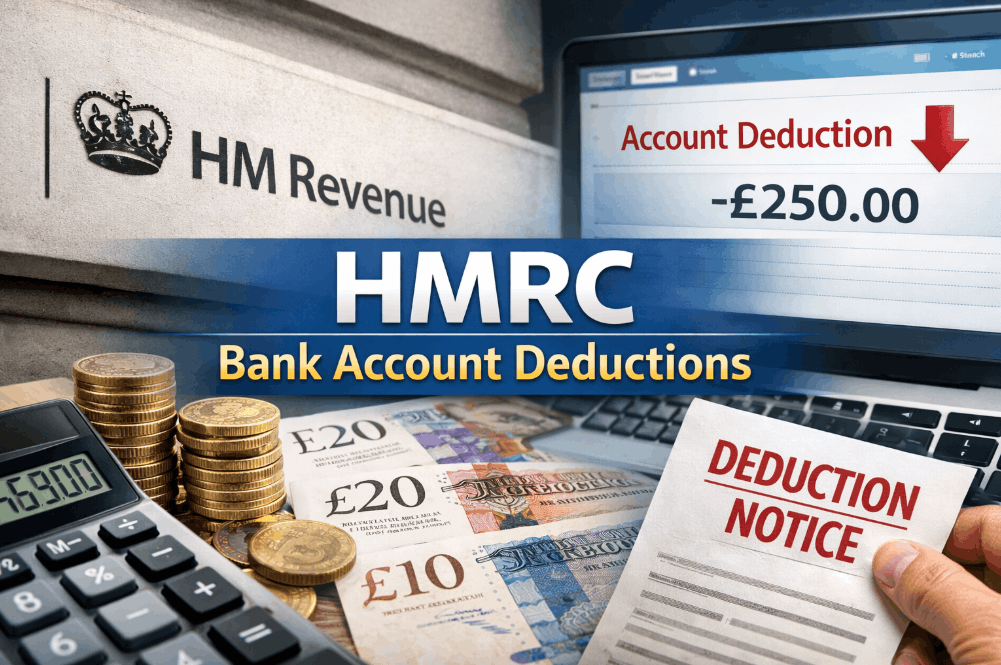
HMRC bank account deductions occur when the government uses the Direct Recovery of Debts (DRD) scheme to extract unpaid tax directly from a debtor’s bank or building society account.
This power allows the recovery of established tax and Tax Credit debts without a specific court order, provided the taxpayer has ignored multiple warnings and a minimum balance remains in the account.
Why does HMRC deduct money from bank accounts?
HMRC bank account deductions are a legal enforcement action used to collect tax arrears directly from your financial accounts.
This process, formally known as Direct Recovery of Debts (DRD), targets individuals and businesses who have the funds to pay their tax bill but have consistently refused to do so despite receiving multiple formal demands for payment.
The Statutory Framework for Debt Recovery
In practice, the authority for these deductions stems from the Finance Act, which granted the relevant powers to ensure that those who can pay but won’t pay are held accountable.
As of 2026, the process has become more streamlined through improved data-sharing between HMRC and UK financial institutions.
However, it is not an automated raid on your funds; it is a multi-stage legal process with built-in safeguards designed to protect a taxpayer’s essential living costs.
Essential Criteria for Direct Recovery
HMRC cannot simply dip into any account at will. For a deduction to be lawful, specific conditions must be met:
- The total debt owed must be at least £1,000.
- The taxpayer must have been issued a formal notice of the debt and failed to respond or settle.
- HMRC must be satisfied that the debtor is aware of the debt (usually evidenced by a face-to-face visit).
- A minimum protected balance of £5,000 must remain across all accounts after the deduction is made.
Does HMRC track all my earnings and spendings?
A common concern is whether HMRC monitors every daily transaction. The reality is more nuanced.
HMRC does not track daily spending in real-time, but it uses a sophisticated AI-driven system called Connect to aggregate data from over 30 sources, including banks, the Land Registry, and digital platforms.
As of early 2026, this monitoring has expanded significantly into the digital economy. Under the latest reporting frameworks, digital platforms and crypto exchanges are now required to report detailed transactional data directly to HMRC.
While they don’t watch your supermarket trips, they certainly see your investment gains, property sales, high-value bank interest, and even income from side-hustles on apps.
Managing your tax exposure starts with clarity on thresholds; it is a point of concern for many who wonder Do I have to notify HMRC of savings interest before an automated nudge letter arrives in the post.
This data-driven oversight ensures that all taxable income is accounted for before it reaches the enforcement stage.
How to register with HMRC correctly and who to contact
Ensuring you are on the Revenue’s radar from day one is the best way to stay compliant. Pinpointing when do i need to register my business with HMRC is an essential early step for any new venture to prevent Failure to Notify penalties from mounting up.
Depending on your situation—whether you are starting a business, becoming a sole trader, or hiring employees—the registration process differs.
How to start the registration process
- Sole Traders: You must register for Self-Assessment if you earn more than £1,000 from self-employment in a tax year.
- Limited Companies: You must register for Corporation Tax within 3 months of starting to do business.
- Employers: You must register for PAYE before the first payday if you employ anyone.
- VAT: Registration is mandatory if your taxable turnover exceeds £90,000 (the 2026 threshold).
Is it illegal not to register?
When reviewing decisions on penalties, HMRC distinguishes between careless errors and deliberate concealment.
It is indeed illegal to fail to notify HMRC of a new source of taxable income. This Failure to Notify can lead to penalties ranging from 30% to 100% of the tax due, plus potential criminal prosecution for deliberate tax evasion.
To register, you should contact HMRC via the official GOV.UK website using a Government Gateway or One Login account.

Current UK Tax Rates and Interest for 2026
Effective budgeting relies on staying abreast of shifting allowances. For instance, updated 2026 warnings suggest that HMRC warns that savings over £3501 may incur tax if the generated interest exceeds your Personal Savings Allowance.
For the 2025/26 and 2026/27 tax years, the Personal Allowance remains frozen at £12,570.
Income Tax Thresholds (England, Wales & NI)
| Band | Income Range | Tax Rate |
| Personal Allowance | Up to £12,570 | 0% |
| Basic Rate | £12,571 to £50,270 | 20% |
| Higher Rate | £50,271 to £125,140 | 40% |
| Additional Rate | Over £125,140 | 45% |
Interest Rates for Late and Early Payments
HMRC interest rates track the Bank of England base rate. Following the January 2026 update, new rates are in effect:
| Interest Type | Rate (as of Jan 2026) |
| Late Payment Interest | 7.75% |
| Repayment Interest | 2.75% |
| Corporation Tax (Instalments) | 6.25% (Late) / 3.50% (Early) |
A common pattern for early-bird filers is asking if they get a reward for early payment. While there is no direct discount, HMRC pays Repayment Interest (currently 2.75%) if you pay your tax early or overpay your bill, effectively acting as a modest savings rate on your credit.
While interest on credit is a small bonus, the practical side of recovery is often misunderstood. A frequent query from taxpayers is, Do HMRC automatically refund overpaid tax or must you proactively request a payout to keep your business cash flow moving?
Understanding these mechanics helps you manage your business cash flow more effectively while staying on the right side of the Revenue.
The Step-by-Step Timeline: From Warning to Deduction
HMRC follows a strict chronological path before money is ever moved. Understanding this timeline is the only way to intervene before your funds are frozen.
- The Final Demand: A formal letter warns that enforcement action, specifically DRD, is being considered.
- Face-to-Face Visit: An HMRC officer must attempt to meet you in person to explain the debt and confirm your identity.
- Information Notice: HMRC sends a notice to your bank to identify your accounts and current balances.
- The Hold Notice: HMRC instructs the bank to freeze the debt amount. You cannot withdraw these specific funds, but the rest of your balance remains accessible.
- The 30-Day Objection Period: You have exactly 30 days to lodge a formal objection or appeal to the County Court.
- Payment Transfer: If no objection is upheld, the bank transfers the held funds to HMRC to settle the debt.
Identifying HMRC Scams and Personal Calls
With the rise of sophisticated phishing in 2026, HMRC scams have reached record levels.
- Do HMRC employees call you personally? Yes, but with strict limits. An HMRC officer may call you to discuss an ongoing case or debt. However, they will never ask for your bank details, PIN, or full National Insurance number over the phone.
- The Urgency Red Flag: Scammers often threaten immediate arrest. Legitimate HMRC enforcement follows a paper-heavy legal process lasting months, not a 10-minute phone ultimatum.
- Payment Methods: HMRC will never ask for payment via Bitcoin, Gift Cards, or WhatsApp. Payments are only made through the official GOV.UK portal or bank transfer.
How to contact HMRC and update your information
If you move house or change your name, you must update your details to ensure you receive critical enforcement warnings before a bank deduction occurs.
How to update your latest information
- Step 1: Sign in to your Personal Tax Account via GOV.UK.
- Step 2: Navigate to Check or update your name/address.
- Step 3: Enter new details and the date of change.
- Step 4: For business changes, use the Tell HMRC about a change to your business service.
- Step 5: Submit the change; confirmation usually arrives in your secure inbox within 48 hours.
HMRC Working Times (2026)
- Self-Assessment Helpline: 0300 200 3310 (Mon–Fri: 8am–6pm).
- VAT Enquiries: 0300 200 3700 (Mon–Fri: 8am–6pm).
- Online Services Helpdesk: (Mon–Fri: 8am–8pm; Sat: 8am–4pm).
Who controls HMRC and how is my data handled?
HMRC is a non-ministerial department, meaning it operates with a degree of independence from direct political interference, though it is ultimately accountable to the Chancellor of the Exchequer and Parliament. It is governed by the Commissioners for Revenue and Customs.
Personal Data and Privacy
Under the Data Protection Act 2018, HMRC is a data controller of one of the largest databases in the UK. They collect names, addresses, and income sources to prevent fraud.
They do not sell your data, but they share it with other government departments (like the DWP) if required by law.

Final Summary and Action Plan
HMRC bank account deductions are a powerful tool used only when communication has completely broken down. Whether you are dealing with a debt or simply trying to stay compliant, the golden rule is engagement.
If you are struggling, set up a Time to Pay arrangement immediately. If you are starting out, register via GOV.UK within 3 months to avoid penalties.
Finally, ensure your correspondence details are current within your Personal Tax Account; missing a formal notice is the most common reason for an avoidable bank deduction.
FAQ
Can HMRC take money from my bank account without a court order?
Yes. Under the Direct Recovery of Debts legislation, HMRC can instruct banks to freeze and transfer funds for unpaid tax without going to court, provided they follow strict notification and visit protocols first.
How much money will HMRC leave in my account?
HMRC is legally required to leave a minimum of £5,000 across your combined accounts. This protected balance ensures you can still meet basic living expenses and immediate financial obligations.
Can HMRC raid a joint bank account?
HMRC can deduct funds from a joint account, but only if they can reasonably determine the debtor’s share. Usually, they assume an equal split between account holders unless you provide evidence that the money belongs to the non-debtor.
Will HMRC give me warning before taking money?
Yes. You must receive a formal letter of intent and a face-to-face visit from an officer. Following that, you receive a Hold Notice and have 30 days to object before any money actually leaves the bank.
Who should I contact to register for tax?
New businesses and sole traders should register online via the official GOV.UK website. You will need your National Insurance number and basic business details to set up your Government Gateway or One Login account.
Does HMRC provide any reward for paying tax early?
There is no direct tax reduction, but HMRC pays Repayment Interest on overpayments or early payments made before the deadline. As of early 2026, this rate is 2.75%.
Is it illegal to ignore HMRC letters?
While not a criminal offence in itself, ignoring letters leads to civil penalties and triggers Direct Recovery of Debts. Persistent refusal to engage can eventually lead to a Failure to Notify charge, which carries heavy financial consequences.