How Long Does an Enhanced DBS Check Take? Timeline, Costs, and Self-Employed Rules
An Enhanced DBS check is a statutory criminal record screening that combines Central Police National Computer records with local police intelligence. As of the 2026/27 financial year, it is the highest level of background check available in the UK, legally required for professionals undertaking regulated activity with vulnerable groups.
Key Takeaways
- GOV.UK states that standard and enhanced DBS checks usually take around 8 weeks to process, whereas basic checks take up to 14 days.
- Since 21 January 2026, self-employed people and personal employees can apply for their own Enhanced DBS check through a registered Umbrella Body.
- An Enhanced DBS check costs £41.00 in DBS fees (reduced from £49.50 on 5 October 2026), with no official fast-track option available at any price.
How Long Does an Enhanced DBS Check Take?
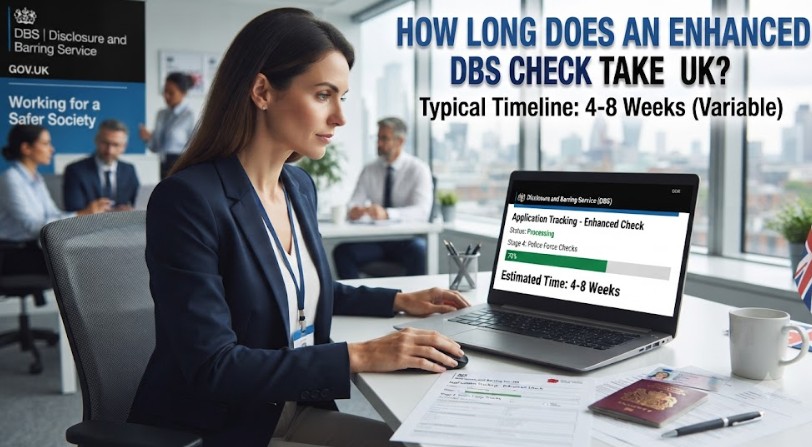
An Enhanced DBS check typically completes within 10 to 14 days, with most applicants receiving their certificate in 2 to 3 weeks. However, official GOV.UK guidance states the process usually takes around 8 weeks, allowing a buffer for variations in local police processing times.
The GOV.UK Guidance
GOV.UK provides distinct official processing estimates depending on the level of background check requested:
- Up to 14 Days (Basic Checks): This shorter timeframe reflects that basic checks only search central databases without local police involvement.
- Around 8 Weeks (Standard and Enhanced Checks): Provides a buffer for complex cases requiring extended review by local police forces.
This difference exists because the DBS directly controls initial validation, database searches, and printing, but relies on independent local police forces for Stage 4 intelligence checks on enhanced applications.
2026 Real-World Processing Averages
Industry data throughout 2026 demonstrates that actual processing times sit near the shorter end of official estimates:
| Check Type | GOV.UK Stated Timeframe | 2026 Real-World Average |
| Basic | Up to 14 days | Under 1 day |
| Standard | Around 8 weeks | 1–5 days |
| Enhanced | Around 8 weeks | 10–13 days |
Data from major DBS umbrella bodies recorded national average turnarounds for enhanced checks at 13 days, with umbrella processing averaging under 10 days.
Key Causes of Processing Delays
When an Enhanced DBS check exceeds the standard two-to-three-week window, the bottleneck almost always occurs during Stage 4 (Local Police Force Review). Common triggers include:
- Multiple Historical Addresses: Living across multiple police force jurisdictions requires each local force to individually review their regional intelligence databases.
- Incomplete Address History: Missing dates, gaps in a 5-year address history, or mismatched postal codes cause automated validation failures.
- Name Discrepancies: Middle names, former legal names, or spelling variations omitted from the application delay identity matching.
- Common Names or Potential Matches: Common names may trigger manual review to distinguish the applicant from individuals on police registers.

How to Prevent Delays of an Enhanced DBS Check?
While there is no paid fast-track option to bypass official police vetting timelines, several actionable measures during application preparation significantly reduce processing delays:
- Apply Online: Avoids postal transit and reduces data entry errors.
- Provide Full Address History: Give precise move-in and move-out dates for the past 5 years with zero gaps.
- Declare All Legal Names: Include middle names, previous legal names, and maiden names matching your ID.
- Use Digital ID Verification: Speeds up initial identity confirmation by several days.
- Escalate at 60 Days: If held at Stage 4 (Local Police) for over 60 calendar days, ask your employer or Umbrella Body to submit a formal DBS escalation.
What Is an Enhanced DBS Check?
An enhanced DBS check is the most detailed criminal record check available in the UK, combining Police National Computer records with relevant local police intelligence.
It sits above basic and standard checks, which only draw on central police records without any local force involvement. Employers use it for roles involving regular, close contact with children or vulnerable adults, where local knowledge beyond a person’s official record may be relevant to a safeguarding decision.
A standard check, by comparison, is reserved for roles with a lower but still meaningful level of trust, such as some legal and financial positions.
What Does an Enhanced DBS Check Show?
An enhanced DBS certificate reveals more than any other level of check. It includes:
- All spent and unspent convictions, cautions, reprimands and final warnings held on the Police National Computer
- Additional relevant information held by local police forces, where considered proportionate to disclose
- A children’s and/or adults’ barred list check, where the role involves this, and it’s requested
Fixed penalty notices, unproven allegations, and filtered convictions are not included on the certificate. Filtering rules determine which older or minor offences are automatically excluded, so an enhanced certificate does not necessarily show every entry ever recorded against someone’s name.
Can You Apply for an Enhanced DBS Check for Yourself?
Yes, since 21 January 2026, you can. Before that date, only an employer or organisation could request an Enhanced DBS check on your behalf, leaving self-employed workers unable to access this level of check without a client acting as the requesting body.
The change now lets self-employed workers and personal employees apply directly through a registered DBS Umbrella Body. This applies to private tutors, self-employed carers looking into licenses to start home health care, contractors, and anyone paid directly by clients rather than employed by an organisation.
Your role still needs to meet the standard eligibility criteria for an enhanced check, since the change affects who can request it, not who qualifies for it.
How Long Does an Enhanced DBS Check Last Once Issued?
An enhanced DBS certificate has no official expiry date. It only confirms someone’s record at the point it was issued, so its usefulness fades the longer ago it was checked.
Most employers set their own renewal policy, typically requesting a new check every one to three years, or subscribing the applicant to the DBS Update Service to keep the existing certificate current instead.
How Much Does an Enhanced DBS Check Cost?
An enhanced DBS check costs £41.00 in statutory DBS fees (effective 5 October 2026, reduced from £49.50), the same figure whether it includes a barred list check or not. This fee is fixed by the DBS itself and doesn’t vary by provider.
Umbrella Bodies and registered organisations typically add their own admin and identity-verification fees on top, which is why advertised prices vary between providers even though the underlying DBS charge stays the same.
Checks are free of charge for genuine volunteer roles, though most volunteering organisations still use an Umbrella Body to submit the application.

How Do You Apply for an Enhanced DBS Check?
To apply for an Enhanced DBS check, you must apply through an employer or a registered DBS Umbrella Body, as individuals cannot apply directly through GOV.UK.
- Get Invited or Choose an Umbrella Body: Your employer will initiate the check, or if you are self-employed, select a licensed DBS Umbrella Body.
- Complete the Application: Fill out the form online, including a complete 5-year address history and exact name details.
- Verify Your Identity: Provide valid ID documents (e.g., passport, driving licence, proof of address) digitally or in person. For non-UK nationals or foreign workers, this step is often combined with generating a right to work share code to verify legal status alongside background checks
- Countersign and Submit: The employer or Umbrella Body confirms your role eligibility and submits the application to the DBS for processing.
How to Track an Enhanced DBS Check?
Track your application online as it moves through the five official DBS processing stages:
- Stage 1 (Validation): Application received and initial data checked.
- Stage 2 (PNC Check): Searched against the Police National Computer.
- Stage 3 (Barred List): Searched against children/adult barred lists (if requested).
- Stage 4 (Local Police): Sent to relevant local forces for intelligence checks (the most common cause of delays).
- Stage 5 (Printing): Certificate printed and dispatched.
When Is an Enhanced DBS Check Necessary?
An enhanced check is required for roles classed as regulated activity under the Rehabilitation of Offenders Act 1974 (Exceptions) Order 1975.
This generally covers work with children or vulnerable adults carried out at least once a week, or on three or more days within 30 days.
Eligibility is set by the nature of the role itself, not by employer preference, so a business cannot request an enhanced check simply because it would feel reassuring.
Typical roles requiring one include:
- Teachers, teaching assistants and school staff
- Care workers and foster carers
- Healthcare professionals with direct patient contact
- Childminders and nursery staff
Exceptions regardless of frequency: Some roles require an enhanced check even if they do not meet the standard frequency test.
For example, taxi and private hire drivers must hold one to keep their licence, since they routinely transport people who may be vulnerable, a rule set out under separate licensing regulations rather than the standard regulated-activity test.
How Can You Speed Up an Enhanced DBS Check?
There is no official fast-track DBS service at any price, and this applies equally to applications made by an employer or by a self-employed applicant through an Umbrella Body.
While individuals with past records often seek insurance without criminal conviction questions, police vetting for DBS checks follows strict statutory timelines.
Providers advertising guaranteed faster results cannot bypass DBS or police processing times. That said, several factors within an applicant’s control do reduce delays:
- Submit the application online rather than on paper, to avoid postal delays and catch errors early.
- Provide a complete five-year address history with no gaps, including exact move-in and move-out dates.
- Include every previous name, spelled exactly as it appears on ID documents.
- Use digital identity verification where offered, which typically saves several days at the start of the process.
- Respond immediately to any query raised by the employer, Umbrella Body, or DBS.
If an application remains stuck at Stage 4 (local police force checks) for more than 60 days, ask your employer or Umbrella Body to submit a formal escalation request to the DBS.
Conclusion
Most enhanced DBS checks now complete within two to three weeks, despite older guidance suggesting longer. Since January 2026, self-employed workers no longer need an employer to request one on their behalf.
Getting the application right the first time remains the single biggest factor in how quickly a certificate arrives, regardless of who submits it.
Disclaimer: Processing times, fees and eligibility rules reflect guidance published as of September 2026 and can change. Individual circumstances vary, so applicants and employers should confirm current requirements directly with GOV.UK or the DBS before applying.
FAQs
What is the 3-month rule for DBS checks?
It refers to safeguarding guidance allowing an employer to accept an existing DBS certificate, rather than requesting a new one, when a new starter has moved from another regulated role within the last three months. It’s a widely used practice rather than an official DBS-wide rule.
How far back does an enhanced DBS check go?
It shows all unfiltered convictions and cautions regardless of age, going back to when the applicant reached the age of criminal responsibility. Filtering rules can remove older, minor offences from the certificate.
What is the DBS Update Service?
It’s an annual subscription service that keeps an existing DBS certificate current, letting employers check its status online instead of requesting a brand new certificate each time.
Can you pay to fast-track an enhanced DBS check?
No. The DBS does not offer a paid fast-track option, and no provider can speed up police force processing times regardless of price.