How to Find a Business VAT Number UK: Complete Guide
A business VAT number is a unique nine-digit identification code issued by HM Revenue and Customs (HMRC) to commercial entities registered for Value Added Tax.
Acting as an essential verification tool for trade compliance, it separates registered taxable enterprises from exempt or small-scale sole traders. As of the 2026/27 tax year, registration is mandatory for businesses exceeding a rolling 12-month taxable turnover of £90,000.
Key Takeaway
- HMRC issues UK VAT numbers as nine digits prefixed with GB; Northern Ireland businesses use XI for EU trade.
- No public UK database lets you search a VAT number by company name, invoices, or websites, and HMRC’s checker is the only reliable route.
- Getting a VAT number requires registering with HMRC, mandatory above the £90,000 turnover threshold, voluntary below it, and unchanged since 1 April 2024.
How to find a business VAT number?
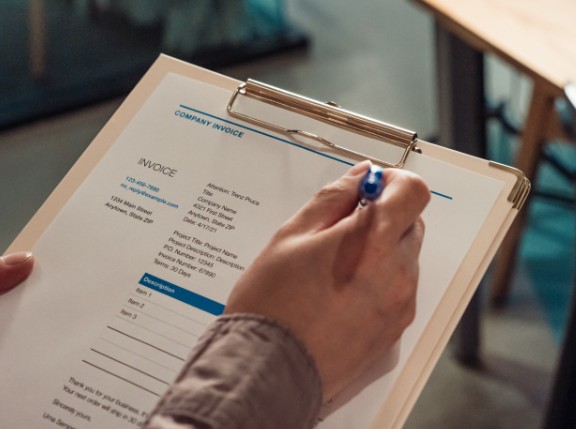
Check the invoice or receipt first; a VAT-registered business must show its VAT number on every VAT invoice it issues. UK VAT numbers follow a fixed format: GB followed by nine digits, which helps it stand out on a page full of other numbers.
If no invoice exists yet, look in these places, roughly in order of how often they work:
- The company’s website footer, terms and conditions page, or checkout screen
- Previous correspondence, such as quotes, order confirmations, or emailed contracts
- Company letterheads or formal paperwork
- A direct email or phone call to the business itself
Contacting the business directly resolves almost every remaining case. Most VAT-registered companies share their number without hesitation, since withholding it only delays payment and invoicing on their side too.
Not every business will have a VAT number to find. Sole traders and small companies trading below the £90,000 threshold often aren’t VAT-registered at all, which comes as a relief to many micro-business owners who worry that being VAT registered is killing their business.
Where to check a company’s VAT number by company name?
If you are attempting a VAT number check by company name, you will quickly notice that no official UK government database lets you type in a company name and receive its VAT number back.
GOV.UK’s own checker service confirms this directly: the VAT number itself is required before the tool can be used, and searching by name is not supported.
This limitation often catches business owners off guard who expect government registries to operate like a keyword search engine. The table below compares the realistic routes available, since no single name-search shortcut exists.
| Method | Speed | Reliability | Limitation |
|---|---|---|---|
| Check the invoice | Fast | High | Only works if an invoice already exists |
| Check the company website | Fast | Medium | Not every business publishes its number online |
| Contact the business directly | Medium | High | Requires a response from the company |
| HMRC online checker | Fast | High | Confirms a number already in hand; cannot search by name |
How do you verify a VAT number using HMRC’s online checker?
HMRC’s free online checker confirms whether a UK VAT registration number is valid and returns the registered business name and address. The process takes under a minute.
- Go to GOV.UK’s Check a UK VAT number service and select Start now.
- Enter the VAT number exactly as it appears on the invoice or website, including the GB prefix.
- Review the returned business name and address against the supplier in question.
- Tick the proof-of-check box for a timestamped record; this requires entering a VAT number too, for VAT-registered businesses only.
A valid result with a matching name means the paperwork is solid enough to proceed, and it also serves as a basic, free step in VAT fraud prevention.
What if the VAT number is valid but the business name doesn’t match?
A valid VAT number paired with an unfamiliar business name is not automatically a warning sign. Several ordinary situations cause this mismatch.
- The supplier is part of a VAT group, where one number covers multiple trading entities.
- The business recently registered or deregistered, and HMRC’s records are still catching up.
- The invoice uses a trading name that differs from the legal entity registered for VAT.
When a mismatch appears, pause the payment and ask the supplier to confirm the legal entity name behind the invoice. A short email resolves this in most cases, and it strengthens supplier verification before any VAT reclaim is made.

How do you check if a company is VAT registered without already having a VAT number?
Checking a business’s VAT status and finding its specific number are two different tasks, and most guidance blurs them together. Registration status can be confirmed without ever seeing the number itself.
Companies House records a company’s registration number, directors, and filing history, but it holds no VAT information at all. VAT registration sits entirely with HMRC, a separate government body with its own database, updated independently of Companies House filings.
The most direct route to registration status, when the business is willing to ask, is a plain question: whether it charges VAT and can supply a VAT invoice.
Any business earning above £90,000 in taxable turnover over a rolling 12-month period is legally required to register, a threshold HM Treasury last raised at the Spring Budget 2024, which narrows the likely answer for larger suppliers.
How do you contact HMRC’s VAT helpline to find a number?
HMRC’s VAT helpline is the right route when digital options run dry, no invoice, no working website, and no response from the business itself. Call 0300 200 3700 during weekday office hours, or use HMRC’s VAT enquiries contact page to reach an adviser online first.
Before dialling, gather what HMRC will ask for:
- The company’s full legal trading name, not an abbreviated or informal version.
- Its Companies House registration number, if known, this speeds up the search considerably.
- The reason for the enquiry, such as invoicing, VAT reclaim, or supplier due diligence.
HMRC can search its own records using these details even without a VAT number to start from, which the online checker cannot do.
Once your registration is sorted and you are preparing to settle liabilities, it is equally important to know how to find HMRC VAT bank details securely. Calls are typically answered fastest mid-morning, avoiding the Monday backlog and the pre-deadline rush late in the month.
Can Companies House tell you a business’s VAT number?
No, Companies House cannot supply a VAT number, because VAT registration is administered entirely by HMRC. The two organisations hold separate records for separate purposes.
What Companies House can confirm is a company’s registration number, registered address, and filing status, useful for verifying a business is genuinely trading, but no substitute for a VAT check. Three separate identifiers often get confused with one another:
- Company Registration Number (CRN): confirms the company legally exists, issued by Companies House
- Unique Taxpayer Reference (UTR): tracks wider tax affairs such as Self Assessment or Corporation Tax, issued by HMRC
- VAT number: confirms VAT status specifically, also issued by HMRC but held on a separate database
Mixing the three up is one of the most common sources of confusion among business owners checking a supplier for the first time.
Where can you find online tools to verify a business VAT number in the UK?
GOV.UK’s Check a UK VAT number service is the only official UK tool, and it’s free to use. For EU VAT number lookups, the European Commission’s VAT Information Exchange System (VIES) performs the equivalent check, though it no longer covers standalone UK numbers post-Brexit.
- GOV.UK’s official checker – for UK VAT numbers
- VIES – for EU member state VAT identification numbers, excluding Great Britain
Third-party lookup websites exist, but treat them with caution. They can be slower to update than HMRC’s own records, so a result from an official source should always take priority over one from an unofficial tool.
Conclusion
Locating a business VAT number typically begins with reviewing a commercial invoice or checking the company’s official website, or asking directly; the number usually sits in plain sight.
What trips people up is verification: confirming a number is genuine, understanding why a name might not match, and knowing when Companies House can’t help. HMRC’s checker settles most of that in under a minute.
Disclaimer: Figures in this article reflect VAT rates and thresholds published as of the 2026 tax year. Individual circumstances vary, so confirm current details directly with HMRC or an accountant before relying on them for VAT compliance decisions.
FAQs
Is a company VAT number public?
Yes, whether the goal is to find a business VAT number or confirm one already in hand, the number itself isn’t sensitive information. HMRC’s checker also confirms the registered name and address linked to any valid number.
How do you get a business VAT number?
A VAT number is issued only after registering for VAT with HMRC, either online through a Government Gateway account or by post. Registration is mandatory once taxable turnover exceeds £90,000, though voluntary registration is available below that threshold.
How do you check a VAT registration number online?
Use GOV.UK’s Check a UK VAT number service, entering the number exactly as shown on the invoice. It confirms validity along with the registered business name and address within seconds.
How can you find your own VAT number?
Check the VAT registration certificate HMRC issued after registration, or any subsequent VAT return submitted. The number is also stored in most accounting software under company or organisation settings.