How Many Sick Days Per Year Can You Take in the UK? Legal Limits, SSP, Employer Triggers
Under UK employment law, there is no statutory cap on how many sick days per year. Statutory Sick Pay (SSP) provides £123.25 per week for up to 28 weeks, payable from day one of illness. However, individual employment contracts and company trigger points determine how many absences you can take before facing formal capability reviews.
Key Takeaways
- UK employment law sets no upper cap on total sick days, but Statutory Sick Pay covers eligible workers for up to 28 weeks per illness.
- National survey data shows UK workers average between 4.4 and 9.4 sick days annually, with public sector staff averaging higher rates.
- Following statutory updates, Statutory Sick Pay pays £123.25 weekly from day one of illness, removing the historic three-day waiting period.
- Employers monitor absence frequency using trigger systems like the Bradford Factor, where multiple short absences risk disciplinary action.
How Many Sick Days Per Year Are You Allowed in the UK?
Under UK employment law, there is no legal maximum or fixed cap on the total number of sick days an employee can take in a year. An employee is allowed to remain off work for as long as medically necessary to recover.
However, your rights and potential limits are regulated by three main boundaries:
Statutory Sick Pay (28-Week Limit)
Statutory Sick Pay (SSP) offers eligible UK workers financial support of £123.25 per week for up to 28 weeks during a single illness or linked periods of sickness.
If your illness lasts longer than 28 weeks, SSP stops, and you can transition to benefits like Employment and Support Allowance (ESA) or explore how long-term sick pay and Universal Credit interact to provide continued support.
Contractual Sick Pay Allowances
While law sets no cap on overall leave, employers can cap how many sick days are paid at full salary. Typical private sector contracts offer 5 to 10 days of paid sick leave annually, whereas public sector bodies (like the NHS) scale paid sick leave up to 6 months full pay based on length of service.
Employer Absence Triggers & Capability Reviews
Even if an absence is genuine, taking too many individual sick days can trigger formal HR reviews. Employers use monitoring metrics like the Bradford Factor or occurrence thresholds (e.g., 3 separate absences or 8 total days off in a rolling 12-month period).
If frequent short-term absences disrupt business operations, an employer may start formal capability proceedings, which can eventually lead to dismissal if attendance standards are not met.

Do Sick Days Reset Every Year in the UK?
Yes, contractual sick pay allowances in the UK usually reset annually at the start of the financial year, calendar year, or employment anniversary.
However, HR absence monitoring and disciplinary triggers (such as the Bradford Factor) typically operate on a rolling 12-month window rather than resetting on a fixed date.
Under a rolling system, an absence taken on 10 March 2025 remains on your record until 10 March 2026.
This prevents employees from taking concentrated blocks of sickness absence right before a calendar year reset without triggering formal review processes.
What Is the Average Number of Sick Days Per Year in the UK?
The average UK employee takes between 4.4 days (according to ONS Labour Force data) and 9.4 days (according to CIPD HR records) of sick leave per year. Public sector workers average higher sickness absence rates (10.6 days) compared to private sector employees (7.8 days).
- ONS National Average (4.4 days): According to the Office for National Statistics (ONS) Labour Force Survey, UK workers take an average of 4.4 sick days per year, representing a sickness absence rate of 2.0%. This figure covers all worker types nationwide, including self-employed individuals and zero-hours contract workers.
- CIPD Employer Average (9.4 days): The Chartered Institute of Personnel and Development (CIPD) Health & Wellbeing survey reports an average of 9.4 sick days per employee per year. Because this metric is collected directly from formal HR absence management records, it reflects structured employers and mid-to-large organizations.
Average absence rates also vary significantly across different sectors and circumstances:
- Public vs. Private Sector: Public sector employees average higher sickness absence rates (10.6 days / 2.9%) compared to private sector staff (7.8 days / 1.7%–1.8%).
- Primary Causes: Minor illnesses (coughs, colds, flu) account for over 30% of short-term absences, while mental health conditions (stress, anxiety) and musculoskeletal disorders remain the leading causes of long-term leave.
How Do Sick Day Allowances Vary Across Sectors and Employers?
Sick day allowances in the UK vary greatly between sectors. Public sector workers (like NHS staff and teachers) receive generous service-linked occupational pay up to 6 months full pay, whereas private sector employers offer discretionary paid leave, often capping full-pay sick leave at 5 to 10 days annually.
How Many Sick Days Per Year in the UK NHS?
NHS staff receive up to 6 months of full pay and 6 months of half pay after 5 years of service under Agenda for Change terms. However, NHS trusts enforce strict trigger limits, initiating formal attendance reviews after 3 separate absence episodes or 8 cumulative days off in a rolling 12-month period.
- During 1st year of service: 1 month full pay and (after completing 4 months) 1 month half pay.
- 2nd year of service: 2 months full pay and 2 months half pay.
- 3rd year of service: 4 months full pay and 4 months half pay.
- 4th and 5th years of service: 5 months full pay and 5 months half pay.
- After 5 years of service: 6 months full pay and 6 months half pay.
Despite these generous pay entitlements, NHS trusts enforce strict absence trigger limits. Under standard NHS sickness absence policies, an informal review or Stage 1 formal meeting is typically triggered if an employee has 3 separate episodes of absence or 8 total cumulative days of sickness within a rolling 12-month period.
How Many Sick Days a Year for Teachers and School Staff?
UK state school teachers under the Burgundy Book agreement receive up to 100 working days of full pay and 100 days of half pay after four years of continuous service.
Support staff covered by Green Book local government terms follow a similar service-linked tiered structure for contractual sick pay.
- 1st year of teaching: 25 working days full pay (and 50 working days half pay after completing half a year).
- 2nd year of teaching: 50 working days full pay and 50 working days half pay.
- 3rd year of teaching: 75 working days full pay and 75 working days half pay.
- 4th year onwards: 100 working days full pay and 100 working days half pay.
Support staff in schools usually follow the Green Book terms negotiated by local government associations, which offer similar tiered sick pay structures tied to service length.

How Many Sick Days in the UK Civil Service?
UK Civil Service employees can receive up to 5 months of full pay followed by 5 months of half pay within any four-year rolling period.
However, formal absence management procedures are typically triggered if an employee takes 4 separate absences or 8 total cumulative days off within 12 months.
Private Sector Standards
Private sector sick pay is discretionary in the UK. Major retailers like Tesco or Amazon offer structured company sick pay (typically 2 to 4 weeks) after probationary periods, while small and medium enterprises (SMEs) usually rely strictly on standard Statutory Sick Pay (£123.25/week) requirements.
For example, retail workers may become eligible for company sick pay only after completing a probationary period (e.g., 6 or 12 months), with entitlements capping at 2 to 4 weeks of full pay per year.
Smaller businesses (SMEs) often rely strictly on Statutory Sick Pay rules due to cash-flow considerations, supplementing statutory payments only on a case-by-case basis.
What Are the Statutory Sick Pay (SSP) Rules in the UK?
Statutory Sick Pay (SSP) is the legal minimum paid by UK employers to eligible sick employees. It pays £123.25 per week (or 80% of average earnings) from day one of illness for up to 28 weeks. Historical three-day waiting periods no longer apply under updated UK regulations.
| Metric / Parameter | Rate & Conditions |
| Weekly Statutory Rate | £123.25 / week (or 80% of average weekly earnings, whichever is lower) |
| Maximum Duration | Up to 28 weeks |
| Waiting Period | Day 1 (0 waiting days) |
| Lower Earnings Limit | Removed / Universal |
Under current UK regulations, Statutory Sick Pay is paid at a flat rate of £123.25 per week (or 80% of average weekly earnings, whichever is lower).
Legislative reforms under the Employment Rights framework removed the historical three-day qualifying waiting period. As a result, eligible workers now receive SSP starting from their very first day of sickness absence.
How to Calculate Sick Pay?
To calculate daily Statutory Sick Pay (SSP) in the UK, divide the weekly rate of £123.25 by the number of days you are contracted to work each week. For a 5-day worker, daily SSP is £24.65; for a 4-day worker, it is £30.81 per sick day.
Daily SSP Rate = Weekly SSP Rate (£123.25) ÷ Number of Contracted Working Days
- 5-day worker: £123.25 ÷ 5 = £24.65 per sick day
- 4-day worker: £123.25 ÷ 4 = £30.81 per sick day
- 3-day worker: £123.25 ÷ 3 = £41.08 per sick day
If your contract includes Company Sick Pay, your employer pays your regular salary (or a specified contractual percentage) and tops up or absorbs the underlying statutory requirement.
How Long Can You Claim SSP?
The maximum legal duration for Statutory Sick Pay is 28 weeks for a continuous period of illness or linked periods of illness. (Absences are considered linked if they occur within 8 weeks of each other and each lasts at least 4 consecutive days).
If your sickness extends beyond 28 weeks, your employer is no longer required to pay SSP. They must issue an SSP1 form, which allows you to apply for state benefits such as Employment and Support Allowance (ESA) or Universal Credit through the Department for Work and Pensions (DWP).
For authoritative details on eligibility and calculation rules, consult the official government guidance on Statutory Sick Pay (SSP) on GOV.UK.
How Many Sick Days Per Year Before Disciplinary Action in the UK?
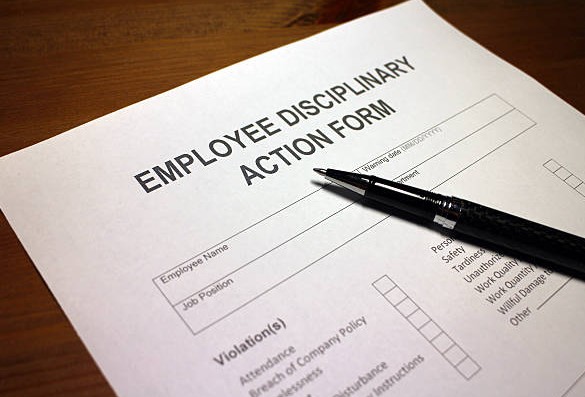
While illness itself is not a disciplinary offense, employers are legally entitled to manage workplace attendance. If your level of absence impacts operational capability, an employer can initiate formal absence management procedures, which may ultimately lead to dismissal on capability grounds.
The Bradford Factor Formula
To evaluate the operational disruption caused by sickness, many UK employers, particularly large corporations, call centres, and public bodies, use an automated scoring metric called the Bradford Factor.
The formula measures absence frequency and duration as follows: Bradford Factor Score = S² × D
Where:
- S = Total number of separate instances/episodes of absence in a rolling 12-month period.
- D = Total number of days absent in that same 12-month period.
Because the number of separate instances (S) is squared, frequent short-term absences generate significantly higher scores than a single long-term absence.
| Absence Pattern | Calculation (S2×D) | Bradford Factor Score | Typical HR Action / Outcome |
| 1 absence of 10 days | 1²× 10 = (1 × 10) | 10 | No action; standard return-to-work chat. |
| 2 absences of 5 days | 2²× 10 = (4 × 10) | 40 | Informal monitoring / verbal check-in. |
| 5 absences of 2 days | 5²× 10 = (25 × 10) | 250 | Stage 1 Formal Written Warning. |
| 10 absences of 1 day | 10²× 10 = (100 × 10) | 1,000 | Final Warning / Capability Dismissal Review. |
Step-by-Step Formal Absence Management Process
When an employee crosses a company absence trigger (such as a Bradford score of 128+ or 4 separate absences in a year), employers typically follow a structured capability process:
- Return-to-Work (RTW) Interview: Conducted after every period of sickness to confirm fitness, review reason for absence, and update medical notes.
- Informal Welfare Meeting: Triggered when sickness pattern causes concern. Focuses on identifying underlying causes and offering occupational health support.
- Stage 1 Capability Hearing: A formal meeting issuing a first written warning if attendance standards fail to improve over a 1- to 3-month review window.
- Stage 2 Final Capability Hearing: Issued if further absences occur within the review period despite formal warnings.
- Capability Dismissal: Termination of employment with notice. The employer must demonstrate they acted reasonably, conducted fair medical investigations, and considered alternative adjustments.
Equality Act 2010 Protections
It is illegal for an employer to discipline or dismiss an employee for absences directly related to a disability protected under the Equality Act 2010, or due to pregnancy-related illness.
Employers are legally required to discount pregnancy-related sickness from absence trigger counts and make reasonable adjustments (such as adjusting Bradford Factor thresholds or modifying working hours) for disabled staff.
What Are the Practical Rules for Calling in Sick in the UK?
When taking sick leave in the UK, you must notify your employer on Day 1. You can self-certify for absences lasting up to 7 consecutive calendar days. If your illness lasts 8 days or longer, you must provide an official fit note issued by a healthcare professional.
UK Sick Leave Documentation Timeline
- Day 1: Self-Notification: Notify your manager by your employer’s required daily deadline.
- Days 1–7: Self-Certification: No official fit note is needed. Just submit your employer’s internal self-certification form.
- Day 8+: Official Fit Note Required: A formal fit note is required. This can be issued by a GP, hospital doctor, nurse, occupational therapist, or physiotherapist.
Self-Certification vs. Fit Notes
If you are off sick for 7 consecutive calendar days or fewer, including weekends, you do not need a doctor’s note. You can self-certify your illness simply by completing your employer’s internal form or the official government SC2 form stating why you were absent.
If your sickness extends to 8 consecutive calendar days or more, you must obtain an official Fit Note (formerly called a sick note). Under UK law, fit notes can be issued by general practitioners (GPs), hospital doctors, registered nurses, occupational therapists, and chartered physiotherapists.
Accruing Holiday While on Sick Leave
Under UK working time regulations, your statutory annual leave entitlement (a minimum of 28 days for full-time workers) continues to build up normally while you are off sick.
If you are unable to take your planned annual leave due to illness, or if you fall sick during a pre-booked holiday, you have the legal right to convert those days to sick leave and reschedule your holiday allowance for a later date.
What Happens to Unused Sick Leave When You Resign?
Unused sick leave in the UK has no monetary cash value when you resign or leave a company. Unlike unused statutory annual leave, employers are not legally required to pay out or compensate employees for unused contractual or statutory sick days upon termination of employment.
Common Sick Leave Myths
| Myth | Reality |
| You are only allowed 10 sick days per year in the UK. | UK employment law sets no legal upper cap on total sick days; limits depend on your contract and health recovery needs. |
| You must wait three days before Statutory Sick Pay kicks in. | Under current rules, Statutory Sick Pay is paid from your very first day of illness without any waiting period. |
| Taking annual leave while off sick isn’t allowed. | You continue to accrue statutory annual leave while off sick and can choose to take paid holiday during long-term sick leave. |
Conclusion and Final Guidance
Managing workplace illness in the UK requires balancing your statutory rights with your employer’s operational policies. While there is no legal ceiling on how many sick days you can take per year, frequency and reporting habits determine how your absence is managed.
To protect your standing and ensure proper financial support during illness:
- Review your employment contract: Identify whether you receive Company Sick Pay or strictly Statutory Sick Pay (£123.25/week).
- Follow notification procedures: Always inform your manager as early as possible on the first day of illness using approved communication channels.
- Self-certify accurately: Complete self-certification paperwork for absences up to 7 calendar days.
- Obtain a Fit Note on Day 8: Secure medical certification promptly from a healthcare professional for long-term absences.
- Monitor your absence frequency: Mind the Bradford Factor impact of taking frequent, scattered single sick days compared to one continuous recovery block.
Disclaimer: This article provides general information for educational purposes only and does not constitute formal legal or employment advice; consult ACAS or a qualified legal professional for specific guidance.
FAQ
How many sick days per year is normal in the UK?
The average UK employee takes between 4.4 days (ONS data) and 9.4 days (CIPD data) of sick leave per year. Taking up to 5 days annually across 1 or 2 instances is considered completely normal.
Can an employer force me to work if I am sick?
No. An employer cannot legally force you to work if you are unwell. Forcing an unfit employee to perform duties may breach workplace health and safety laws and duty of care obligations.
Can you get more than 10 sick days in the UK?
Yes. There is no legal cap limiting you to 10 sick days per year. Statutory Sick Pay covers eligible employees for up to 28 weeks (140 working days) of medically certified illness.
Do part-time workers get the same sick day allowance?
Yes. Part-time employees hold identical statutory rights as full-time staff. Statutory Sick Pay is paid at the same weekly rate (£123.25), and contractual sick pay days are calculated pro-rata based on hours worked.
Can an employer deny sick pay in the UK?
An employer can only withhold SSP if you fail to meet eligibility criteria, do not provide timely notification without reasonable cause, or fail to submit a Fit Note after 7 consecutive days of absence.
Do sick days reset every year in the UK?
Contractual sick pay allowances usually reset at the start of the financial or calendar year. However, absence monitoring triggers (like the Bradford Factor) operate on a rolling 12-month window.
What happens if I am off sick for 2 days?
Under 2026 Statutory Sick Pay rules, SSP is payable from day one of illness. If your employer provides contractual sick pay, you will receive your regular pay according to your contract.
Can I go on holiday while on sick leave in the UK?
Yes. You can take annual leave while on long-term sick leave. In some cases, taking a holiday is medically supported to assist in recovery, though you must inform your employer in advance.