
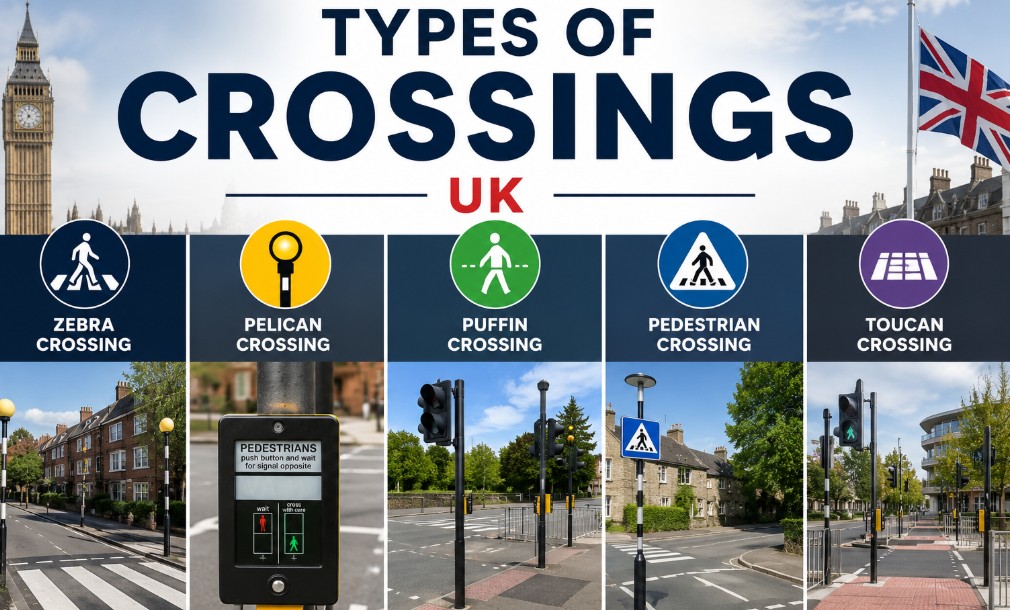
The Ultimate Guide to All Types of Crossings UK Roads Feature: Essential Highway Code Rules
Navigating the various types of crossings UK roads feature requires an absolute understanding of current traffic laws, signal sequences, and pedestrian rights.
Whether preparing for a professional driving qualification or managing a commercial delivery fleet, identifying these road configurations accurately prevents serious accidents and ensures strict regulatory compliance across the transport network.
Pedestrian crossings in the United Kingdom are specialized road safety designs regulated by the Highway Code to manage the safe interaction between vehicular traffic and vulnerable road users.
These systems use specific light sequences, sensory equipment, road markings, and warning beacons to dictate right of way.
Key Takeaways
- Zebra crossings require drivers to give way to any pedestrian who has moved onto the striped markings or is waiting at the pavement edge to cross.
- Modern Puffin crossings utilize smart infrastructure like motion and thermal sensors to dynamically adjust light timings based on pedestrian speed.
- Toucan crossings allow both cyclists and pedestrians to cross simultaneously in shared or segregated lanes without cyclists needing to dismount.
- Legacy Pelican crossings feature a flashing amber light phase that permits drivers to proceed if the crossing area is completely clear of people.
What Is a Pedestrian Crossing?
Pedestrian crossings are designated points on public roads engineered to facilitate the safe, regulated movement of pedestrians, cyclists, and equestrians from one side of a carriageway to another.
Governed strictly by the UK Highway Code, these installations manage user interaction using specialized road markings, electronic sensors, light indicators, and warning beacons.
Their primary objective is protecting vulnerable road users while optimizing traffic efficiency across high-density urban and suburban environments.
What are the Types of Crossing UK?
As of 2026, the official framework recognizes six distinct pedestrian crossing designs deployed across the national road infrastructure, each serving tailored traffic management purposes.
Zebra Crossings
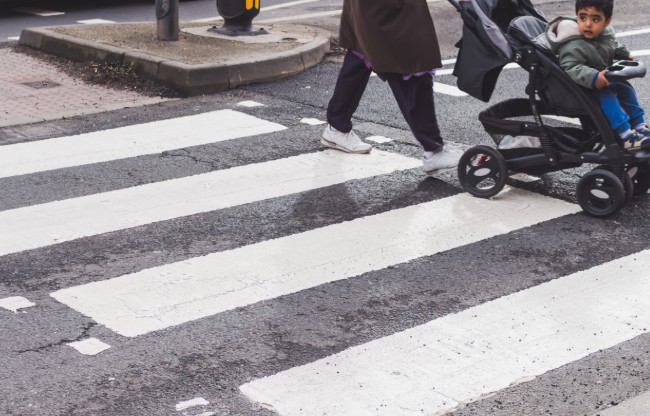
Zebra crossings are uncontrolled safety zones characterized by alternating black and white road stripes painted across the asphalt, marked by flashing amber globes mounted on posts, officially termed Belisha beacons.
Advice for Drivers
Approach with extreme caution, especially in poor visibility or wet weather. You must look well ahead to spot pedestrians waiting near the kerb edge.
Maintain a steady pace, avoid sudden braking, and ensure you do not block the striped markings if traffic queues stall your vehicle.
Pedestrian Rules & Safety
While you hold priority under the updated framework, never step blindly onto the stripes. Wait at the kerb edge, make eye contact with approaching motorists, and ensure vehicles from both directions have ground to a complete stop before advancing across the lanes.
Pelican Crossings
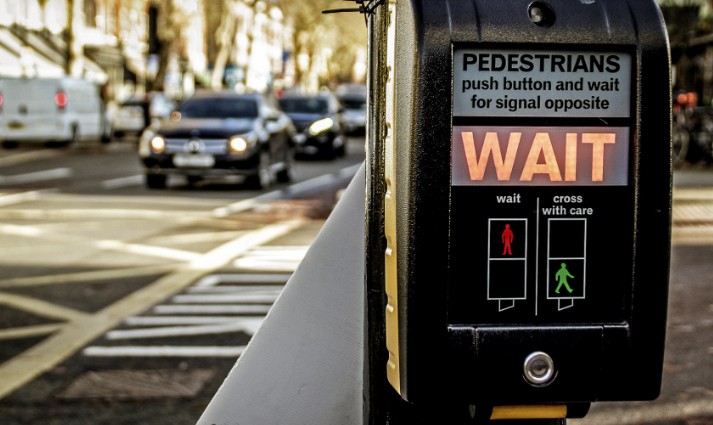
Pedestrian Light Controlled (Pelican) crossings are an older style of signalized infrastructure featuring pedestrian push-button units and signal lights mounted on the opposite side of the road (farside signals).
Advice for Drivers
These systems are unique because they include a flashing amber light phase following the solid red light.
During the flashing amber phase, you must yield to any pedestrians still on the crossing; however, if the crossing is completely clear of people, you are legally permitted to proceed.
Due to efficiency issues, these layouts are actively being phased out in Great Britain.
Pedestrian Rules & Safety
Press the button and wait for the green walking man signal to light up on the far side of the road.
If the green man begins to flash while you are mid-crossing, do not panic; the light sequence leaves sufficient time for you to finish your journey safely, but you should not step off the kerb if the flashing phase has already begun.
Puffin Crossings
Pedestrian User-Friendly Intelligent (Puffin) crossings represent the smart successor to legacy systems.
They feature nearside signals positioned on the same side of the road as the waiting pedestrian, directly above the push-button control box.
Advice for Drivers
Puffin crossings follow the standard, solid traffic light sequence: Red, Red & Amber, Green, and Steady Amber. There is no flashing amber phase.
Smart infrared and thermal sensors monitor the crossing area continuously. If a pedestrian crosses slowly, the sensor extends the vehicle red-light phase automatically; if a pedestrian pushes the button but walks away, the system cancels the cycle entirely.
Pedestrian Rules & Safety
Stand by the control box and look at the internal display. Because the lights are on your side of the road, monitoring the signal naturally forces your field of vision to look toward oncoming traffic. Only cross when the green man illuminates.
Toucan Crossings
Toucan crossings are wider, light-controlled, shared-use installations designed specifically so that two can cross safely together: pedestrians and cyclists.
Advice for Drivers
Be prepared for faster-moving users. Cyclists are legally permitted to ride across these zones without dismounting, meaning an active cyclist can approach the crossing zone much faster than a standard pedestrian.
The signal follows a standard traffic light sequence without a flashing amber phase.
Pedestrian & Cyclist Rules
Cyclists do not need to dismount to use a Toucan crossing. Look out for the integrated bicycle icon alongside the green walking man on the signal heads.
Respect shared spaces by remaining in designated lanes if the crossing path is physically segregated.
Pegasus Crossings
Pegasus crossings (also known as equestrian crossings) are specialized, signalized infrastructure designed for horse riders and pedestrians.
Advice for Drivers
Horses are easily startled by sudden sounds or movements. Always stop smoothly behind the solid stop line, keep your engine idle quiet, and avoid revving your engine or moving forward prematurely while animals are transitioning across the road.
Equestrian Rules & Safety
These installations feature two distinct push-button panels. One is set at a standard height, while the second is mounted two meters high on the post, allowing riders to activate the system without dismounting.
Cross within the designated horse corral paths to stay segregated from regular foot traffic.
Parallel Crossings
Parallel crossings consist of a traditional, uncontrolled zebra crossing flanked directly by an adjacent, marked cycle track running parallel to the black and white stripes.
Advice for Drivers
You must yield the right of way to both pedestrians waiting on the kerb and cyclists approaching the parallel track. Because cyclists travel at higher speeds, scan the approach paths early to avoid sudden emergency stops.
Pedestrian & Cyclist Rules
Cyclists can ride seamlessly across the parallel track without dismounting. Pedestrians must stick to the striped zebra markings. Always verify that oncoming traffic has observed you and is actively decelerating before moving onto the tarmac.
How do all types of crossings in the UK differ?
Understanding the precise differences between these light-controlled systems is essential for passing professional examinations and avoiding operational penalties.
A common pattern among road users is confusing the light sequences and sensor placements of these three primary controlled designs.
This confusion frequently leads to drivers moving off prematurely or failing to anticipate pedestrian behavior correctly.
| Crossing Type | Operational Classification | Signal Placement | Light Sequence Highlights | Permitted Users | Dynamic Sensors |
| Zebra | Uncontrolled | None (Uses flashing amber Belisha beacons) | No traffic lights; relies entirely on driver observation and compliance. | Pedestrians only (Cyclists must dismount). | No |
| Pelican | Controlled | Farside (Opposite side of the road) | Includes a flashing amber phase for drivers (go if clear). | Pedestrians only (Cyclists must dismount). | No (Runs on fixed timers) |
| Puffin | Controlled | Nearside (Same side as waiting pedestrian) | Standard, solid traffic light sequence; no flashing phases. | Pedestrians only (Cyclists must dismount). | Yes (Thermal & motion sensors) |
| Toucan | Controlled | Nearside or Farside | Standard, solid traffic light sequence; no flashing phases. | Pedestrians and Cyclists concurrently. | Yes (Modern installations) |
| Pegasus | Controlled | Nearside or Farside | Standard, solid traffic light sequence; no flashing phases. | Equestrians and Pedestrians (Segregated lanes). | Yes (Standard crossing sensors) |
| Parallel | Uncontrolled | None (Uses flashing amber Belisha beacons) | No traffic lights; mirrors zebra crossing priority rules. | Pedestrians and Cyclists concurrently. | No |
Differentiators to Remember
- Uncontrolled vs. Controlled: Zebra and Parallel crossings rely entirely on manual driver compliance and road markings. Pelican, Puffin, Toucan, and Pegasus crossings use electronic traffic light sequences to enforce a hard stop.
- Active Transport Integration: Toucan and Parallel crossings are the only two layouts where cyclists are legally permitted to ride across without dismounting.
- The Smart Sensor Divide: Pelican crossings are mechanical and run on strict, blind timers. Puffin, Toucan, and Pegasus systems utilize intelligent sensors to track human or animal movement, actively holding the red light open for slower users or canceling the sequence if someone walks away.
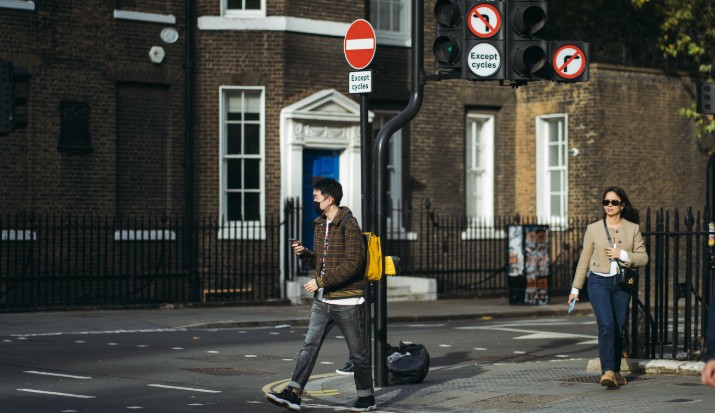
How to Correctly Navigate All Types of Crossings UK Driving Theory Demands?
Mastering the practical application of crossing rules is a significant milestone for commercial drivers navigating high-density urban environments safely.
In practice, fleet operators monitor telemetry data closely because crossing violations carry severe insurance and regulatory consequences.
Alongside monitoring driving behaviors, transport managers must ensure compliance with operational cost standards, such as tracking the HMRC New Road Fuel Rates 2026, to maintain overall fleet efficiency. Consequently, drivers must follow a disciplined, repeatable approach whenever they spot zigzag lines or warning beacons ahead.
Steps Approach Controlled and Uncontrolled Infrastructure
- Scan for advance warning signs: Observe the road ahead for flashing Belisha beacons, pedestrian warning signs, or the start of white zigzag road markings.
- Check mirrors and assess rear traffic: Check the interior and exterior mirrors to evaluate the proximity and speed of any vehicles traveling directly behind.
- Decelerate smoothly and maintain control: Remove your foot from the accelerator and lightly cover the brake pedal to reduce momentum without causing sudden adjustments.
- Search the pavement edges thoroughly: Look left and right to identify pedestrians, cyclists, or horse riders positioned near the control boxes or waiting kerbs.
- Determine the current signal status: Identify if the lights are steady, changing, or if a pedestrian has initiated movement onto an uncontrolled zebra crossing area.
- Stop completely behind the solid line: Bring the vehicle to a smooth stop behind the solid stop line if the signal is red, amber, or if the zebra crossing is occupied.
- Wait for clear clearance without flashing lights: Maintain your position until the pedestrians have fully cleared the roadway and the signal has turned completely green.
What Are the Recent New Highway Code Updates?
The most critical regulatory update is the introduction of Rules H1, H2, and H3, establishing a clear Hierarchy of Road Users.
This framework places those most at risk from a collision, pedestrians, cyclists, and horse riders, at the absolute top of the priority ladder.
Specifically, Rule H2 mandates that drivers, motorcyclists, and horse riders must give way to pedestrians waiting to cross at a zebra crossing, and to pedestrians or cyclists waiting to cross at a parallel crossing.
Previously, the legal obligation to stop was only triggered once a pedestrian had actually stepped onto the road markings.
How Does It Impact Different Types of Crossings UK Theory?
For those studying for the DVSA theory and practical examinations, these updates radically alter the correct answers for situational questions:
- Uncontrolled Priority Shift: On test modules involving Zebra or Parallel layouts, answers stating a driver should maintain speed until a foot touches the road are now completely incorrect. The correct response is to decelerate early and prepare to yield the moment a pedestrian or cyclist positions themselves at the pavement edge with the intent to cross.
- Junction Intention Rules: Under the updated framework, if a driver turns into a side road and a pedestrian is waiting to cross, the vehicle must yield priority and stop. This requires a higher level of scanning awareness around urban junctions and crossing boundaries.
- Commercial Stopping Distance Allowances: Theory updates place heavier emphasis on commercial fleet vehicles and heavy goods vehicles (HGVs). Because larger chassis require extended stopping distances, drivers must anticipate pedestrian intentions much earlier at uncontrolled crossings to prevent hazardous, sudden braking situations.
Essential Safety Rules for All Drivers:
- Never overtake the leading vehicle when approaching any crossing; their chassis may be blocking your view of a pedestrian who has already started crossing.
- Keep zigzag lines clear. In heavy traffic queues, ensure you stop before the white zigzag markings begin so you do not block vital sightlines between pedestrians and other moving vehicles.
Summary of Crossing Compliance
Maintaining an accident-free record relies on recognizing these systems early and understanding the distinct rules that govern them.
| Regulatory Marking | Invalidation Penalty | Primary Operational Function |
| Solid White Stop Line | Fine and licence points | Defines the mandatory boundary where a vehicle must stop during a red light phase. |
| White Zigzag Markings | Fine and licence points | Clear zone where parking, loading, and overtaking are strictly prohibited at all times. |
| Central Refuge Island | Geometric division | Splits a wide road into two separate, manageable crossing steps for pedestrians. |
Conclusion
Managing commercial risk across a busy delivery network requires continuous driver education focused on the latest updates to the Highway Code.
Ensuring that your operating team can clearly differentiate between legacy Pelican installations and modern sensor-driven Puffin systems minimizes expensive fleet downtime and protects vulnerable road users.
Fleet operations should incorporate these crossing updates into standard driver inductions and annual safety reviews to maintain high safety compliance
Disclaimer: This article is for informational purposes only and does not constitute formal legal or professional driving advice.
FAQ
What are the 5 types of crossing in the UK?
The five traditional animal-named crossings utilized across the road network are the Zebra, Pelican, Puffin, Toucan, and Pegasus designs. Each system features a unique combination of warning lights, sensor installations, and specific user access rules.
Can cyclists legally ride across a standard Zebra crossing?
Cyclists are not legally permitted to ride across a standard zebra crossing and must dismount to push their bicycles across. To ride across without dismounting, they must use a dedicated Toucan or modern Parallel crossing layout.
What happens if a pedestrian is standing on a central island at a staggered crossing?
If the central island features a staggered layout where the two halves of the crossing do not align perfectly, they are legally treated as two independent crossings. Drivers do not need to stop if the pedestrian is on the opposing side.
Why did the Highway Code replace Pelican crossings with Puffin crossings?
Puffin crossings replaced Pelican crossings because their smart sensors improve vehicular traffic flow by canceling unnecessary red lights. Additionally, the nearside signals keep pedestrian eyes focused toward oncoming traffic for improved safety.
What do white zigzag lines mean at a pedestrian crossing?
White zigzag lines indicate a strict no-parking and no-overtaking zone approaching the crossing point. Parking within these lines blocks vital sightlines between drivers and pedestrians, making it a serious endorsable traffic offense.
How does a Pegasus crossing differ from a Toucan crossing?
A Pegasus crossing is configured specifically for horses and features a raised button box mounted two meters high alongside wide crossing lanes. Toucan crossings are engineered specifically for the shared use of pedestrians and cyclists.
Who has priority at an uncontrolled parallel crossing?
Both pedestrians and cyclists have clear legal priority at a parallel crossing point. Approaching motorists are required by law to yield the right of way to both user groups as they approach or step onto the road markings.