
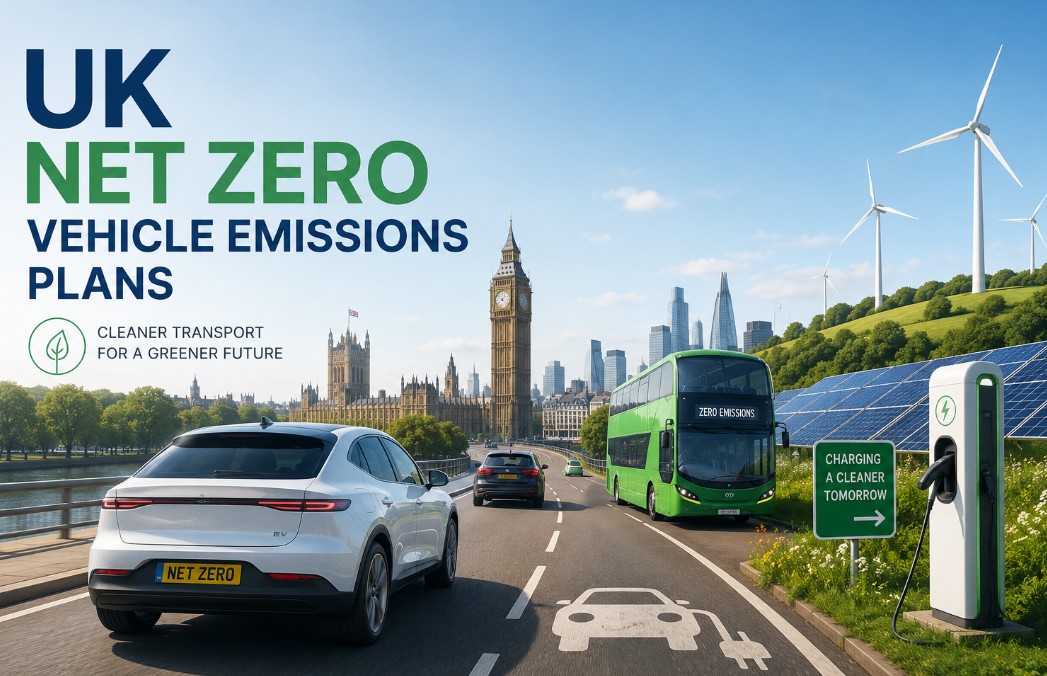
UK Net Zero Vehicle Emissions Plans: The SMEs Fleet Compliance Guide
The UK net zero vehicle emissions plans are a legally binding statutory framework requiring the phase-out of new pure petrol and diesel light vehicles by 2030, transitioning to 100% zero-tailpipe emission sales by 2035.
For British small and medium enterprises (SMEs), it enforces mandatory fleet transitions supported by strict manufacturer quotas, revised tax structures, and workplace charging grants.
Transitioning commercial vehicles from legacy powertrains to zero-emission units is now a core structural obligation backed by stringent manufacturer quotas and shifting tax bands.
Understanding these fiscal updates ensures British businesses can avoid penalties, optimize total asset expenses, and leverage available infrastructure subsidies.
What Are the UK Net Zero Vehicle Emissions Plans?
The UK net zero vehicle emissions plans refer to the Department for Transport’s (DfT) regulatory strategy to eliminate all road transport tailpipe greenhouse gases. It forces an industrial migration from fossil fuels toward electric and hydrogen powertrains to help meet the broader national legal target of net zero economic emissions by 2050.
Under this broader decarbonisation blueprint, the Department for Transport (DfT) regulates surface transport through strict zero-emission mandates, running parallel to separate sectoral frameworks such as the UK ETS aviation emissions trading system to tackle macroeconomic carbon output.
For small business owners, the practical reality of these UK net zero vehicle emissions plans is a structured, mandatory market migration away from fossil fuels toward highly specific electric and hydrogen technologies.
UK Transport Decarbonisation Trajectory
- 2024: ZEV Mandate Enacted (22% Cars / 10% Vans Manufacturer Quota)
- 2026: Quota Escalation (33% Cars / 24% Vans) + EV VED Tax Revisions
- 2030: End of New Pure Petrol & Diesel Light Vehicle Sales
- 2035: 100% Zero-Emission Target at Tailpipe for New Vehicles
- 2050: Legal Deadline for Broad UK Net Zero Economic Compliance
To maintain regulatory alignment, businesses must differentiate between compliant powertrains and restricted internal combustion engines (ICE). The official Office for Zero Emission Vehicles (Zero Emission Vehicles UK Registry) dictates that compliance requires zero tailpipe emissions at the point of use.
Approved Zero Emission Vehicles List
Under the UK net zero fleet guidelines, the three types of compliant Approved Zero Emission Vehicles (ZEVs) are Battery Electric Vehicles (BEVs) running entirely on grid-charged batteries, Hydrogen Fuel Cell Electric Vehicles (FCEVs) emitting only water vapor, and Extended-Range Zero-Emission Commercials utilizing hydrogen range extenders in urban zones.
- Battery Electric Vehicles (BEVs): Fully electric passenger cars and commercial vans drawing energy exclusively from onboard battery packs charged via the electricity grid.
- Hydrogen Fuel Cell Electric Vehicles (FCEVs): Commercial vehicles using compressed hydrogen gas reacted through an onboard fuel cell stack to generate electricity, emitting only pure water vapor.
- Extended-Range Zero-Emission Commercials: Heavily specialised utility trucks that utilise secondary hydrogen range extenders while maintaining a zero-tailpipe emission operating profile within urban zones.
How Does It Affect UK Businesses?
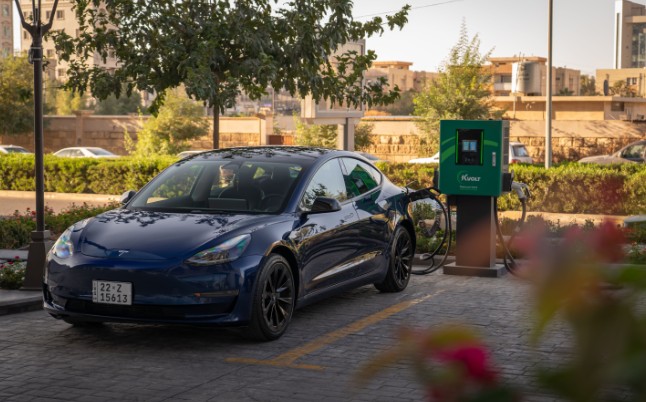
The UK net zero vehicle plans affect UK businesses by fundamentally transforming capital procurement, operational budgeting, and workplace facilities.
It forces SMEs to replace aging combustion fleets with zero-emission alternatives, upgrade site grid infrastructure to accommodate workplace charging, and adjust corporate travel expense structures to meet evolving dynamic tax brackets.
For small and medium enterprises across Britain, the transition is shifting rapidly from high-level corporate social responsibility into everyday logistical reality. The regulations reshape small business operations across three core areas:
- Procurement and Stock Availability: Because the ZEV Mandate forces manufacturers to hit strict sales percentages, businesses will find traditional petrol and diesel commercial vans becoming scarcer and more expensive to lease new. Conversely, manufacturers are heavily discounting and prioritising electric vehicle stock allocations for the corporate market.
- Operational Resilience and Fuel Security: Moving away from standard combustion engines insulates businesses from highly volatile international fossil fuel pump prices. Transitioning to a managed electric charging structure allows logistics managers to map out predictable per-mile fuel costs using commercial off-peak energy tariffs.
- Capital Infrastructure Demands: Fleet modernisation requires small businesses to rethink their physical premises. Enterprises are forced to assess their commercial property’s incoming electricity supply, often leading to site upgrades like installing smart, load-balanced workplace chargers to support daytime operations.
The UK Zero Emission Vehicle Mandate and Phase-Out Timelines
The regulatory mechanism driving this shift is the UK zero-emission vehicle mandate, which operates as a legal quota system on vehicle manufacturers rather than a direct restriction on business buyers.
Under the UK ZEV mandate 2026 guidelines, vehicle producers are legally required to ensure that 33% of all new car registrations and 24% of new van sales are zero-emission models.
This percentage escalates annually, penalising manufacturers with non-compliance fines of up to £15,000 per non-compliant car and £15,000 per van, heavily incentivising manufacturers to prioritise electric vehicle stock allocations and promotional corporate leasing tariffs for the business community.
Do all cars have to be electric by 2030 in the UK?
No, not all new cars have to be electric by 2030, but the vast majority will have to be. The UK government’s framework operates on a dual timeline that combines a sales ban with a strict quota system:
The Year-by-Year ZEV Mandate Quotas
| Year | New Cars (Must be 100% ZEV) | New Vans (Must be 100% ZEV) |
| 2024 | 22% | 10% |
| 2025 | 28% | 16% |
| 2026 (Current) | 33% | 24% |
| 2027 | 38% | 34% |
| 2028 | 52% | 46% |
| 2029 | 66% | 58% |
| 2030 | 80% | 70% |
- The 2028 Jump: Notice the massive percentage leap between 2027 and 2028. For cars, it jumps 14% in a single year. This is the point where the law forces electric vehicles to become the outright majority of the UK market.
- The 2030 Hybrid Limit: While pure petrol and diesel sales are banned in 2030, manufacturers cannot just switch entirely to hybrids. Hybrids are legally capped at making up the remaining 20% of new car sales and 30% of new van sales.
- The 2035 Hard Stop: By 2035, the grace period for plug-in hybrids (PHEVs) and full hybrids ends entirely. Every single new light vehicle registered in the UK must produce zero tailpipe emissions.
Step-by-Step Compliance Roadmap for SME Fleets
To comply with the UK transport transition, SMEs must follow a structured fleet compliance roadmap: conduct a telematics utilization audit, review three-phase depot grid capacity, align capital procurement with vehicle depreciation, deploy smart load-balancing workplace chargers, launch an EV salary sacrifice framework, and register for OZEV financial subsidies.
- Conduct a Fleet Utilization Audit: Telematics logs must be processed to track the average daily mileage, payload requirements, and route profiles of all active company vehicles.
- Review Workplace Grid Capacity: Property managers should consult with a qualified electrical contractor to assess the incoming three-phase power availability at the commercial depot.
- Establish a Phased Procurement Cycle: Capital allocation plans must be aligned with the annual depreciation cycles of existing ICE vans, prioritising high-mileage urban delivery routes for immediate electric replacement.
- Deploy Smart Workplace Infrastructure: Fleet managers should install internet-connected chargepoints capable of load balancing to prevent exceeding local grid distribution limits during peak hours.
- Implement an Employee Salary Sacrifice Framework: HR policies can be updated to introduce an EV salary sacrifice program, leveraging current tax exemptions to lower corporate National Insurance obligations.
- Register for Official OZEV Financial Subsidies: Applications must be submitted through the designated portal to claim active workplace charging grants before commencing any civil engineering works.
- Transition Driver Reimbursement Protocols: Internal mileage claim policies must switch to the Advisory Electric Rate (AER) for business travel mileage payouts, ensuring strict compliance with current HM Revenue and Customs (HMRC) tracking rules.
Active Capital Grants and Financial Support for SMEs
Transitioning a commercial transport footprint requires balancing significant upfront capital expenditures (CapEx) against long-term operating cost reductions.
In practice, smaller enterprises can substantially mitigate these initial procurement costs by leveraging current central government funding initiatives aimed at business asset modernisation.
| Funding Programme Name | Maximum Financial Benefit per Unit | Key Eligibility Criteria for SMEs |
| Plug-In Van Grant | Up to £2,500 (Small Vans) / £5,000 (Large Vans) | Vehicle must be under 4.25 tonnes, feature on the approved OZEV list, and emit less than 50g/km CO2 with an electric range of at least 10 miles. |
| Zero Emission Truck Grant | Up to £16,000 (N2 Category) / £25,000 (N3 Category) | Heavy commercial vehicles exceeding 4.25 tonnes with an all-electric or hydrogen range of at least 60 miles, up to a maximum of 10 solid orders per year. |
| Workplace Charging Scheme | Up to £350 per socket (Max 40 sockets per business) | Applicant must possess dedicated off-street parking facilities at a registered business location, with installations executed by an authorized OZEV specialist. |
| Depot Charging Scheme (2026 Window) | Up to 70% of total civil and infrastructure costs | Tailored for mid-to-large logistics operators, funding up to £1 million across eligible commercial depots to enable high-power commercial vehicle charging. |

What Has Changed for Business EVs?
The fiscal framework for business EVs has matured by eliminating absolute tax exemptions. Electric vehicles are now integrated into the standard dynamic Vehicle Excise Duty (VED) road tax matrix, while corporate Benefit-in-Kind (BiK) rates have risen to a controlled 4% rate, maintaining a massive tax discount over fossil fuels.
To see how these changes compare across older model years, business operators can reference the comprehensive breakdown of New Car Tax Rates.
Vehicle Excise Duty (VED) Structure
The most notable change concerns Vehicle Excise Duty (VED), commonly referred to as road tax. Electric passenger cars are now fully integrated into the standard VED matrix:
- List Price Under £50,000:
- Year 1: £10 First-Year Rate
- Years 2–6: £200 Standard Annual Rate
- List Price £50,000 and Above:
- Year 1: £10 First-Year Rate
- Years 2–6: £200 Standard Rate + £425 Expensive Car Supplement (Total Annual Liability: £625)
The Expensive Car Supplement threshold, frequently referred to as the luxury car tax, incurs this additional annual premium of £425 for five consecutive years starting from the second year of registration.
Benefit-in-Kind (BiK) Incentives
Despite these standard vehicle tax regularisations, the Benefit-in-Kind (BiK) company car tax structure remains highly advantageous for business owners and corporate drivers. For the current tax year, the BiK rate for a fully electric company car is set at 4%.
While this reflects a marginal step up from previous years, it presents an exceptional tax advantage when contrasted with conventional petrol or diesel combustion models, which frequently attract BiK rates as high as 37%.
This wide fiscal variance ensures that salary sacrifice schemes remain a highly effective tool for attracting corporate talent while simultaneously lowering Class 1 National Insurance Contributions (NICs) for employers.
Technical Fleet Management
Optimising a zero-emission fleet requires a shift from traditional mechanical maintenance paradigms toward sophisticated electronic asset management.
A common pattern observed among early commercial EV adopters is that operational cost efficiencies are directly tied to driver training and battery preservation protocols.
Essential Fleet Operating Protocols
- Enforcing the 80% Charging Rule: Fleet operators should restrict standard daily depot charging to 80% of total battery capacity. Limiting rapid DC charging sessions within this upper boundary slows chemical degradation and maintains long-term battery cell health.
- Utilising Intelligent Pre-Conditioning: Commercial vehicles should be programmed to pre-heat or pre-cool the cabin space while still physically tethered to the depot grid power, preserving vital battery energy for on-road range allocation.
- Transitioning to Advisory Electric Rates: Mileage expense reimbursement protocols must be dynamically indexed to current HMRC AER standards, moving away from legacy fossil fuel structures to avoid corporate audit compliance issues.
Commercial EV Battery Lifecycle
When analyzing operational lifespans, small businesses frequently ask: what happens to an EV after 8 years, and what happens to old EV batteries?
In practice, typical commercial electric van batteries retain roughly 75% to 80% of their original capacity after eight years of intensive road use, often outlasting the mechanical chassis of the vehicle.
- Phase 1: Automotive Deployment (Years 1–8): Primary fleet operations, rapid DC charging, and rapid delivery routes.
- Phase 2: Second-Life Industrial Storage (Years 9–15): Depot grid load-balancing, solar array backup, and micro-grid storage.
- Phase 3: Circular Recycling Loops (End of Life): Automated shredding and chemical reclamation of critical minerals such as nickel, cobalt, and lithium.
Analysis of UK Electric Vehicle Market Trends
From a strict market perspective, the assertion that electric vehicle sales are experiencing a structural decline across the United Kingdom is factually incorrect. Official registrations logged by the Society of Motor Manufacturers and Traders (SMMT) show that electric vehicles represent a growing portion of the new car and van market.
Growth is primarily driven by corporate fleet purchases, where total cost of ownership (TCO) models heavily favor electrification over traditional diesel platforms due to lower fuel expenses per mile and simplified drivetrain maintenance requirements.
This ongoing market expansion is further supported by the arrival of competitive global manufacturers like BYD, alongside established European vehicle producers expanding their commercial model selections.
Summary
Aligning with the evolving transport landscape requires quick and structured changes to corporate operations. To ensure uninterrupted logistics operations and minimize tax exposure, small business management should immediately initiate a comprehensive transport audit.
This process begins by evaluating existing commercial fleet leases against upcoming compliance deadlines and analyzing current facility energy contracts to prepare for intelligent depot charging.
Adjusting enterprise capital allocation models to account for the revised Vehicle Excise Duty thresholds while maximizing active OZEV financial grants is essential, as managing the UK net zero vehicle emissions plans means future-proofing logistical workflows for small businesses throughout the 2026 fiscal year.
FAQ about UK Net Zero Vehicle Emissions Plans
What is the difference between older and newer net zero vehicle plans?
Older policy drafts laid out high-level decarbonisation objectives, whereas current legislation enforces these goals through the statutory Zero Emission Vehicle Mandate, imposing direct financial penalties on manufacturers failing to hit escalating electric sales quotas.
What percentage of UK cars are electric today?
According to the latest figures from the Society of Motor Manufacturers and Traders (SMMT), pure battery-electric vehicles account for roughly 23.4% of new UK registrations, with total overall electric vehicle volume on British roads consistently climbing past the two million mark due to corporate fleet procurement.
Is the UK net zero target by 2030 or 2050 for the whole economy?
No, the targets are split. The comprehensive statutory target for complete macroeconomic greenhouse gas elimination is legally fixed for 2050. The 2030 target applies specifically to terminating the sale of new pure petrol and diesel light vehicles.
How can I access official copies of net zero transport documents?
The formal regulatory structures, technical consultation summaries, and updated compliance criteria can be downloaded directly via official Department for Transport and OZEV policy portals hosting the UK net zero vehicle emissions plans PDF publications.
Does the luxury car tax premium apply to commercial work vans?
No, it does not. The Expensive Car Supplement applies exclusively to passenger cars with an official list price exceeding £50,000, leaving standard commercial cargo vans exempt from the premium annual road tax supplement.
Can a business still purchase used petrol or diesel vans after 2030?
Yes, the 2030 phase-out restriction applies exclusively to the sale of brand-new internal combustion vehicles, meaning companies can continue to legally operate and trade existing pre-owned ICE assets on the secondary market.
What is the official Advisory Electric Rate for corporate mileage claims?
The Advisory Electric Rate is updated quarterly by HMRC, reflecting changes in domestic and commercial electricity tariffs to ensure accurate, tax-compliant driver mileage reimbursements.