Gov.uk/p800refund: A Complete 2026 Guide To Claiming Your HMRC Tax Refund Fast And Avoiding Scams
Gov.uk/p800refund is the GOV.UK short link for HMRC’s official tax calculation refund service. If your P800 letter confirms you overpaid Income Tax through PAYE, you claim there using your P800 reference number and National Insurance number, and the money is usually paid within 5 working days by bank transfer.
Key takeaways
- Online claims through gov.uk/p800refund are usually paid within 5 working days, while automatic HMRC cheques arrive within 14 days of the letter.
- If you are eligible to claim online but do not act within 21 days of your P800 letter date, HMRC will default to posting you a cheque instead.
- HMRC can only collect a PAYE underpayment automatically through next year’s tax code if the total amount owed is £3,000 or less in that tax year.
- You can claim a missed PAYE tax refund for any of the last four tax years, and P800 calculations run cumulatively across those overlapping years.
Why have I received a P800 tax calculation from HMRC?
A P800 calculation is a formal notice from HMRC explaining that your tax for the previous year was not correct.
This usually occurs because your employer or pension provider used an incorrect tax code, you had multiple sources of income, or you started and stopped work during the financial year.
Why doesn’t HMRC just send a cheque anymore?
In practice, HMRC has moved away from the traditional automatic cheque model. Many taxpayers often wonder, do HMRC automatically refund overpaid tax, but the reality in 2026 is that the onus has shifted to the individual to claim via the portal.
Failing to ignore the digital claim process often results in your money remaining unclaimed within your tax account. HMRC no longer defaults to posting a paper cheque, so the funds will sit idle until you manually trigger the payout.
For instance, a contractor who transitioned to a full-time PAYE role mid-year might find that their initial emergency tax code resulted in a significant overpayment.
The P800 serves as the reconciliation of those figures once the tax year has concluded on 5 April.

What are the steps to use gov.uk/p800refund for a payout?
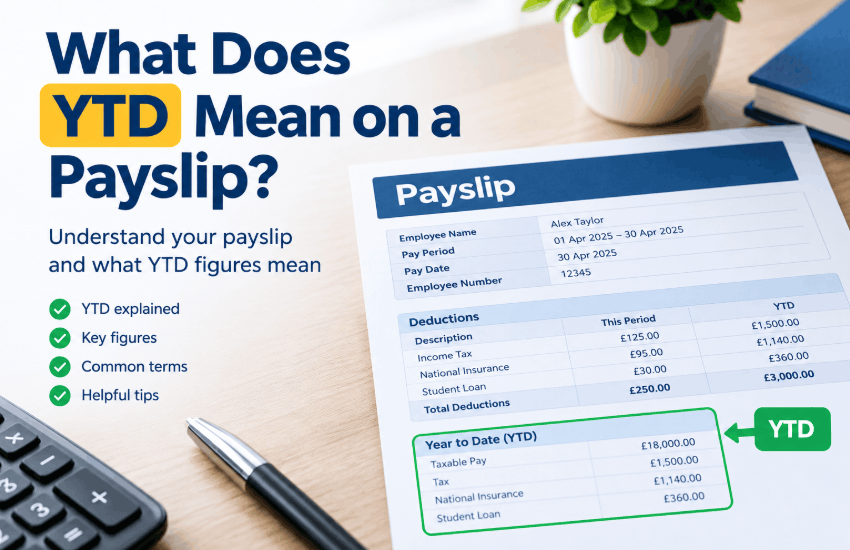
To claim your refund through the official portal, you must verify your identity and provide the reference number found on your P800 letter.
Using the digital service is the fastest way to receive funds, typically reaching your nominated UK bank account within five working days of the request.
- Locate the 10-digit P800 reference number found at the top of your HMRC letter.
- Visit the official gov.uk/p800refund webpage and select the Claim now option.
- Sign in using your Government Gateway user ID and password or create a new one.
- Enter your National Insurance number and confirm your total income for the year matches the letter.
- Provide the sort code and account number for the UK bank account where you wish to receive the funds.
- Review the summary of your claim and submit the digital application.
- Save the confirmation reference provided at the end of the process for your records.
- Monitor your bank account for the BACS transfer, which usually arrives in 3 to 5 business days.
How long does a P800 refund take to arrive in 2026?
The timeline for receiving your money depends entirely on the method you choose. Digital claims are prioritised by HMRC’s automated systems, whereas manual cheque requests involve significant postal and administrative delays.
2026 Processing Timelines Summary
| Method of claim | Expected arrival | Tracking capability |
|---|---|---|
| Online via gov.uk/p800refund | 5 working days | Real-time via Personal Tax Account |
| HMRC official app | 5 working days | Push notifications |
| Automatic cheque (letter says HMRC will send one) | 14 days from the letter date | None, arrives by post |
| Default cheque (you didn’t claim online within 21 days) | Up to 6 weeks | None, arrives by post |
Digital claims go straight into HMRC’s automated payment run, so there’s less scope for the address or name-matching errors that hold up paper cheques. There isn’t a separate phone-only refund channel with its own turnaround, calling HMRC is for querying or correcting the calculation itself, not for triggering a faster payout.
Can you get a gov.uk/p800refund without a Gateway ID?
While a Government Gateway account is the standard way to access HMRC services, there is an express route for those who only need to claim a single refund.
If your income sources are more varied, perhaps due to a new side-hustle, you may actually need to find out how do i get a UTR number to register for the Self Assessment system instead. For a standard P800 claim, the route simply requires intensive identity verification.
Eligibility for the express refund service
- You must have your P800 letter physically in front of you.
- Your National Insurance number must be valid and active.
- You must not have any other outstanding debts with HMRC.
A common pattern we see among seasonal workers is the loss of the physical P800 letter. If this happens, you cannot use the express service and must instead log into the full Personal Tax Account to view your calculation digitally and trigger the payment.

Do HMRC automatically refund overpaid tax on pension income?
Not always, and not always through a P800. If you’ve taken your whole pension as regular PAYE income, an overpayment usually does show up on a standard P800 like any other employment income.
It works differently if you’ve flexibly accessed a pension, for example, taking a lump sum via drawdown or a UFPLS. HMRC often applies an emergency Month 1 tax code to that first payment, which can significantly overtax it, worth keeping in mind alongside how HMRC bank account deductions work more generally, since both come down to HMRC recovering or repaying money outside your usual monthly pay cycle.
In that case, you don’t wait for a P800; you claim the overpayment back in-year using one of three forms, depending on your situation:
- P55 – you’ve taken part of your pension flexibly and aren’t taking regular payments
- P50Z – you’ve withdrawn your entire pot and have no other PAYE income
- P53Z – you’ve withdrawn your entire pot and do have other PAYE or pension income
These claims can usually be submitted online through your Personal Tax Account and are processed faster than waiting for the automatic end-of-year reconciliation.
How do I spot a gov.uk/p800refund scam in 2026?
Tax refund scams have become increasingly sophisticated, often using spoofed SMS messages that appear in the same thread as genuine HMRC alerts.
It is vital to remember that HMRC will never send a text or email containing a direct link to a login page or asking for credit card details.
Red flags to watch for
- Suspicious URLs: Always check that the link starts exactly with https://www.gov.uk/. Scammers often use variations like gov-uk-refund-online.com.
- Urgency: Genuine P800 letters give you ample time to claim. Scams often threaten legal action or loss of funds if you don’t click within minutes.
- Direct Bank Requests: HMRC will never ask for your PIN or the long 16-digit number on your debit card.
One small business employee recently shared an experience in which they received a WhatsApp message claiming to be from the HMRC Refund Dept that included a QR code. HMRC does not currently use WhatsApp for refund notifications; any such communication should be reported and deleted immediately.
What happens if the P800 says I owe tax instead?
Not every P800 calculation results in a refund. If the document states you have underpaid tax, HMRC will usually try to collect this automatically by adjusting your tax code for the next financial year.
Should your P800 reveal a significant underpayment, it’s worth knowing that the £3,000 coding-out limit is specific to PAYE underpayments and Self Assessment balancing payments.
It doesn’t apply in the same way to other HMRC debts, Self Assessment debt generally and tax credit overpayments are coded out on a sliding scale that can reach £17,000 depending on your income.
For a standard P800 underpayment, though, £3,000 is the hard ceiling: above that, HMRC moves you to a Simple Assessment instead of adjusting your tax code.
This is known as coding out the debt.
Comparison: Refund vs. Underpayment Process
| Feature | Tax Refund (Overpayment) | Tax Bill (Underpayment) |
| Primary Action | Claim via gov.uk/p800refund | Automatic tax code change |
| Timeline | Money received in days | Spread over 12 months |
| Documentation | P800 Letter | P800 Letter or Simple Assessment |
| Threshold | Any amount over £1 | Usually for debts under £3,000 |
If the amount you owe is more than £3,000, or if you do not have enough PAYE income for HMRC to adjust your code, they will send a Simple Assessment letter. This requires you to pay the balance directly via your banking app or a debit card.
How far back can you claim a P800 refund?
You can claim overpaid PAYE tax for the last four tax years. If HMRC hasn’t sent you a P800 for an earlier year where you think you overpaid, you can still prompt a reconciliation by contacting HMRC directly rather than waiting.
One detail that trips people up: P800 figures are cumulative, not separate pots. If you’re owed money across more than one year, each new P800 rolls the earlier years’ balances into it, the figure on your most recent P800 is your total, not an amount to be added to previous letters.
There’s also a lower limit. If a repayment works out at less than £10, HMRC’s system won’t issue it automatically; you’ll need to submit a claim yourself to get it.
That’s also a good moment to check whether any of the money involves savings interest; our piece on when savings interest becomes taxable walks through how the Personal Savings Allowance and the starting rate for savings interact, which is often why a refund figure looks smaller than expected.

Conclusion
If your P800 letter says you’re due money back, claim it at gov.uk/p800refund with your reference number and National Insurance number to hand; most online claims are paid within 5 working days.
Don’t sit on it: waiting past 21 days switches you to the slower cheque route by default. If the letter shows a small underpayment instead, HMRC will usually adjust next year’s tax code automatically rather than asking for a lump sum.
And whenever a message about a refund arrives by text, email, or WhatsApp, treat it as a scam, HMRC will only ever contact you about a P800 by letter or through your official online account.
Disclaimer: This article is for informational purposes only and does not constitute official financial or tax advice; please consult HMRC or a qualified professional for guidance regarding your specific tax situation.
FAQ
How do I get a refund back from HMRC?
For PAYE income, check your P800 letter or Personal Tax Account and claim online via gov.uk/p800refund using your reference number and National Insurance number. Self-employed refunds are instead claimed through your Self Assessment return.
How do I check my VAT refund?
VAT refunds work differently from a P800; they apply to VAT-registered businesses, not individual PAYE taxpayers. You check the status through your VAT online account or the HMRC app; HMRC aims to pay valid repayment claims within 30 days of receiving your return.
What does a P800 look like?
A P800 is a printed HMRC letter headed Tax Calculation, showing your income, tax paid, and tax due for the year. It has a reference number near the top and states clearly whether you’re due a refund or owe tax.
Does HMRC automatically refund overpaid tax on pension?
Only sometimes. Regular PAYE pension income is usually reconciled automatically via a P800. Flexibly accessed pension lump sums often need a separate in-year claim using form P55, P50Z, or P53Z, rather than waiting for the P800 cycle.
Can I claim a P800 refund without waiting for the letter?
Yes, if the tax year has already ended and you believe you overpaid, you don’t have to wait for HMRC to issue a P800, you can contact HMRC to ask them to check and reconcile your position sooner.
What if my P800 refund amount looks too low?
Check whether the figure already accounts for balances from earlier years, since P800 calculations are cumulative. It may also reflect tax due on other income, such as savings interest above your Personal Savings Allowance.
Is there a deadline to claim my P800 refund online?
You can claim within 21 days of the letter date to use the online bank transfer route. Miss that window and HMRC will default to sending a cheque instead, which takes longer to arrive.