What Is Shop Pay? UK Small Business Guide to Setup, Fees, and Safety
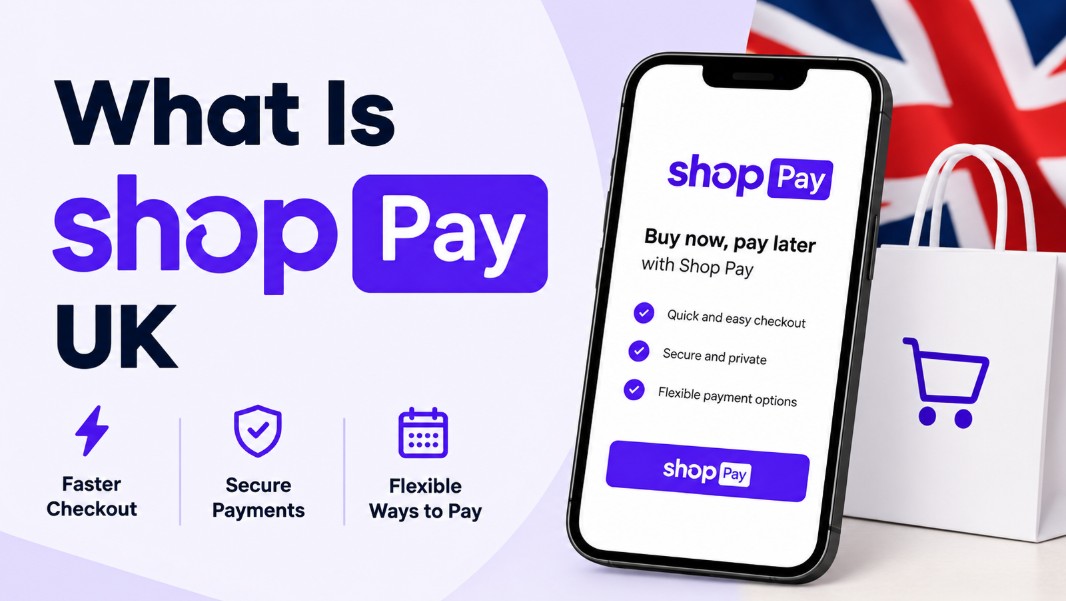
Shop Pay is a Shopify-built accelerated checkout wallet that stores a shopper’s payment, shipping, and billing details for one-tap purchases at any Shopify Payments store.
It functions as a checkout layer rather than a standalone processor, recognising returning customers instantly, as of Shop Pay Installments’ 2026 UK rollout.
Key Takeaways
- Shop Pay is Shopify’s accelerated checkout, not a separate processor, it uses a store’s existing Shopify Payments rate.
- UK online card rates run 2%, 1.7%, or 1.5% plus 25p, depending on the Shopify plan.
- Shop Pay Installments has been regulated as Deferred Payment Credit by the Financial Conduct Authority (FCA) since 15 July 2026.
What Is Shop Pay?
Shop Pay saves a shopper’s checkout details after a first purchase, so later orders at a Shopify Payments store take a few taps instead of a full form.
- The shopper enters an email address or mobile number at checkout.
- Shopify sends a one-time verification code by text message.
- Saved shipping, billing, and card details fill in automatically.
- The shopper confirms, and the order completes without re-entering data.
For a UK seller, that shortened flow is quicker than a guest checkout form typed out from scratch, which is the main reason Shopify promotes Shop Pay as a conversion tool rather than a payment method in its own right.
This emphasis on capturing sales quickly and owning the checkout experience makes a standalone Shopify store an appealing step for growing merchants, especially those looking to expand their independent brand after they start an Etsy shop.

How Much Does Shop Pay Cost a UK Small Business?
Shop Pay itself carries no separate charge. A UK store pays whatever card-processing rate its Shopify plan already carries through Shopify Payments, whether or not Shop Pay is switched on.
This straightforward, fixed-rate approach online contrasts with physical retail, where business owners must actively compare providers and hardware to find a suitable card payment machine that minimises their in-person overheads.
- Basic plan: 2.0% + 25p per online transaction.
- Grow plan: 1.7% + 25p per online transaction.
- Advanced plan: 1.5% + 25p per online transaction.
(Note: Payments made with an international card incur an additional 2% fee, which applies across all three tiers.)
A store using a third-party gateway instead of Shopify Payments pays that gateway’s own rate plus an additional Shopify transaction fee, which does not apply once Shopify Payments is active.
What’s the Difference Between Shop Pay and Shopify Payments?
Shopify Payments is the processor that moves the money; Shop Pay is the checkout wallet that speeds up how a returning shopper enters their details.
| Feature / Aspect | Shop Pay | Shopify Payments |
| Primary Function | Accelerated checkout wallet that speeds up details entry for returning shoppers. | The actual payment processor that moves the money. |
| Role in Transaction | Handles only the autofill and customer recognition layer on top. | Handles the backend: authorisation, settlement, and payout. |
| Dependency | Cannot be switched on independently; relies entirely on Shopify Payments to process the transaction. | Must be active first; serves as the required foundation for Shop Pay to work. |
| Common Confusion | Often mistakenly blamed for billing/fee queries. | The actual entity responsible for the transaction fees. |
What Are the Platform Limits for Business Owners Using Shop Pay?
While Shop Pay is built directly into the Shopify ecosystem, it is not an independent plug-and-play gateway; it comes with structural and platform-side boundaries that UK merchants must navigate:
- Gateway Requirement: Requires Shopify Payments to be active; it cannot run on a third-party standalone gateway.
- Geographic Reach: Limited to Shopify Payments-supported countries and currencies.
- Store Status: Storefronts must be publicly live and fully compliant with Shopify’s prohibited business policies (password-protected sites are excluded).
- Installment Caps: Shop Pay Installments enforces strict minimum and maximum order thresholds set by the lender (Affirm).
What Are the Payment Mode Restrictions for Business Owners Using Shop Pay?
Shop Pay streamlines the checkout process, but it also imposes specific boundaries on how funds can be transacted and which payment instruments are permitted:
- Accepted Cards: Primarily processes major debit and credit cards (Visa, Mastercard, Amex) saved in the digital wallet.
- BNPL Exclusions: Shop Pay Installments restricts certain funding sources like prepaid or virtual cards.
- Prohibited Items: Cannot be used to purchase cash equivalents, crypto, or gift cards via installments.
- Wallet Conflicts: Cannot be combined simultaneously with competing checkout wallets (like Apple Pay) in a single transaction.

Is Shop Pay Available to UK Shoppers and Sellers?
Shop Pay is available to both UK shoppers and UK sellers, provided the store has Shopify Payments active in the United Kingdom.
- Shopify Payments supports UK stores directly, with payouts and settlement handled through Shopify’s UK banking rails.
- Shop Pay activates automatically once Shopify Payments is switched on, no separate UK application is needed.
- Shop Pay Installments is available to eligible UK stores as part of the same 2026 rollout.
- Some Shop Pay features, including certain chargeback-protection tools, are limited to US merchants and do not apply to UK stores.
That last point matters for a UK seller comparing Shop Pay’s marketing claims against what actually applies locally.
How Does Shop Pay Installments Work for UK Sellers?
Shop Pay Installments lets a UK shopper split an eligible order into instalments through Affirm, Shopify’s lending partner, while the seller is paid in full upfront.
| Plan feature | Detail |
|---|---|
| Lender | Affirm (not Shopify) |
| Store requirement | Shopify Payments and Shop Pay both active |
| Shopper requirement | UK resident, 18 or over, debit card, may require a deposit |
| Regulatory status | Falls under FCA-regulated Deferred Payment Credit when repaid in 12 or fewer instalments over 12 months or less |
UK Shop Pay Installments has been regulated by the FCA as Deferred Payment Credit since 15 July 2026. The FCA’s rules apply to Affirm as the lender, not to the Shopify store selling the goods, since the two are separate parties under the regulation.
Who Qualifies to Offer Shop Pay Installments?
A UK small business qualifies once Shopify Payments and Shop Pay are both active and the store is approved by Affirm, which reviews eligibility and can restrict certain product categories. Approval is not automatic for every Shopify Payments merchant.
That regulatory line explains why disputes over an instalment payment are handled differently from an ordinary chargeback.
What Happens If a Customer Disputes a Shop Pay Installments Payment?
A Shop Pay Installments dispute is handled by Affirm as the lender, not by the seller’s own Shopify complaints process.
- The customer opens a dispute directly with Affirm.
- Affirm emails the store’s Shopify account with the dispute details.
- The seller has 15 days to reply with evidence.
- If Affirm resolves the dispute in the customer’s favour, the store does not receive the standard chargeback notification shown for card payments.
If a dispute reaches a deadlock, a customer can escalate to the Financial Ombudsman Service (FOS), since Affirm’s UK Deferred Payment Credit lending falls within its remit.
A UK seller’s exposure here is largely about response time, not liability, which is worth weighing against how Shop Pay performs next to other checkout options.
How Does Shop Pay Compare With PayPal?
Shop Pay and PayPal solve different problems: Shop Pay speeds up checkout inside a Shopify store, while PayPal is a separate payment account shoppers can use across many retailers.
| Shop Pay | PayPal | |
|---|---|---|
| What it is | Shopify’s accelerated checkout wallet | Independent payment account and processor |
| Works outside Shopify stores | No | Yes |
| Requires Shopify Payments | Yes | No |
| Buyer protection | No named consumer scheme | Formal claims process for buyers |
A store is not limited to choosing one. Many UK Shopify stores run Shop Pay for speed and offer PayPal or a BNPL alternative such as Klarna alongside it, since shoppers often expect a choice at checkout rather than a single option.
What Are the Benefits and Risks of Enabling Shop Pay?
Shop Pay’s main benefit for a UK store is fewer abandoned carts; its main risk is treating its marketing claims as universal when some do not apply outside the US.
Benefits
- Faster checkout, which Shopify links to reduced cart abandonment.
- Section 75 protection: Because Installments is a regulated credit agreement, purchases over £100 give buyers statutory protection, making Affirm jointly liable if goods are faulty or not delivered.
- No extra fee beyond the store’s existing Shopify Payments rate.
- Automatic recognition across any Shop Pay-enabled store, increasing repeat-purchase speed.
Risks
- Some promoted features, including certain chargeback protections, apply to US merchants only.
- Enabling Installments brings in a regulated third-party lender, with its own dispute process.
- A store cannot fully control the checkout experience once Affirm is involved in a sale.
Weighed together, Shop Pay is close to a low-cost decision for most UK sellers already on Shopify Payments, with Installments as the one feature that needs a deliberate, informed choice rather than a default toggle.
Conclusion
Shop Pay is Shopify’s accelerated checkout, not an extra cost: a UK store pays its existing Shopify Payments rate whether or not it is switched on.
The one decision that needs care is Shop Pay Installments, now FCA-regulated Deferred Payment Credit, which brings Affirm in as a separate lender with its own dispute process.
Disclaimer: Card processing rates and FCA regulatory status reflect information published as of September 2026. Terms, fees and eligibility vary by Shopify plan and lender, and readers should confirm current figures directly with Shopify or the FCA before making a decision.
FAQs
What are the disadvantages of Shop Pay?
Its main limits for UK sellers are marketing features restricted to US merchants and reduced control once a dispute moves to Affirm. Shopify Payments must also already be active, so it is not usable independently.
Is Shop Pay the same as PayPal?
No. Shop Pay is Shopify’s own checkout wallet, tied to Shopify Payments, while PayPal is an independent payment account usable across many retailers beyond Shopify.
How do you get rid of Shop Pay?
A customer can opt out of Shop Pay through their Shop account settings, which keeps order tracking active, or delete the account entirely. Any open Installments balance must be paid off first.
Does Shop Pay affect your credit report?
Creating a Shop Pay account does not affect a credit score. Using Shop Pay Installments and how the resulting payments are managed can influence a credit rating, per Shopify’s own guidance.