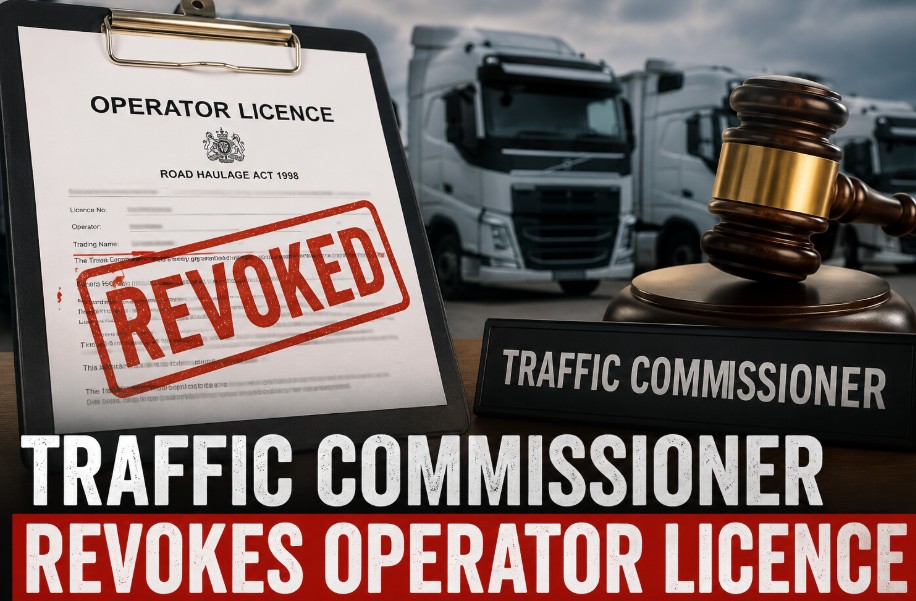
Traffic Commissioner Revokes Operator Licence: The UK Transport Compliance, Appeal Guide
When a UK Traffic Commissioner revokes operator licence, a commercial transport business loses its legal right to operate heavy goods vehicles or public service vehicles, effectively halting all trading activity with immediate effect.
Key Takeaways
- Statutory law requires Traffic Commissioners to issue a mandatory licence revocation under Section 27 if an SME completely fails to prove its required financial standing.
- Regulatory decisions take effect at 23:45 hours on the date specified in the written decision unless the operator secures an official stay of execution.
- A Section 28 disqualification order can prevent company directors from holding a controlling interest in any other transport business nationwide.
- Operators must lodge an official appeal with the Upper Tribunal within 28 days of the date printed on the Traffic Commissioner decision notice.
What is operator licence revocation?
An operator licence revocation is the absolute maximum regulatory penalty enforced by the Office of the Traffic Commissioner, which completely invalidates a business’s legal permission to run commercial vehicles over 3.5 tonnes (HGVs) or public transport vehicles (PSVs).
Unlike suspensions or fleet reductions, a revocation is a permanent cancellation. Once a licence is revoked, continuing to operate commercial vehicles becomes a severe criminal offence in the United Kingdom.
This exposes the transport business to immediate roadside vehicle impoundment by enforcement agencies and unlimited court-ordered fines.
Why Traffic Commissioner revokes operator licence?
The primary driver for an operator licence revocation is a fundamental breakdown of professional trust between the operator and the regulator. An operator licence is granted on trust, and businesses sign up to strict, ongoing compliance undertakings.
When an operator demonstrates that they can no longer be trusted to protect public safety, maintain fair competition, or manage their fleet safely, the Traffic Commissioner is legally obligated to step in and revoke the authorisation.
What Is the Role of the Traffic Commissioner in Licence Revocation?
The Traffic Commissioner acts as an independent, quasi-judicial tribunal judge responsible for evaluating physical compliance evidence compiled by the DVSA to determine whether a commercial transport operator remains legally fit to hold a licence.
Traffic Commissioners regulate distinct geographic traffic areas across Great Britain. Although directly appointed by the Secretary of State for Transport, they are independent regulators rather than civil servants.
Their primary legal mandate focuses entirely on ensuring fair market competition and protecting public safety on UK roads.
How Do I Contact the Office of the Traffic Commissioner?
Commercial transport vehicle operators can contact the Traffic Commissioner through the centralized Office of the Traffic Commissioner (OTC) licensing teams in Leeds, via the digital Vehicle Operator Licensing (VOL) portal, or via email at enquiries@otc.gov.uk.
For ongoing regulatory cases, formal legal documents, compliance evidence portfolios, and official public inquiry briefs must be submitted directly to the specific regional Hearing Centre handling that particular geographic territory.
Under What Circumstances is an Operator Licence Revoked?
A Traffic Commissioner revokes an operator licence when a business breaches mandatory legal criteria under Section 27 or commits severe, persistent operational infractions categorized under the discretionary grounds of Section 26 of the Transport Acts.
Traffic Commissioners exercise their powers under the Goods Vehicles (Licensing of Operators) Act 1995 and the Public Passenger Vehicles Act 1981 across two distinct legal frameworks:
1. Mandatory Grounds (Section 27)
The Traffic Commissioner is statutorily required to revoke a standard operating licence if an SME or corporate entity falls short on the baseline pillars of compliance:
- Loss of Financial Standing: Failing to maintain the required capital reserves in bank accounts to prove the fleet can be safely maintained.
- Loss of Professional Competence: Operating without a designated, qualified Transport Manager (e.g., if a manager leaves, dies, or is found unfit, and no compliant replacement is made).
- Loss of Good Repute: Accumulating serious criminal convictions or showing persistent dishonesty.
2. Discretionary Grounds (Section 26)
Revocation actions can also be triggered at the Commissioner’s discretion following severe or systemic operational failures:
- Dangerous maintenance habits, such as missing Preventative Maintenance Inspections (PMIs), severe brake testing failures, or driver defect sheets filled out falsely or in advance.
- Deliberate tachograph manipulation or a complete lack of mileage reconciliation, which leaves drivers’ hours unmonitored.
- Repeated vehicle overloading, failing to verify safely how a load should be carried, or bridge strikes.
- Fronting or Entity Traps: Operating under a limited company structure using an old sole-trader licence without notifying the regulator.
The personal impact of Section 28 disqualifications
A revocation often carries long-term consequences that extend beyond the corporate entity. Under Section 28 of the Act, a Traffic Commissioner can concurrently issue a disqualification order against specific individuals.
| Affected Role | Direct Regulatory Consequence | Long-Term Business Restriction |
| Company Director | Disqualified from holding or obtaining an operator licence in Great Britain. | Prohibited from holding a controlling interest in any other transport company. |
| Transport Manager | Declared unfit; professional Certificate of Professional Competence (CPC) is suspended. | Banned from acting as a named Transport Manager on any commercial licence. |
A haulage business in the Midlands recently attempted to circumvent a pending DVSA investigation by applying to voluntarily surrender its authorization.
The Traffic Commissioner formally refused the surrender application, pushed the case to a full Public Inquiry, revoked the licence, and disqualified the managing director for three years.
The written decision emphasized that licence surrender cannot be used as a legal shield to avoid regulatory scrutiny.
What Does It Mean When a Traffic Commissioner Revokes Operator Licence?
When a Traffic Commissioner revokes operator licence, it signals the permanent termination of the business’s transport authorization, differentiating it from temporary enforcement measures like suspensions or fleet size curtailments.
In practice, transport managers frequently confuse permanent revocation with lesser enforcement mechanisms like a PSV operator licence suspension.
Understanding these precise legal distinctions is absolutely critical for an SME assessing restructuring or business survival options:
| Regulatory Action | Operational Impact | Typical Duration | Reapplication Restrictions |
| Revocation | Total invalidation of the licence; all commercial vehicles must immediately stop operating. | Permanent unless overturned on appeal. | Blocked if accompanied by a Section 28 disqualification order. |
| Suspension | Temporary withdrawal of the right to use specified vehicles; licence remains legally in force. | Specified fixed period. | Automatic reinstatement occurs once the suspension term expires. |
| Curtailment | A mandatory reduction in the maximum number of vehicles authorized on the licence. | Permanent or temporary adjustment. | Requires a formal variation application to restore previous vehicle limits. |
The Outcomes of a Revoked Operator’s Licence
The legal outcome of a revoked operator’s licence includes the automatic, immediate cancellation of all registered local bus services tied to that operating entity, coupled with immediate criminal liability if commercial transport operations continue.
Attempting to run commercial freight or passenger transport routes past the exact minute the revocation order takes effect shifts the case from a regulatory matter to a criminal prosecution, empowering the DVSA to seize assets permanently.
What Are the Key Differences Between HGV and PSV Operator Licence Revocations?
The structural legal process for revoking a heavy goods vehicle (HGV) or a public service vehicle (PSV) licence relies on similar principles of public safety, but the specific operational focus, legislative acts, and compliance triggers differ markedly due to passenger welfare considerations.
This includes stricter tracking of driver behavior around pedestrian zones and various types of crossings in the UK. Here are the key differences between HGV and PSV operator licence revocations:
| Feature / Core Area | HGV Operator Licence Revocation | PSV Operator Licence Revocation |
| Primary Legislation | Goods Vehicles (Licensing of Operators) Act 1995. | Public Passenger Vehicles Act 1981 / Transport Act 1985. |
| Public Safety Focus | Focused on road wear, vehicle dimensions, safe loading/weight limits, and cargo security. | Focused heavily on passenger welfare, vehicle accessibility, and strict interior safety standards. |
| Operational Revocation Triggers | Repeated overloading, insecure loads, bridge strikes, or systemic failure in cargo tracking. | Timetable non-compliance, unauthorized route deviations, or improper local bus service registration. |
| Maintenance & Fleet Failures | Infrequent preventative maintenance inspections (PMIs), poor commercial brake test logs, and driver hours fraud. | Similar vehicle maintenance flaws, but single mechanical failures (like public coach brake issues) face immediate, fast-tracked revocation. |
| Collateral Impact of Revocation | Businesses can no longer transport commercial goods over 3.5 tonnes. | Results in the immediate, automatic cancellation of all registered local bus services tied to that operating entity. |
| Driver Conduct Focus | Addressed via driver conduct hearings for tachograph manipulation, mobile phone use, and weight violations. | Addressed via driver conduct hearings, with a zero-tolerance policy for passenger-facing safety breaches or customer welfare misconduct. |
How Does an Operator End Up on the Traffic Commissioner Public Inquiry List?
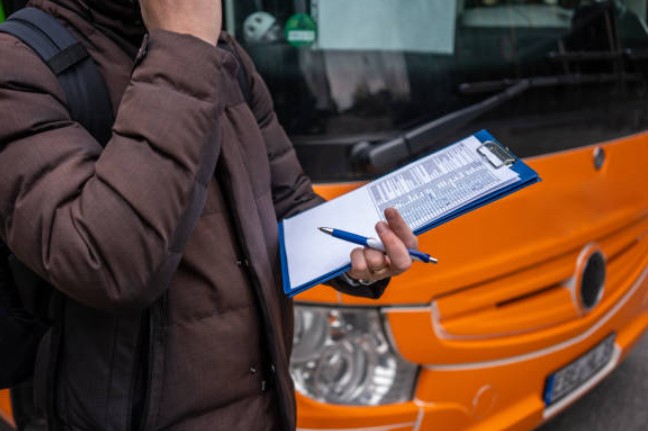
An operator ends up on the official Traffic Commissioner public inquiry list via a structured, evidentiary path that starts with a failed DVSA roadside stop or office audit and escalates into a formal case referral.
A commercial operator does not face sudden licence revocation without prior administrative warning. The compliance enforcement pipeline moves step-by-step through the following stages:
- DVSA Roadside Stop / Audit Failure: Authorized DVSA traffic officers detect safety defects during a roadside inspection or uncover systemic compliance gaps during an on-site operator office audit.
- National Compliance Referral: The investigating officers compile an official Public Inquiry report detailing their findings and formally refer the transport entity to the Office of the Traffic Commissioner.
- Formal Call-In Letter Issued: The regional OTC issues an official legal Call-In Letter to the transport operators, outlining the alleged rule breaches and demanding copies of all corporate books.
- Listing on the Public Inquiry Schedule: The case is formally published and listed on the national traffic commissioner public inquiry list, defining the time, location, and date of the hearing.
- Final Regulatory Decision: The Traffic Commissioner hears oral evidence from directors and transport managers, evaluates the written briefs, and issues a final regulatory decision (such as revocation).
What is the Role of Traffic Commissioner Notices and Proceedings?
Every week, the Office of the Traffic Commissioner publishes traffic commissioner notices and proceedings documents.
These legal publications act as the official public record for the transport industry, listing every new licence application, variation request, upcoming public inquiry, and final regulatory decision within each regional traffic area.
Traffic Commissioner Hearings and Public Inquiries
When an SME receives a formal Call-In Letter, the business is officially scheduled for traffic commissioner hearings.
This letter outlines the exact compliance failures identified by the DVSA and provides a strict timeline for submitting maintenance records, tachograph analyses, and bank statements.
- Public Inquiries: Formal regulatory tribunals where the operator, directors, and transport managers must provide testimony regarding company compliance systems.
- Driver Conduct Inquiries: Separate proceedings featured on the traffic commissioner driver conduct hearings list. These target individual vocational drivers holding HGV or PSV entitlements, focusing on personal driving offences, mobile phone use, or tachograph falsification independent of the corporate entity.
As of 2026, Traffic Commissioners have established a strict regulatory stance regarding the presentation of compliance evidence at these hearings.
Operators who present generic, automated AI compliance templates or boilerplate policy documents rather than business-specific, verifiable maintenance logs face immediate skepticism.
Regulators explicitly treat unverified, machine-generated responses as a failure to actively engage with the regulatory process.
How can Goods Vehicle Operators avoid licence revocation?
Protecting an HGV or PSV operator licence requires proactive compliance monitoring and rapid intervention at the first sign of a DVSA investigation. Goods vehicle operators can insulate their business from revocation by strictly implementing the following steps:
- Acknowledge and Audit Immediately: Respond to all regulatory correspondence within specified deadlines. Failing to engage or missing deadlines is treated as an aggravating factor by the Commissioner.
- Maintain Relentless Oversight: Even if tasks are delegated to a Transport Manager or an external provider, directors must retain ultimate control. Establish regular management meetings focused on compliance Key Performance Indicators (KPIs) and run internal audits on your PMIs.
- Execute an Independent Maintenance Audit: Commission a thorough, third-party audit of your past 15 months of preventative maintenance inspection records, roller brake test results, and daily walk-around check sheets to uncover hidden system drifts.
- Download and Analyze VOL Data: Extract complete records from the digital VOL system, tracking your OCRS (Operator Compliance Risk Score) metrics and encounter rates.
- Rectify Financial Deficiencies Quickly: Ensure you compile and maintain consecutive 3-month bank statements demonstrating continuous access to the statutory financial thresholds required for your authorized fleet size.
- Formulate a Verifiable Rectification Plan: Draft a transparent, business-specific strategy detailing the deployment of new tracking tools, transport manager training, or updated driver check procedures to present at the tribunal.
- Instruct Specialist Counsel Early: Retain a qualified transport law specialist to manage communications with the Office of the Traffic Commissioner and represent the business at public inquiry.
What to Do If Facing an Office of the Traffic Commissioner Investigation?
When an SME faces a DVSA investigation or receives an official Call-In Letter, immediate, structured action is required to minimize the risk of total operational closure.
- Acknowledge and Audit: Instruct your compliance team to respond to all regulatory correspondence within the specified deadlines, as failing to engage with the regulator is treated as an aggravating factor.
- Instruct Specialist Counsel: Retain a qualified transport law specialist to review the brief and manage communications with the Office of the Traffic Commissioner.
- Download Vehicle Operator Licensing Data: Extract complete records from the digital VOL system, including your current encounter rates, OCRS (Operator Compliance Risk Score) metrics, and MOT histories.
- Execute an Independent Maintenance Audit: Commission an independent, third-party audit of your past 15 months of preventative maintenance inspection records, roller brake test results, and daily walk-around check sheets.
- Rectify Financial Standing Deficiencies: Compile consecutive 3-month bank statements demonstrating access to the statutory financial thresholds required for your authorized fleet size.
- Formulate a Continuous Improvement Plan: Draft a transparent rectification strategy detailing the deployment of new tracking tools, transport manager training, or updated driver check procedures to present at the tribunal.

Final Summary
Protecting an SME from an operator licence revocation requires proactive compliance monitoring and rapid intervention at the first sign of a DVSA investigation.
If your business receives a Call-In Letter or notification of a preliminary hearing, you must treat the matter as an immediate risk to your trading status.
Ensure that all maintenance files, financial records, and tachograph analysis charts are thoroughly audited by an independent professional before presenting your case to the regional Traffic Commissioner.
Disclaimer: This article provides general regulatory information for transport operators and does not constitute formal legal advice.
FAQ
What is the main reason a traffic commissioner revokes an operator licence?
The primary driver for revocation is a fundamental loss of professional trust. This typically stems from persistent maintenance failures, deliberate tachograph manipulation, or an operator’s failure to communicate transparently with the regulator.
Where can I view recent traffic commissioner decisions for PSV and HGV operators?
All regulatory decisions, public inquiry schedules, and licensing application outcomes are updated weekly within the regional traffic commissioner notices and proceedings documents on the official GOV.UK portal.
Can an operator appeal a licence revocation decision?
Yes. Operators can lodge a formal appeal with the Upper Tribunal (Administrative Appeals Chamber) within 28 days of the decision date, provided they have valid legal grounds to challenge the commissioner’s factual findings.
What is a stay of execution in transport law?
A stay of execution is an official order that temporarily postpones the implementation of a licence revocation. This allows an SME to continue running its commercial fleet while awaiting a full appeal hearing.
Can a director start a new transport company immediately after a revocation?
No. If the revocation includes a Section 28 disqualification order, the director is legally barred from holding a licence or maintaining a controlling interest in any transport entity. Doing so constitutes a criminal offence.
How long does a public inquiry decision take to be published?
While oral decisions are occasionally delivered at the close of a hearing, Traffic Commissioners typically issue their formal, comprehensive written judgments within 28 days of the inquiry’s conclusion.
What happens if a business operates vehicles after its licence is revoked?
Operating without a valid licence is a severe statutory breach. The DVSA retains the legal authority to seize, impound, and permanently dispose of any non-compliant vehicles found on public roads.