
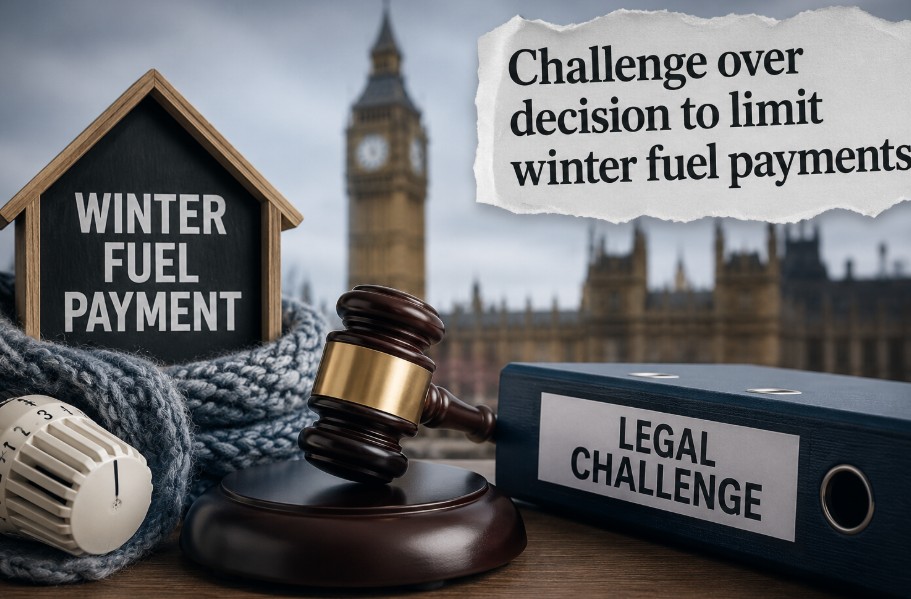
UK Winter Fuel Payment legal challenge: Rules & Clawback Limits
The winter fuel payment legal challenge directly contested the legality of the Department for Work and Pensions altering universal benefit access without executing statutory reviews.
While the High Court and Court of Session ultimately refused to quash the regulations, the intense litigation pressured the government to establish an automated individual tax-clawback system.
Key Facts
- A major legal battle over the UK government removing universal winter fuel payments for 10 million pensioners
- The High Court and Scottish Court of Session upheld the cuts and ruled the government process lawful
- Intense litigation forced a policy compromise replacing upfront means-testing with an automated HMRC tax clawback
- All eligible pensioners receive initial payments, but individuals earning over £35,000 must repay it via their tax code
- Devolved nations including Scotland, Wales, and Northern Ireland mirror this exact individual income threshold
What is the Winter Fuel Payment?
The Winter Fuel Payment is an annual, tax-free financial allowance designed to help older UK residents cover heating costs during winter.
Following recent updates to the standard Winter Fuel Payment 2025/26 parameters, it has transitioned from a universal baseline payment into an income-contingent benefit recovered from high earners via an automated HMRC tax code clawback
Historically distributed as a universal benefit to everyone who reached State Pension age, the scheme underwent a massive structural overhaul following significant legislative and judicial developments.
The current framework balances initial automated distribution with an income-contingent clawback system managed directly through HM Revenue & Customs (HMRC).
What is the UK Winter Fuel Payment legal challenge about?
The UK winter fuel payment legal challenge was a judicial review brought by unions and campaigners contesting the government’s sudden removal of the universal entitlement for 10 million pensioners.
The litigation argued that the DWP acted unlawfully by failing to consult advisory groups or conduct mandatory equality impact reviews.
Who stopped the Winter Fuel Payment?
The Winter Fuel Payment changes were stopped and modified by the Chancellor of the Exchequer, working alongside the Treasury and the Department for Work and Pensions (DWP), who used secondary legislation rather than a full Act of Parliament to cut the spending baseline.
Rather than passing an independent Act of Parliament, the administration utilized secondary legislation to curtail the spending baseline.
This procedural choice meant the regulations bypassed full parliamentary debate, drawing immediate criticism from independent advocacy groups, social security analysts, and trade unions.
Legal Basis of the England Framework Challenges
In England and Wales, high-profile legal actions led by organisations such as Unite the Union targeted the DWP directly. Litigators argued that the government acted unlawfully by completely bypassing the Social Security Advisory Committee (SSAC) before enacting the benefit cuts.
In practice, skipping this mandatory referral process can render secondary social security regulations procedurally void if no genuine emergency exists. Furthermore, the English applications concentrated heavily on statutory breaches of the Equality Act 2010.
Under the Public Sector Equality Duty (PSED), government departments are legally required to assess how a major policy change will disproportionately hit protected groups, including the elderly and those living with chronic disabilities who face significantly higher baseline heating costs.
Campaigners asserted that the decision was inherently irrational because it failed to gather empirical evidence regarding winter mortality risks prior to implementation.
How Did the Scottish Winter Fuel Payment legal challenge Differ?
The Scottish Winter Fuel Payment challenge differed because it moved directly to Scotland’s highest civil court, the Court of Session, as a lead judicial review testing cross-border administrative agreements and the distinct financial pressures caused by the UK devolution settlement.
What did the court decide in the Scottish judicial review?
The Court of Session completely refused the Scottish judicial review petition on all grounds. In the definitive judgment, Lady Hood ruled that neither the UK Secretary of State nor the Scottish Ministers had breached their statutory duties under the Equality Act 2010.
Is the Winter Fuel Payment devolved?
Yes, the Winter Fuel Payment is fully devolved to Scotland under Holyrood’s legislative authority. However, because Westminster cut the corresponding block grant funding by £160 million, the Scottish Government was forced to replicate the UK means-testing model.
However, the Fanning case highlighted the complex realities of the devolution settlement. In April 2024, power shifted to Holyrood, which intended to introduce a universal, non-means-tested alternative called the Pension Age Winter Heating Payment (PAWHP).
When Westminster restricted the English scheme, it triggered a corresponding reduction of roughly £160 million in the Scottish block grant funding.
The Scottish Government stated it had no financial option but to replicate the means-testing model for that season. The court found that this financial reality justified the joint administrative choices of both governments.
Who is Eligible for the Winter Fuel Payment Under Current Rules?
Pensioners are eligible for the Winter Fuel Payment under current rules if they reach State Pension age by the September qualifying week, yielding a base household payment of £200, or £300 if a resident is aged 80 or older, subject to the individual £35,000 tax clawback.
To prevent an ongoing cycle of court battles and union-backed pre-action protocols, the UK Government introduced a major modification to the framework.
The current system re-establishes broader initial payments while utilizing the tax system to recover funds from higher-income brackets.
Who will not get the Winter Fuel Payment?
Pensioners will not get the Winter Fuel Payment if their individual net income exceeds £35,000, if they have lived in a care home for more than 12 weeks with specific state funding, or if they are serving a custodial sentence.
The payment is completely withheld or fully clawed back based on strict income criteria and benefit statuses:
- Higher Earners: Individuals whose total individual net income across private pensions, investment portfolios, employment, and the State Pension exceeds the statutory threshold of £35,000.
- Exclusions for Specific Institutional Residents: Individuals who have been living in a care home for more than 12 weeks and receive certain funding, or those serving a custodial sentence throughout the entire qualifying week.
How do I know if I am entitled to the fuel allowance?
You are automatically entitled to keep the fuel allowance if you receive Pension Credit, Universal Credit, Income Support, income-related ESA, or income-based JSA. If you rely solely on a state or private pension, your total income must sit below £35,000.
How do I stop getting the Winter Fuel Payment?
You can stop getting the Winter Fuel Payment by using the online opt-out tool on GOV.UK for England, Wales, and Northern Ireland. Pensioners living in Scotland must contact Social Security Scotland by telephone to formally cancel future automated payments.

Scotland, Wales, and Northern Ireland
Devolved administrations in Scotland, Wales, and Northern Ireland independently administer local versions of pensioner heating support, but all national frameworks remain strictly synchronized with the central UK Treasury parameters, enforcing identical age rules and an individual £35,000 tax clawback threshold across all borders.
Because the UK winter fuel payment legal challenge questioned cross-border administrative duties, the separate national administrations handle pensioner heating support through distinct delivery bodies but share structural tax parity.
Cross-Border Devolved Comparison Table
| Region / Nation | Local Scheme Name | Delivery Administration | Payment Architecture | Individual vs. Household Clawback Execution |
| Scotland | Pension Age Winter Heating Payment (PAWHP) | Social Security Scotland | £100 to £300+ based on household age profile. | Strictly Individual Basis: If a married couple in Edinburgh both receive PAWHP, but Spouse A’s individual income hits £38,000 while Spouse B’s is £21,000, Spouse A repays 100% via tax while Spouse B keeps theirs. |
| Wales | Winter Fuel Payment | Welsh Government alongside the DWP | £200 to £300 based on standard qualifying bands. | Centralized UK Parity: High Court determinations and centralized HMRC PAYE / Self-Assessment clawbacks apply over the individual £35,000 limit. |
| Northern Ireland | Winter Fuel Payment | Department for Communities | £200 to £300 automatically delivered to eligible residents. | Statutory Parity: Operates on a technically separate legal framework but maintains strict parity, using the exact same £35,000 individual income tax check. |
Financial and Tax Implications for Pensioners and Advisors
Financial advisors must note that under the Finance (No. 2) Bill, the winter fuel allowance remains initially non-taxable but is subject to a 100% Winter Fuel Payment Charge if an individual’s net income exceeds the rigid £35,000 cliff-edge.
- The Zero Taper Rule: Unlike other benefits that phase out gradually, this charge operates as a strict cliff-edge. Earning even £1 over the £35,000 individual net income limit triggers a total clawback of the £200 or £300 payment.
- The Safeguard Exemption: Crucially, any pensioner who receives Pension Credit or an equivalent income-related benefit is completely exempt from the tax clawback, irrespective of unexpected fluctuations in other minor income streams.

How the Clawback is Collected?
The Winter Fuel Payment clawback is collected automatically by HMRC via PAYE tax code adjustments, reducing monthly payouts by roughly £17, or pre-populated onto digital profiles for self-assessment taxpayers.
For individual taxpayers who do not explicitly opt out of the system, HMRC has designed a phased, automated recovery model:
- Data Compilation: The DWP and Social Security Scotland compile the complete recipient database during the September qualifying week.
- Automatic Distribution: Payments are distributed automatically to all eligible individuals between November and December.
- Income Evaluation: At the close of the financial year, HMRC reviews the individual’s total taxable income across all source systems.
- PAYE Code Adjustments: For individuals paid via Pay As You Earn (PAYE), such as those receiving state or company pensions, HMRC automatically alters their tax code.
- Monthly Deductions: The altered tax code prompts pension providers to deduct approximately £17 per month from the individual’s monthly payout to reclaim a basic £200 payment.
- Self-Assessment Integration: Taxpayers who file annual Self Assessment returns will see the winter fuel payment amount automatically pre-populated onto their digital return. Paper filers must manually declare the exact sum received.
- The Double-Deduction Transition Year: During the transition to in-year recovery, certain fiscal periods will witness a temporary rise in deductions to approximately £33 per month as HMRC aligns past and current season reconciliations.
Conclusion
The resolution of the winter fuel payment legal challenges has created a complex intersection between social security benefits and active tax code administration.
Because the clawback functions as a rigid cliff-edge at £35,000 of individual income, micro-businesses, accountants, and financial planners must carefully monitor client income streams. A minor, unexpected dividend or private pension drawdown that pushes an individual over the threshold will trigger a full repayment obligation via PAYE or Self Assessment.
Moving forward, practitioners should audit vulnerable clients for Pension Credit eligibility to ensure their allowances remain structurally insulated from the clawback system. Verified against the Social Fund Winter Fuel Payment Regulations, the Equality Act 2010, and official HMRC tax code parameters for the 2025/2026 fiscal periods.
FAQ
Did the winter fuel payment cuts legal challenge change the law?
The courts officially refused to quash the DWP regulations. However, the intense litigation pressured the government to establish the current individual tax-clawback model to protect lower-income households.
How much is the winter fuel allowance?
The base payment is £200 per eligible household, rising to £300 if a resident is aged 80 or over during the qualifying week.
Who qualifies for winter heating payment in Scotland?
Pensioners residing in Scotland who reach State Pension age by the September qualifying week are eligible, subject to the individual £35,000 tax clawback threshold.
What are the core winter fuel payment regulations?
The current framework is governed by the Social Fund Winter Fuel Payment Regulations alongside amending provisions within the Finance (No. 2) Bill.
Is the Scottish Winter Fuel Payment per person or per household?
No, it is not strictly a household-restricted benefit; the initial allocation is distributed based on household age profiles, but the corresponding tax clawback applies strictly to individual incomes.
What is the winter fuel scheme in Wales?
Wales follows the central DWP framework, providing an identical £200 to £300 initial benefit linked to the standard HMRC tax recovery parameters.
Who gets winter fuel allowance in NI?
Pensioners in Northern Ireland who satisfy the age and residency requirements receive it automatically from the Department for Communities.