
New Aldi Stores: Full List of 2026 Openings and Local Business Impact
The UK grocery sector is undergoing a significant structural shift as discount retail footprints rapidly expand into new regional territories. Driven by changing consumer habits and a demand for localized value, the pipeline for new Aldi stores has accelerated.
This expansion strategy introduces major capital infrastructure developments across England, Wales, and Scotland, fundamentally reshaping high street footfall and local retail markets.
For independent businesses, commercial landlords, and consumers, tracking these brick-and-mortar openings is essential for evaluating regional economic growth, property demand, and shifting grocery market share.
Where Are the New Aldi Stores Planned in the UK for 2026?
Aldi plans to open 16 new Aldi stores across the UK over the coming months as part of an official £370 million investment program for the current financial year. This regional infrastructure rollout scales its current footprint of 1,080 trading locations closer to its long-term property target of 1,500 UK supermarkets.
In practice, executing large-scale retail rollouts requires careful coordination with local municipal planning authorities.
Delays in structural construction timelines or local council planning approvals often shift specific branch opening dates into subsequent quarters.
As part of its ongoing capital deployment, Aldi has locked in the exact locations for its next wave of store openings. The following pipeline comprises 16 key sites slated to open their doors to the public in the coming months:
| Exact Announced Store Location | Regional Territory / County |
| Hattersley | Greater Manchester |
| Newport | Isle of Wight |
| Bishops Cleeve, Cheltenham | Gloucestershire |
| Newport | South Wales |
| Orpington | Greater London |
| Hoxton | Greater London |
| Ashford | Kent |
| Watford | Hertfordshire / London Border |
| Rayleigh | Essex |
| Balsall Common | West Midlands |
| Marble Arch | Greater London |
| Malton | North Yorkshire |
| Port Talbot | West Glamorgan, Wales |
| Sutton Coldfield | West Midlands |
| Wigan | Greater Manchester |
| Sudbury | Suffolk |
Upcoming Store Launches and Summer Upgrades
The following matrix tracks the verified commercial site pipeline, regional territories, and the expected operational launch windows for the upcoming properties:
| Confirmed Store Location | Regional Territory | Project Status & Deployment Phase | Expected Launch Window |
| Hastings | South East | Structural Fit-Out Phase | Q3 2026 |
| St Leonards | South East | Planning Permission Approved | Q4 2026 |
| Leytonstone | Greater London | Internal Construction Phase | Q3 2026 |
| Muswell Hill | Greater London | Detailed Planning Review | Q1 2027 |
| Caterham | Surrey | Final Site Handover | Q4 2026 |
| Taunton | South West | Groundworks & Excavation | Q4 2026 |
| Shrewsbury | West Midlands | Structural Frame Completion | Q3 2026 |
| Macclesfield | North West | Highways Consultation Phase | Q2 2027 |
Estate Modernization: Alongside this rapid greenfield expansion, an official Aldi UK estate audit confirms plans to comprehensively upgrade and refurbish 25 existing stores across the UK this summer to sustain high efficiency and handle growing customer volume.
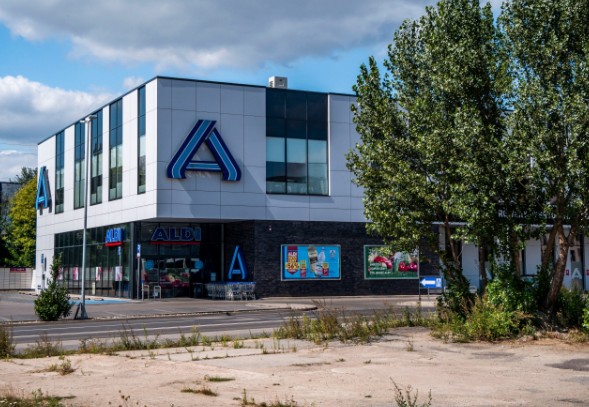
Where does Aldi target UK locations to open new stores as part of its expansion plan?
To drive its long-term strategy of reaching 1,500 UK stores, Aldi’s real estate acquisition teams actively track a Priority Target List across several key territories.
To bypass traditional bottleneck constraints, the supermarket has increasingly deployed public-backed crowd-sourcing initiatives, inviting British shoppers directly to nominate local gaps in the network.
The active regional search focus spans the following key hubs:
- London & Home Counties: High-priority urban catchments including Notting Hill, Chelsea, Chiswick, Barnet, St Albans, and high-density spots inside the M25 boundary.
- The Midlands & East Anglia: Areas like Coventry, Leicester Fosse Park, Wolverhampton, Cambridge South, and Nottingham Beeston.
- The North & Scotland: Key gaps in Glasgow (Cathcart, Springburn), Edinburgh Barnton, Harrogate, and West Didsbury.
- South West & Wales: Expansion links through Bristol, Bath, Cardiff, Swansea, and Penzance.
What Changes and Investment Projects Are Coming to Aldi in 2026?
The major investment changes coming to Aldi include a £370 million property expansion push to build new stores and upgrade 25 existing sites.
This capital deployment underpins a larger £1.6 billion two-year framework focused on upgrading regional distribution infrastructure, expanding automated logistics networks, and rolling out energy-efficient layouts across the UK
- Review corporate capital allocation frameworks for UK supermarket infrastructure.
- Identify regional distribution center capacity upgrades across logistics networks.
- Submit formal site planning applications to local municipal councils.
- Finalize freehold acquisitions and long-term leasehold commercial agreements.
- Initiate civil engineering, groundworks, and sustainable shell construction.
- Execute internal supermarket fit-outs, refrigeration zoning, and asset installation.
- Conduct regional recruitment drives for store management and floor personnel.
- Complete final regulatory compliance checks ahead of the public launch date.
When reviewing retail property decisions, a common pattern emerges: expansion focuses heavily on upgrading logistical infrastructure alongside building new shops. This ensures that regional distribution hubs can successfully manage the higher volume of stock required by an expanding supermarket network.
Why Do Aldi UK Stores Plan Seasonal Closures Over Christmas and New Year?
Aldi UK stores close for three days over the festive period: Christmas Day, Boxing Day, and New Year’s Day, as a mandatory corporate policy.
These seasonal closures are designed to protect staff welfare, reward workers with industry-leading retail conditions, and perform essential, off-peak maintenance across the property estate.
A core element of this operational policy is the confirmation that all trading locations across England, Wales, and Scotland will close on Christmas Day, Boxing Day, and New Year’s Day.
This structural closure routine distinguishes the brand from competitors who often run limited holiday hours, prioritizing long-term employee retention and workforce sustainability instead.

How Do Upcoming Discount Supermarkets Impact Local Economies and SMEs?
Upcoming discount supermarkets impact local economies by increasing high street footfall for neighboring small businesses, raising regional entry-level wages due to structural wage floors (starting at £13.50/hr nationally and £14.88/hr within the M25), and opening multi-million-pound domestic contract channels for local food and agricultural suppliers.
Shifting Footfall Dynamics and High Street Real Estate
The introduction of a major discount grocery anchor alters local commercial property landscapes. While some discount brands face structural shifts.
For instance, Poundland is closing over 100 stores by next year, Aldi’s expansion often brings a net increase in customer visits to surrounding businesses, drawing shoppers from a wider geographic catchment area into local retail parks and town centers.
Labor Market Competition and Structural Wage Floors
The entry of a new supermarket site into a regional territory often reshapes local retail wages. By offering competitive entry-level base rates, the corporate framework pushes independent local businesses and smaller retail operations to reassess their own compensation packages to retain skilled floor staff.
Supply Chain Opportunities for Regional Agricultural Producers
An expanding supermarket footprint creates new commercial opportunities for domestic supply chains. The brand’s commitment to sourcing British meat, dairy, and fresh produce allows regional agricultural businesses and food manufacturers to secure predictable, high-volume corporate supply contracts.
| Property Metric Requirement | Target Specification Criteria | Commercial Asset Impact |
| Catchment Population | 15,000+ residents within a 2-mile radius | Ensures sustainable weekly customer volume |
| Site Area Footprint | 1.5 to 2 acres of clear, developable land | Accommodates standard store layouts and logistics |
| Dedicated Parking Spaces | 100+ standard bays with EV charging stations | Supports high-volume, car-dependent customer bases |
| Property Tenure Preference | Freehold purchase or long-term leasehold | Secures long-term asset stability and value |
Summary of Retail Expansion and Outlook
The continuous rollout of new Aldi stores marks a major shift in the UK’s commercial landscape. For local communities, these openings bring direct capital investment, fresh employment opportunities, and more grocery choice.
For small businesses and property markets, understanding how these stores drive footfall and alter regional wages is key to navigating an evolving retail environment.
FAQ about New Aldi Stores
How many UK stores does Aldi have?
The supermarket network currently operates more than 1,080 stores across England, Scotland, and Wales, moving steadily toward a long-term structural real estate target of 1,500 trading locations.
What’s new at Aldi UK?
Current developments center on introducing energy-efficient store designs, expanding the Middle Aisle product rotation, and rolling out self-checkout infrastructure to improve customer processing speeds.
What is the biggest Aldi store in the UK?
The biggest Aldi store in the UK is located in Knutsford, Cheshire, and serves as the supermarket’s flagship model site for testing expanded product ranges and advanced eco-friendly store layouts.
What is the 13 rule in Aldi?
This refers to internal efficiency guidelines and stock management practices designed to maximize scanning throughput at checkout lanes while minimizing product handling time on the store floor.
Why is Aldi called the Aisle of Shame?
This colloquial consumer term refers to the middle aisle, which features a fast-moving, unpredictable selection of non-food Specialbuys, ranging from hardware tools to garden furniture.
What changes are coming to Aldi in 2026?
Key updates focus on expanding urban click-and-collect services, investing in automated distribution centers, and acquiring new real estate sites within the M25 boundary.
Why is Aldi closing its stores for 3 days?
Stores close on Christmas Day, Boxing Day, and New Year’s Day as an established corporate policy to support employee well-being and allow for essential holiday maintenance.
Which country has the most Aldi stores?
Germany remains the largest global market for the brand, split operationally between Nord and Süd branches, followed by a large and growing store network in the United States.
Is Aldi still German-owned?
Yes, the business operates under private German ownership, divided into two distinct corporate entities that manage separate international retail territories.