Companies House Accounts Reforms 2028: The Ultimate Guide for UK Small Businesses
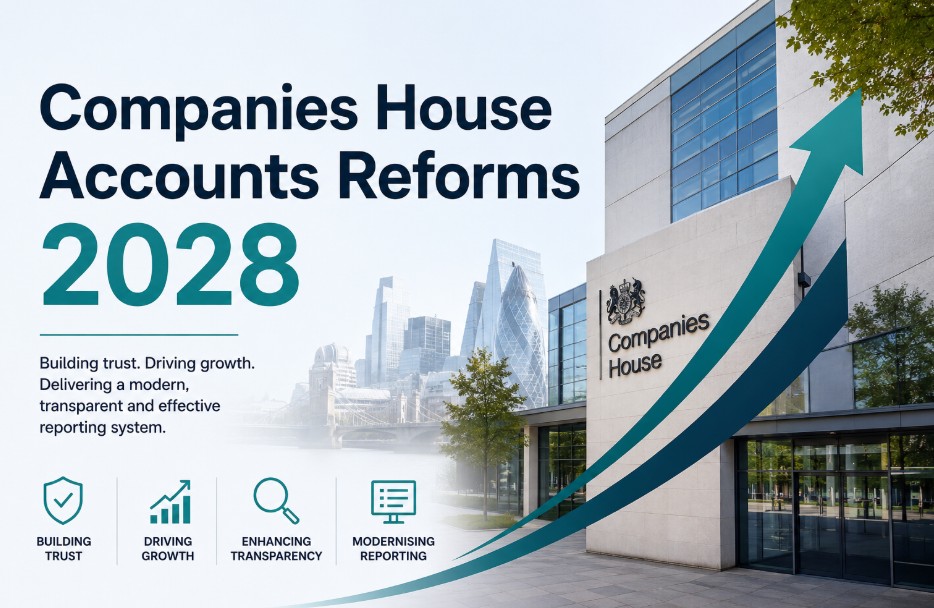
The UK corporate landscape is undergoing its most significant regulatory shift in a generation. The Companies House accounts reforms 2028 represent a comprehensive overhaul of how small businesses, micro-entities, and directors submit financial data to the central register.
Driven by the Economic Crime and Corporate Transparency Act 2023, these statutory measures transition the UK corporate registry from a passive repository of documents into an active, digitally driven enforcement hub designed to verify corporate identities, eliminate fraudulent filings, and streamline financial transparency.
What are the Companies House accounts reforms?
The Companies House accounts reforms are a sweeping modernisation of UK company filing laws enacted under the Economic Crime and Corporate Transparency Act 2023.
These statutory changes transform the UK corporate registry from a passive document storage system into an active enforcement agency, aiming to eliminate corporate fraud, enhance data accuracy, and standardise identity transparency across the UK business sector.
In practice, this historic shift updates how more than five million UK entities interact with the central registry.
By introducing strict compliance checks, identity protocols, and data structural updates, the government ensures that all filed corporate data can be instantly cross-referenced and validated with other state databases, such as HM Revenue and Customs (HMRC).
For new founders navigating this tightening regulatory landscape, knowing exactly When Do I Need To Register My Business With HMRC is the critical first step to ensuring complete cross-departmental compliance before these automated data-matching systems fully take effect.
What are the changes under the Companies House accounts reforms 2028?
The changes under the Companies House accounts reforms 2028 require all limited companies to file statements exclusively via commercial software using the iXBRL format.
Taking full effect in April 2028, these updates ban manual web screen data entry, completely eliminate the option to file filleted or abridged accounts, and require micro-entities and small businesses to file full Profit and Loss accounts.
The core adjustments to the UK filing landscape are structured across several key operational pillars:
- Mandatory Software-Only Filing: All financial statements must be submitted via commercially validated accounting software that communicates directly with the Companies House Application Programming Interface (API).
- The iXBRL Data Standard: Accounts can no longer be uploaded as plain text blocks or standard PDFs. Every line item must utilise Inline Extensible Business Reporting Language (iXBRL) digital tags for automated machine readability.
- Abolition of Filleted Accounts: Small companies and micro-entities lose the ability to hide sensitive operational information. Full Profit and Loss (P&L) statements become mandatory submissions.
- Integrated Identity Verification: Company directors, shadow directors, and People with Significant Control (PSCs) must link their accounts to a verified, photographic government identity profile.

When do the Companies House accounts reforms take effect?
The Companies House accounts reforms take effect in April 2028. The UK Government officially postponed the mandatory software-only accounts filing timeline from its initial April 2027 target to April 2028, providing small businesses, software developers, and accountants a deliberate 21-month preparation runway to update compliance systems.
This strategic adjustment followed extensive consultations between ministerial bodies, accountancy associations, and business leaders.
The extension balances the state’s enforcement priorities under the Economic Crime and Corporate Transparency Act 2023 with the practical realities faced by small entities upgrading their operational infrastructure.
Giving corporate directors essential time to test compliance pipelines ensures a smoother technical migration.
| Implementation Milestone | Original Target | Confirmed 2028 Timeline | Impact on Small Entities |
| Software-Only Transition | April 2027 | April 2028 | Complete removal of manual web screen inputs; mandatory commercial software adoption. |
| Profit & Loss Mandate | April 2027 | April 2028 | Micro-entities and small businesses must submit full P&L statements alongside balance sheets. |
| Identity Verification | Phased Rollout | Fully Integrated by 2028 | Mandatory verification for all directors and People with Significant Control. |
What is the legal foundation behind these changes?
The statutory framework for the 2028 filing updates is established under the Economic Crime and Corporate Transparency Act 2023, which amends the Companies Act 2006. These rules fundamentally alter the foundational provisions of the Companies (Accounts) Rules 2014 by permanently removing simplified filing carve-outs for small corporate structures.
When reviewing decisions made during the drafting of the Economic Crime and Corporate Transparency Act, regulatory bodies focused heavily on modernising outmoded collection channels.
While the 2014 rules introduced specific reporting flexibilities for small corporate structures, the new measures introduce structural amendments designed for a digital-first economy.
The updated framework integrates rigorous digital tagging requirements directly into the statutory filing process, ensuring that companies can no longer bypass transparent financial reporting through manual mechanisms.
Can small companies file filleted accounts after 2028?
No, small companies cannot file filleted accounts after April 2028. The Economic Crime and Corporate Transparency Act 2023 completely abolishes the options to file filleted or abridged accounts, forcing both micro-entities and small companies to deliver a complete Profit and Loss (P&L) statement to Companies House.
The phased elimination of filleted and abridged accounts is designed to remove the structural opacity that often conceals illicit financial networks, corporate insolvency risks, and bad-faith trading patterns.
Under the historical regulatory framework, smaller businesses frequently stripped their Profit and Loss statements from their submissions to the public register, leaving behind minimal balance sheet data that offered little insight into actual operational health.
A common pattern observed by financial investigators is the exploitation of simplified filing tiers by fraudulent operators to mask unauthorised trading activities.
By requiring comprehensive statements, the regulatory framework ensures that creditors, suppliers, and enforcement bodies have access to a reliable, verified baseline of corporate financial data.
What are the two-year rule mechanisms and balance sheet thresholds?
The Companies House size thresholds state that a micro-entity must not exceed a £632,000 turnover or £316,000 balance sheet, while a small company must not exceed a £10.2 million turnover or £5.1 million balance sheet.
Under the Two-Year Rule, a business must breach or fall below these limits for two consecutive financial years before its official corporate classification changes.
Determining your corporate reporting tier requires a clear understanding of these established statutory thresholds:
- Micro-Entity Thresholds: To maintain this status under current UK statutory limits, a business must not exceed a turnover of £632,000, a balance sheet total of £316,000, or an average employee count of 10.
- Small Company Thresholds: According to Companies House size classifications, this tier applies to entities that do not exceed a turnover of £10.2 million, a balance sheet total of £5.1 million, or an average employee count of 50.
- The Two-Year Rule Mechanism: If an entity exceeds these limits for a single accounting period, its filing obligations remain unchanged; compliance shifts only when thresholds are breached for two consecutive years.

What is the new Central Register identity check?
The Companies House accounts reform introduces an enhanced corporate identity verification ecosystem centred around a secure, centralised register.
Every active director, shadow director, and Person with Significant Control must verify their identity using official photographic identification, either directly through government verification applications or via an authorised corporate service provider.
To complete this process and remain compliant, directors must follow these core steps:
- Initiate Identity Verification (Pre-filing Requirement): Directors and PSCs submit government-issued photographic identification through the verified digital gateway to secure a unique identity reference number.
- Perform Annual Confirmation Review (Form CS01 Update): Log in to the digital portal to review corporate registers, shareholder lists, and registered office addresses before generating the annual confirmation statement.
- Execute the Lawful Activities Declaration (Mandatory Statutory Clause): Formally attest via the explicit digital checkbox that the company’s intended future operational activities remain entirely lawful under UK legislation.
- Submit the Completed Return (Final Verification Stage): Transmit the validated confirmation statement to Companies House, automatically logging the active compliance status within the centralised register.
Can I still use Companies House WebFiling for annual accounts?
No, you cannot use Companies House WebFiling to submit annual accounts after April 2028. Manual web screen data entry and standard PDF uploads for financial statements will be completely disabled, mandating the use of commercial software that interfaces directly with the Companies House API.
For financial submissions, the registry is shifting entirely to a digital pipeline that accepts documents produced exclusively by compliant commercial software.
This software generates the required inline Extensible Business Reporting Language formatting automatically, embedding machine-readable data tags directly into the text of the financial statements.
- What is Banned: Typing balance sheet figures directly into Companies House web screens, uploading standard text PDFs, and submitting physical paper accounts via postal mail.
- What is Mandated: Processing accounts through commercially validated software that transmits files securely via the dedicated Companies House Application Programming Interface.
- What is Retained on WebFiling: Filing confirmation statements, managing shareholder allocations, and updating director residential or service addresses.

How do UK corporate filing rules change before versus after April 2028?
The structural shift brought about by these measures updates the regulatory responsibilities for every small business director in the UK.
The table below details how filing permissions, document requirements, and register transparency rules evolve as the new framework takes effect.
| Corporate Feature | Pre-2028 Regulatory Rules | Post-April 2028 Framework |
| Primary Input Channels | WebFiling screens, paper documents, or commercial software. | Strictly software-only via integrated APIs. |
| Micro-Entity Document Scope | Simplified balance sheet only; Profit and Loss statement omitted from public file. | Full balance sheet and mandatory Profit and Loss statement submission. |
| Small Company Document Scope | Permitted to file filleted accounts, hiding the turnover and P&L details. | Full balance sheet, mandatory P&L, and a detailed Directors’ Report. |
| Data Format Standard | PDF uploads or unformatted text blocks. | Fully structured iXBRL digital data tagging. |
| Public Register Exposure | Financial summaries visible to any public user browsing the register. | Comprehensive data filed; privacy opt-out provisions protect sensitive details from public view. |
How to file accounts under the new Companies House Accounts Reforms 2028?
Under the new corporate reforms, directors must bypass manual government portals and complete filings through an end-to-end digital workflow.
The process shifts from entry-level web typing to automated schema data transmission, where financial statements are dynamically compiled, iXBRL-tagged, and securely dispatched directly to the Companies House API gateways.
The traditional methods of manual entry are being entirely replaced. Filing under the modern system follows a rigid technical progression designed to prevent data corruption and administrative delivery errors:
- Reconcile and Close Ledger Data: Bookkeeping data must be finalised within an internal accounting system, ensuring all transaction ledgers balance exactly against physical banking statements before closing the financial period.
- Generate Combined Financial Schedules: Compile the mandatory small business accounting components together as a singular payload. For small companies, this means drafting the balance sheet, a full profit and loss ledger, and the updated director’s report as a unified dataset.
- Execute Pre-Submission Software Validation: Run the assembled data through localised software verification scripts. This process intercepts formatting abnormalities, missing disclosure checkboxes, or asymmetrical balance figures before trying to transmit the file to the state.
- Authorise through Digital Key Protocols: Input the company’s secure 6-character authentication code into the software suite to sign off the data structure electronically on behalf of the board of directors.
- Secure Direct API Transmission: Trigger the secure transmission pipeline. The software bundles the statements into a specialised ZIP folder, attaches the correct machine-readable iXBRL taxonomies, and pushes the payload directly to the central registry’s receiver system, returning an instant, traceable digital tracking ID.
What should SMEs do now to prepare?
UK SMEs must prepare for the changes now by auditing their accounting software for API compatibility, phasing out filleted bookkeeping templates, and ensuring all company directors complete their mandatory identity verification profiles.
Businesses should utilise the current transition window to transition from manual spreadsheets to comprehensive cloud accounting packages.
While the formal deadline has been deferred to April 2028, leaving modifications to the last minute exposes a business to severe transition frictions and unexpected processing bottlenecks.
Taking action during the preparation window safeguards organisational compliance:
- Audit Internal Software Capacity: Confirm that your bookkeeping infrastructure natively supports automated iXBRL tag injection and open API connections. If your business relies on manual ledger spreadsheets or legacy desktop applications, plan a migration to a modern, cloud-based software standard immediately.
- Reconfigure Financial Forecasting Accounts: Because full Profit and Loss visibility is becoming standard, consult with your accounting professionals to realign internal financial templates. Workflows must be adjusted to accommodate compiling full public P&Ls, alongside checking if your entity qualifies for upcoming public register opt-out privacy allowances.
- Coordinate Director Identity Mapping: Compile a comprehensive register of all current directors, shadow directors, and individuals with significant control (PSCs). Ensure their baseline details precisely match current records, and guide them to complete their digital photographic ID verifications early through the Gov.uk gateway.
- Establish Multi-Interval Deadline Alerts: Because late submission fines escalate rapidly, establish structured compliance alert systems. Relying on a single notification risks administrative oversights; instead, deploy internal calendar trackers at 30, 14, and 7 days before your statutory filing windows.

What happens if a company fails to file its accounts or annual returns?
Failing to file company accounts triggers automatic civil late filing penalties starting at £150, which double if filing is late two years in a row. Ongoing non-compliance results in the publication of a First Gazette Notice, leading to compulsory strike-off and dissolution of the company within four months.
- Day 1 Overdue (Statutory Deadline Breach): An automatic late filing penalty is applied to the company profile. For private companies, Companies House sets this initial charge at £150, which escalates based on the duration of the delay.
- Weeks 2–4 Overdue (Issuance of Late Filing Reminders): Companies House delivers formal statutory warnings to the registered office address, alerting directors to outstanding obligations and accumulating financial penalties.
- Month 2 Overdue (Publication of the First Gazette Notice): The Registrar publishes a formal notice in the Gazette, signalling the intent to strike the non-compliant company off the primary corporate register.
- Month 4 Overdue (Compulsory Dissolution & Asset Seizure): If no valid objection is raised, the company is officially dissolved. Remaining corporate assets automatically transfer to the Crown under bona vacantia (ownerless property) rules.
Summary of Actionable Next Steps for UK Business Directors
Navigating the transition to the Companies House accounts reforms 2028 requires proactive adjustments well ahead of the formal enforcement date. Directors should begin by auditing their current accounting software to ensure it supports direct API transmission and automated iXBRL data tagging.
Next, coordinate with your internal accounting teams to phase out filleted filing workflows and prepare for the mandatory submission of full Profit and Loss statements and Directors’ Reports.
Finally, ensure all active directors and People with Significant Control complete the mandated identity verification process through the central register portal to maintain full regulatory compliance.
FAQ about Companies House accounts reforms 2028
Will small company profit and loss accounts be completely visible to the public?
No. While small companies must file a Profit and Loss statement, the registry includes specific privacy opt-out provisions designed to protect commercially sensitive data from the general public file while keeping it accessible to regulatory authorities.
What companies don’t have to file accounts at all with Companies House?
Every registered UK limited company, including dormant, non-trading, and charitable entities, must file annual financial statements. No active or registered corporate structure is entirely exempt from this statutory submission requirement.
How many years should books of account be maintained by a UK business?
Under UK tax and corporate legislation, a private limited company must retain its core books of accounts, invoices, receipts, and financial records for a minimum of six years from the end of the relevant accounting reference period.
Can you submit company accounts without an accountant?
Yes, directors can submit accounts without an accountant, provided they purchase, configure, and operate commercially validated accounting software that complies with the mandatory iXBRL digital tagging and API transmission standards.
Which companies are exempted from audit?
A company qualifies for an audit exemption if it meets at least two of the following criteria for two consecutive years: an annual turnover under £10.2 million, a balance sheet total under £5.1 million, or fewer than 50 employees.
What happens if your accountant does not file in time?
The legal responsibility for timely filing rests strictly with the company’s directors. Delays caused by third-party agents do not waive late filing fees or halt compulsory strike-off actions initiated by the registrar.