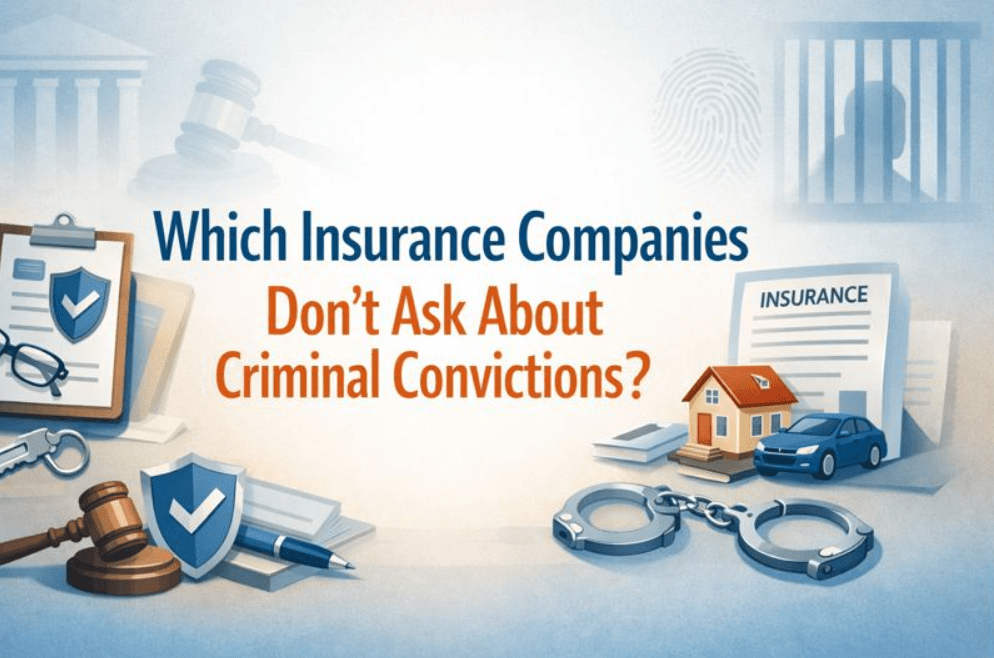
Which Insurance Companies Do Not Ask About Criminal Convictions? UK Guide, What You Must Disclose
If you’ve searched which insurance companies do not ask about criminal convictions, you’re probably trying to do one thing: get the right cover without over-sharing and without accidentally creating a disclosure problem later.
This guide explains what “don’t ask” really means in the UK, when you must disclose, where “only motoring offences” questions are common, and how to protect yourself with simple, sensible steps.
The UK rulebook: which insurers don’t ask about criminal convictions and what you legally must disclose?
What don’t ask actually means and why people get caught out?
In UK consumer insurance, your answers are judged against the exact wording you were asked. So they don’t ask can mean two different things:
- They don’t ask at quote stage (common on some motor journeys where the question is framed around motoring offences).
- They ask later in policy documents, onboarding forms, renewals, or “duty to tell us” sections (where the wording can be wider).
Here’s the key mindset: don’t guess what the insurer meant. Only answer what they asked, but answer it accurately and keep proof.

Do you have to declare criminal convictions for insurance in the UK?
Most confusion disappears once you separate these two ideas:
- Spent convictions (under the Rehabilitation of Offenders Act framework): in most everyday consumer insurance contexts, you generally don’t need to declare spent convictions.
- Unspent convictions: you usually need to disclose them when you are asked, and only within the scope/time period the question specifies.
If you’re unsure what’s currently “unspent,” many people use a basic DBS certificate as a personal sense-check (it shows unspent convictions and conditional cautions).
A quick, real-world example
You’re buying car insurance, and the site asks: “Have you had any motoring offences in the last 5 years?”
- If your issue is a non-motoring conviction, that question may not capture it at the quote stage.
- But you still need to read the policy documents, because later wording may ask about any unspent convictions not previously disclosed.
What you must disclose?
| Situation | You are asked about convictions? | Conviction is spent? | What to do (practical UK approach) |
|---|---|---|---|
| Any consumer insurance | No | Spent or unspent | Don’t volunteer extras. Answer what’s asked, and save what you were asked. |
| Any consumer insurance | Yes | Yes (spent) | You typically don’t need to disclose spent convictions in standard consumer contexts. |
| Any consumer insurance | Yes | No (unspent) | Disclose what’s requested, accurately, within scope and timeframe. |
Which insurance companies do not ask about criminal convictions (UK): what you can say safely?
The honest answer: it depends on the product and the question wording
There isn’t a single permanent safe list of UK insurers because:
- Questions change.
- Different quote routes (direct vs broker vs comparison site) can show different wording.
- Different products ask different eligibility questions.

Motor insurance: where motoring offences only questions are common?
On some motor quote journeys, insurers ask about motoring offences (points, bans, endorsements) rather than a broad any criminal convictions? question.
Below is an example-style table to show how the wording typically looks when it’s motoring only at the quote stage.
Motor insurers that may only ask about motoring offences at quote stage
| Motor insurer (example) | Typical quote-stage wording style | What that implies for non-motoring convictions |
|---|---|---|
| Churchill | Any motoring offences in the last X years? | Non-motoring convictions may not be asked at quote stage; check documents after purchase. |
| Direct Line | Any motoring offences / driving convictions? | Same: question scope may be motor-focused in the quote flow. |
| Privilege | Any motoring offences in the last X years? | Same: your duty is to answer what’s asked, then read post-sale wording carefully. |
Here’s what you can do next: when you get a quote, copy/paste the exact question wording into your notes (or screenshot it). That one step prevents most “but I thought…” problems later.
Car insurance: Do UK insurers ask about criminal convictions or only driving convictions?
Motoring offences vs non-motoring convictions
Many UK car insurance quote journeys focus on:
- Driving/motoring convictions (endorsements and bans), and
- Claims history,
- Vehicle and usage details.
But some insurers or some routes also include broader criminal conviction questions.
Named drivers: A common hidden snag
Even if you personally aren’t asked a broad question, the insurer may ask about named drivers or, depending on the wording, other people included on the policy.
If you’re adding a partner, adult child, or friend as a named driver, re-check the questions; don’t assume they’re identical to last year.
Quick scenario
You’re the main driver and fine. You add a named driver. The insurer now asks an extra eligibility question that wasn’t shown earlier. That’s not unusual, so treat “adding a named driver” like a mini re-quote.

Home insurance: Can they ask about convictions for your household?
Why home policies sometimes ask about anyone living at the property?
Home insurance is tied to the risk at an address and the people living there. Some policies ask about convictions for:
- The policyholder, and/or
- Anyone living at the home, and/or
- Anyone with access to the property.
What to do if a household member has an unspent conviction?
If the question includes household members, don’t guess. If the wording is unclear, contact the insurer and ask them to confirm (email is ideal). Keep that confirmation with your policy documents.
Travel insurance: what questions show up most often?
Don’t confuse medical questions with conviction questions
Travel insurance often focuses heavily on medical screening. Some providers ask nothing about convictions; some ask broader eligibility questions.
If you’re repeatedly declined online, a specialist broker can be a more efficient route because you can explain the facts once, clearly, and get matched to suitable underwriting.

Life insurance: why underwriting can feel stricter?
What makes life insurance different
Life insurance underwriting often asks wider questions because it’s a long-term risk assessment. If convictions are asked about, expect requests for:
- Dates
- Sentence details
- Time since the conviction
- Any ongoing conditions (licence, supervision, etc.).
Tip: Prepare a short, factual statement you can reuse. Keep it calm and consistent.
Example (adapt to your truth): “I have one conviction from [month/year]. The sentence was [type]. There have been no further convictions since.”
Can insurers check your criminal record in the UK?
In most consumer journeys, insurers primarily rely on your answers and the evidence trail of what you were asked and what you responded. That’s why keeping screenshots, emails, and policy documents matters so much.
If you want a personal check of what is currently unspent, a basic DBS is a common route people use for clarity.

What happens if you don’t disclose a conviction?
Outcomes depend on:
- What you were asked?
- Whether your answer was accurate and reasonable?
- Whether the information would have changed the insurer’s decision (price, terms, or acceptance).?
This is exactly why answering the question as written + saving proof is such a powerful combo.
How to get insured after a conviction (UK)?: A practical checklist
Here’s what you can do next (without overcomplicating it):
- Save the exact question wording you answered (screenshots are perfect).
- Keep your timeline clear: what’s spent vs unspent, and key dates.
- If a question is vague (e.g., “any convictions?”), ask the insurer: “Do you mean spent convictions as well, or only unspent?”
- Read the policy documents immediately after purchase and look for any section that says you must disclose any unspent convictions not previously disclosed.
- If you spot a mismatch, contact the insurer straight away and keep the reply.
How people talk about this online?
What happens if I don’t tell insurance company about my DR10?
byu/Still-Sheepherder-47 indrivingUK
Insurance doubled after SP30 Speeding Conviction
byu/LampieVidiot inCarTalkUK
Need advice on car insurance after old conviction (UT50 + LC20)
byu/H-OBrien inCarTalkUK
First time driver with a conviction
byu/UsualRow3452 indrivingUK
If my additional driver has an unspent non motoring conviction does that affect my insurance?
byu/Vivid-Warning-6511 indrivingUK
Conclusion
The safest way to interpret which insurance companies do not ask about criminal convictions in the UK is this:
- You win by focusing on the exact question wording, not the brand name.
- In motor insurance, it’s common to see motoring-offences-only questions at the quote stage, but you must still read post-sale documents.
- Protect yourself with evidence: screenshots, confirmations, and early corrections if you spot a mismatch.
FAQs
Do you have to declare spent convictions for insurance in the UK?
In standard consumer insurance contexts, spent convictions generally don’t need to be disclosed. The practical move is to follow the question wording and keep proof of what you were asked.
How long do unspent convictions affect insurance?
It depends on when the conviction becomes spent, which is tied to sentence type and timelines. If you’re unsure, use an official route to confirm your status before applying.
Can an insurer refuse cover because of a conviction?
Yes. Insurers can set acceptance rules and pricing based on risk. If you’re declined repeatedly online, a broker approach can be more efficient.
Will my insurance be invalid if I answered no by mistake?
Not automatically. It depends on the question’s clarity, your circumstances, and what the insurer would have done with the correct information. If you realise an error, correcting it promptly is usually the safest step.
Author expertise note
This article is written as a consumer-facing UK guide based on repeated patterns in insurer question wording, common underwriting flows (direct, comparison sites, brokers), and how disclosure issues typically arise in real applications.