
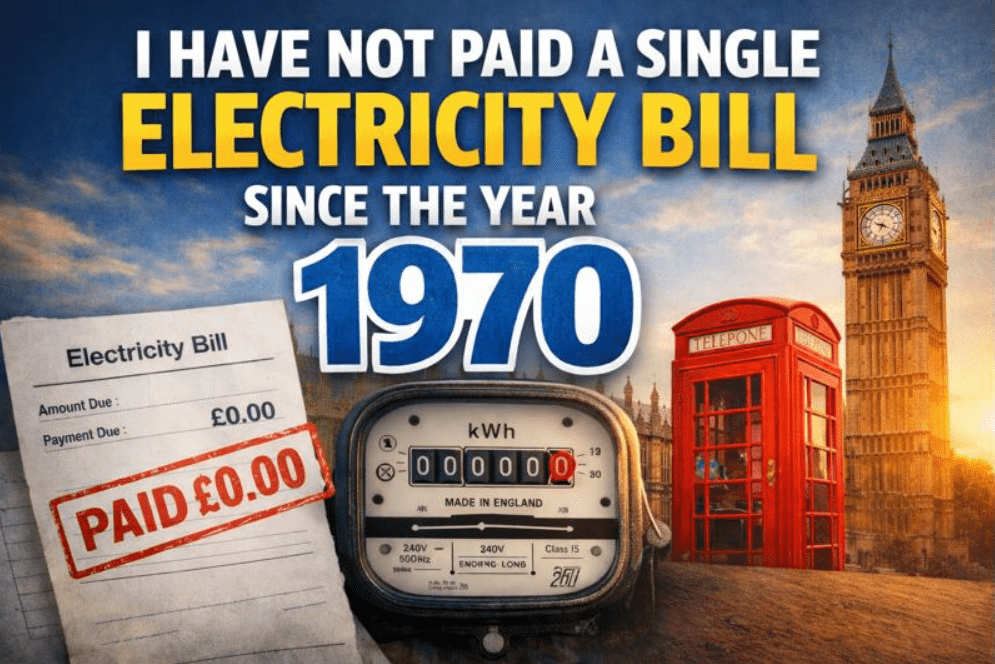
I Have Not Paid a Single Electricity Bill Since the Year 1970” – UK Reality Check, Common Explanations, and What’s Actually Legal
In this guide, we’ll unpack the most common explanations, what’s actually legal, and the calm, practical steps you can take if this sounds even remotely like your situation.
Let’s break it down in a friendly, real-world way, so you can understand what’s likely happening and what you can do next without stress.
What your situation usually means?
| If your situation is | What it typically means | Your safest next move |
|---|---|---|
| Truly off-grid | No electricity supplier; you generate your own power | Confirm you’re not connected / no active supply |
| Bills “included” | The account is in a landlord/third-party name | Check tenancy agreement + confirm who the supplier bills |
| On-grid but “no bills” | Billing failure, wrong account, meter issues, switching errors | Gather evidence + contact supplier in writing; learn the back-billing limit |
Is it even possible to pay £0 for electricity for decades?
Yes, but mostly only if you’re not using a UK electricity supplier at all (off-grid), or if electricity costs are being covered indirectly (for example, bundled into your rent).
If you’re connected to the grid and using electricity, “never paying” is usually either:
- A billing gap (no correct bills arriving), or
- An unpaid-bills problem (bills exist, but haven’t been settled).
Those two paths are totally different, and they lead to totally different outcomes.
Why this phrase spreads online and what it often really points to?
People use this line as:
- A shorthand for off-grid living (“my solar and batteries cover it”), or
- A dramatic way to describe supplier chaos (“they’ve never billed me properly”).
And to be fair, UK billing problems do happen, especially after moving home, switching supplier, or when meter details get mixed up.
Possible scenarios behind “I have not paid a single electricity bill since the year 1970″
If you’re reading this because you or someone you know hasn’t paid for electricity in ages, don’t panic. Start by working out which bucket you’re in.
Scenario 1: You’re genuinely off-grid
What “off-grid” actually means?
Off-grid usually means:
- You’re not connected to the mains electricity network (or it’s disconnected and unused).
- You have no supplier billing you.
- Your power comes from a setup you manage (solar PV + battery, sometimes a generator).
What it doesn’t mean?
Being “off-grid” doesn’t simply mean:
- My bills are small.
- I’m on a good tariff.
- I’ve got solar panels.
Plenty of UK homes have solar panels and still get electricity bills, because they’re still connected to the grid and still import power, especially in winter and evenings.
The friendly reality check
If someone says, “I’ve never paid since 1970,” and they truly mean it, off-grid is the most believable explanation. But it’s not free electricity, it’s often at different costs.
You pay upfront, you maintain equipment, and you plan ahead. It’s a lifestyle choice more than a hack.

Scenario 2: I’ve never received a bill (supplier/admin issues)
This is surprisingly common. And it’s often fixable, but it’s important to handle it the right way.
Common causes that are more normal than you’d think
- Bills going to an old address or the previous occupier.
- Your move-in date never being set correctly.
- Supplier switch issues (account stuck between suppliers).
- Meter serial numbers mixed up.
- Long runs of estimated bills that never get corrected.
- Smart meter data not sending properly (yes, it happens).
The key idea: “unbilled” vs “unpaid”
If you truly weren’t correctly billed, UK protections can apply. In simple terms, if the supplier didn’t bill you properly, they usually can’t suddenly demand decades of money in one go.
When protections might not apply?
Protections are not a magic wand in every situation. For example, if you :
- Were billed and just didn’t pay.
- Blocked access to the meter repeatedly.
- Deliberately ignored requests and made it impossible to bill correctly.
But here’s a useful reassurance: Simply being a bit disorganised or missing a meter read here and there doesn’t automatically mean you lose protection.
Scenario 3: You’ve been billed, but you haven’t paid (electricity arrears)
If bills do exist and they haven’t been paid, this becomes a debt/arrears situation.
What normally happens and why you shouldn’t ignore it?
Suppliers usually go through steps like:
- Reminders and late notices.
- Offers of payment plans.
- Collections activity if no agreement is reached.
- In some cases, seeking a warrant to fit a prepayment meter.
Disconnection is rare in practice, but stress can build quickly if letters pile up.
A gentle but honest note
If you’re in this category, the best money-saving move is boring but powerful: contact them early and agree on something realistic. The earlier you engage, the more options you usually have.
Never paid for electricity since 1970, what to do next?
Here’s the calm, practical route. Think of this like sorting paperwork, not fighting a war.
A simple checklist you can do in 20–30 minutes
- Take dated photos of your meter (including the meter serial number).
- Write down your move-in date and find your tenancy agreement (if renting).
- Check if anyone else is named on the account (landlord, partner, previous occupier).
- Email or write to the supplier asking for:
- Billing history.
- Opening meter reading.
- Current tariff details.
- Confirmation of who is responsible for the account.
If you get a big “catch-up” bill, don’t panic-pay instantly. Ask for a breakdown and keep everything in writing. You’re allowed to question it.

How complaints usually work?
If the supplier doesn’t fix it:
- You open a formal complaint.
- You wait up to 8 weeks (or get a “deadlock letter” sooner).
- Then you can escalate to the Energy Ombudsman.
| Step | What happens | Why it matters |
|---|---|---|
| 1 | Complaint to the supplier | You create a paper trail |
| 2 | 8 weeks or deadlock | The formal gateway to escalation |
| 3 | Ombudsman | Independent review if it’s not resolved |
How to reduce electricity bills legally in the UK?
Let’s be real: most people don’t want a dramatic story; they want manageable bills.
Two friendly, high-impact routes
- Billing hygiene (often overlooked): correct details after moving, regular meter checks, and making sure you’re not stuck on nonsense estimates.
- Usage reduction (without misery): small habit changes + efficiency improvements. Even simple things like draught proofing and smarter heating routines can help more than people expect.
Here’s what you can do next: Pick one billing fix and one usage fix this week. Make it easy. Make it repeatable.
Myth-buster section
Can a supplier backdate bills to the 1970s?
In a typical “you weren’t correctly billed” situation, UK protections are designed to stop extremely old surprise bills.
Can you be cut off for unpaid electricity in the UK?
Disconnection is rare, but ignoring it can lead to serious escalation. It’s better to engage early and agree on a plan.
If bills were included in rent, who’s responsible?
It depends on the tenancy agreement and whose name the supply account is in. This is why checking paperwork early matters.
What if the meter is faulty?
Faulty meters and faulty readings can cause billing chaos. Evidence (photos and dates) makes resolution much easier.
How people talk about this online?
I haven’t paid for an electric bill in 6 years, now I’m moving out. How do I settle my bill?
byu/Creative_Banana4625 inAskUK
⚠️With customer debt now at a record £4.4 billion according to @ofgem, it underlines the need for the Government to #BringDownBills and help prevent customers getting into arrears. 🔎 For more on potential solutions check out our #BringDownBills hub 👉 https://t.co/wHxuswcy9u pic.twitter.com/AspnzHEptX
— Energy UK (@EnergyUKcomms) September 26, 2025
Conclusion
If someone says “I have not paid a single electricity bill since the year 1970”, in the UK it’s usually one of:
- Genuinely off-grid.
- Bills bundled/paid by someone else.
- A billing issue that will eventually show up (but can often be handled fairly if you act calmly and keep records).
Here’s what you can do next: treat it like a paperwork problem, not a brag. Take meter photos, write to the supplier, and escalate through the proper complaint path if needed.
Author expertise note
This article is written using widely used UK consumer and regulatory guidance and recurring UK billing-dispute patterns. It’s designed to be calm, practical, and focused on what’s legal, documentable, and complaint-ready, not on “dodging” anything.